Yamaha YZF-R1 (RN32) — Supersport
Yamaha press archive

2015–2016 · Supersport · Buyer's Guide

YZF-R1 (RN32)

The Crossplane War Cry

The Machine's Character

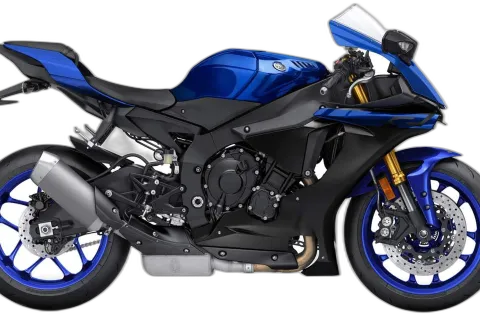
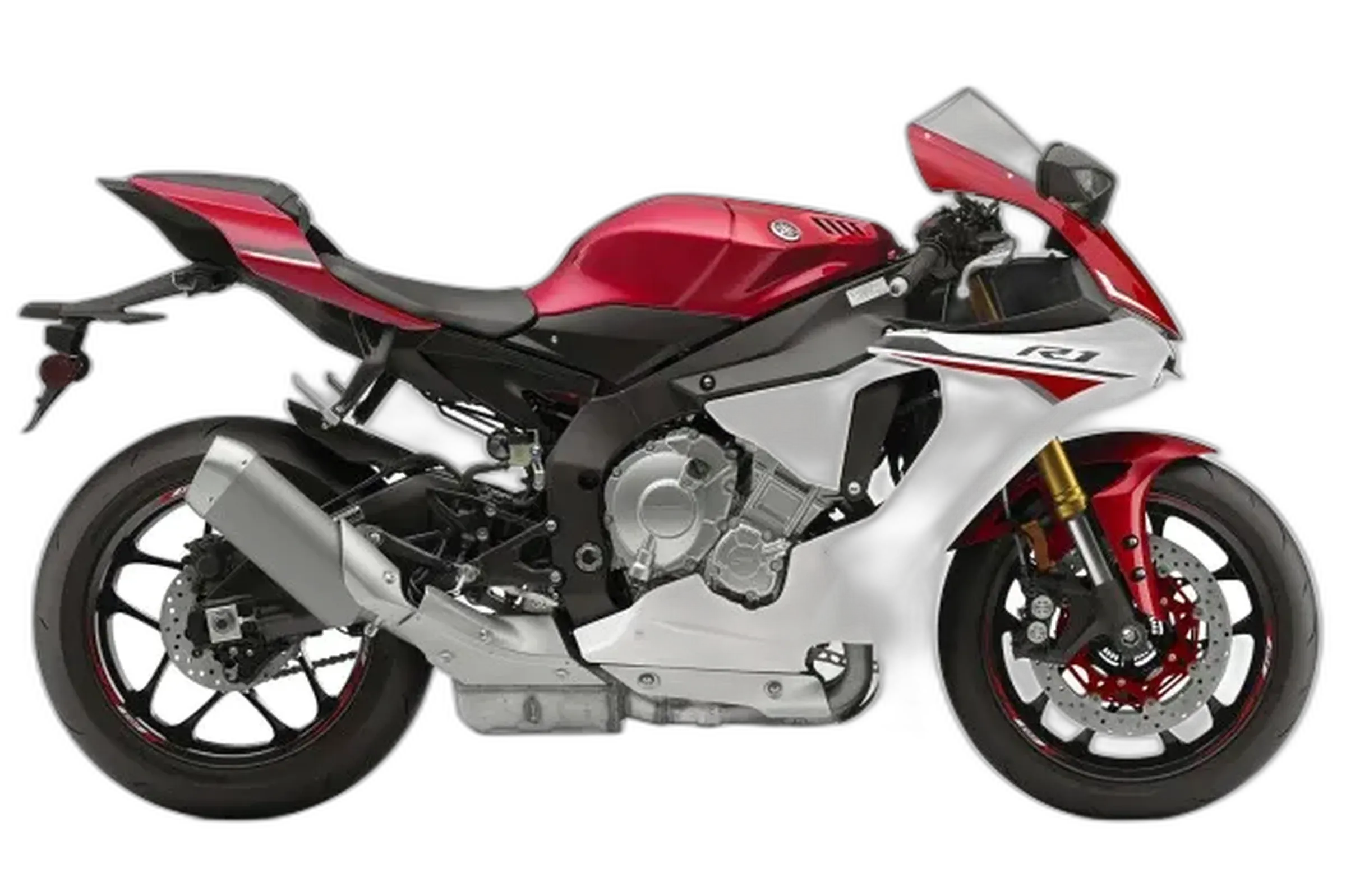
Yamaha built the RN32 around a crossplane inline-four, and that one decision defines everything else about it. The 998 cc motor makes 200 hp at 13,500 rpm and 83 lb-ft at 11,500, with an uneven firing order that gives it a voice no other four has. A full 6-axis IMU sits underneath, feeding traction, slide, lift and cornering ABS control, with a Slide Control System layered on top. At 439 lb wet on a 55.3 in wheelbase, this is a liter bike shaped by MotoGP thinking rather than showroom compromise.

In use it splits in two. Below 6,000 rpm the engine feels flat and slightly lethargic, then output climbs sharply past 7,000 and the bike becomes something else entirely. That, plus a 33.7 in seat and hard clip-on geometry, tells you who it is for: riders who work for their speed on canyon roads and on track, not people looking for an easy commuter. Heat is real, with coolant running 230 to 244°F (110 to 118°C) in traffic. On a used MY2015 example, confirm the transmission gear recall and the crankshaft thrust washer work were done before money changes hands.

Hard Numbers

Spec sheets don't ride bikes, but they set the baseline.

Show full specs & equipment Hide specs & equipment
Key specifications
Power 200 hp (147 kW) @ 13,500 rpm
Torque 83 lb-ft (112 Nm) @ 11,500 rpm
Displacement 998 cc
Engine Inline-four
Cooling Liquid-cooled
Gearbox 6-speed
Final drive Chain
Front tire 120/70-17
Rear tire 190/55-17
Wheelbase 55.3 in (1405 mm)
Seat height 33.7 in (855 mm)
Wet weight 439 lb (199 kg)
Fuel capacity 4.5 gal (17 L)
Top speed 186 mph (299 km/h)
Fuel economy 32 mpg (US)

Equipment check

Chassis

  • Front Suspension Adjustable Standard
  • Rear Suspension Adjustable Standard
  • Steering Damper Standard

Connectivity

  • TFT Display Standard

Drivetrain

  • Quickshifter Standard
  • Slipper Clutch Standard

Lighting

  • LED Headlight Standard

Safety

  • ABS Standard
  • Cornering ABS Standard
  • Traction Control Standard
  • Ride Modes Standard
  • Wheelie Control Standard
  • Launch Control Standard

The Voice of Experience

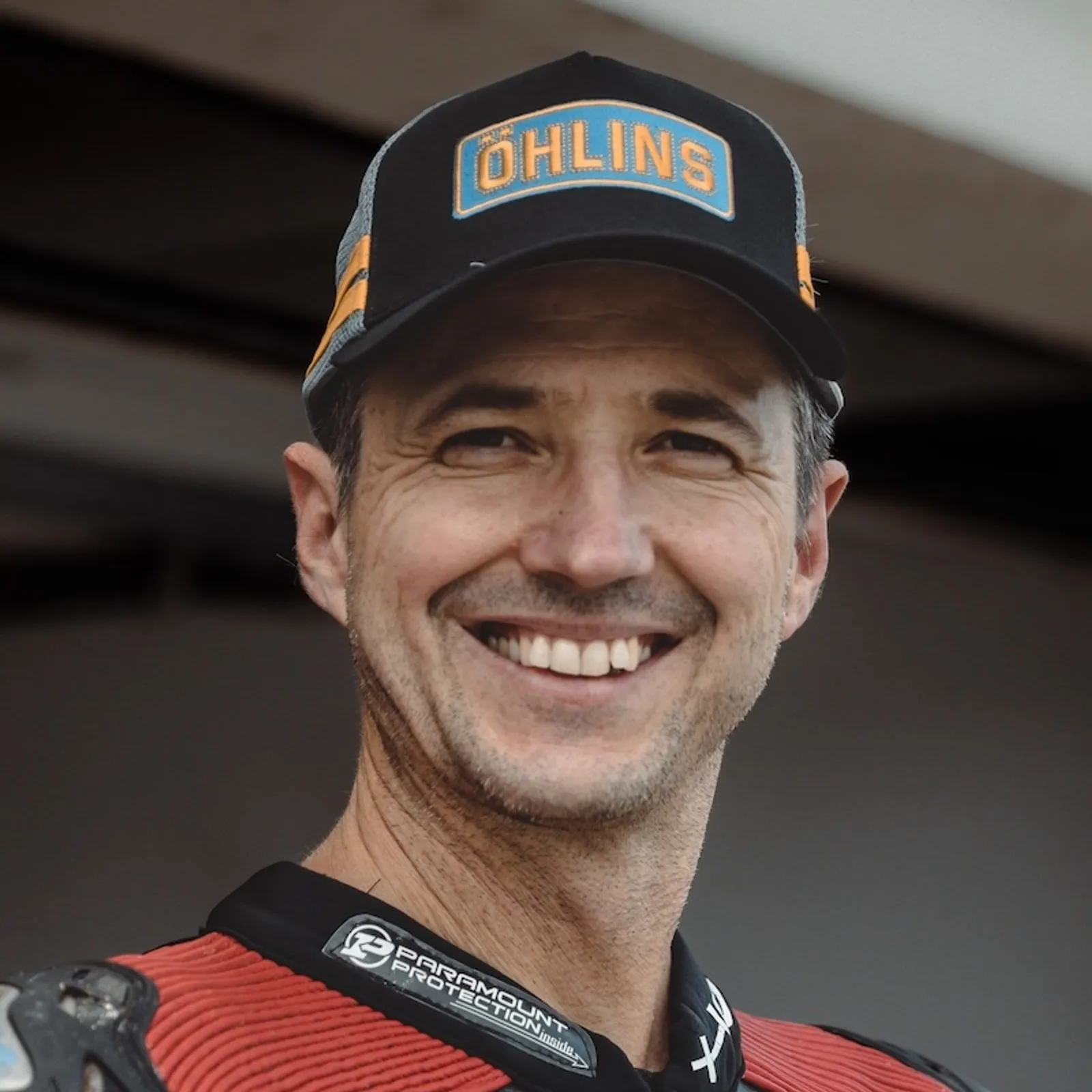
Portrait of NastyNils

The test ride

Blip it in pit lane and the crossplane four answers with a metallic war cry that no other stock exhaust produces. The proportions look cramped when you stand next to it, then you sit down and the flat seat and narrow tank open the whole thing up, even for taller riders who would write it off on sight. The position it rewards is committed: upper body forward and inward, head alongside the screen, inside elbow tracking toward the pavement. Ride it lazily and you spend the session working around the bike. Wind the motor out and there is no sense of strain anywhere in it, just a weightless climb toward the limiter. Four ride modes switch under your left thumb at speed, so a wet patch at one end of a dry circuit costs you nothing in rhythm. Building a rain map and a separate dry map from scratch took about five minutes.

Rated point by point — where it earns its keep

My own 0–100 score for this bike against the class, area by area — the marker on each bar is the class average.

Turn-in happens the instant I ask for it. On slicks I could pick a line, commit to it and then stop thinking about it, because the bike simply goes where I aimed and stays there. Nothing to correct halfway through, no slow push wide, no argument while I concentrate on the exit. A front end that holds its position is the whole game in this class, and this one holds.

A session on this bike does not leave room for any other conversation. I climbed off and it was all still arriving at once: the noise, the immediacy of the drive, a chassis that takes aggression without making you pay for it, and electronics that quietly let me run closer to the edge than I had any real business running. None of it registers as a list of features. It lands as one impression, hard and immediate, and it stays with you long after the engine has stopped.

What I keep coming back to on this motor is how directly it answers. There is no slop between my right hand and the rear tire, no lag while something in the middle interprets what I asked for, no soft edge before the drive arrives. I ask, it delivers, and that honesty is what makes the upper half of the rev range usable instead of intimidating. Lift control is part of the same story. It is tuned to protect drive rather than trim it, so on the way out of a corner the front stays light for a moment, the rear digs in, and I sit planted through the whole thing without ever sensing a system working underneath me. The only evidence that anything intervened is the speed I am carrying by the time I glance down.

One delivery detail tells me how seriously Yamaha meant this thing: it arrives on genuine semi-slick rubber, not the cheap compound most manufacturers fit to protect a price point. That is an engineering decision rather than a marketing one, and it sets the tone for what the chassis is allowed to do the moment you start leaning on it properly.

Standing next to it, the proportions look like a punishment. Sitting on it, they are not. The seat is flat and the tank is slim, so there is real room to work, and I have watched tall riders write this bike off on sight and then find it fits fine. What it will not do is carry a passive rider. It wants full commitment from your body, and anyone riding it at half effort ends up managing the machine rather than using it.

Four ride modes, all configurable, and I can move between them with my left thumb without changing anything else I am doing with my body. On a bike this fast that turns adapting to changing grip into a decision rather than a project. Building the maps in the first place cost me about as much time as a coffee break, and I did it without help, which says the menu logic is sound. Two things annoy me. The quickshifter works going up the box only, so every downshift is back to lever and clutch on a machine that has earned better than that. And once you are past the basic mode setup, the genuinely granular tuning is buried deep enough that I gave up looking for it.

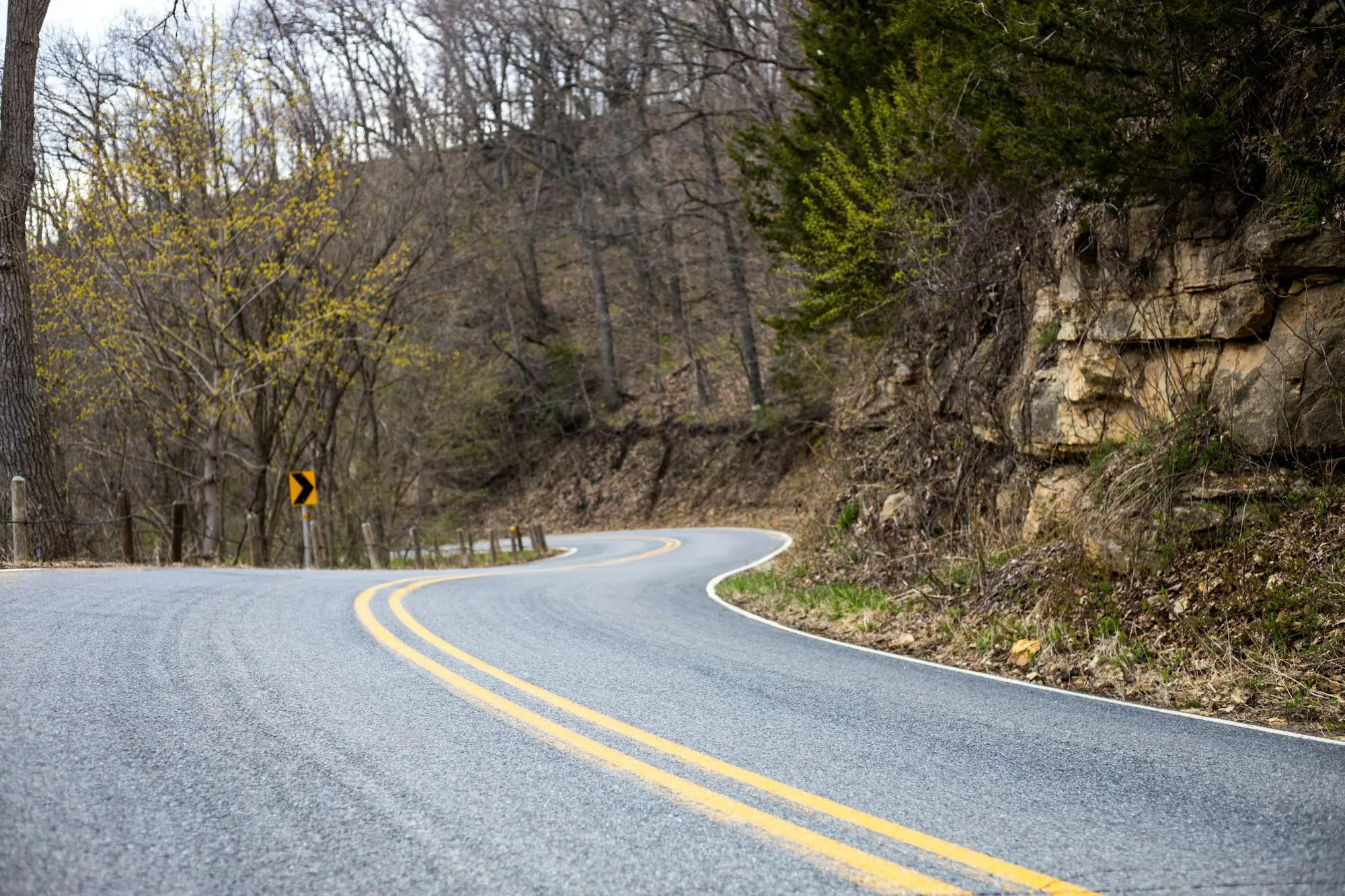
A winding two-lane asphalt road in the Appalachian mountains, photographed in dry daylight. Yellow double-center line markings guide through a series of tight left-hand curves. Dense deciduous and evergreen forest flanks both sides; a rock cut is visible on the right. The road surface and geometry suggest a technical, high-traffic riding corridor popular with motorcyclists.
Chris Flaten / Pexels

The Truth on the Street

None of this is my own riding. It comes from what riders have told me over the years: pit-lane conversations, club-night talk, owners catching me after a track day, and the mail that arrives from people living with the bike week to week. For the RN32 the pattern is steady. Praise for the machine itself runs high, and the complaints are almost all about what it asks of you on public roads.

What owners never argue about

The strongest agreement is on how the whole package works on a circuit. Riders rate the chassis, the brakes and the control systems at the top of that generation, and very few of them push back on it. On the R1M version the talk turns to finish instead: the polished aluminum tank, the carbon bodywork, the magnesium subframe and wheels get called a work of art by people who are not usually sentimental about hardware. R1M owners also report that the semi-active Ohlins setup, once it is dialed in, gives quick feedback and keeps adjusting to their inputs as a session goes on.

Stiff on the road, abrupt on the throttle

A recurring complaint on the standard bike is the suspension in stock trim. Riders describe the baseline tune as built for a track surface and harsh on real streets, and several note that it gets noticeably stiffer in cold weather. The other regular gripe is throttle response in the most aggressive power setting. Owners call it abrupt at small openings, either full on or full off, with very little in between.

Range and R1M service costs

Owner-reported economy sits around 32 mpg US in mixed riding, which puts the reserve light somewhere near 120 miles. Long days need planning. R1M owners raise a second cost: the semi-active suspension needs special tools and trained hands, rebuilds run well above a passive cartridge setup, and some riders have gone back to passive Ohlins for tunability and to satisfy race regulations.

Known issues

  • Crank-web fatigue from uncontrolled crankshaft end-float (MY2015 only)

    engine occasional

    Early MY2015 RN32 engines lacked a crankshaft thrust washer to control end-float, allowing one of the crank webs to drift into the orbit of the counter-rotating balance shaft and fatigue over time. In rare cases this resulted in catastrophic crank failure. Yamaha quietly added a thrust washer (Yamaha P/N **2CR-11426-00**) starting in MY2016, then revised the cases, crank, and valve springs in MY2017 (RN49, P/N **BW8-11426-00-00**). Note that this issue was never the subject of a formal NHTSA / KBA recall — owners of unmodified MY2015 bikes were not officially remedied.

  • OE airbox flapper valve and intake plate restrict flow even at full open

    engine occasional

    The OE airbox features a pneumatically actuated flapper valve. Owners report that even fully open, intake flow is restricted; removal of the restrictor plate combined with an ECU re-tune has been measured to yield mid-range and top-end gains. Whether the restriction is a genuine fault or a deliberate Yamaha choice for emissions and noise compliance is debated within the community.

  • Aggressive ride-by-wire mapping in PWR1 produces abrupt on/off throttle transitions

    electrics occasional

    YCC-T mapping in the most aggressive power mode creates harsh on/off transitions around low-to-mid throttle openings, particularly noticeable in town and at corner exit. Owners describe the throttle as "either full on or full off." Common mitigation is to ride PWR2 or PWR3 (and a softer YRC mode preset) on the street and reserve PWR1 for the track.

  • Communication Control Unit (CCU) draws current with ignition off (R1M)

    electrics occasional

    An ECU programming error left the CCU partially powered after ignition-off, slowly draining the battery during parking. Yamaha issued a service bulletin and ECU re-flash in May 2015; some owners report continued residual drain even after the flash, and a battery quick-disconnect is a common owner workaround.

  • Compact CP4 packaging causes high coolant temperature and rider heat in traffic

    cooling common

    Coolant temperatures of 230–244 °F (110–118 °C) in traffic are reported as normal by Yamaha and confirmed by owners. The fan-on threshold is considered high. Compact bodywork transfers significant heat to the rider's lower legs at low speeds. Common mitigations: lower-temperature coolant (e.g., Engine Ice), de-cat pipes, secondary radiator.

  • Engine feels weak below 6,000 rpm; sharp jump in output around 7,000 rpm

    engine occasional

    The CP4 engine pulls strongly from approximately 7,200 rpm — owners report rear-wheel output rising over a narrow rev band. Below 6,000 rpm the engine feels weak, especially in town and on slow roads. ECU re-flash + intake unrestriction smooths the low-end somewhat but does not fundamentally change the character. This is widely accepted by owners as the bike's defining character rather than a defect.

  • Audible clutch primary-gear / cush-drive spring rattle at idle in neutral

    drivetrain occasional

    Audible rattle from the clutch primary-gear / cush-drive spring assembly at idle in neutral; quietens when the clutch lever is pulled. This is a long-known characteristic across multiple R1 generations: the cush-drive uses six non-removable springs to damp crank pulses, and these can loosen over time. Yamaha service docs prescribe replacing two small rings plus the fiber behind the wire clip in cases of excessive chatter. Per multi-source community consensus, the noise itself is cosmetic — not a fault.

The Expert Benchmark

Where this Yamaha YZF-R1 pulls ahead of — or falls behind — its rivals on the numbers, and the typical bike in its class on character.

What kind of bike this is — character vs. the class

This bike Class average

The shape of the Yamaha YZF-R1 — numbers and character vs. the average Supersport

Head-to-head: Yamaha YZF-R1 vs. its rivals

The Handshake Score

Forget spec-sheet bragging. Here's who the YZF-R1 is actually built for.

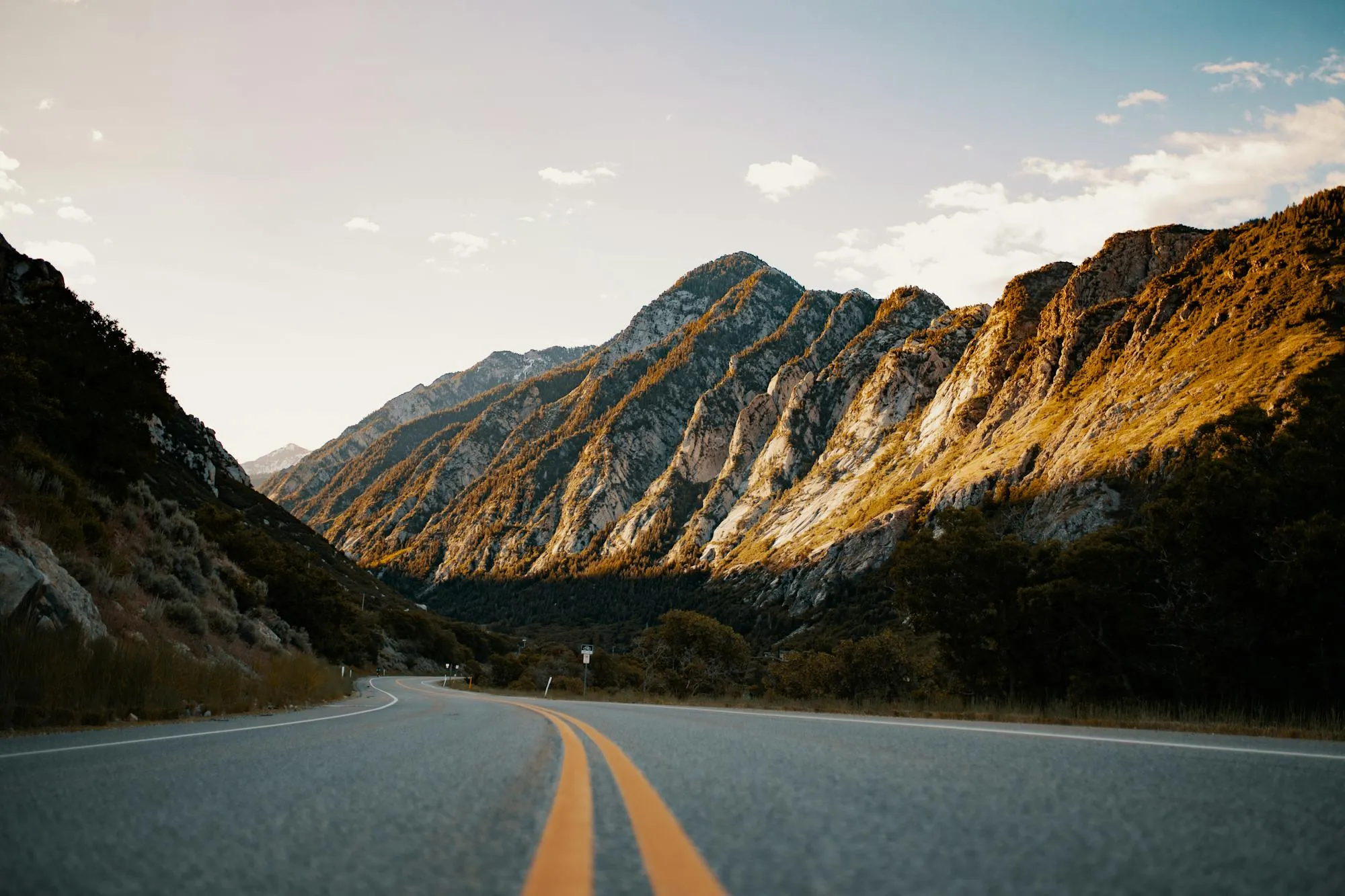
A scenic view of Angeles Crest Highway winding through rugged Southern California canyon terrain. Rocky mountainsides with golden earth tones frame the asphalt road with tight sweeping curves. Double yellow center line visible, sparse vegetation along the shoulders, clear blue sky with white clouds. Daylight, dry conditions. Iconic location for canyon-road enthusiasts.
Josh Sorenson / Pexels

Best motorcycle for Angeles Crest?

On the good canyon roads, ridden properly, this is exactly the tool you want. The traffic-bound run out there is the price: dull under 6,000 rpm, abrupt on throttle, and hot.

Made for Angeles Crest Highway · Coronado Trail / US 191 · Highway 1 / Big Sur
Best motorcycle for Laguna Seca?

Closest fit on this list. Lean clearance, front-end precision and the 6-axis IMU let you push, and the left-thumb mode switch earns its keep the moment a circuit starts drying out.

Made for Barber Motorsports Park · WeatherTech Raceway Laguna Seca · Circuit of the Americas

Best motorcycle for Tail of the Dragon?

Tight, slow technical roads sit under the powerband, so you ride around the engine more than with it. The chassis is superb; the delivery is not built for that pace.

Made for Back of the Dragon · Blue Ridge Parkway · Cherohala Skyway

What's new versus the previous generation

If you're cross-shopping the older generation, here's what changed.

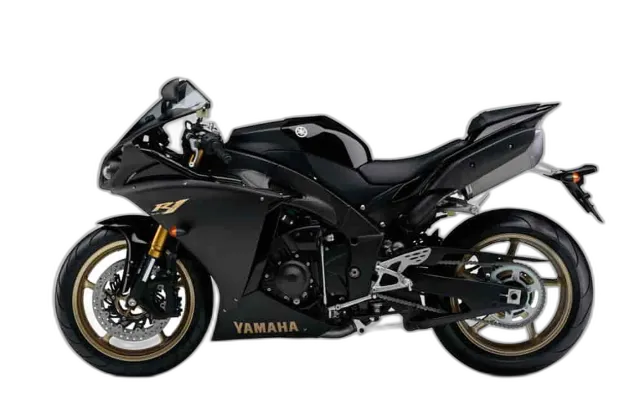
Yamaha YZF-R1 (RN22)

Previous generation · 2009–2011

Yamaha YZF-R1 (RN22)

The Crossplane Traction Machine

Compare to the previous model →