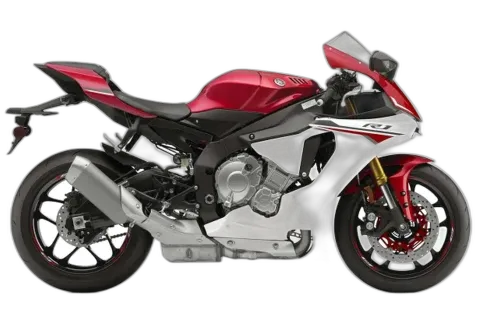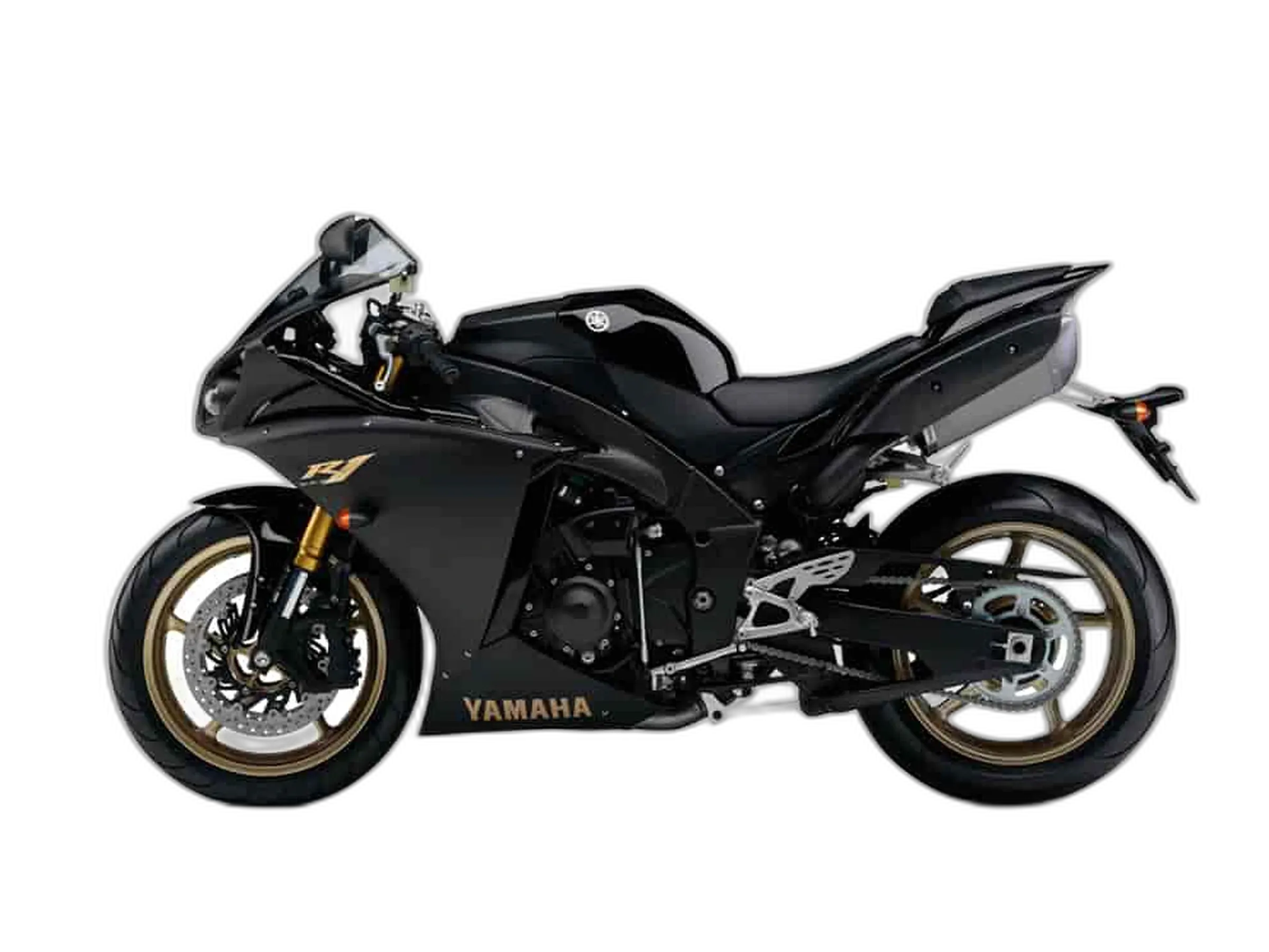


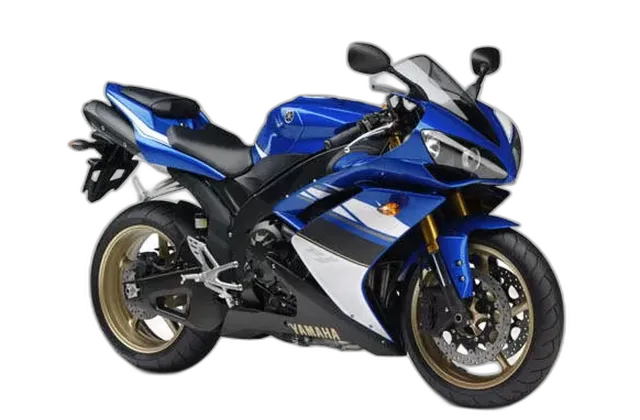
Yamaha YZF-R1 (RN22) — Supersport
NastyNils / Yamaha Press

2009–2011 · Supersport · Buyer's Guide

YZF-R1 (RN22)

The Crossplane Traction Machine

The Machine's Character

The RN22 is the R1 that swapped headline horsepower for a crossplane crankshaft, and the whole bike bends around that decision. The 998cc inline-four fires on an uneven 90-degree beat, so it sounds like nothing else in the paddock and lays its 85 lb-ft down with unusual traction and feel. Yamaha's YCC-T fly-by-wire throttle tightens the connection to the rear wheel, and switchable ride modes let you soften or sharpen the delivery. At 182 hp it isn't chasing the peak-power crown of the class. It's chasing feedback, and it gets it.

On real roads this thing flows. The chassis tips in willingly, forgives a blown entry line, and stays planted at speed, so you spend your energy riding instead of wrestling. It's built for the canyon and back-road rider who values character and communication over the last tenth on a stopwatch. The honest caveat: the suspension is tuned soft for the street and goes vague under hard track loads, there's no ABS on offer, and the charging system and cam chain tensioner are known weak spots on higher-mileage examples. Buy one that's been checked over, and it ages into a genuine keeper.

Hard Numbers

Spec sheets don't ride bikes, but they set the baseline.

Show full specs & equipment Hide specs & equipment
Key specifications
Power 182 hp (134 kW) @ 12,500 rpm
Torque 85 lb-ft (116 Nm) @ 10,000 rpm
Displacement 998 cc
Engine Inline-four
Cooling Liquid-cooled
Gearbox 6-speed
Final drive Chain
Fork Upside-down (USD)
Front brake 310 mm
Front tire 120/70 ZR17
Rear tire 190/55 ZR17
Wheelbase 55.7 in (1415 mm)
Seat height 32.9 in (835 mm)
Wet weight 454 lb (206 kg)
Fuel capacity 4.8 gal (18 L)
Top speed 182 mph (293 km/h)
Fuel economy 33 mpg (US)

Equipment check

Chassis

  • Front Suspension Adjustable Standard
  • Rear Suspension Adjustable Standard
  • Steering Damper Standard

Drivetrain

  • Slipper Clutch Standard

Safety

  • Ride Modes Yamaha YCC-T (Chip Controlled Throttle) Refined throttle responseSelectable ride modes Standard

The Voice of Experience

Portrait of NastyNils

The test ride

Thumb the starter and the crossplane note settles into that lumpy, off-beat idle that turns heads at every gas stop. Roll out and the riding position surprises you: roomy and fairly upright by supersport standards, not the wrist-heavy tuck you brace for. Vibration stays milder than a high-output four has any right to, though a fine tingle still reaches your fingertips on a long day at speed. The gearbox is crisp and precise, the kind that makes you want to use the whole box. In stop-and-go traffic the underseat collector cooks your right thigh, and taller riders will find the clip-ons leave little to brace against when you're really pushing. One quirk to know: in the standard map the fuelling snatches just off closed at low rpm, so most riders default to the softer setting around town. On a flowing road, none of it gets in the way.

Rated point by point — where it earns its keep

My own 0–100 score for this bike against the class, area by area — the marker on each bar is the class average.

What I keep coming back to is the front end. In a comparison that pulled the suspension apart everywhere else, the feedback at corner entry and the stability at real speed stood out as genuine bright spots. You always know what the front contact patch is doing, and the electronic steering damper backs that up: several corner exits had bumps loading the front light and going nervous, and the damper settled every one of them without me second-guessing the tire. Snap down two or three gears into a slow corner and the slipper clutch keeps the rear settled, no fight. On a circuit I'd never seen, the bike looked after itself from the first session, which is worth a lot when you're still learning the place. Fit proper slicks and a matching setup and the same chassis turns surgical; the character holds, the precision just multiplies. The honest limits all live in the springs. The tune is soft for serious track work, and the rear is the worst of it: get on the gas early and hard and it won't load the tire with enough authority, so corner-exit traction turns unpredictable at this level. And for all the engineering in splitting compression and rebound between the fork legs, the dive under hard braking is no better than before. It reads like a cost decision, not a performance one.

The thing the crossplane crank actually fixed is throttle manners. It used to be that a sharp response and easy metering pulled against each other; you picked one. Here you get both at once. Crack it open and it answers immediately, but you can still feed the power in by the degree without catching the rear by surprise. And it builds in one smooth arc rather than stacking up and slamming in at the top, so the drive stays clean and readable the whole way up. There's a catch worth knowing, and it's a tradeoff rather than a flaw. The revised motor cured the overheating that turned up in early production, and the bill came due at the top of the rev range, where a little output went missing. It's the kind of thing that stays invisible on the road and only surfaces when you're chasing the quickest bikes on a circuit. My other gripe is the limiter. Neither the way the power builds nor the noise it makes gives you a clear warning when you're closing on redline, so you end up living on the tachometer instead of riding by ear. A small thing on the road, more of a nuisance when you're really wringing it out.

The brakes belong in the plus column. Push your entry point deep and the front answers cleanly, with progressive feedback that keeps building as you lean harder rather than grabbing at you. The one asterisk is initial bite: six-piston calipers on individual pads should feel like hitting a wall, and they don't quite. On a circuit that shortfall shows, and while sharper pads would likely close it, that's not a job you should inherit from stock.

This is where the R1's new personality cuts both ways. The old one punished mistakes and was genuinely unrideable for anyone without real racecraft. That bike is gone. This one is manageable and easygoing enough to live with on the road, which sounds like pure upside until you line it up wheel-to-wheel with the class on a closed circuit. There the street-biased setup becomes the defining trait: approachable where it used to be brutal, and on a racetrack that trade costs you. Ridden for what it is, though, the willingness at the limit is real. The fast, bumpy left-hander is where it shows itself, the rear working a street tire hard while you feel exactly where the grip runs out. In this company it draws the comfortable-and-easy label, and at the track that label wins you no points.

Ergonomically this is a supersport that plays it relaxed, and how you feel about that depends on where you're coming from. The former racers in the test spotted it right away: the geometry doesn't fold you into the aggressive tuck the hardest-edged bikes in the class use, and the smaller, track-focused riders in the group drifted toward machines with sharper ergonomics. If your reference point is a full race replica, that's a real compromise. It shows up under load, too. Through hard braking and long sweepers there's no clean way for a taller rider to lock the upper body in place, so the stock clip-on position leaves you working against the bike rather than settling into it. Rotating the clip-ons forward would likely sort it, but that isn't how it arrives from the factory.

The one piece of genuine everyday convenience here is the hydraulic rear preload adjuster. Loading a pillion and luggage and then going back to solo is the kind of job that normally means a hook spanner and scraped knuckles, and on this bike it's a quick twist with no tools at all. It's a small thing, but it's the sort of detail you appreciate every time your load changes, and it's rare enough at this end of the market to be worth calling out. For a machine this focused, that bit of real-world thinking is welcome.

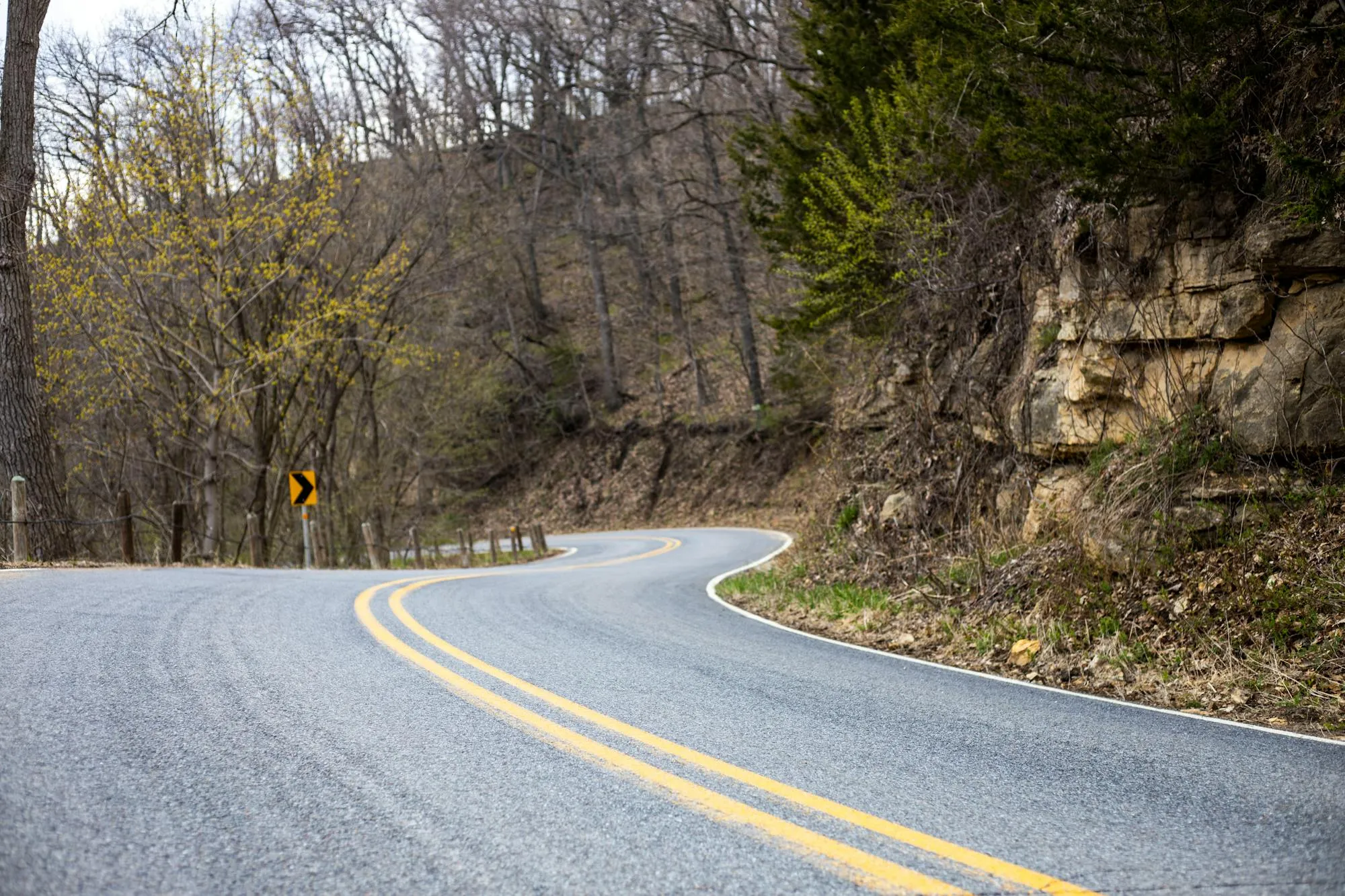
A winding two-lane asphalt road in the Appalachian mountains, photographed in dry daylight. Yellow double-center line markings guide through a series of tight left-hand curves. Dense deciduous and evergreen forest flanks both sides; a rock cut is visible on the right. The road surface and geometry suggest a technical, high-traffic riding corridor popular with motorcyclists.
Chris Flaten / Pexels

The Truth on the Street

Over the years I've kept an ear on what R1 owners actually say: the messages that land in my inbox, the talk in the paddock, and the questions riders send me directly. On the RN22 the chatter settles in one place. Riders praise how the bike communicates, and they flag what it leaves out.

The feel riders keep praising

The crossplane engine draws the most comment by far. Riders describe a linear, V-twin-like torque pulse that they feel clearly at the rear tire on corner exit, and they trust it. The chassis follows close behind: the aluminum frame and fully adjustable suspension earn steady praise for stability and feel, both mid-corner and on the brakes. Many also credit the selectable throttle maps and the slipper clutch for making the bike easy to live with in town and forgiving on hard downshifts.

The gripes that keep coming up

The loudest gripe is the missing safety net. There's no traction control and no ABS. Weight comes next. Among the heaviest in its class, the R1 feels reluctant to flick side to side at low speed. Riders mention heat off the rear cylinder under the seat in stop-and-go traffic, and several flag the thirst, with economy around 33 mpg and usable range near 137 miles (220 km).

Known issues

  • Recall: rear brake hose chafing

    brakesrareRecall

    Yamaha issued a recall for a rear brake hose that could chafe against the swingarm, potentially causing brake fluid leakage and loss of rear braking.

  • Regulator/rectifier failure

    electricscommon

    The factory regulator/rectifier is known to overheat and fail, leading to either a flat battery or, in worse cases, fried wiring at the connector.

  • Cam chain tensioner wear and rattle

    engineoccasional

    Original spring-loaded cam chain tensioners can lose tension, causing a top-end rattle at idle and on overrun. The aftermarket APE manual tensioner is a popular fix.

  • Stator failure

    electricsoccasional

    The charging stator can fail prematurely, sometimes related to or causing R/R failure; symptoms include erratic voltage and progressive electrical issues.

  • Fuel pump failure

    fuel systemoccasional

    Some owners report fuel pump degradation leading to power loss at higher rpm or stalling; usually requires pump replacement.

  • Excessive heat in seat and right thigh

    exhaustvery common

    The underseat exhaust collector and rear cylinder transfer significant heat to rider, particularly noticeable in traffic or hot weather.

  • Snatchy fuelling at low rpm in STD/A mode

    enginecommon

    Abrupt throttle response just off closed makes smooth low-speed riding difficult; many owners default to the softer B-map for town use.

The Expert Benchmark

Where this Yamaha YZF-R1 pulls ahead of — or falls behind — its rivals on the numbers, and the typical bike in its class on character.

What kind of bike this is — character vs. the class

This bike Class average

The shape of the Yamaha YZF-R1 — numbers and character vs. the average Supersport

Head-to-head: Yamaha YZF-R1 vs. its rivals

The Handshake Score

Forget spec-sheet bragging. Here's who the YZF-R1 is actually built for.

A scenic view of Angeles Crest Highway winding through rugged Southern California canyon terrain. Rocky mountainsides with golden earth tones frame the asphalt road with tight sweeping curves. Double yellow center line visible, sparse vegetation along the shoulders, clear blue sky with white clouds. Daylight, dry conditions. Iconic location for canyon-road enthusiasts.
Josh Sorenson / Pexels

Best motorcycle for Angeles Crest?

This is your kind of bike. On the Angeles Crest it flows: light steering, huge lean clearance, and a crossplane engine that hooks up cleanly out of every corner. You trade a little top-end for a lot of feel.

Made for Angeles Crest Highway · Coronado Trail / US 191 · Highway 1 / Big Sur
Best motorcycle for Laguna Seca?

Straight talk: out of the box it's set up for the road, so the soft suspension goes vague and the weight shows in transitions. Fit slicks and a stiffer setup, though, and the same forgiving chassis turns surgical.

Made for Barber Motorsports Park · WeatherTech Raceway Laguna Seca · Circuit of the Americas

Best motorcycle for Tail of the Dragon?

On the Tail of the Dragon this rewards smooth technique. It forgives a botched line, tells you what the front is doing, and flows through the technical stuff. Just know it steers a touch heavier than the sharpest bikes.

Made for Back of the Dragon · Blue Ridge Parkway · Cherohala Skyway

Alternatives to the Yamaha YZF-R1

If this one isn't quite the fit, these are the bikes worth riding back-to-back against it.

Any price note compares both bikes at the same age — the youngest age both have on the used market — against this Yamaha YZF-R1. “cheaper/pricier” is what that bike costs second-hand, not how worn it is.