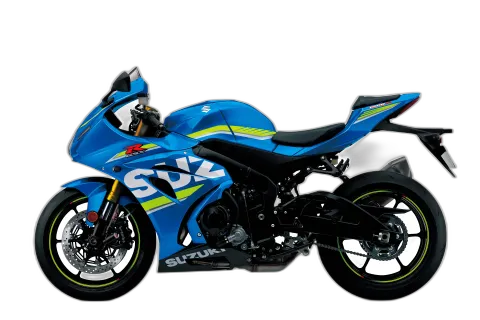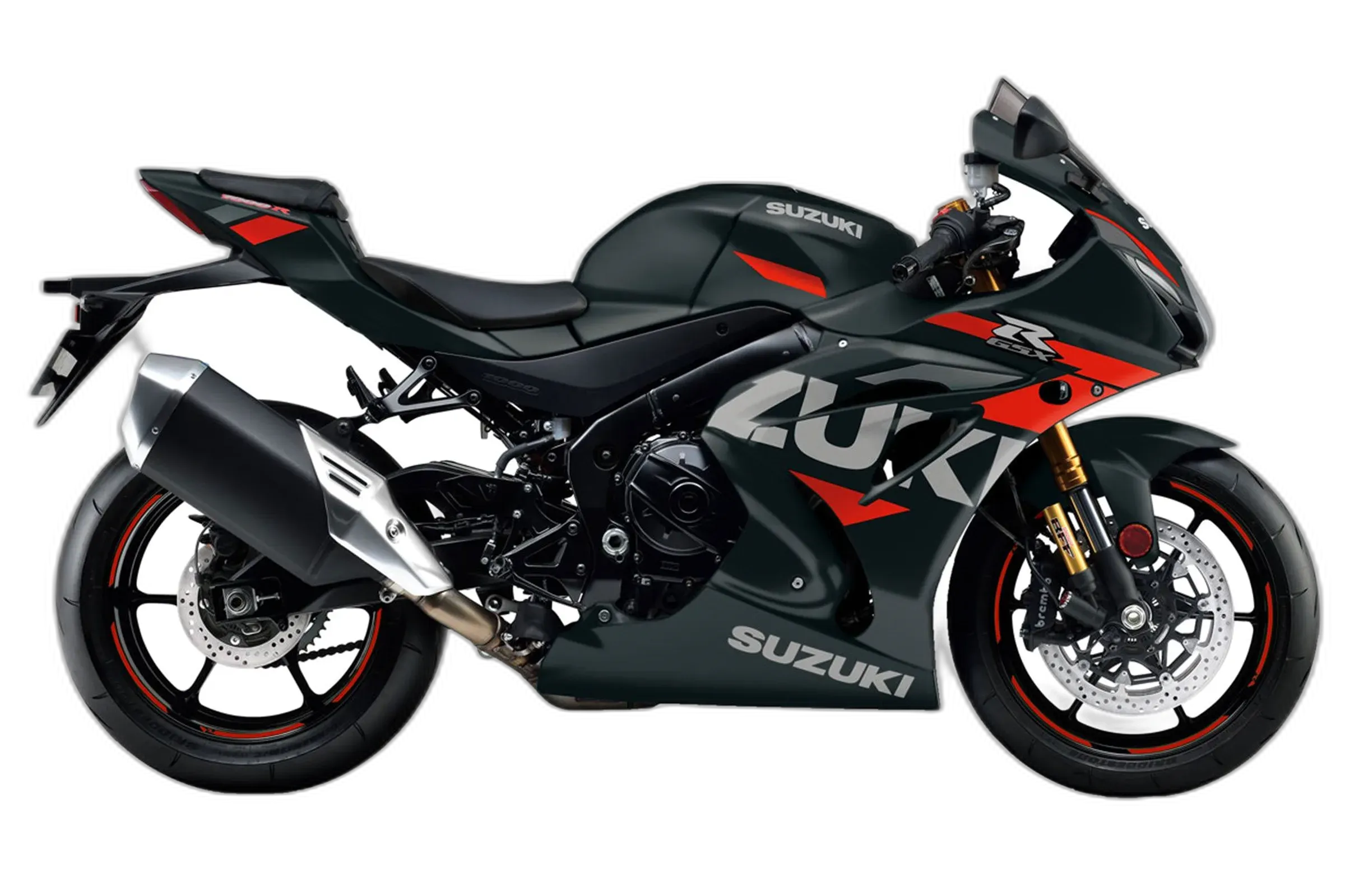
Suzuki GSX-R 1000 (K9) — Supersport
NastyNils / Suzuki press archive

2009–2016 · Supersport · Buyer's Guide

GSX-R 1000 (K9)

Analog Power You Can Use

The Machine's Character

The K9 was Suzuki's third ground-up redesign of the GSX-R1000, and it shifted the whole brief toward usability. A clean-sheet 999cc inline-four makes 185 hp at 12,000 rpm, but the real story is the midrange: the pull arrives low and stays full all the way to the top. Suzuki tightened the mass around the center, shortened the main frame, and ran a longer swingarm, so the bike changes direction with a snap the spec sheet doesn't predict. The big-piston fork was the first of its kind on a production liter bike, and it set the tone for a front end that talks to you constantly.

On the road this is the friendliest big-bore superbike of its era. The chassis stays neutral and planted, you carry real speed without fighting the bike or throwing your body around, and the accessible character never thins out as the pace climbs. It ages well, with a stable platform and deep aftermarket support, though a few known weak points deserve a pre-purchase look: the regulator/rectifier, early fuel pumps, and a camchain tensioner that rattles with miles. The honest caveat is the electronics, or rather the lack of them. There is no traction control and no ABS, so the safety net is your right hand.

Hard Numbers

Spec sheets don't ride bikes, but they set the baseline.

Show full specs & equipment Hide specs & equipment
Key specifications
Power 185 hp (136 kW) @ 12,000 rpm
Torque 86 lb-ft (117 Nm) @ 10,000 rpm
Displacement 999 cc
Engine Inline-four
Bore × stroke 74.5 × 57.3 mm
Compression 12.8:1
Cooling Liquid-cooled
Fuel system Fuel injection
Gearbox 6-speed
Final drive Chain
Frame Aluminum twin-spar
Fork Upside-down (USD)
Front brake 310 mm
Rear brake 220 mm
Front tire 120/70 ZR17
Rear tire 190/55 ZR17
Wheelbase 55.3 in (1405 mm)
Seat height 31.9 in (810 mm)
Wet weight 448 lb (203 kg)
Fuel capacity 4.6 gal (17.5 L)
Top speed 186 mph (299 km/h)
Fuel economy 36 mpg (US)

Equipment check

Chassis

  • Front Suspension Adjustable Standard
  • Rear Suspension Adjustable Standard
  • Steering Damper Standard

Drivetrain

  • Slipper Clutch Standard

Safety

  • Ride Modes Standard

The Voice of Experience

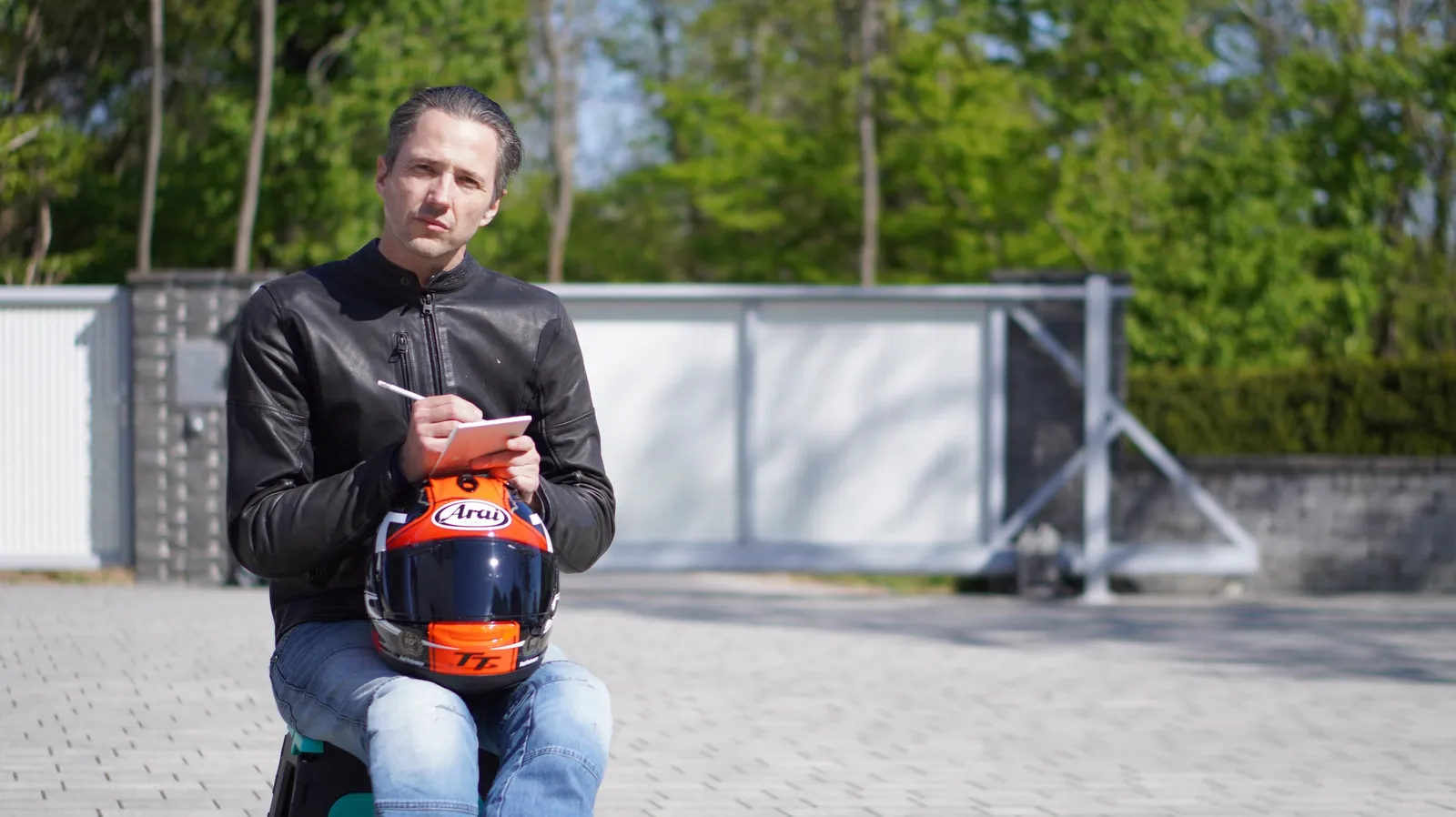
Portrait of NastyNils

The test ride

Settle into it and the ergonomics just disappear. The bars sit forward without leaning on your wrists, the controls land where your hands already are, and the three-position footpegs let you set the rider triangle before you ever leave the driveway. The cable slipper clutch is genuinely light at the lever. What stays with you is the noise and the information. Wound out, the 4-into-2-into-1 sounds mechanical and honest about how hard it's working, and the front end feeds a constant, readable stream of what the tire is doing back through the bars. Over broken pavement the chassis acknowledges the hit and settles straight back, no skip, no correction needed. At real road pace it feels light, planted, and quietly addictive, the kind of bike that talks you into the long way home.

Rated point by point — where it earns its keep

My own 0–100 score for this bike against the class, area by area — the marker on each bar is the class average.

What keeps surprising me is the electronic steering damper. The only time I notice it is when I stop to think about how unsettled the front should be getting and simply isn't. Take it through a session at a circuit with compression bumps in the acceleration zones and crests that load up mid-corner, and the chassis stays composed where most bikes start arguing with you. I ran full twenty-minute stints at a demanding track and nothing in the fork or shock went vague or faded on me, and the adjustment range is wide enough that I built a properly stiff, track-specific setup straight off the stock hardware. Turn-in is the one place I'd stop short of class-leading. It tips in cleanly and holds the apex without diving or running wide, accurate enough that I was on my line from the first corner of the morning even on slicks, but it isn't the sharpest front out there, and a more aggressive tire profile would flick it in faster without making it nervous. The bill comes due when the corners stack up fast. String a quick chicane together and the lag in the pivot costs me rhythm and lap time both. So I read it as a bike that rewards commitment over quick flicks: get it loaded and settled and it's wonderfully planted, ask it to snap side to side and you feel every pound it's carrying.

What defines this bike for me is that nothing sits between you and the machine. With no electronics filtering the signal, I feel precisely what's happening underneath, every bit of grip and movement coming through clean. At a place like Portimao that's right at the edge of sensory overload, but it's the rewarding kind: I'm not riding by watching dashboard lights flicker, I'm reading the bike directly and acting on it. The other thing that earns my respect is how the character survived the power. Suzuki wound the output up significantly and the bike didn't get any harder or more demanding to ride for it. That's the line between a genuine platform and a motorcycle that's merely fast, and this one lands firmly on the right side of it.

The brakes on this generation are a genuine step up. The monoblock calipers are lighter than what came before but bite noticeably harder, and the confidence that buys you late into a braking zone is real. I'll be blunt about the context: braking on the previous version was an embarrassment on circuit, and the gap between that and grabbing this lever late and getting hauled down with real authority is enormous. Stability under load is the other half of it. Brake hard on the way into a corner and the front stays composed, no nervous flutter, nothing going loose, the bike just holds its line. The one thing standing between good and serious is the stock pad compound. The hardware clearly promises more than the factory pads deliver on track, and a more aggressive compound turns this straight into a proper track brake package.

Roll the throttle open from anywhere and the fueling just tracks the request, no stumble and no surge, and on something with this much output that linearity is exactly what gives me the confidence to get on the gas early. The transmission backs it up: every shift is positive and precisely weighted, and the drivetrain adds no noise of its own to what the engine is telling me. On track the story is the midrange. Through long, climbing corner exits the motor delivers a full, usable pull from the middle on up, and that, not peak output, is what actually wins time. Which makes the limitation interesting. On a tight, technical circuit I watched a smaller-displacement bike log quicker laps on the same day, because with nothing managing the power on the way out of a slow corner, all that grunt starts working against you. There's also the stock fuel map, which the factory ran lean at low rpm to clear emissions and rich up top to compensate, so neither setting serves you where partial-throttle response actually matters. Get the fueling sorted, though, and the engine hangs cleanly on the gas at corner exit with nothing to manage, and that clean pickup is the difference between relishing a hard exit and tiptoeing through one.

The thing I keep coming back to with the ergonomics is how little they ask of you. From the first lap I stopped thinking about where to put myself and just rode, and the position loads the muscles you actually want working instead of fighting you. It's forward-set without tipping into aggressive, so after a full circuit session I wasn't bracing my weight through my arms or reaching for anything that didn't fall to hand. What stands out most is how universal it is. I've watched genuinely fast riders call the position a dream, and I've also watched people who'd never describe themselves as quick find it completely natural to carry real speed, which is rare on a liter sportbike. Where the package gives ground is width. Park it next to its competition and the tank and seat feel thick, and you notice it most when you're weighting the inside peg and dropping your hip into a corner. There's more bulk between your knees than the corner actually calls for, and on a bike this otherwise easy to get along with, that girth is the one ergonomic note I'd want trimmed. None of it spoils the day. It just means the comfort story is about a position almost anyone slots into, sitting on a midsection that's a touch broader than ideal when you're really hanging off it.

A few practical realities come with the territory. The exhaust sits exactly where it'll take the hit in a crash, so any drop at all means it comes off damaged; it's a question of when, not if. The lighting does its job and nothing more. And the big one: no ABS and no traction control, while every serious rival in this segment carries at least one of the two.

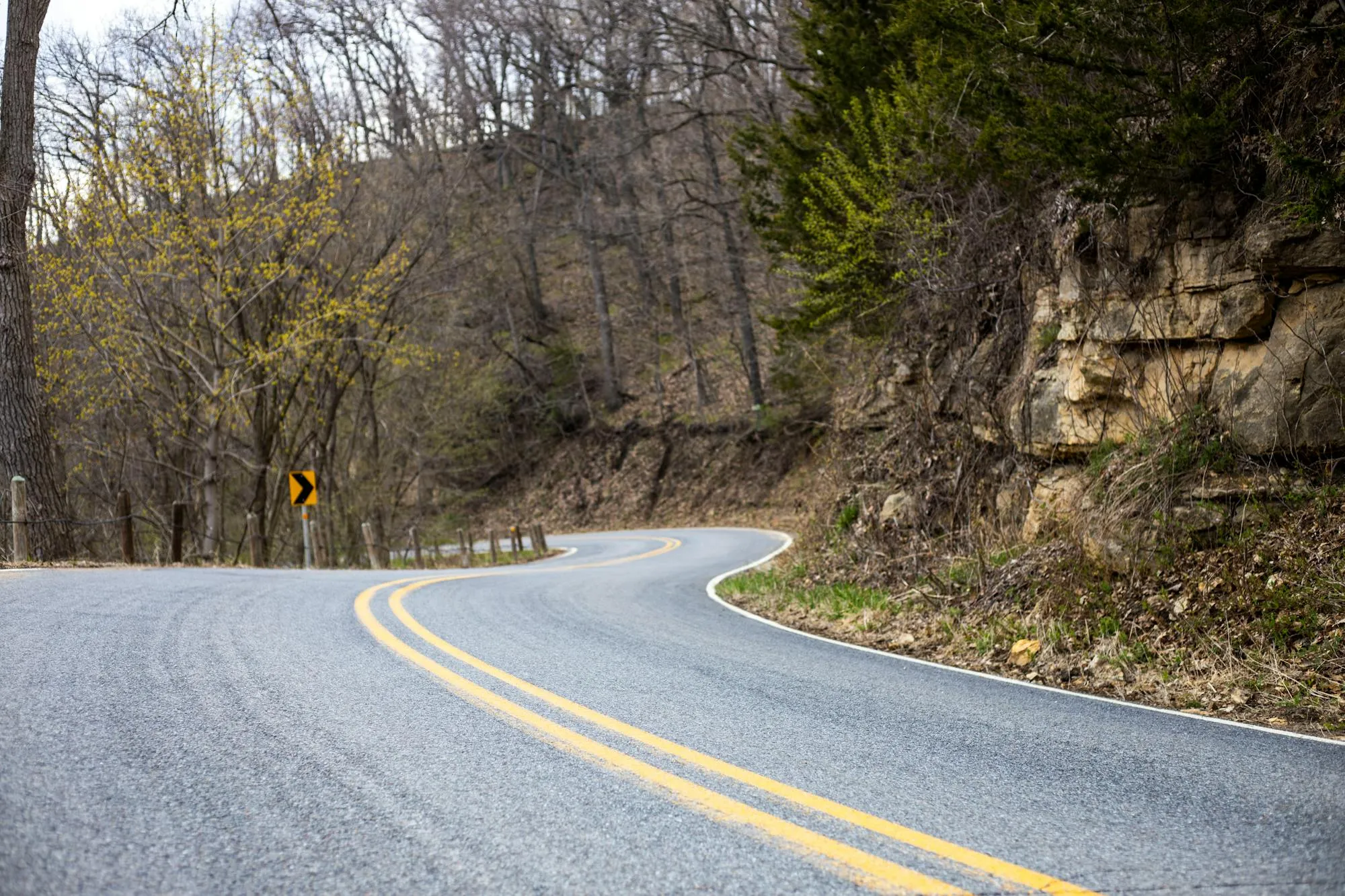
A winding two-lane asphalt road in the Appalachian mountains, photographed in dry daylight. Yellow double-center line markings guide through a series of tight left-hand curves. Dense deciduous and evergreen forest flanks both sides; a rock cut is visible on the right. The road surface and geometry suggest a technical, high-traffic riding corridor popular with motorcyclists. No motorcycle, no person visible.
Chris Flaten / Pexels

The Truth on the Street

For years I've read the YouTube comments, followed the forum threads, talked with owners in the paddock, and gone through the messages riders send me directly. On the K9-generation GSX-R1000 the chatter lands in one place: owners trust this engine to keep running, and the gripes cluster around the brakes and the heat.

The engine owners trust to keep running

Riders consistently call the bottom end one of the toughest inline-fours of its era. Owners regularly report problem-free running well past 31,000 miles (50,000 km) when they keep to the service schedule. The slipper clutch earns steady praise too: it takes the snatch out of hard downshifts and gets credit for keeping the bike track-friendly without any electronics behind it.

Where the brakes and heat draw gripes

The recurring complaint on early examples is the front brake. Riders running the original Tokico calipers describe the stopping power as adequate but short on outright bite, a shortfall Suzuki addressed later in the production run. The other common gripe, raised most by owners in hot climates, is heat off the right-side exhaust radiating onto the rider's leg in slow traffic.

Known issues

  • Regulator/rectifier failure

    electricscommon

    The voltage regulator is a known weak point across multiple Suzuki sport-bike platforms of this era; symptoms include battery undercharging, melted connector plugs at the rectifier, and erratic charging voltage. Aftermarket MOSFET-based replacements are a frequent owner upgrade.

  • Fuel pump failure (early models)

    fuel systemoccasional

    Some 2009-2011 examples reported sudden fuel pump failures, often without warning. Suzuki issued a service bulletin in some markets covering the affected units.

  • Clutch basket and judder spring wear

    drivetrainoccasional

    On hard-ridden or track-used examples the clutch basket can develop notching and the slipper-clutch judder spring can fatigue, leading to clutch shudder and inconsistent engagement.

  • Camchain tensioner rattle

    enginecommon

    A characteristic rattling noise at idle and on light throttle is common as the bike ages; usually traced to wear in the spring-loaded camchain tensioner. Owners report replacement with the updated tensioner part resolves it.

  • Low-rpm fueling stumble

    enginecommon

    Numerous owners report a snatchy throttle response and slight bog around 3,000-4,000 rpm under light load — typically resolved with an ECU reflash or aftermarket fuel-mapping device.

The Expert Benchmark

Where this Suzuki GSX-R 1000 pulls ahead of — or falls behind — its rivals on the numbers, and the typical bike in its class on character.

What kind of bike this is — character vs. the class

This bike Class average

The shape of the Suzuki GSX-R 1000 — numbers and character vs. the average Supersport

Head-to-head: Suzuki GSX-R 1000 vs. its rivals

The Handshake Score

Forget spec-sheet bragging. Here's who the GSX-R 1000 is actually built for.

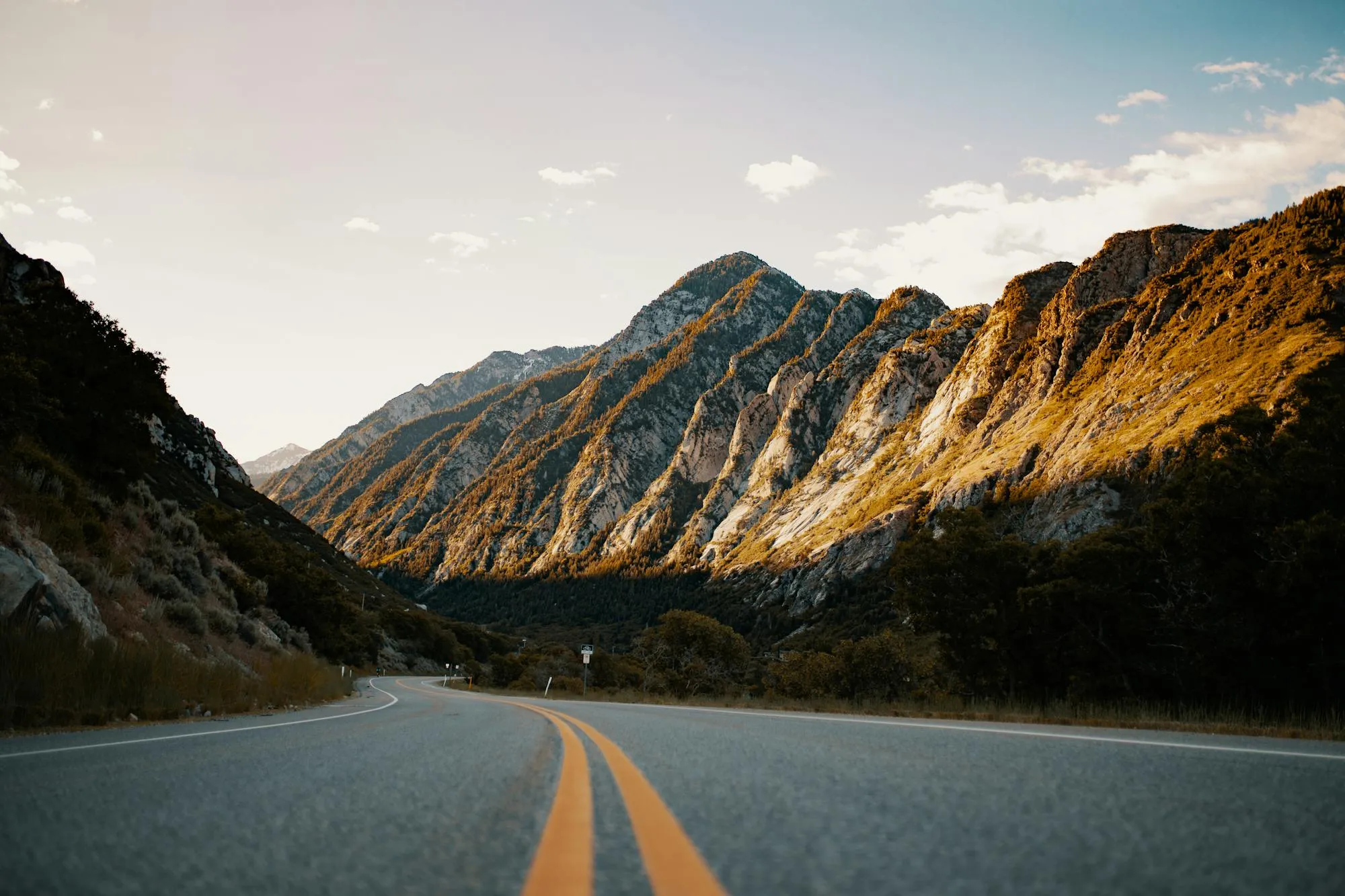
A scenic view of Angeles Crest Highway winding through rugged Southern California canyon terrain. Rocky mountainsides with golden earth tones frame the asphalt road with tight sweeping curves. Double yellow center line visible, sparse vegetation along the shoulders, clear blue sky with white clouds. Daylight, dry conditions. No motorcycle or rider visible. Iconic location for canyon-road enthusiasts.
Josh Sorenson / Pexels

Best motorcycle for Angeles Crest?

For Angeles Crest weekends this fits you well. The neutral chassis and low-end pull let you flow corner to corner fast, but with no traction control the grip management is all on you.

Made for Angeles Crest Highway · Coronado Trail / US 191 · Highway 1 / Big Sur
Best motorcycle for Laguna Seca?

A forgiving platform to build track skill on, with a fork and chassis that reward clean lines. Just know there are no electronics, and the stock brake pads and shock want upgrading before serious sessions.

Made for Barber Motorsports Park · WeatherTech Raceway Laguna Seca · Circuit of the Americas

Best motorcycle for Tail of the Dragon?

On tight, technical twisties it's quick rather than razor-sharp, and it can feel a touch wide and lazy when the corners stack up fast. Skill and a sharper tire profile bring out its best.

Made for Back of the Dragon · Blue Ridge Parkway · Cherohala Skyway

What's new versus the previous generation

If you're cross-shopping the older generation, here's what changed.

Suzuki GSX-R 1000 (K7)

Previous generation · 2007–2008

Suzuki GSX-R 1000 (K7)

The Slab That Carves

Compare to the previous model →

Alternatives to the Suzuki GSX-R 1000

If this one isn't quite the fit, these are the bikes worth riding back-to-back against it.

Any price note compares both bikes at the same age — the youngest age both have on the used market — against this Suzuki GSX-R 1000. “cheaper/pricier” is what that bike costs second-hand, not how worn it is.