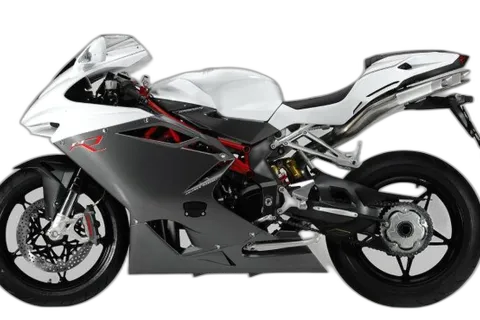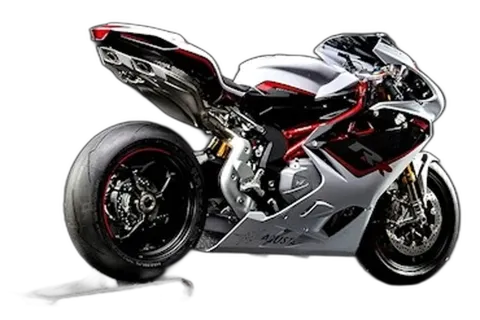


MV Agusta F4 1000 (MY2010) — Supersport

2010–2011 · Supersport · Buyer's Guide

F4 1000 (MY2010)

Italian Fire, Maximum Lean

The Machine's Character

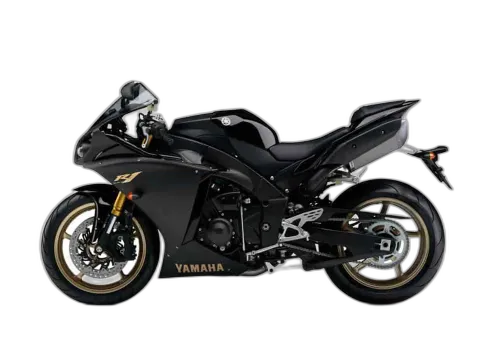
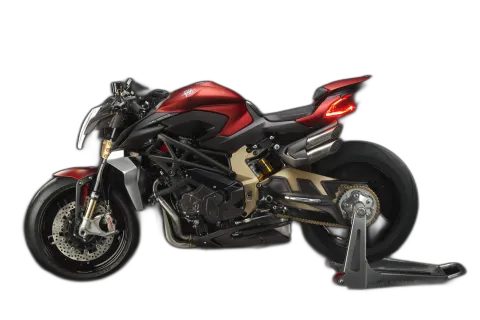
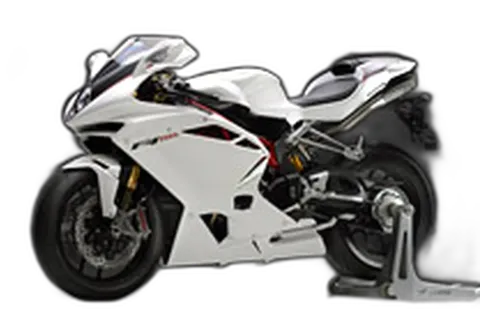
Strip away the mythology and the F4 1000 is still a serious piece of engineering. The 998 cc inline-four makes 186 hp at 12,900 rpm and 84 lb-ft at 9,500 rpm, which puts it among the genuine hard chargers of the class. Around it sits a chassis on a 56.3 in wheelbase with fully adjustable suspension at both ends, a steering damper, a slipper clutch and 320 mm front discs. Traction control and ride modes come as standard, so there is a leash on the power. What separates it from the rest is how completely it commits to being an object of desire rather than a tool.

This one asks for commitment. The seat sits 33.9 in off the ground, the riding position is uncompromising, and the bike pays back a rider who is fit, deliberate and happy to use revs. It ages the way exotic Italian machinery ages, which means the paperwork matters: the rear subframe recall and its reinforcement kit, the radiator, the cooling system in slow traffic. The honest caveat is the electronics. Traction control and ride modes are the entire story here, and there is no ABS. Buy it because you want this exact motorcycle, not because you want the sensible one.

Hard Numbers

Spec sheets don't ride bikes, but they set the baseline.

Show full specs & equipment Hide specs & equipment
Key specifications
Power 186 hp (137 kW) @ 12,900 rpm
Torque 84 lb-ft (114 Nm) @ 9,500 rpm
Displacement 998 cc
Engine Inline-four
Cooling Liquid-cooled
Gearbox 6-speed
Final drive Chain
Fork Upside-down (USD)
Front brake 320 mm
Front tire 120/70-17
Rear tire 190/50-17
Wheelbase 56.3 in (1430 mm)
Seat height 33.9 in (860 mm)
Fuel capacity 4.5 gal (17 L)
Top speed 190 mph (305 km/h)
Fuel economy 33 mpg (US)

Equipment check

Chassis

  • Front Suspension Adjustable Standard
  • Rear Suspension Adjustable Standard
  • Steering Damper Standard

Drivetrain

  • Slipper Clutch Standard

Safety

  • Traction Control Standard
  • Ride Modes Standard

The Voice of Experience

Portrait of NastyNils

The test ride

You notice the shape of it before you notice anything else, and then you sit down and the shape starts making demands. Bars are low and set well forward, so at a standstill your wrists carry you. The tank is narrow where your knees close on it, the pegs are high, and the whole cockpit pulls you into a tuck that feels natural at speed and awkward in a parking lot. The noise it makes is the reason half the owners bought it, a hard metallic wail that fills the helmet as the revs climb. The suspension is firm and expensive-feeling, so patched pavement comes through cleanly rather than harshly. Heat is the thing you feel most in stop-and-go, radiating up the right side. And with a 4.5 gal tank and 33 mpg, you plan your stops early.

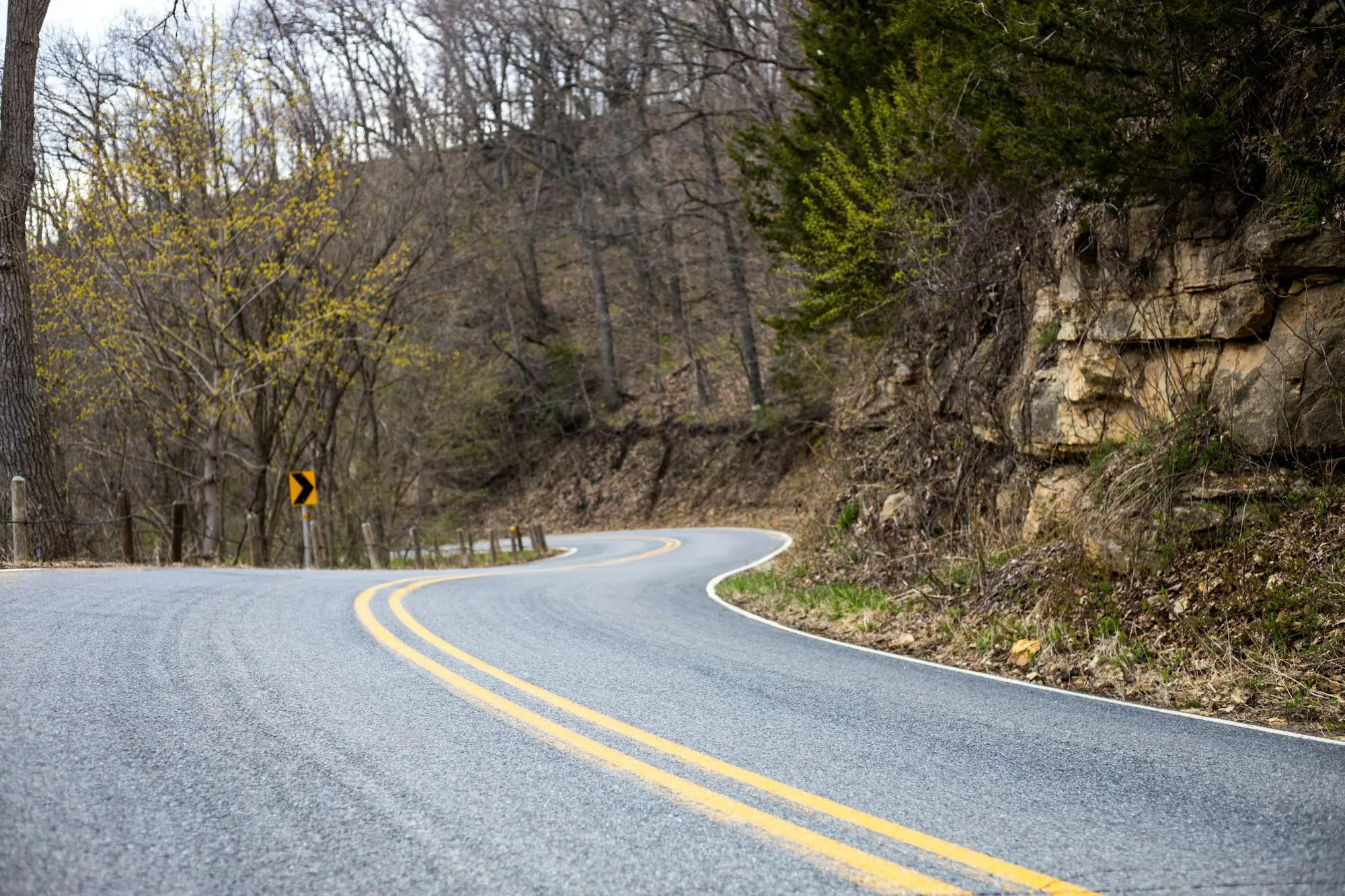
A winding two-lane asphalt road in the Appalachian mountains, photographed in dry daylight. Yellow double-center line markings guide through a series of tight left-hand curves. Dense deciduous and evergreen forest flanks both sides; a rock cut is visible on the right. The road surface and geometry suggest a technical, high-traffic riding corridor popular with motorcyclists.
Chris Flaten / Pexels

The Truth on the Street

This one comes from the riders rather than from my own laps. Years of talking with owners after events, messages that land in my inbox, and the questions people bring me at club gatherings add up to a picture of what living with this bike is like. On the F4 1000 that picture is unusually sharp. There is strong agreement about what thrills them, and equally strong agreement about what wears them down.

The parts owners never stop praising

The engine dominates the conversation. Riders describe a top end that screams and pays back a hard right hand, with an exhaust note they bring up unprompted every time. Chassis talk follows close behind: composed, accurate, and trusted enough that people call it a track bike without hesitating. Owners who came off an older F4 mention the roomier stance and the adjustable pegs. And the look of the thing still closes the deal for plenty of them.

Where the complaints pile up

Nothing gets raised more often than the ride quality. Riders call the suspension stiff to the point of punishing, with rough roads arriving at them undiluted. Heat runs a close second. In stop-and-go the engine cooks, and owners say it gets past what they are willing to tolerate. Behind those two sits low-speed behavior: a clutch they describe as heavy and quick to grab, and an engine that hunts off idle in town.

Known issues

  • Rear subframe cracking (recall)

    chassis rare Recall

    Upper fixture points of the rear subframe may crack or break, compromising stability. MV Agusta issued a recall to install a reinforcement kit.

  • Rear hub bearing failure

    drivetrain occasional

    Wheel hub bearings may fail at low mileages due to a design issue; manageable with lower pinch bolt torque or aftermarket hub replacement.

  • Radiator cracking

    cooling occasional

    The radiator is prone to cracking at the upper left corner due to a design flaw; aftermarket brackets are available.

  • Overheating in traffic

    cooling common

    The cooling system struggles at low speeds, leading to rapid temperature rise, melted fan blades, and potential radiator damage.

  • Electrical gremlins

    electrics occasional

    Weak battery, poor grounding, and charging system quirks can cause starting issues; often resolved with a quality battery and connection cleaning.

  • Belly pan melting

    bodywork occasional

    Exhaust heat can melt the bottom right side of the belly pan, even at speed; aftermarket heat shields are recommended.

The Expert Benchmark

Where this MV Agusta F4 1000 pulls ahead of — or falls behind — its rivals on the numbers, and the typical bike in its class on character.

What kind of bike this is — character vs. the class

This bike Class average

The shape of the MV Agusta F4 1000 — numbers and character vs. the average Supersport

Head-to-head: MV Agusta F4 1000 vs. its rivals

The Handshake Score

Forget spec-sheet bragging. Here's who the F4 1000 is actually built for.

A scenic view of Angeles Crest Highway winding through rugged Southern California canyon terrain. Rocky mountainsides with golden earth tones frame the asphalt road with tight sweeping curves. Double yellow center line visible, sparse vegetation along the shoulders, clear blue sky with white clouds. Daylight, dry conditions. Iconic location for canyon-road enthusiasts.
Josh Sorenson / Pexels

Best motorcycle for Angeles Crest?

On Angeles Crest this bike is exactly what you hoped for: stable, precise, and loud in the best way. The price is the crawl through LA traffic to get there, where it runs hot.

Made for Angeles Crest Highway · Coronado Trail / US 191 · Highway 1 / Big Sur
Best motorcycle for Laguna Seca?

Lean clearance and suspension quality are real track assets, and the drive off a corner is serious. Just know the aids stop at traction control and ride modes, and there is no ABS.

Made for Barber Motorsports Park · WeatherTech Raceway Laguna Seca · Circuit of the Americas

Best motorcycle for Tail of the Dragon?

It works on tight Appalachian roads if you ride it hard enough to keep air moving through the radiator. Slow sightseeing traffic on the Dragon is where it gets uncomfortable.

Made for Back of the Dragon · Blue Ridge Parkway · Cherohala Skyway

Variants, Models & Special Editions

The MV Agusta F4 1000 also comes in these variants, models and special editions. Each has its own page covering only what differs from the standard F4 1000 — equipment, electronics, specs and used price.