By NastyNils·
Motorcycle comparison · Supersport
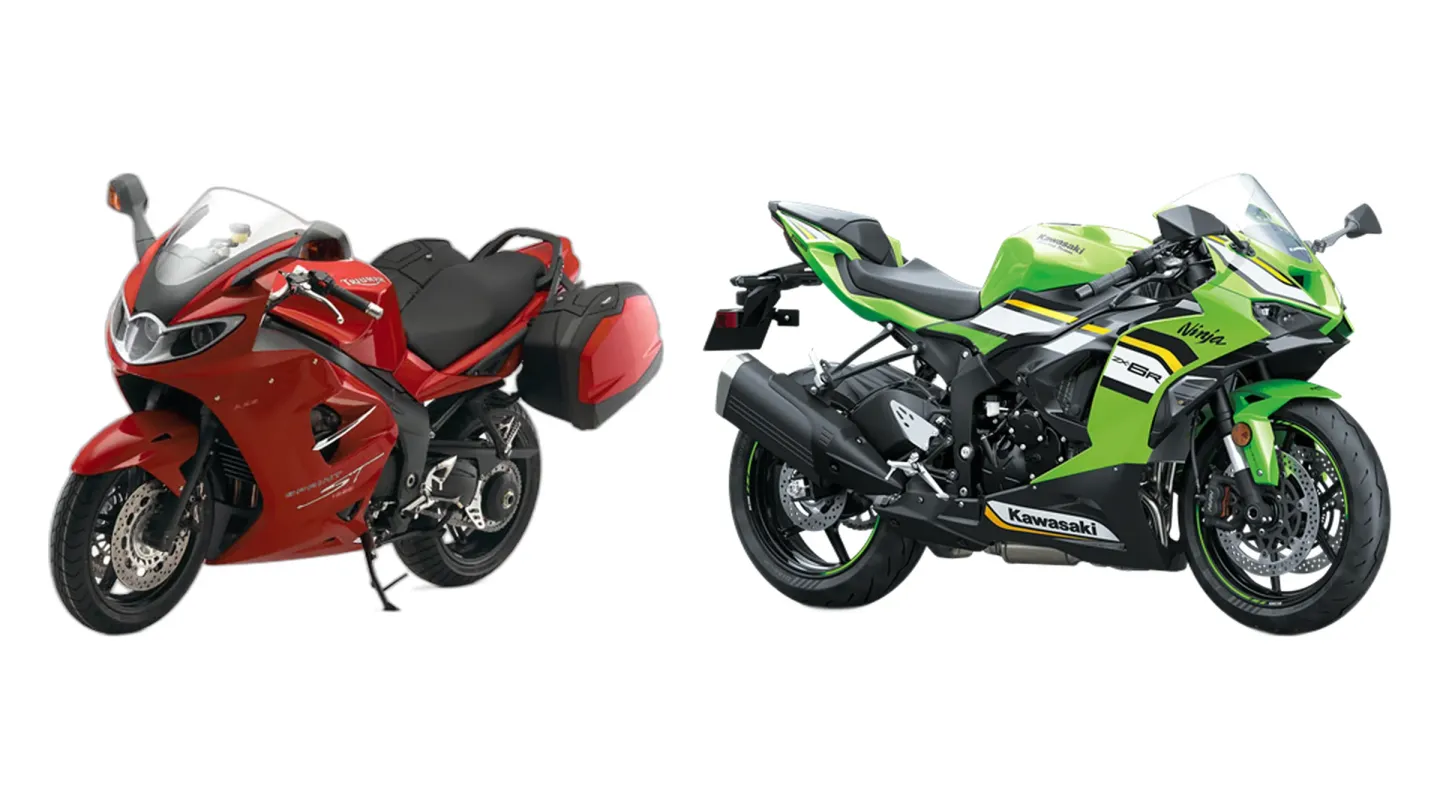
Triumph Daytona 675 (D67LC) vs Kawasaki Ninja ZX-6R (MY2007)
Triumph Daytona 675 vs Kawasaki Ninja ZX-6R: which one to buy for the riding you do.
Through a tight run of bends, the Triumph Daytona 675 holds second gear almost everywhere, and its motor doesn't protest when you ride it lazy. The Kawasaki Ninja ZX-6R snaps across each right-left without resistance.
What makes each one tick
Daytona 675
On its slim chassis, the Daytona puts the front tire wherever you aim it, and the light rear end flicks through S-sections without a fight. Corner entry stays measured: the front turns in willingly but doesn't dive at the apex. With the damping backed off, broken pavement doesn't reach the seat. Patchy exits leave the bars quiet.
Ninja ZX-6R
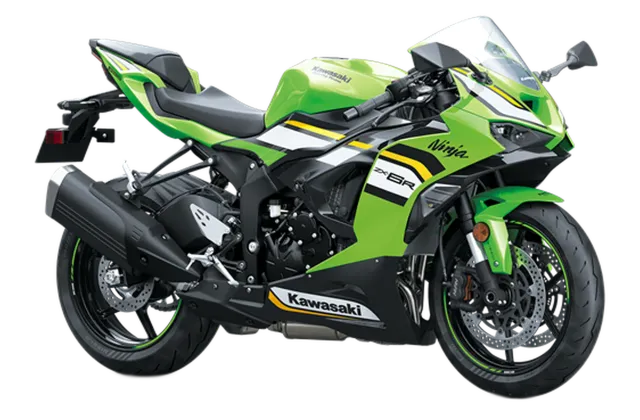
Under its more radical chassis, the ZX-6R asks nothing more of its rider than the bike it replaces. Carry over your riding style from the outgoing model and you'll find lap time immediately, without any reorientation. The weight reduction and tighter chassis geometry transform direction changes. There's no stumble or flat spot anywhere the tach needle sits. On the road or at an occasional track day, the stock rear shock doesn't get flustered by a bump. Its tank gives forearms a ledge.
Nils rode the Ninja ZX-6R in the USA in 2006, in Austria, Hungary, and the Czech Republic in 2007, and in Germany in 2017 (1000PS test reports).
The Voice of Experience

What actually separates them
- The Daytona 675 has the lower wet weight: 408 lb (185 kg) vs 421 lb (191 kg).
- The Daytona 675 makes more peak torque: 53 lb-ft (72 Nm) vs 49 lb-ft (66 Nm).
- The Daytona 675 has the larger engine: 675 cc vs 599 cc.
Which one for the way you ride
Comfortable long-distance riding
Not built for this
Big miles aren't where either one shines. You'll be watching for the next rest stop.
Look at track days, commuting, twisty roads, and running costs and you'll find two bikes doing the same job equally well. Fit is what breaks the tie.
Who each one is built for
What's good, and what you'll live with
Daytona 675
Strengths
- Goes Exactly Where You Point
- Settled On Rough Corners
- Holds Up To Hard Use
- One Gear, Most Situations
- Characterful inline-triple engine
Trade-offs
- Throttle Lag Off A Closed Corner
- Rear Moves Under Hard Braking In Lean
- Track Tires Wear Fast
- Cramped, track-focused ergonomics
Ninja ZX-6R
Strengths
- Direction changes cost nothing
- Tank you can brace against
- Fueling is faultless
- Sharper without being harder
- Lean clearance you won't find
Trade-offs
- Rear lightens under hard braking
- Top end trails the sharpest rivals
- Stock shock gives up at race pace
- Track ergonomics on a road bike
- Overly tall stock gearing
Known problems to check before you buy
Daytona 675
- Regulator/rectifier overheating and failure Recall 12V445000 The regulator/rectifier can overheat, preventing charging and causing the motorcycle to stall. An NHTSA recall (12V445000) was issued covering 2006–2009 Daytona 675 models.
- EXUP valve sticking The exhaust valve (EXUP) can seize or become noisy, triggering the check engine light and potentially affecting mid-range power. Often requires adjustment or replacement.
Ninja ZX-6R
- Early 2007 valve train failures Some early production 2007 models (built March–April) suffered from heat treatment problems in the valve train, potentially leading to dropped valves or top‑end damage. Not a formal recall but well‑documented; often resolved by warranty.
- Over‑long kickstand causing tip‑overs The stock sidestand is longer than ideal, making the bike stand too upright. On uneven ground or with a full tank, the bike can tip over, damaging bodywork.
- Poorly greased suspension linkages The suspension linkage bearings receive minimal grease from the factory, leading to premature wear and sticky action. Regular re‑greasing is recommended.
What they share
- Cooling
- Liquid-cooled
- Gearbox
- 6-speed
- Final drive
- Chain
- Fork
- Upside-down (USD)
- Front tire
- 120/70-17
- Rear tire
- 180/55-17
Where the spec sheets split
| Daytona 675 | Ninja ZX-6R | |
|---|---|---|
| Seat height | 32.5 in (825 mm) | 32.3 in (820 mm) |
| Wet weight | 408 lb (185 kg) | 421 lb (191 kg) |
| Daytona 675 | Ninja ZX-6R | |
|---|---|---|
| Displacement | 675 cc | 599 cc |
| Engine | Inline-three | Inline-four |
| Power | 123 hp (92 kW) | 125 hp (92 kW) |
| Peak power at | 12,600 rpm | 14,000 rpm |
| Torque | 53 lb-ft (72 Nm) | 49 lb-ft (66 Nm) |
| Peak torque at | 11,750 rpm | 11,700 rpm |
| Daytona 675 | Ninja ZX-6R | |
|---|---|---|
| Fuel capacity | 4.6 US gal (17.5 L) | 4.5 US gal (17 L) |
| Daytona 675 | Ninja ZX-6R | |
|---|---|---|
| Front brake | 308 mm | 300 mm |
What comes fitted, what costs extra
| Daytona 675 | Ninja ZX-6R | |
|---|---|---|
| Slipper Clutch | Not offered | Standard |
Head to head, area by area
Both bikes on the same scale, one area at a time.