
·

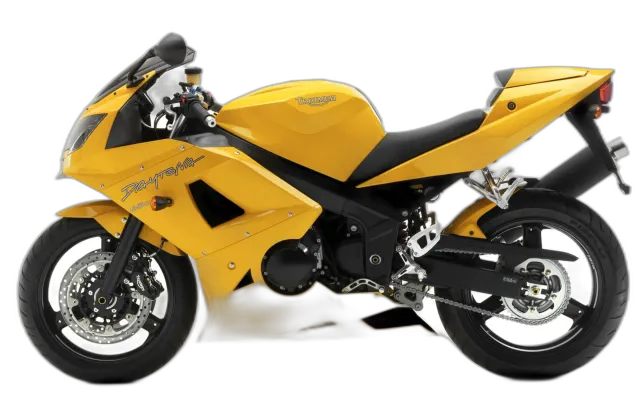
Triumph Daytona 675 (D67LC) — Supersport
NastyNils / Triumph Press

2006–2008 · Supersport · Buyer's Guide

Daytona 675 (D67LC)

Triple Character, Track Manners

The Machine's Character

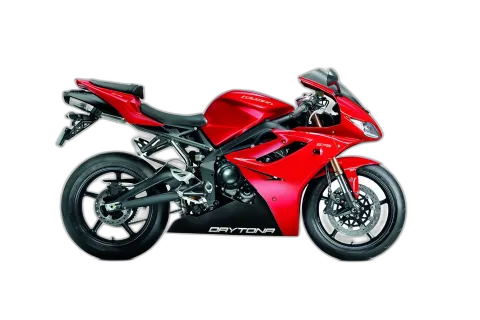
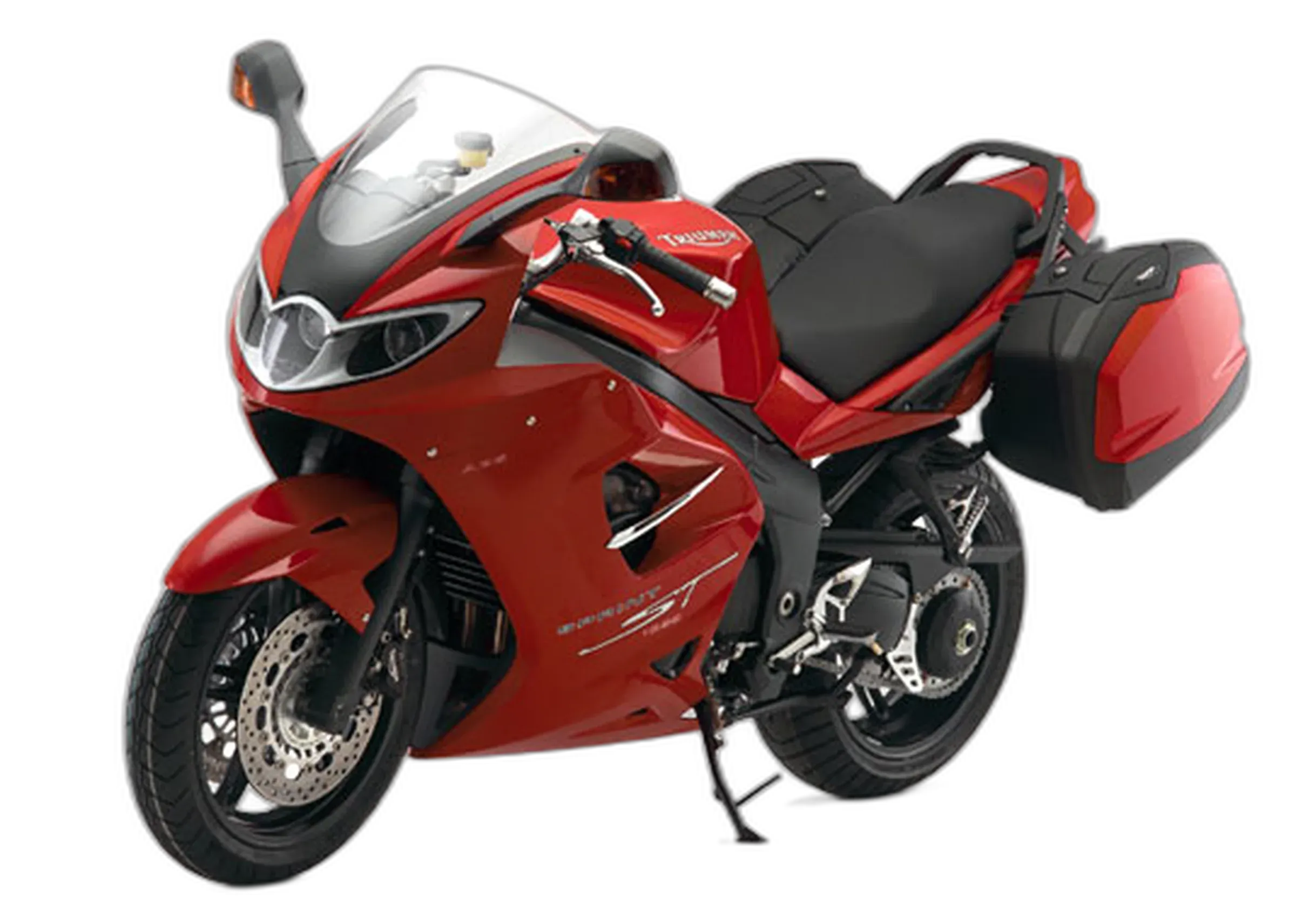
Triumph built its supersport reputation on this one. Instead of chasing the inline-fours with another four, the Daytona 675 answers with a 675 cc inline-three making 123 hp, and that choice shapes everything about how it goes down a road. The triple pulls hard through the low and mid-range where you actually live, then keeps climbing to a real top end. An aluminum perimeter frame and a fully adjustable upside-down fork give it the precision the class demands. What it doesn't carry is a modern electronics suite. No ride modes, no traction control, no slipper clutch. This is rider and machine, nothing filtering in between.

On the road that stripped-back character is the point. The 408 lb (185 kg) chassis stays narrow and honest, and one gear covers most of a good backroad without complaint. It fits taller riders better than the numbers suggest. Buy with your eyes open, though. Turn-in is willing rather than razor-sharp, throttle pickup off a closed corner sits behind the sharpest bikes in the class, and the factory track tires grip hard but wear fast. Watch the known trouble spots too: a regulator/rectifier recall, the EXUP exhaust valve sticking, and oil weeping from engine bolts. Sort those and it ages into a genuinely rewarding machine.

Hard Numbers

Spec sheets don't ride bikes, but they set the baseline.

Show full specs & equipment Hide specs & equipment
Key specifications
Power 123 hp (92 kW) @ 12,600 rpm
Torque 53 lb-ft (72 Nm) @ 11,750 rpm
Displacement 675 cc
Engine Inline-three
Cooling Liquid-cooled
Gearbox 6-speed
Final drive Chain
Fork Upside-down (USD)
Front brake 308 mm
Front tire 120/70 ZR 17
Rear tire 180/55 ZR 17
Wheelbase 54.9 in (1395 mm)
Seat height 32.5 in (825 mm)
Wet weight 408 lb (185 kg)
Fuel capacity 4.6 gal (17.5 L)

Equipment check

Chassis

  • Front Suspension Adjustable Standard
  • Rear Suspension Adjustable Standard

The Voice of Experience

Portrait of NastyNils

The test ride

Swing a leg over and the first thing you notice is how slim it is between your knees. The triple has its own voice, a hard induction wail with none of the flat drone a four gives you, and it settles into a rhythm that makes fast feel unhurried. Back the damping off for the street and the ride quality transforms. Through a city approach and up into the hills, the chassis soaks up broken asphalt without punching hard shots into your wrists, and the riding position holds through a full day out. Push into a set of mountain switchbacks and it composes itself completely. Hard drive out of a bend, the front skimming light over a blind crest, and an hour of that leaves you relaxed rather than wrung out. Not every bike in this class gives you that.

Rated point by point — where it earns its keep

My own 0–100 score for this bike against the class, area by area — the marker on each bar is the class average.

What the Daytona gives you is command over placement. It's slim between the knees and light at the rear, so flipping it from one side to the other through a run of quick esses takes almost nothing, and it stays on whatever line you choose without any argument. A poor surface doesn't change that. Bumps partway through a bend and crumbling tarmac at the road's edge don't shove it off course or make the drive out feel busy. The one honest caveat is at entry. Coming off a bike that dives for the apex the moment you ask, the Daytona feels more deliberate getting there. It still turns readily, but that first commitment is smooth rather than urgent. For most riders on most roads, that steadiness buys more speed than a sharper stab into the corner ever would.

Give it a genuinely difficult mountain route and everything the Daytona has comes out. Drive hard off a corner, feel the nose go weightless as the road humps up ahead of the next turn, all of it over torn-up surface, and the bike stays completely gathered underneath you. The part that sold me was doing this surrounded by other riders. A full group of us pressed on at that clip across bad tarmac and not one scare passed among us. Very few pointed sportbikes earn that kind of confidence this quickly.

This inline-three is what makes the bike worth owning. It carries real thrust from low revs and through the midrange, the part of the powerband a road keeps you in nearly all the time, and only at the very top do the fours pull level with it. Hold it wide open and it keeps building further than the numbers promise, past where the previous engine ran out of breath, and it eases off softly instead of dropping off a shelf. In ordinary riding that flexibility means you can be lazy with the gearbox and the motor won't complain about being asked to lug up from low speed. The single flaw shows up on the transition back to power. Shut the throttle for a corner, pick it up again, and there's a small hesitation at the very moment precision counts. Set against how forgiving the engine is otherwise, it's easy to forgive too.

One quirk stops this from being spotless. There's no mechanical slipper clutch fitted. To blunt the engine braking, Triumph holds the throttle bodies open a fraction under hard deceleration. Slow it in a straight line and everything stays clean. Brake hard with the bike laid over, though, and the rear starts to weave, a light and repeating motion that never escalates into anything worrying. On a chassis this settled everywhere else, that faint wobble is the single thing that draws attention.

Durability never became a question for me. Pushed hard and rotated lap after lap over a rough circuit for hours on end, the brakes and the suspension never went soft or lost their bite before we finished. The one asterisk is the tires. The factory compound is a true track tire, so the grip is superb, but it pays for that grip in longevity and wears through far faster than an everyday sport tire. Plan on fresh rubber well before you'd normally shop for it.

Comfort really comes down to the suspension's range. Wind the damping down from where you'd set it for hot laps and the whole bike loosens up; what was firm turns pliant enough for daily roads. Riding from a town start out toward higher ground, it dealt with the ruts and ridges without passing anything harsh up to me, and the ergonomics stayed livable right through to evening. Machines this focused rarely stretch this far outside their element, and this one manages it.

There's one small ergonomic gap worth naming. A few rivals let you adjust the instrument functions from a bar-mounted button as you ride. The Daytona offers no such shortcut; changing a setting means coming to a stop first. It reads as a minor inconvenience, not a real shortcoming, and on a bike this focused on pace I seldom wished for it. Riders used to fine-tuning things on the move will register the omission.

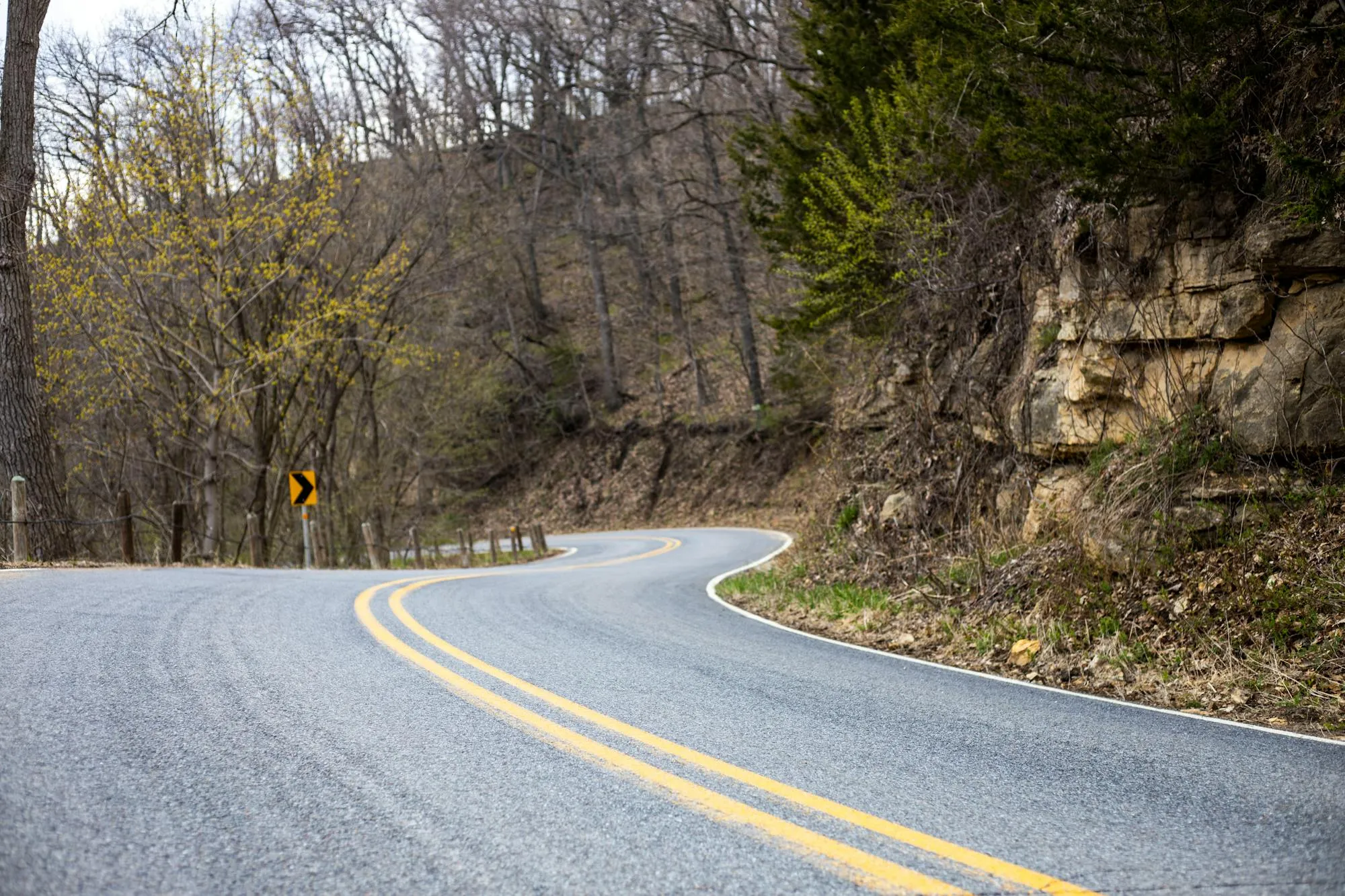
A winding two-lane asphalt road in the Appalachian mountains, photographed in dry daylight. Yellow double-center line markings guide through a series of tight left-hand curves. Dense deciduous and evergreen forest flanks both sides; a rock cut is visible on the right. The road surface and geometry suggest a technical, high-traffic riding corridor popular with motorcyclists.
Chris Flaten / Pexels

The Truth on the Street

Known issues

  • Regulator/rectifier overheating and failure

    electricscommonRecall

    The regulator/rectifier can overheat, preventing charging and causing the motorcycle to stall. An NHTSA recall (12V445000) was issued covering 2006–2009 Daytona 675 models.

  • EXUP valve sticking

    exhaustoccasional

    The exhaust valve (EXUP) can seize or become noisy, triggering the check engine light and potentially affecting mid-range power. Often requires adjustment or replacement.

  • Oil leaks from engine bolts

    engineoccasional

    Some engines develop oil leaks from loose/broken bolts on the crankcase or covers after a few thousand miles, requiring re-torquing or thread locking.

The Expert Benchmark

Where this Triumph Daytona 675 pulls ahead of — or falls behind — its rivals on the numbers, and the typical bike in its class on character.

What kind of bike this is — character vs. the class

This bike Class average

The shape of the Triumph Daytona 675 — numbers and character vs. the average Supersport

Head-to-head: Triumph Daytona 675 vs. its rivals

The Handshake Score

Forget spec-sheet bragging. Here's who the Daytona 675 is actually built for.

A scenic view of Angeles Crest Highway winding through rugged Southern California canyon terrain. Rocky mountainsides with golden earth tones frame the asphalt road with tight sweeping curves. Double yellow center line visible, sparse vegetation along the shoulders, clear blue sky with white clouds. Daylight, dry conditions. Iconic location for canyon-road enthusiasts.
Josh Sorenson / Pexels

Best motorcycle for Angeles Crest?

For Angeles Crest weekends this is a natural. Its low-end pull and precise chassis let you carry real pace and hit your lines without wrestling the bike, and it stays composed on rough canyon asphalt.

Made for Angeles Crest Highway · Coronado Trail / US 191 · Highway 1 / Big Sur
Best motorcycle for Tail of the Dragon?

On the Dragon and Cherohala this bike is in its element. Light, narrow, and settled over broken pavement, it's about skill and precision more than raw speed, exactly what these roads reward.

Made for Back of the Dragon · Blue Ridge Parkway · Cherohala Skyway

Best motorcycle for Laguna Seca?

It rewards a rider chasing apexes and holds up to sustained hard laps. Just know the electronics are basic, so track discipline is on you, not on rider aids.

Made for Barber Motorsports Park · WeatherTech Raceway Laguna Seca · Circuit of the Americas

Alternatives to the Triumph Daytona 675

If this one isn't quite the fit, these are the bikes worth riding back-to-back against it.

Any price note compares both bikes at the same age — the youngest age both have on the used market — against this Triumph Daytona 675. “cheaper/pricier” is what that bike costs second-hand, not how worn it is.