
·

Triumph Daytona 675 (D67LC2) — Supersport

2009–2012 · Supersport · Buyer's Guide

Daytona 675 (D67LC2)

The Triple That Carves Clean

The Machine's Character

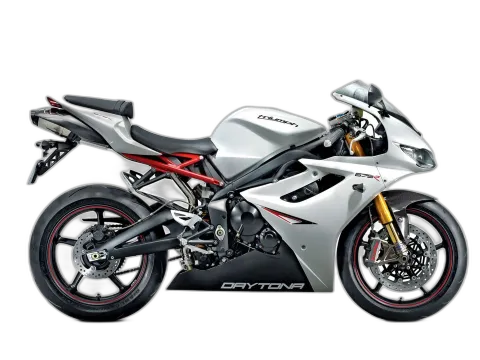
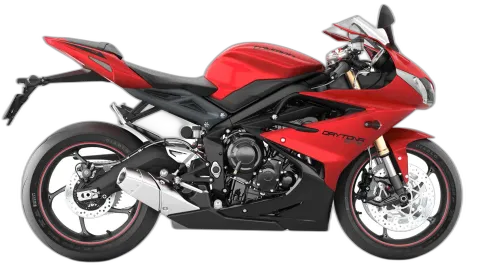
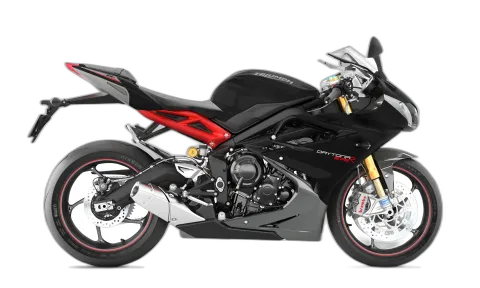
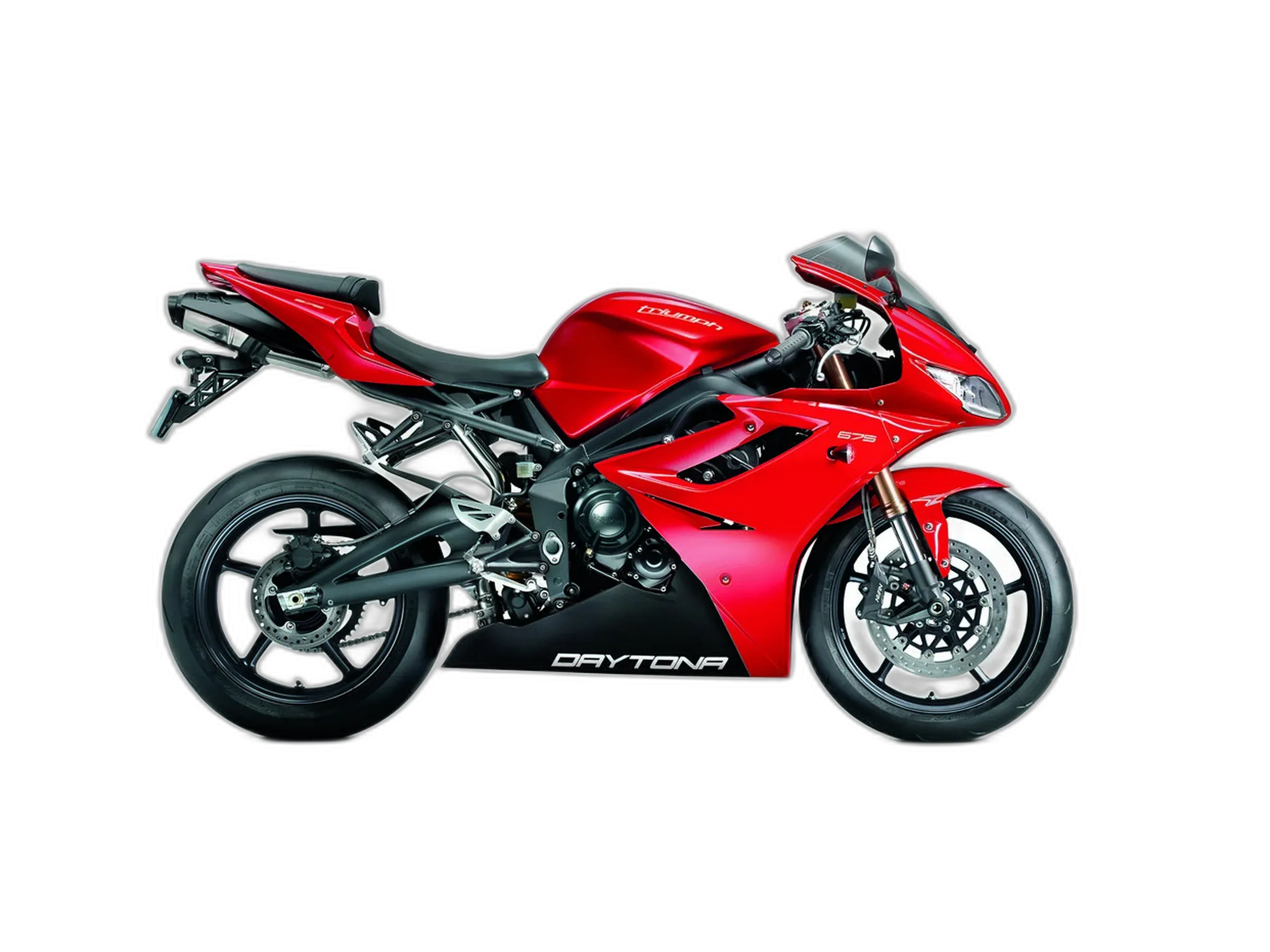
The 675 cc inline-three is the whole point. It gives you flat, usable torque down low plus a top-end that keeps pulling to 126 hp at 12,600 rpm, an engine with real personality rather than just a peak figure. The chassis is a light aluminum twin-spar with fully adjustable Kayaba suspension and an upside-down fork. At 417 lb wet it turns quickly and holds its line without argument. Lean clearance is effectively limitless. This is a supersport built as much around character as around lap time.

On the road it's precise and confidence-inspiring, and the triple's tractability means you don't have to wring its neck to go fast, which keeps fatigue down on a long canyon day. Ownership does take attention. The oil-to-water heat exchanger can fail internally and mix coolant with oil, the EXUP valve can seize near 15,000 miles, engine casing bolts can back out early, and sensor failures are a known cost. There's no ABS or traction control, so the electronics won't cover a mistake. Buy a well-kept example and it rewards a rider with real skill.

Hard Numbers

Spec sheets don't ride bikes, but they set the baseline.

Show full specs & equipment Hide specs & equipment
Key specifications
Power 126 hp (94 kW) @ 12,600 rpm
Torque 54 lb-ft (73 Nm)
Displacement 675 cc
Engine Inline-three
Cooling Liquid-cooled
Gearbox 6-speed
Final drive Chain
Fork Upside-down (USD)
Front brake 308 mm
Front tire 120/70-17
Rear tire 180/55-17
Wheelbase 54.9 in (1395 mm)
Seat height 32.3 in (820 mm)
Wet weight 417 lb (189 kg)
Fuel capacity 4.6 gal (17.4 L)
Top speed 156 mph (251 km/h)
Fuel economy 32 mpg (US)

Equipment check

Chassis

  • Front Suspension Adjustable Standard
  • Rear Suspension Adjustable Standard
  • Steering Damper Standard

The Voice of Experience

Portrait of NastyNils

The test ride

Swing a leg over and the ergonomics tell you straight away this is a committed supersport. The clip-ons sit low, the pegs sit high, and the tank narrows so your knees tuck in tight. At 32.3 inches the seat isn't punishing, but your wrists carry weight at a stoplight. Fire it up and the triple delivers a hard, metallic intake howl; that's the sound you carry home. There's a fine, busy buzz through the bars up in the revs, more texture than nuisance. What stays with you is the feedback. The front end talks constantly, so you always know what the 120-section tire is doing, and at speed it sits rock-steady beneath you. Push the pace on a good road and the bike feels alert, planted, and completely honest about the grip on offer.

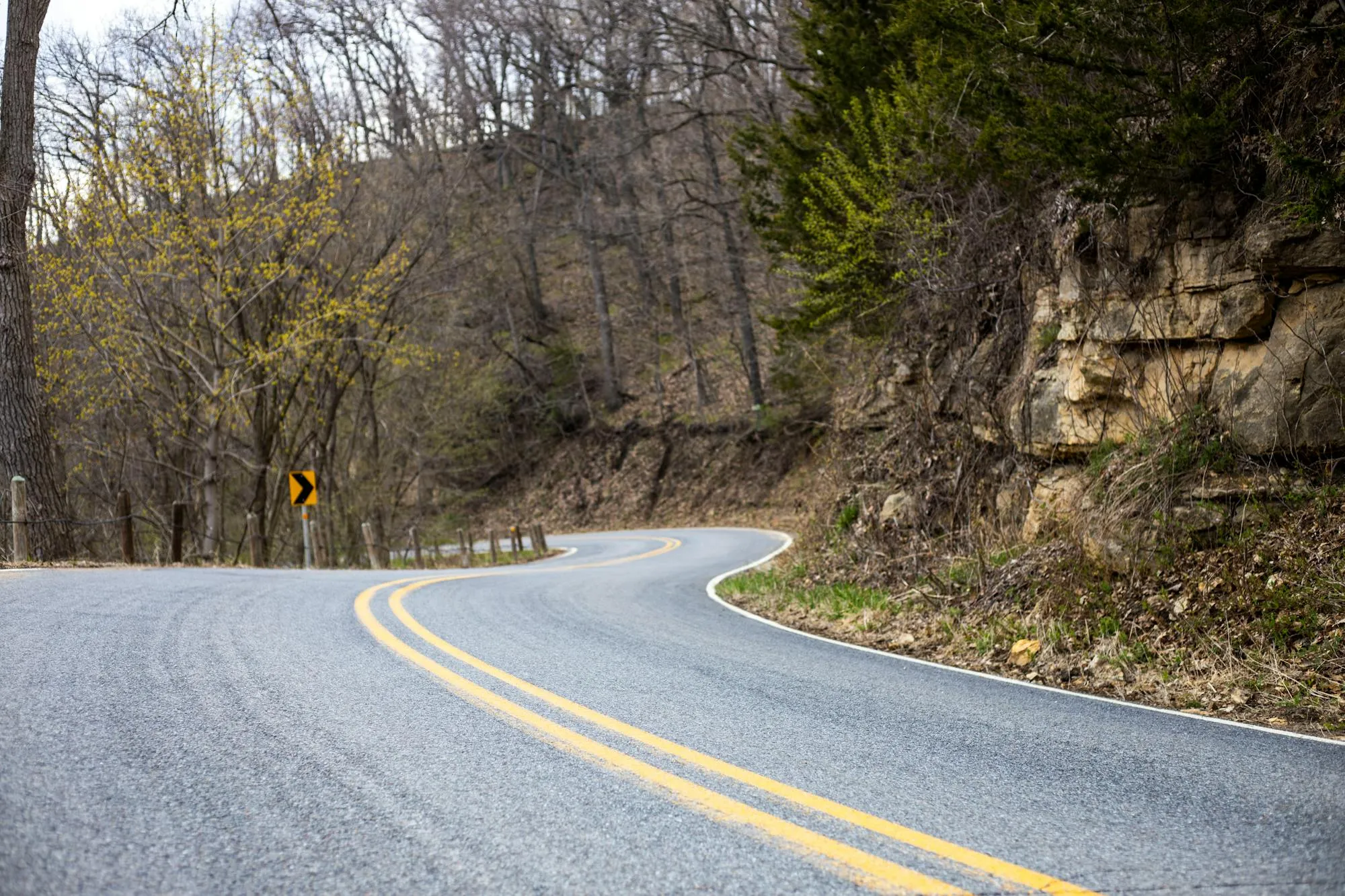
A winding two-lane asphalt road in the Appalachian mountains, photographed in dry daylight. Yellow double-center line markings guide through a series of tight left-hand curves. Dense deciduous and evergreen forest flanks both sides; a rock cut is visible on the right. The road surface and geometry suggest a technical, high-traffic riding corridor popular with motorcyclists.
Chris Flaten / Pexels

The Truth on the Street

This section gathers what riders themselves tell me, built up over years of owner messages, questions sent my way, and the notes that get compared after a day at the track. Across all that chatter the Daytona 675 draws a remarkably consistent response.

The parts riders keep praising

The 675cc triple draws the loudest approval. Owners talk about its flexible mid-range and a voice, richer still with an aftermarket pipe, that they count among the finest in motorcycling. The chassis earns nearly as much love for being light, narrow, and quick to change direction while still feeding back plenty of confidence. A smaller but committed group singles out the suspension, praising how finely the compression damping can be dialed in at both ends to suit different roads and conditions.

What wears on riders

Two complaints recur. The committed riding position, with low clip-ons and high pegs, starts to punish once a street ride runs long. And ridden hard, the bike goes through fuel faster than the class norm, hovering around 32 mpg US (7.2 L/100km).

Known issues

  • Indicator stem recall (NHTSA 13V-104)

    electricsoccasionalRecall

    Affected 2012-2013 Daytona 675 models may have defective indicator stems that require replacement. This is a safety recall due to potential loss of turn signal functionality.

  • Oil/water heat exchanger failure

    coolingoccasional

    The oil-to-water heat exchanger can internally fail, allowing coolant and oil to mix. This can lead to engine damage if not caught early. Aftermarket delete kits are popular.

  • Regulator/rectifier failure

    electricsoccasionalRecall

    The R/R can overheat, leading to charging system failure and potentially leaving the rider stranded. Covered by NHTSA recall campaign 12V445000 for 2006-2009 models.

  • EXUP valve seizing

    exhaustcommon

    The exhaust valve in the collector box can seize due to corrosion or carbon buildup, triggering the check engine light. Often occurs around 15,000 miles; can be freed by adjustment or removed.

  • Engine bolts loosening

    engineoccasional

    Some owners report that engine casing bolts can back out over the first 2,500 miles, potentially causing oil leaks. Application of thread locker is a common preventative measure.

  • Sensor failures

    electricsoccasional

    Various sensors (e.g., cam sensor, crank sensor) are known to fail, leading to expensive replacement costs and warning codes on the dashboard. This issue has been noted as a main reliability concern.

The Expert Benchmark

Where this Triumph Daytona 675 pulls ahead of — or falls behind — its rivals on the numbers, and the typical bike in its class on character.

What kind of bike this is — character vs. the class

This bike Class average

The shape of the Triumph Daytona 675 — numbers and character vs. the average Supersport

Head-to-head: Triumph Daytona 675 vs. its rivals

The Handshake Score

Forget spec-sheet bragging. Here's who the Daytona 675 is actually built for.

A scenic view of Angeles Crest Highway winding through rugged Southern California canyon terrain. Rocky mountainsides with golden earth tones frame the asphalt road with tight sweeping curves. Double yellow center line visible, sparse vegetation along the shoulders, clear blue sky with white clouds. Daylight, dry conditions. Iconic location for canyon-road enthusiasts.
Josh Sorenson / Pexels

Best motorcycle for Angeles Crest?

This is your canyon weapon. Light, precise, and endlessly leanable, it carves the Crest with a front end that never stops talking. Just know you ride without ABS, so the skill is on you.

Made for Angeles Crest Highway · Coronado Trail / US 191 · Highway 1 / Big Sur
Best motorcycle for Tail of the Dragon?

Built for the Dragon's tight, technical work. It steers quick and the low-end pull means you don't have to scream it between corners. Skill over speed, exactly your game.

Made for Back of the Dragon · Blue Ridge Parkway · Cherohala Skyway

Best motorcycle for Laguna Seca?

On a trackday it rewards precision over horsepower: stable, quick to the apex, with limitless lean clearance. Sort the suspension and trust the tires, because no electronics will save you.

Made for Barber Motorsports Park · WeatherTech Raceway Laguna Seca · Circuit of the Americas

What's new versus the previous generation

If you're cross-shopping the older generation, here's what changed.

Triumph Daytona 675 (D67LC)

Previous generation · 2006–2008

Triumph Daytona 675 (D67LC)

Triple Character, Track Manners

Compare to the previous model →

Alternatives to the Triumph Daytona 675

If this one isn't quite the fit, these are the bikes worth riding back-to-back against it.

Any price note compares both bikes at the same age — the youngest age both have on the used market — against this Triumph Daytona 675. “cheaper/pricier” is what that bike costs second-hand, not how worn it is.