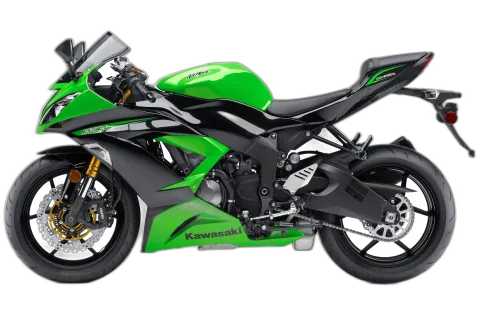
Kawasaki Ninja ZX-6R (ZX600R) — Supersport
Kawasaki Press

2009–2012 · Supersport · Buyer's Guide

Ninja ZX-6R (ZX600R)

Wide Open From Corner Entry

The Machine's Character

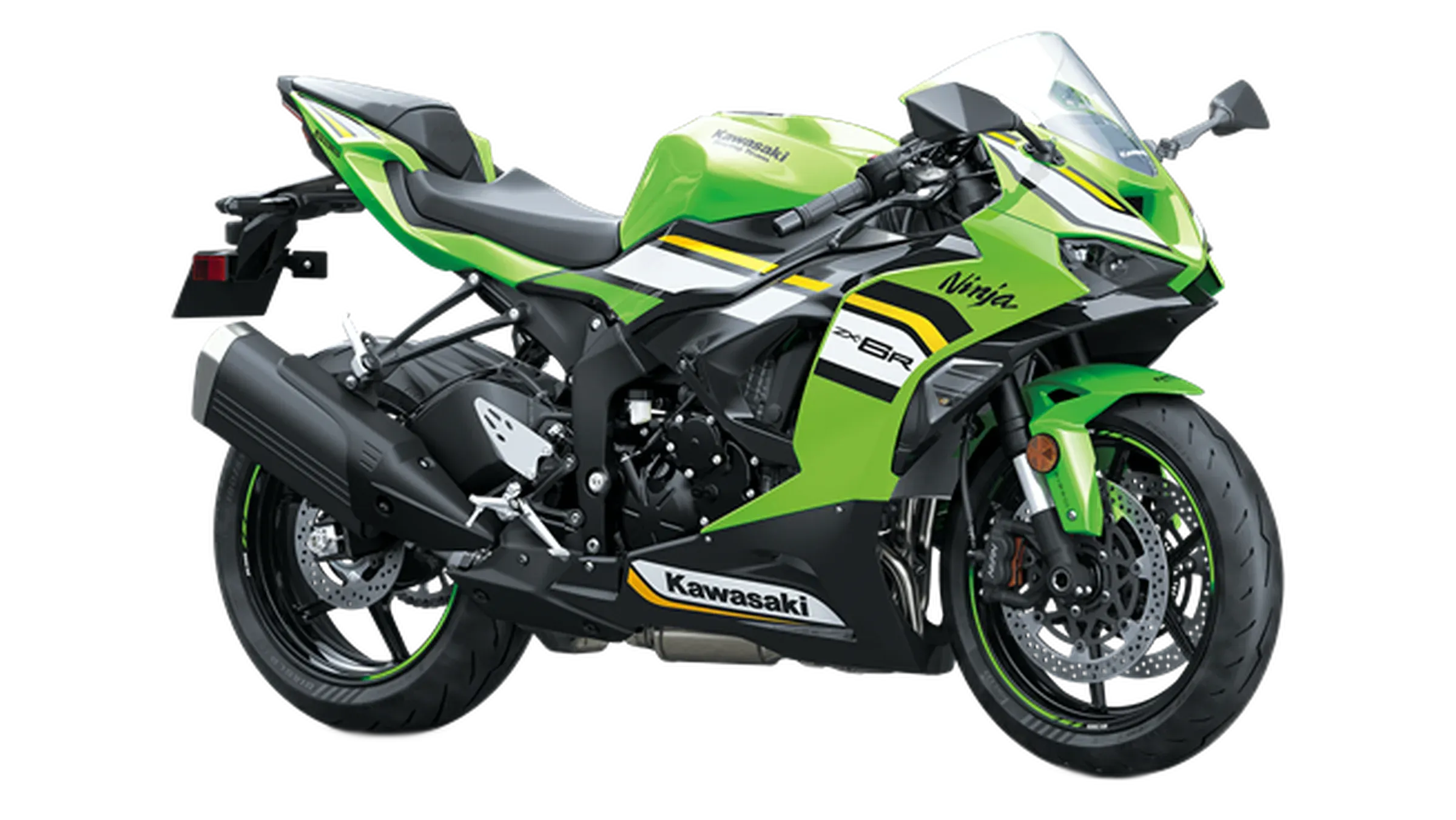
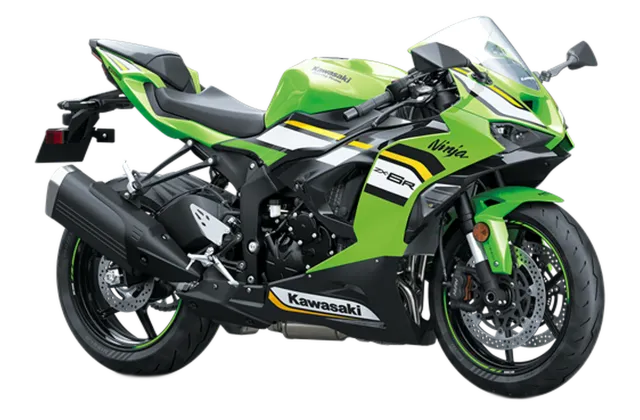
The 2009 to 2012 ZX-6R is built around a 599 cc inline-four making 128 hp at 14,000 rpm and 49 lb-ft, and it is the delivery, not the peak, that sets it apart in this class. There is real mid-range underneath, so you make progress without living permanently against the rev limiter. The chassis matches it: a Showa big piston fork with adjustment at both ends, a steering damper and a slipper clutch as standard, 421 lb wet on a 55.1 in wheelbase. Kawasaki put the money into hardware that works instead of a spec sheet full of screens.

That makes it one of the more usable supersports of its era. It carries speed with a settled front end, it stays honest when you push, and the enormous aftermarket behind it means keeping one sharp is cheap and simple years down the line. It suits an experienced rider who wants feedback and lean angle rather than a safety net. The honest caveat: this bike has no ABS, no traction control and no IMU. Cold tires, wet pavement and greasy canyon exits are entirely your problem, and any used example needs its charging system recall confirmed as done.

Hard Numbers

Spec sheets don't ride bikes, but they set the baseline.

Show full specs & equipment Hide specs & equipment
Key specifications
Power 128 hp (94 kW) @ 14,000 rpm
Torque 49 lb-ft (67 Nm)
Displacement 599 cc
Engine Inline-four
Cooling Liquid-cooled
Gearbox 6-speed
Final drive Chain
Fork Telescopic
Front brake 300 mm
Front tire 120/70-17
Rear tire 180/55-17
Wheelbase 55.1 in (1400 mm)
Seat height 32.1 in (815 mm)
Wet weight 421 lb (191 kg)
Fuel capacity 4.5 gal (17 L)

Equipment check

Chassis

  • Front Suspension Adjustable Standard
  • Rear Suspension Adjustable Standard
  • Steering Damper Standard

Drivetrain

  • Slipper Clutch Standard

The Voice of Experience

Portrait of NastyNils

The test ride

The first thing that registers is how compact it feels for a full-size supersport. At 32.1 in the seat is easy to reach from a standstill, the tank is narrow where your knees clamp, and the reach to the bars is committed without folding you in half. Below 6,000 rpm it is quiet and unremarkable. Above that the airbox starts howling up through the tank and into your helmet, and the whole machine gets louder and busier in a way that pulls your eyes to the tach instead of the speedo. Vibration stays civilized. There is a light buzz through the pegs at sustained highway revs and nothing that numbs your palms on a long day. At real road pace you sit in the airstream more than behind the screen, and the 4.5 gal tank ends up setting the rhythm of the ride.

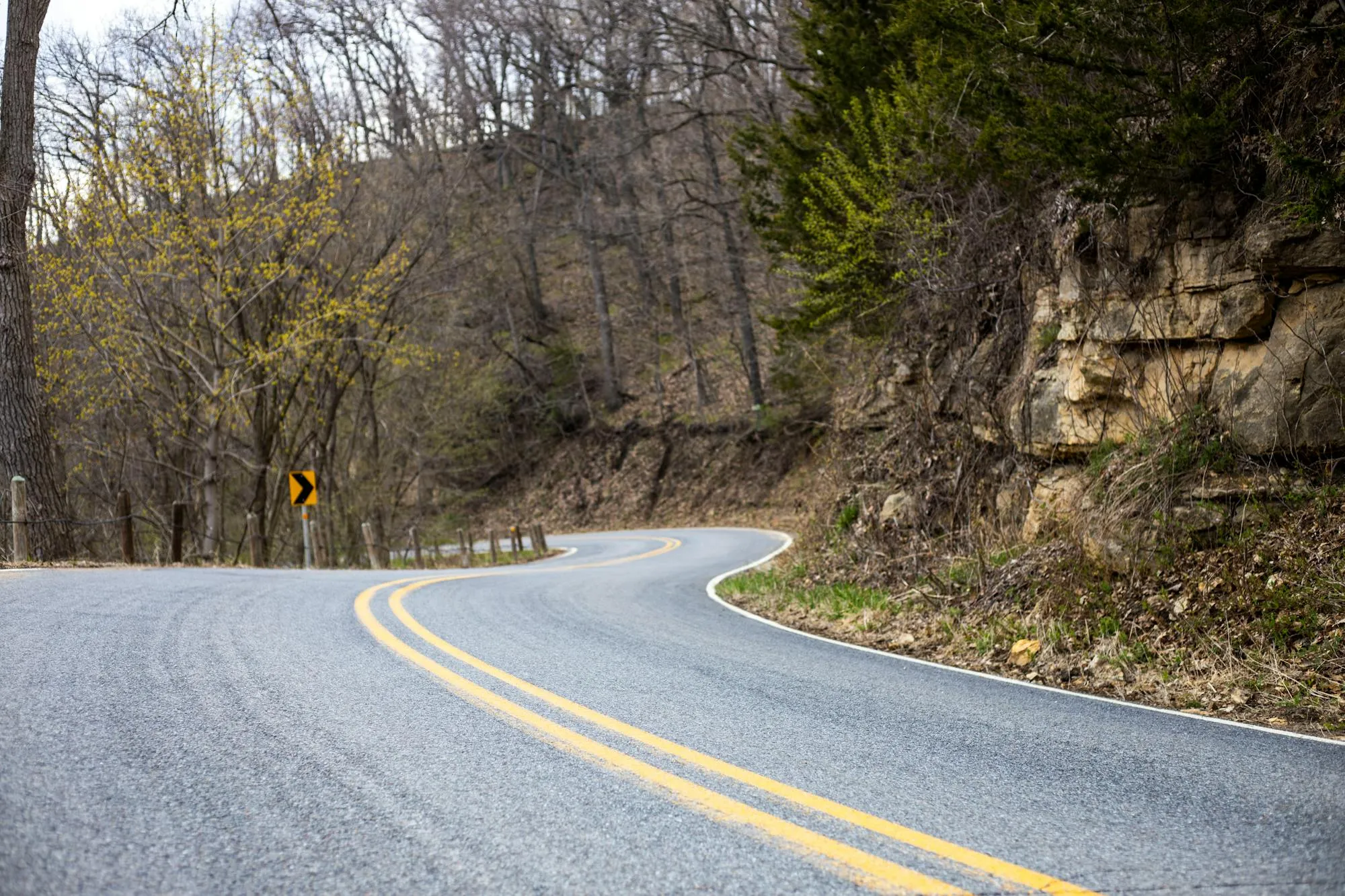
A winding two-lane asphalt road in the Appalachian mountains, photographed in dry daylight. Yellow double-center line markings guide through a series of tight left-hand curves. Dense deciduous and evergreen forest flanks both sides; a rock cut is visible on the right. The road surface and geometry suggest a technical, high-traffic riding corridor popular with motorcyclists.
Chris Flaten / Pexels

The Truth on the Street

Known issues

  • Regulator/rectifier charging failure (recall)

    electrics very common Recall

    A manufacturing error causes the regulator/rectifier to insufficiently charge the battery. This may lead to sudden stalling without warning. Kawasaki recalled MY2009–2012 ZX‑6R models to replace the unit free of charge.

  • Intermittent ticking noise from engine top‑end

    engine occasional

    Some owners report a pronounced ticking or knocking sound, often attributed to the automatic cam‑chain tensioner or piston slap when cold. Usually considered a characteristic rather than a mechanical fault, but valves and CCT should be inspected if noise is excessive.

The Expert Benchmark

Where this Kawasaki Ninja ZX-6R pulls ahead of — or falls behind — its rivals on the numbers, and the typical bike in its class on character.

What kind of bike this is — character vs. the class

This bike Class average

The shape of the Kawasaki Ninja ZX-6R — numbers and character vs. the average Supersport

Head-to-head: Kawasaki Ninja ZX-6R vs. its rivals

The Handshake Score

Forget spec-sheet bragging. Here's who the Ninja ZX-6R is actually built for.

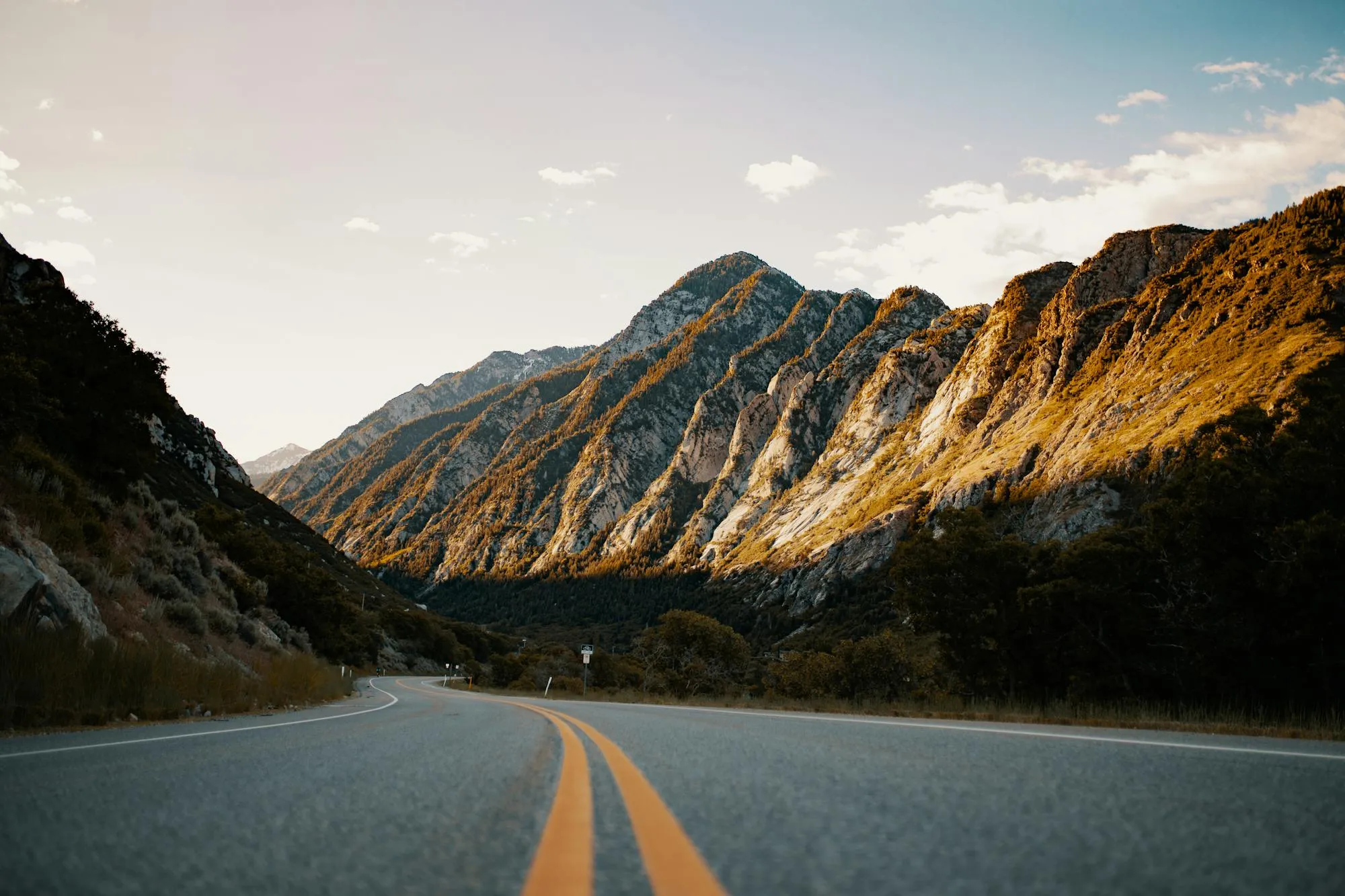
A scenic view of Angeles Crest Highway winding through rugged Southern California canyon terrain. Rocky mountainsides with golden earth tones frame the asphalt road with tight sweeping curves. Double yellow center line visible, sparse vegetation along the shoulders, clear blue sky with white clouds. Daylight, dry conditions. Iconic location for canyon-road enthusiasts.
Josh Sorenson / Pexels

Best motorcycle for Angeles Crest?

Angeles Crest is the exact use case: lean clearance you cannot use up, a front end that tells you everything, and enough mid-range to hold a canyon pace. No traction control, so read the pavement yourself.

Made for Angeles Crest Highway · Coronado Trail / US 191 · Highway 1 / Big Sur
Best motorcycle for Laguna Seca?

For track work it hands you the things that matter: suspension adjustment at both ends, a slipper clutch, and huge lean angle. There is no electronics package to lean on, so your skill sets the ceiling.

Made for Barber Motorsports Park · WeatherTech Raceway Laguna Seca · Circuit of the Americas

Best motorcycle for Tail of the Dragon?

The Dragon rewards precision, and precision is what this chassis does best. It goes where you point it and holds the line, and at 421 lb the constant direction changes cost you almost nothing.

Made for Back of the Dragon · Blue Ridge Parkway · Cherohala Skyway

What's new versus the previous generation

If you're cross-shopping the older generation, here's what changed.

Kawasaki Ninja ZX-6R (MY2007)

Previous generation · 2007–2008

Kawasaki Ninja ZX-6R (MY2007)

Snaps In, Holds Nothing Back

Compare to the previous model →