By NastyNils·
Motorcycle comparison · Supersport
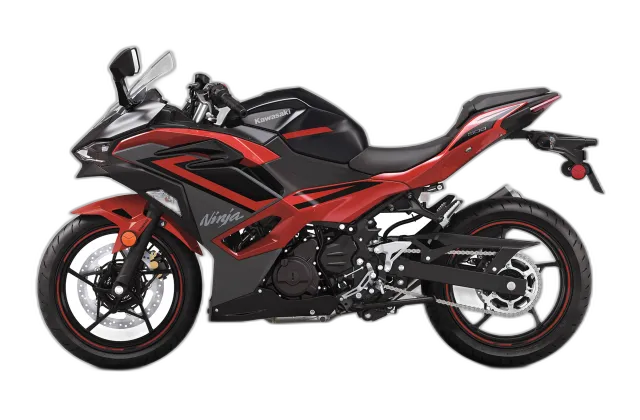
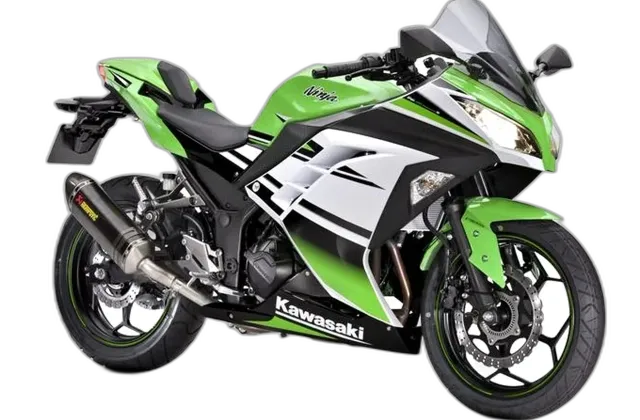
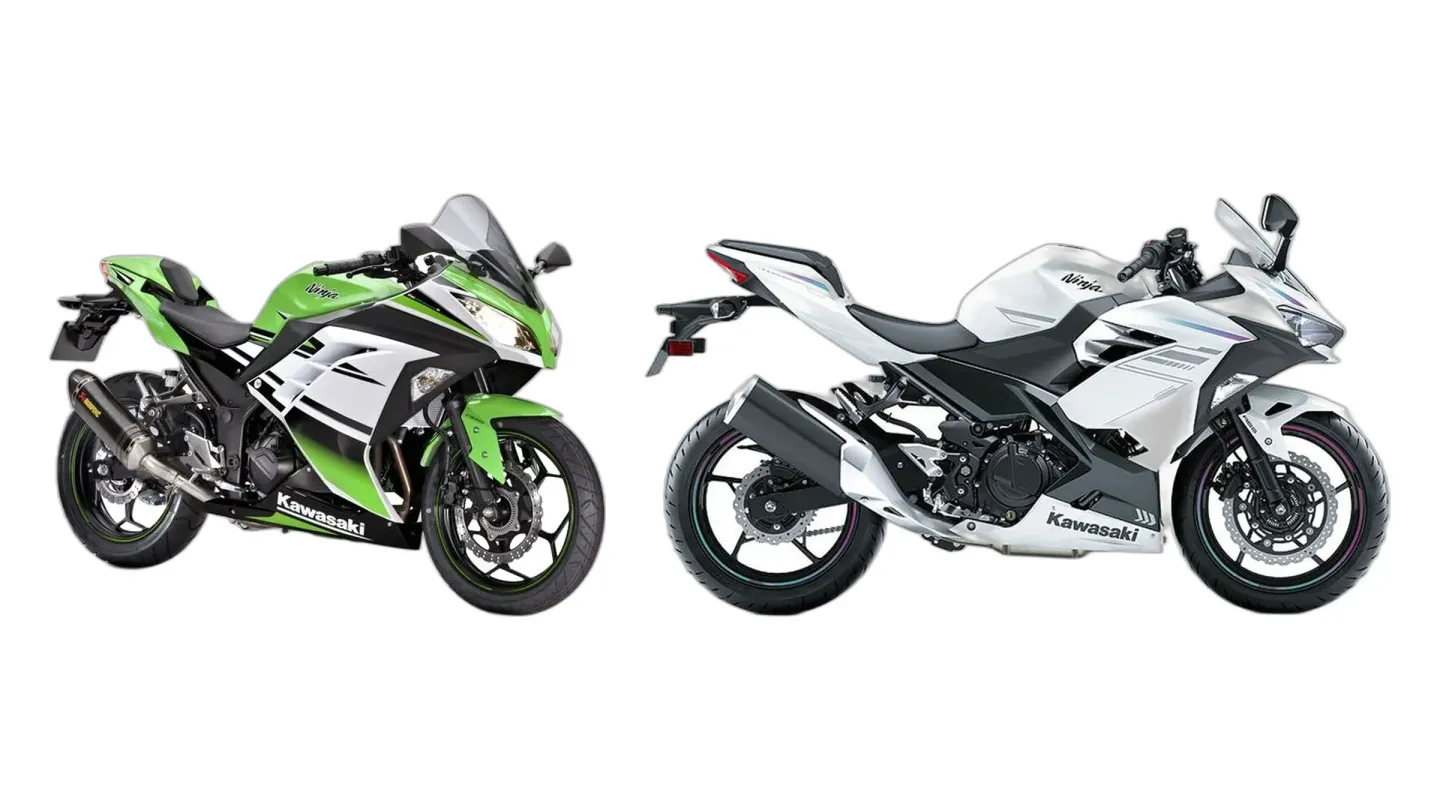
Kawasaki Ninja 300 (MY2013) vs Ninja 400 (MY2018)
Kawasaki Ninja 300 vs Ninja 400: one garage spot. Here's what should decide it.
You'll wring the Kawasaki Ninja 300 toward the top of the tach, and its twin comes alive up there. The Kawasaki Ninja 400 doesn't need wringing; it settles onto whatever line you pick from the first lap. It holds that line lap after lap.
So which one do you buy?
The Ninja 400 has the edge if…
Racetrack use
Small edge: Ninja 400
On a circuit, the Ninja 400 feels a little sharper. Most of that is more lean clearance. The margin is thin, and setup can close it.
Sporty riding on twisty roads
Narrow edge: Ninja 400
The Ninja 400 nudges ahead once the pavement starts to wiggle. Don't expect a night-and-day difference.
What makes each one tick
Ninja 300
There's nothing tall or stretched about the Ninja 300's cockpit: you sit upright on a low seat over a clutch lever that pulls feather-light. Each twist of the throttle sends the engine hunting for revs it's glad to spin. The engine eggs you on. Up high, it pulls like a bigger supersport.
Ninja 400
A nudge at the bars swings the Ninja 400 from lean to lean, since its 362 lb (164 kg) and light rotating parts don't put up a fight. At a proper sport pace, the brake lever runs out of bite. On the Angeles Crest Highway, the chassis tracks exactly where it's aimed, bend after bend. Second gear finds you grinning.
Nils rode the Ninja 400 in Slovakia in 2023 (NastyNils Testride).
The Voice of Experience

What actually separates them
- The Ninja 400 has the lower wet weight: 362 lb (164 kg) vs 379 lb (172 kg).
- The Ninja 400 makes more peak power: 45 hp (33 kW) vs 39 hp (29 kW).
- The Ninja 400 makes more peak torque: 28 lb-ft (38 Nm) vs 20 lb-ft (27 Nm).
Which one for the way you ride
Comfortable long-distance riding
Not their thing
Long days aren't what these two do best. Plan shorter legs and plenty of stops.
Nothing splits them on commuting and running costs. Ride both back to back and the decision usually makes itself.
Who each one is built for
What's good, and what you'll live with
Ninja 300
What owners say
Strengths
- High-revving, entertaining engine
- Rider-friendly ergonomics and practicality
Ninja 400
Strengths
- Agile without ever going nervous
- Goes exactly where you point it
- Zero learning curve
- The seat is actually soft
- 45 hp feels like enough
Trade-offs
- Mixed-power groups kill it
- Suspension is set for the street
- One front disc, real limits
- Slicks overwhelm the chassis
- Weak front brake feel and bite
Known problems to check before you buy
Ninja 300
- Front ABS sensor lead bracket caliper interference On ABS-equipped models, the front ABS sensor lead bracket can physically contact and interfere with the front brake caliper. This contact impedes proper caliper movement, leading to accelerated and uneven outer brake pad wear that degrades braking performance.
- Stator/rotor failure leads to charging loss Some owners report premature stator or rotor failure, resulting in a total loss of charging capability.
Ninja 400
- Assist & Slipper Clutch premature wear — slipping, false neutrals, gear dropping Premature wear of the assist and slipper clutch is one of the most frequently reported problems on the Ninja 400. The cable-operated clutch has little wear margin, and the assist-and-slipper ramp design adds to it, so the clutch pack can start slipping early in the bike's life. The first symptom is usually the clutch slipping under moderate to hard acceleration, most noticeably in the higher gears. Some owners also report false neutrals between the upper gears, gears not engaging cleanly and the transmission jumping out of gear. Track riding and aggressive launches make it worse. The usual fix is new friction plates and springs, along with a check of the clutch cable free play.
- OEM cylinder coolant seal deformation causing external coolant leak The rubber coolant seal between the crankcase and cylinder block at the front of the engine tends to deform, fold over, and allow coolant to leak externally. The factory seal is a tall, narrow rubber piece sitting in an open cavity without mechanical retention. Once deformed, coolant weeps from the front of the engine.
What they share
- Seat height
- 30.9 in (785 mm)
- Engine
- Parallel twin
- Cooling
- Liquid-cooled
- Gearbox
- 6-speed
- Final drive
- Chain
- Fork
- Telescopic
- Front tire
- 110/70-17
Where the spec sheets split
| Ninja 300 | Ninja 400 | |
|---|---|---|
| Wet weight | 379 lb (172 kg) | 362 lb (164 kg) |
| Ninja 300 | Ninja 400 | |
|---|---|---|
| Displacement | 296 cc | 399 cc |
| Power | 39 hp (29 kW) | 45 hp (33 kW) |
| Torque | 20 lb-ft (27 Nm) | 28 lb-ft (38 Nm) |
| Ninja 300 | Ninja 400 | |
|---|---|---|
| Fuel capacity | 4.5 US gal (17 L) | 3.7 US gal (14 L) |
| Ninja 300 | Ninja 400 | |
|---|---|---|
| Rear tire | 140/70-17 | 150/60-17 |
What comes fitted, what costs extra
| Ninja 300 | Ninja 400 | |
|---|---|---|
| Slipper Clutch | Not offered | Standard |
| LED Headlight | Not offered | Standard |
Head to head, area by area
Both bikes on the same scale, one area at a time.