By NastyNils·
Motorcycle comparison · Supersport
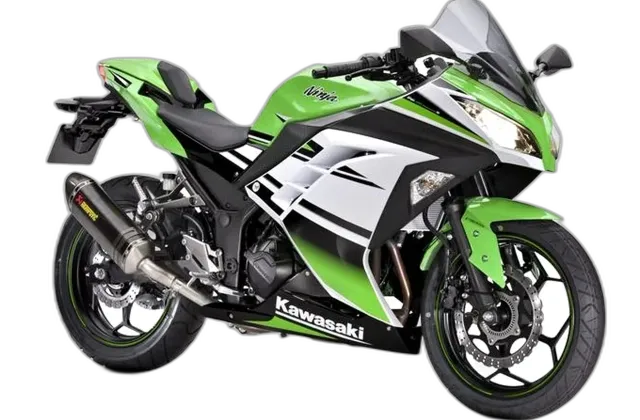
Kawasaki Ninja 300 (MY2013) vs Ninja 250 SL (NINJA250SL-MY2015)
Kawasaki Ninja 300 vs Ninja 250 SL: which one to buy for the riding you do.
You'll keep the Kawasaki Ninja 300's twin wound up near the top, where it's happiest and rushes. Spun up just as high, the Kawasaki Ninja 250 SL's single doesn't shake. Its shifts click home without a miss.
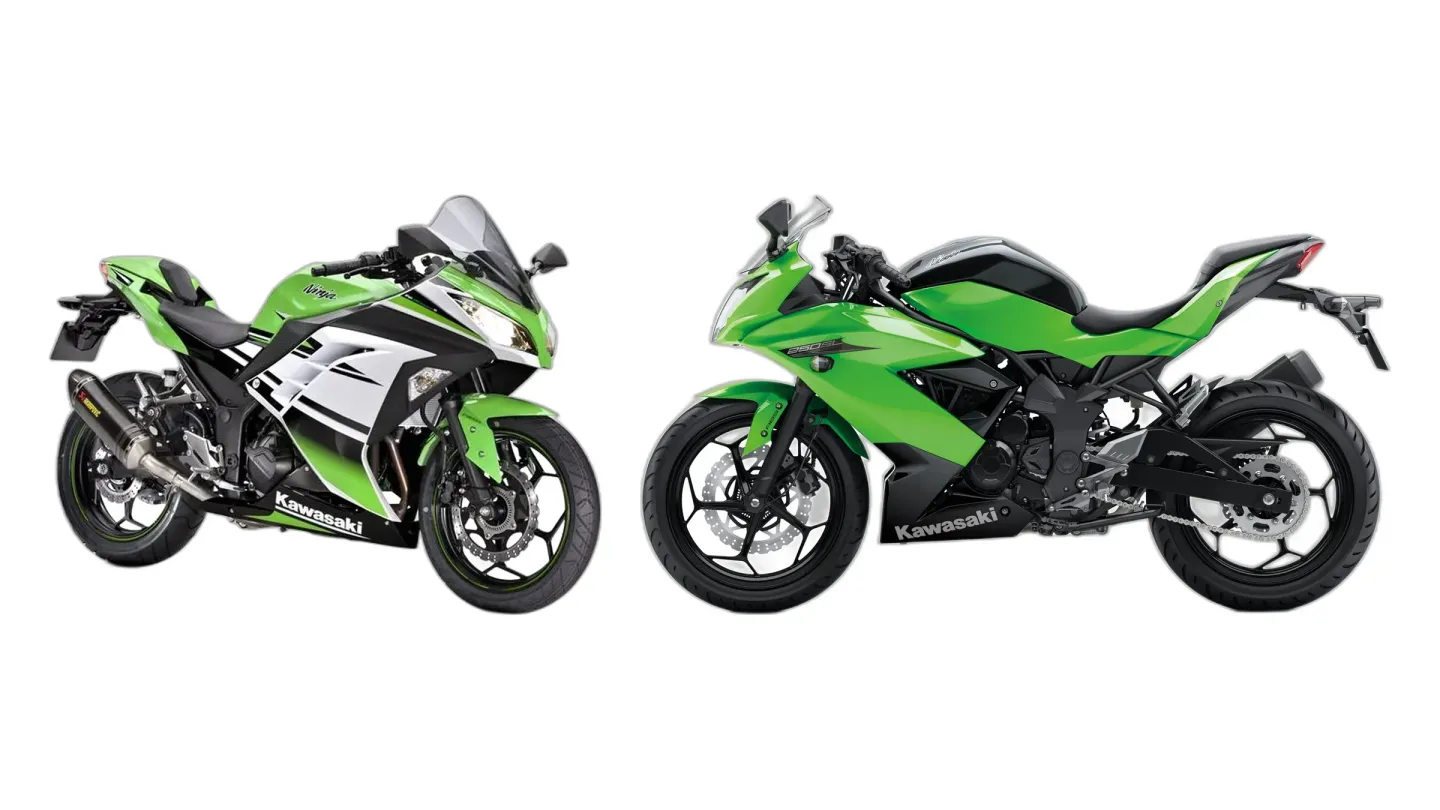
So which one do you buy?
The Ninja 250 SL has the edge if…
Racetrack use
Slight edge: Ninja 250 SL
On a circuit, the Ninja 250 SL feels a little sharper. That comes from more feel through the bars and a sportier chassis. The margin is thin, and setup can close it.
Sporty riding on twisty roads
Inches ahead: Ninja 250 SL
Back-road fun leans slightly toward the Ninja 250 SL. It's a narrow call, so trust your test ride.
What makes each one tick
Ninja 300
From the first commute, the Ninja 300 sits you upright over a light clutch and a seat that's 30.9 in (785 mm) off the ground. Each extra turn of the throttle sends the parallel-twin chasing revs, and there's a top-end eagerness that goads you into riding harder. The tach needle keeps sweeping right.
Ninja 250 SL
Through stalled city traffic, the Ninja 250 SL threads gaps on a slim chassis and a wide steering lock. On twisty back roads, the firm fork and shock hold the line through bends. The engine pulls willingly off apexes.
The Voice of Experience

What actually separates them
- The Ninja 250 SL has the lower wet weight: 335 lb (152 kg) vs 379 lb (172 kg).
- The Ninja 300 makes more peak power: 39 hp (29 kW) vs 28 hp (21 kW).
- The Ninja 300 makes more peak torque: 20 lb-ft (27 Nm) vs 17 lb-ft (23 Nm).
Which one for the way you ride
Comfortable long-distance riding
Look elsewhere
Hours in the saddle won't flatter either of these. They're happier on shorter runs.
Don't look for a gap on commuting and running costs: there isn't one. Go by how each one fits you.
Who each one is built for
What's good, and what you'll live with
Ninja 300
What owners say
Strengths
- High-revving, entertaining engine
- Rider-friendly ergonomics and practicality
Ninja 250 SL
What owners say
Strengths
- Slick gearbox and refined engine
Known problems to check before you buy
Ninja 300
- Front ABS sensor lead bracket caliper interference On ABS-equipped models, the front ABS sensor lead bracket can physically contact and interfere with the front brake caliper. This contact impedes proper caliper movement, leading to accelerated and uneven outer brake pad wear that degrades braking performance.
- Stator/rotor failure leads to charging loss Some owners report premature stator or rotor failure, resulting in a total loss of charging capability.
Ninja 250 SL
No confirmed faults on file yet. That's not the same as fault-free.
What they share
- Cooling
- Liquid-cooled
- Gearbox
- 6-speed
- Final drive
- Chain
- Fork
- Telescopic
Where the spec sheets split
| Ninja 300 | Ninja 250 SL | |
|---|---|---|
| Seat height | 30.9 in (785 mm) | 30.7 in (780 mm) |
| Wet weight | 379 lb (172 kg) | 335 lb (152 kg) |
| Ninja 300 | Ninja 250 SL | |
|---|---|---|
| Displacement | 296 cc | 249 cc |
| Engine | Parallel twin | Single-cylinder |
| Power | 39 hp (29 kW) | 28 hp (21 kW) |
| Torque | 20 lb-ft (27 Nm) | 17 lb-ft (23 Nm) |
| Ninja 300 | Ninja 250 SL | |
|---|---|---|
| Fuel capacity | 4.5 US gal (17 L) | 2.9 US gal (11 L) |
| Ninja 300 | Ninja 250 SL | |
|---|---|---|
| Front tire | 110/70-17 | 100/80-17 |
| Rear tire | 140/70-17 | 130/70-17 |
Head to head, area by area
Both bikes on the same scale, one area at a time.