By NastyNils·
Motorcycle comparison · Supersport
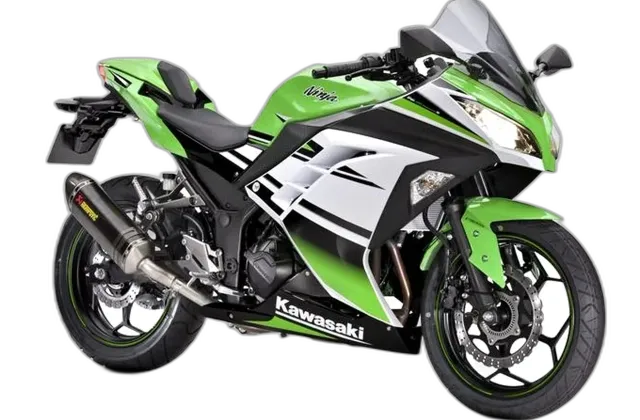
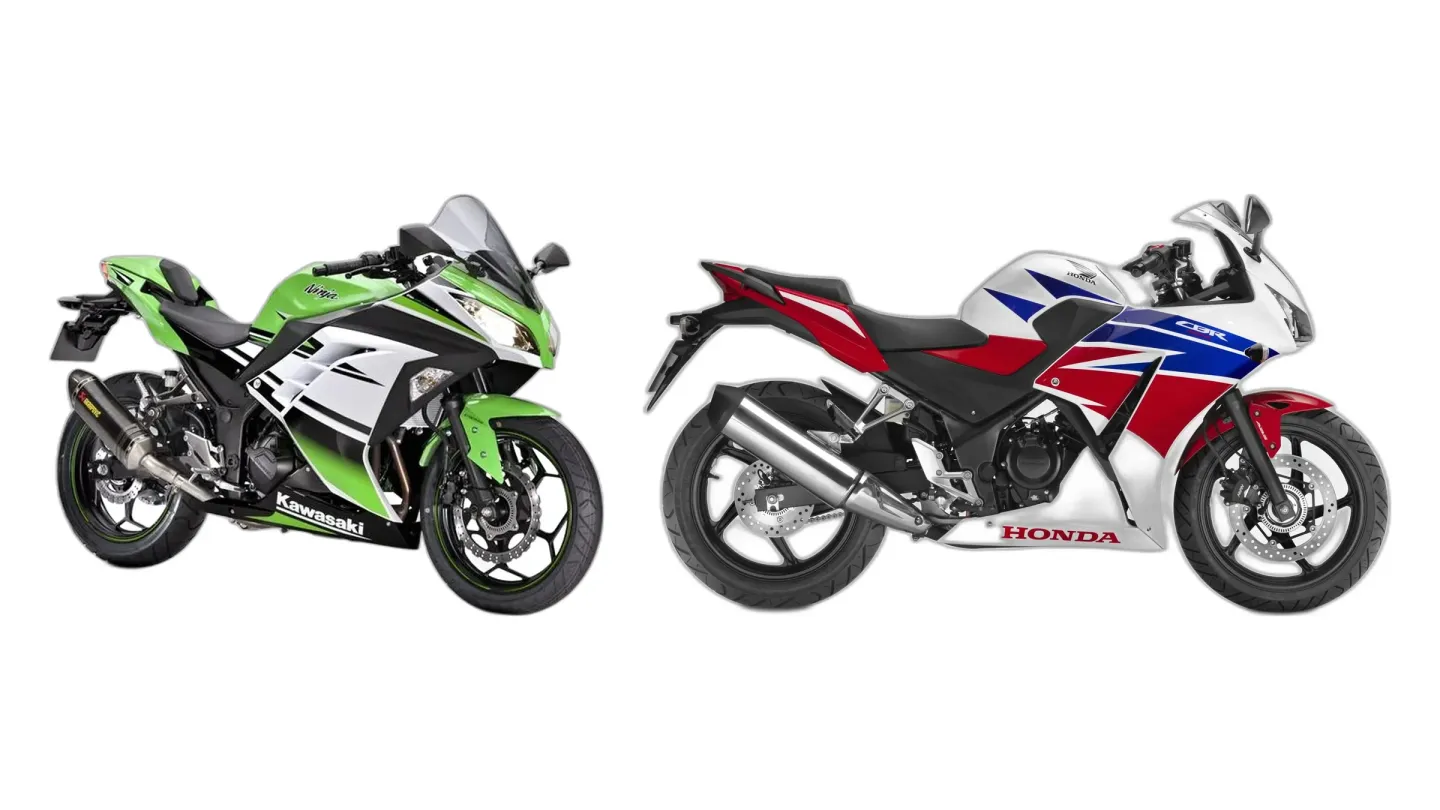
Kawasaki Ninja 300 (MY2013) vs Honda CBR 300 R (CBR300R)
Kawasaki Ninja 300 vs Honda CBR 300 R: one garage spot. Here's what should decide it.
You'll want to wind the Kawasaki Ninja 300's twin out, since it's hungriest for revs near the top. Roll on the Honda CBR 300 R and its torquey single doesn't wait for revs to pull smooth. The shove builds in a straight line, without surprises.
So which one do you buy?
Which one's the smarter buy
Even on value
At these used prices, neither bike comes out ahead. The Ninja 300 and CBR 300 R sit close enough that the money doesn't pick a winner.
What makes each one tick
Ninja 300
Small as it is, the Ninja 300 sits you up in a sporty crouch that doesn't fold you over the tank. There's a low seat, too. Its clutch lever comes in light at every stoplight.
CBR 300 R
In city traffic, the CBR 300 R darts through gaps, and there's hardly any effort needed to flick it from lean to lean. Out on the highway, it doesn't get nervous and holds its course. Only a faint buzz comes through. The bars and pegs set you up like a bigger CBR.
The Voice of Experience

What actually separates them
- The CBR 300 R has the lower wet weight: 357 lb (162 kg) vs 379 lb (172 kg).
- The Ninja 300 makes more peak power: 39 hp (29 kW) vs 31 hp (23 kW).
- The Ninja 300 has the larger fuel tank: 4.5 US gal (17 L) vs 3.4 US gal (13 L).
Which one for the way you ride
Comfortable long-distance riding
Not built for this
Hours in the saddle won't flatter either of these. They're happier on shorter runs.
There's no real gap on track days, commuting, twisty roads, and running costs. Sit on both and let fit and price decide.
Who each one is built for
What's good, and what you'll live with
Ninja 300
What owners say
Strengths
- High-revving, entertaining engine
- Rider-friendly ergonomics and practicality
CBR 300 R
What owners say
Strengths
- Nimble and lightweight chassis
- Forgiving and manageable power delivery
- Surprisingly stable at highway speeds
Known problems to check before you buy
Ninja 300
- Front ABS sensor lead bracket caliper interference On ABS-equipped models, the front ABS sensor lead bracket can physically contact and interfere with the front brake caliper. This contact impedes proper caliper movement, leading to accelerated and uneven outer brake pad wear that degrades braking performance.
- Stator/rotor failure leads to charging loss Some owners report premature stator or rotor failure, resulting in a total loss of charging capability.
CBR 300 R
- Crankshaft bearing retainer failure (recall) Recall 16V528000 A manufacturing defect in the crankshaft can cause the connecting rod bearing retainer plating to wear prematurely, leading to corrosion and potential engine stall. Honda recalled all 2015–2016 models (NHTSA 16V-528) to replace the crankshaft assembly. Symptoms include abnormal noise, sudden power loss, and inability to restart.
What they cost used
These prices compare a 9-year-old Ninja 300 with a 9-year-old CBR 300 R.
- Ninja 300
- about $3,700
- CBR 300 R
- about $3,500
What they share
- Cooling
- Liquid-cooled
- Torque
- 20 lb-ft (27 Nm)
- Gearbox
- 6-speed
- Final drive
- Chain
- Fork
- Telescopic
- Front tire
- 110/70-17
- Rear tire
- 140/70-17
Where the spec sheets split
| Ninja 300 | CBR 300 R | |
|---|---|---|
| Seat height | 30.9 in (785 mm) | 30.7 in (780 mm) |
| Wet weight | 379 lb (172 kg) | 357 lb (162 kg) |
| Ninja 300 | CBR 300 R | |
|---|---|---|
| Displacement | 296 cc | 286 cc |
| Engine | Parallel twin | Single-cylinder |
| Power | 39 hp (29 kW) | 31 hp (23 kW) |
| Ninja 300 | CBR 300 R | |
|---|---|---|
| Fuel capacity | 4.5 US gal (17 L) | 3.4 US gal (13 L) |
Head to head, area by area
Both bikes on the same scale, one area at a time.