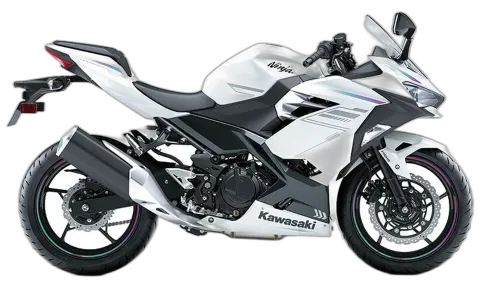

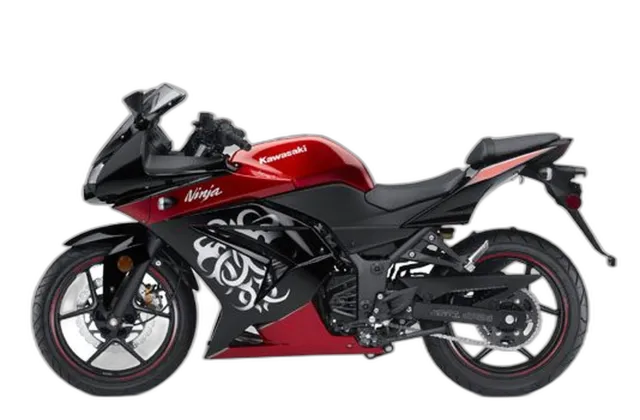
Kawasaki Ninja 300 (MY2013) — Supersport
Kawasaki Press

2013–2017 · Supersport · Buyer's Guide

Ninja 300 (MY2013)

3.5 / 5 NastyNils Rating · against its class

Light, Eager, Go-Anywhere

The Machine's Character

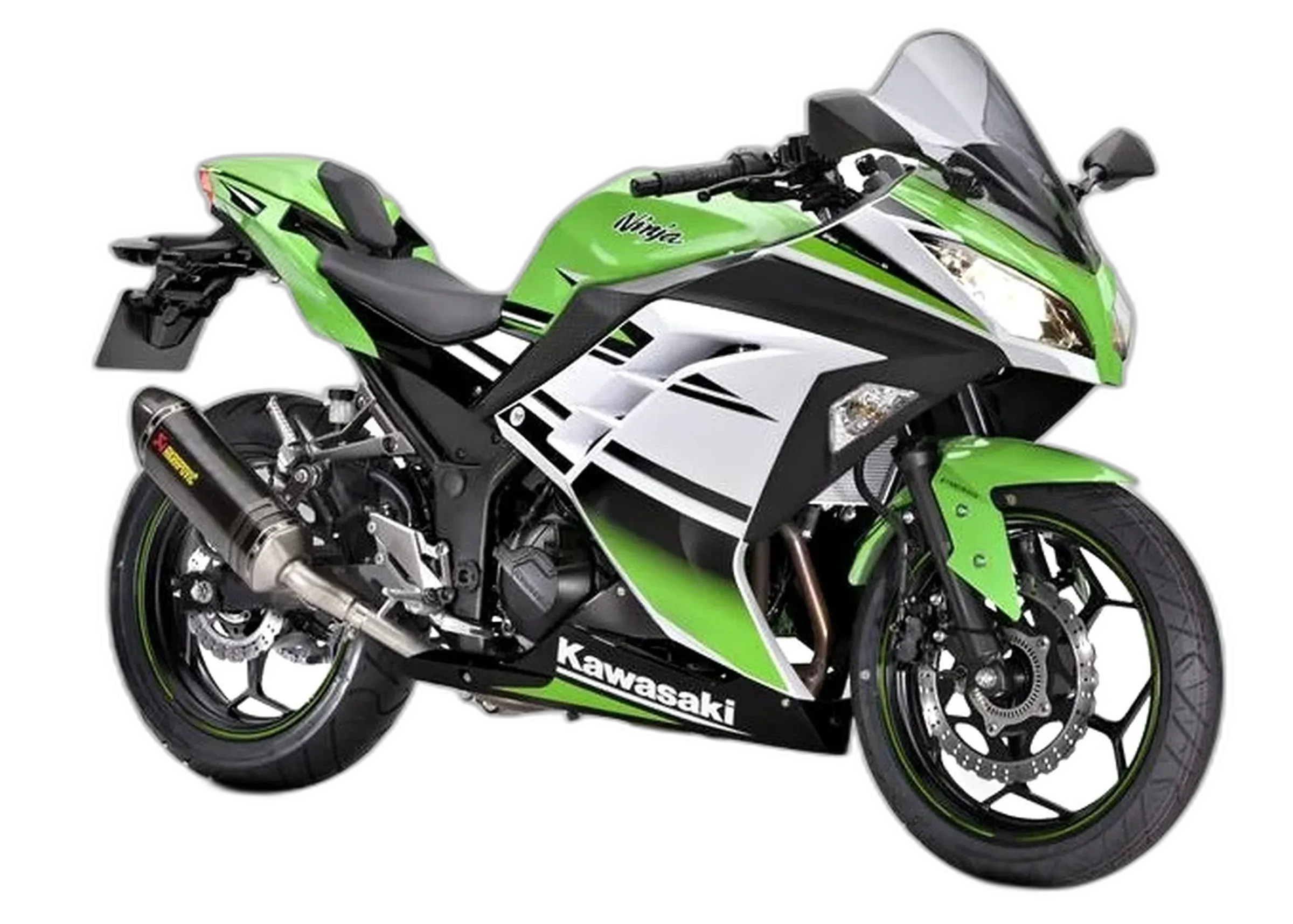
Kawasaki built this Ninja around a 296 cc liquid-cooled parallel twin making 39 hp and 20 lb-ft, and the rest of the motorcycle exists to let you use all of it. Full-size Ninja bodywork, a 6-speed box, chain drive, 379 lb wet: the numbers read small, the presence does not. What defines this generation in the small-bore sportbike class is how far the chassis runs ahead of the engine. Narrow 110/70 front and 140/70 rear rubber, a 30.9 in seat, and steering that asks almost nothing of you.

It rides like a bike that wants revs. You keep the tach up, use the gearbox, and it rewards commitment without punishing mistakes, which is why it suits a rider building skill as well as someone who simply likes a light motorcycle. Running costs stay low, and the aftermarket for this generation runs deep enough that almost anything you dislike can be changed. The honest caveat: the fork is fixed, with no preload, compression, or rebound adjustment, so the front end is what Kawasaki decided it should be. Only the rear shock takes preload. ABS was optional, so confirm what the specific bike carries.

Hard Numbers

Spec sheets don't ride bikes, but they set the baseline.

Show full specs & equipment Hide specs & equipment
Key specifications
Power 39 hp (29 kW)
Torque 20 lb-ft (27 Nm)
Displacement 296 cc
Engine Parallel twin
Cooling Liquid-cooled
Gearbox 6-speed
Final drive Chain
Fork Telescopic
Front tire 110/70-17
Rear tire 140/70-17
Seat height 30.9 in (785 mm)
Wet weight 379 lb (172 kg)
Fuel capacity 4.5 gal (17 L)

Equipment check

Chassis

  • Rear Suspension Adjustable Standard

Safety

  • ABS Optional
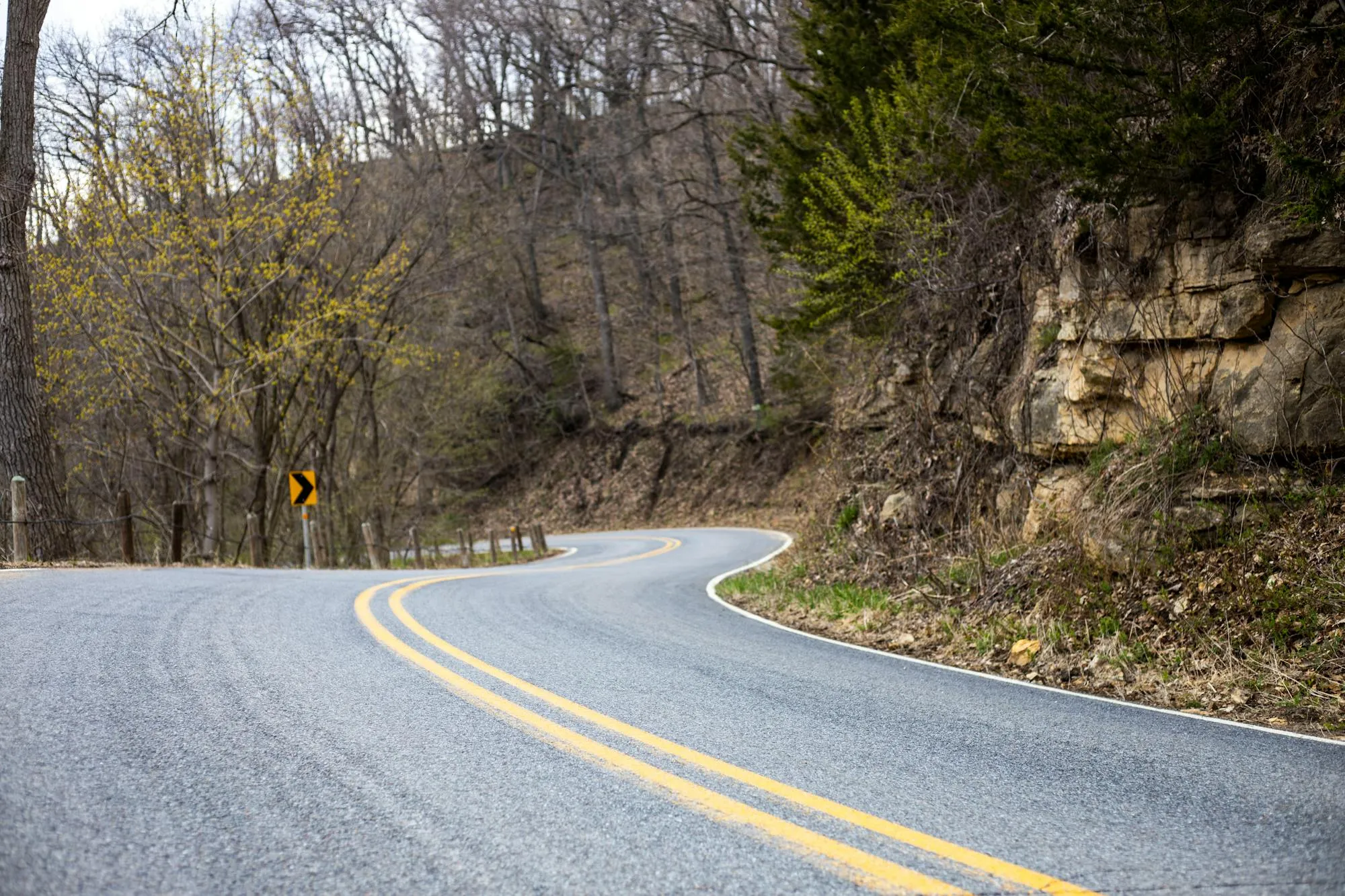
A winding two-lane asphalt road in the Appalachian mountains, photographed in dry daylight. Yellow double-center line markings guide through a series of tight left-hand curves. Dense deciduous and evergreen forest flanks both sides; a rock cut is visible on the right. The road surface and geometry suggest a technical, high-traffic riding corridor popular with motorcyclists.
Chris Flaten / Pexels

The Truth on the Street

Two decades of listening to riders leaves you with a lot of material: pit-lane talk, chats in parking lots, club nights, and the messages that land in my inbox from people who actually own the thing. On the Ninja 300 that chatter is unusually consistent. Riders talk about the chassis and the ergonomics before they talk about anything else, and the gripes cluster in one place instead of scattering across the bike.

Light, Willing, And Easy To Live With

The praise starts with how little effort it takes to turn. Riders describe it tipping in with confidence and staying flickable on a twisty road, whatever their experience level. Close behind comes the practical side: an upright seating position, a low seat, a light clutch, plus details like the fuel gauge and bungee hooks that keep it unintimidating day to day. The engine gets its own following. Owners say the twin wants revs and pays you back with a top-end rush that has them riding harder than the size suggests. And a smaller group of high-mileage owners reports engines running past 60,000 miles on nothing more than routine maintenance.

Where The Complaints Collect

Both recurring gripes sit at the front of the bike. Riders point at the non-adjustable fork as too soft, diving hard under heavy braking and giving up front-end stability when they lean on it. The stock tires draw the other complaint, though from fewer voices: limited grip and vague feedback, with owners often swapping them early.

Known issues

  • Engine stalling on deceleration (ECU recall)

    engine common Recall

    An improper ECU setting could cause the engine to stall when pulling in the clutch to downshift or slow down, posing a safety risk. Kawasaki recalled 11,097 units in 2013 to replace the ECU.

  • ABS pump malfunction (ABS recall)

    brakes occasional Recall

    The ABS pump could fail, causing a loss of anti-lock function and increasing the risk of wheel lock during hard braking. Kawasaki recalled 1,083 units to replace the pump.

  • ABS bracket interference with brakes

    brakes rare

    On some ABS-equipped models, a bracket or cable may obstruct proper brake pad contact with the rotors, potentially reducing braking performance or causing rotor damage. Reports mention both front and rear brake interference.

  • Stator/rotor failure leads to charging loss

    electrics rare

    Some owners report premature stator or rotor failure, often around 13,000 miles, resulting in a total loss of charging capability and requiring replacement of the alternator assembly.

  • Premature headstock bearing wear

    chassis occasional

    The factory-installed ball-type headstock bearings can wear out early, leading to steering notchiness. Replacement with tapered roller bearings is a common fix.

The Expert Benchmark

Where this Kawasaki Ninja 300 pulls ahead of — or falls behind — its rivals on the numbers, and the typical bike in its class on character.

What kind of bike this is — character vs. the class

This bike Class average

The shape of the Kawasaki Ninja 300 — numbers and character vs. the average Supersport

Head-to-head: Kawasaki Ninja 300 vs. its rivals

The Handshake Score

Forget spec-sheet bragging. Here's who the Ninja 300 is actually built for.

A scenic view of Angeles Crest Highway winding through rugged Southern California canyon terrain. Rocky mountainsides with golden earth tones frame the asphalt road with tight sweeping curves. Double yellow center line visible, sparse vegetation along the shoulders, clear blue sky with white clouds. Daylight, dry conditions. Iconic location for canyon-road enthusiasts.
Josh Sorenson / Pexels

Best motorcycle for Angeles Crest?

On Angeles Crest this is a skill bike, not a speed bike. It carries corner speed and lean angle happily, but on the open sections you sit flat out in top gear wanting more.

Made for Angeles Crest Highway · Coronado Trail / US 191 · Highway 1 / Big Sur
Best motorcycle for Tail of the Dragon?

For tight, repetitive Appalachian corners it is close to ideal. The low weight and instant direction changes let you work on lines all day; the highway slog to get there is the real cost.

Made for Back of the Dragon · Blue Ridge Parkway · Cherohala Skyway

Best motorcycle for Texas Hill Country?

Great fun on the Hill Country twisties and cheap to own, but Texas distances mean long interstate stretches at high revs. If your weekend is more miles than corners, it turns into work.

Made for Austin / Texas Hill Country · Twisted Sisters · Austin / Handbuilt Motorcycle Show

What's new versus the previous generation

If you're cross-shopping the older generation, here's what changed.

Kawasaki Ninja 250R (EX250J-MY2008)

Previous generation · 2008–2012

Kawasaki Ninja 250R (EX250J-MY2008)

Small Bike, Real Redline

Compare to the previous model →