
·

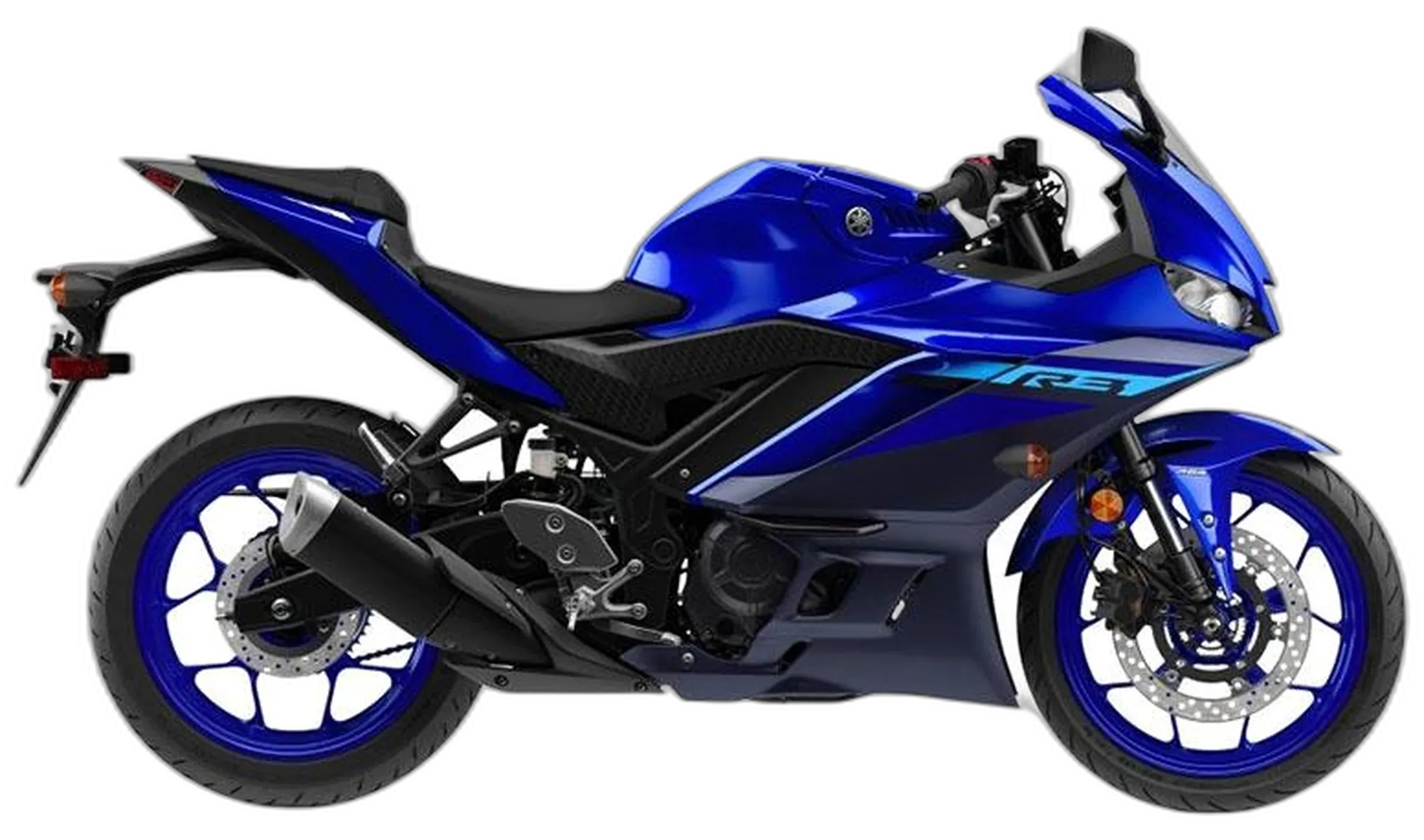
Yamaha YZF-R3 (B7P) — Supersport
Yamaha press archive

2019–2024 · Supersport · Buyer's Guide

YZF-R3 (B7P)

3.5 / 5 NastyNils Rating · against its class

Light, Sharp, Rev It Hard

The Machine's Character

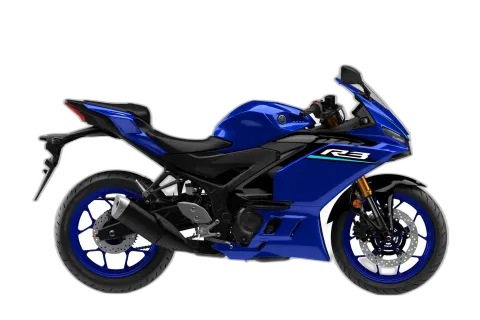
The R3 is a 321 cc parallel twin built to be revved. Its 42 hp peak lands high in the range, near 10,750 rpm, and the flat-crank engine spins smooth and eager rather than punchy down low. The real story is the chassis. KYB forks, a firm rear, lowered clip-ons and a reshaped tank put you in a committed, sport-focused stance, and the result is one of the better-handling packages in the entry supersport class. Electronics stay simple. ABS is standard, and that is the extent of the rider-aid suite on this trim.

On the road it rewards a rider who keeps it spinning. Below about 5,000 rpm it feels soft by class standards, so you work the six-speed box and let the top end do the talking. That suits canyon runs and back-road sport riding far better than lazy highway cruising. It stays light, costs little to run at 56 mpg, and holds a line with real confidence as the miles pile up. The honest caveat: this is a modest-power machine with basic electronics and a non-adjustable front fork, so riders chasing big straight-line speed or deep suspension tuning should look elsewhere.

Hard Numbers

Spec sheets don't ride bikes, but they set the baseline.

Show full specs & equipment Hide specs & equipment
Key specifications
Power 42 hp (31 kW) @ 10,750 rpm
Torque 22 lb-ft (30 Nm) @ 9,000 rpm
Displacement 321 cc
Engine Parallel twin
Cooling Liquid-cooled
Gearbox 6-speed
Final drive Chain
Front brake 298 mm
Front tire 110/70-17
Rear tire 140/70-17
Wheelbase 54.3 in (1380 mm)
Seat height 30.7 in (780 mm)
Wet weight 368 lb (167 kg)
Fuel capacity 3.7 gal (14 L)
Top speed 115 mph (185 km/h)
Fuel economy 56 mpg (US)

Equipment check

Chassis

  • Rear Suspension Adjustable Standard

Lighting

  • LED Headlight Standard

Safety

  • ABS Optional
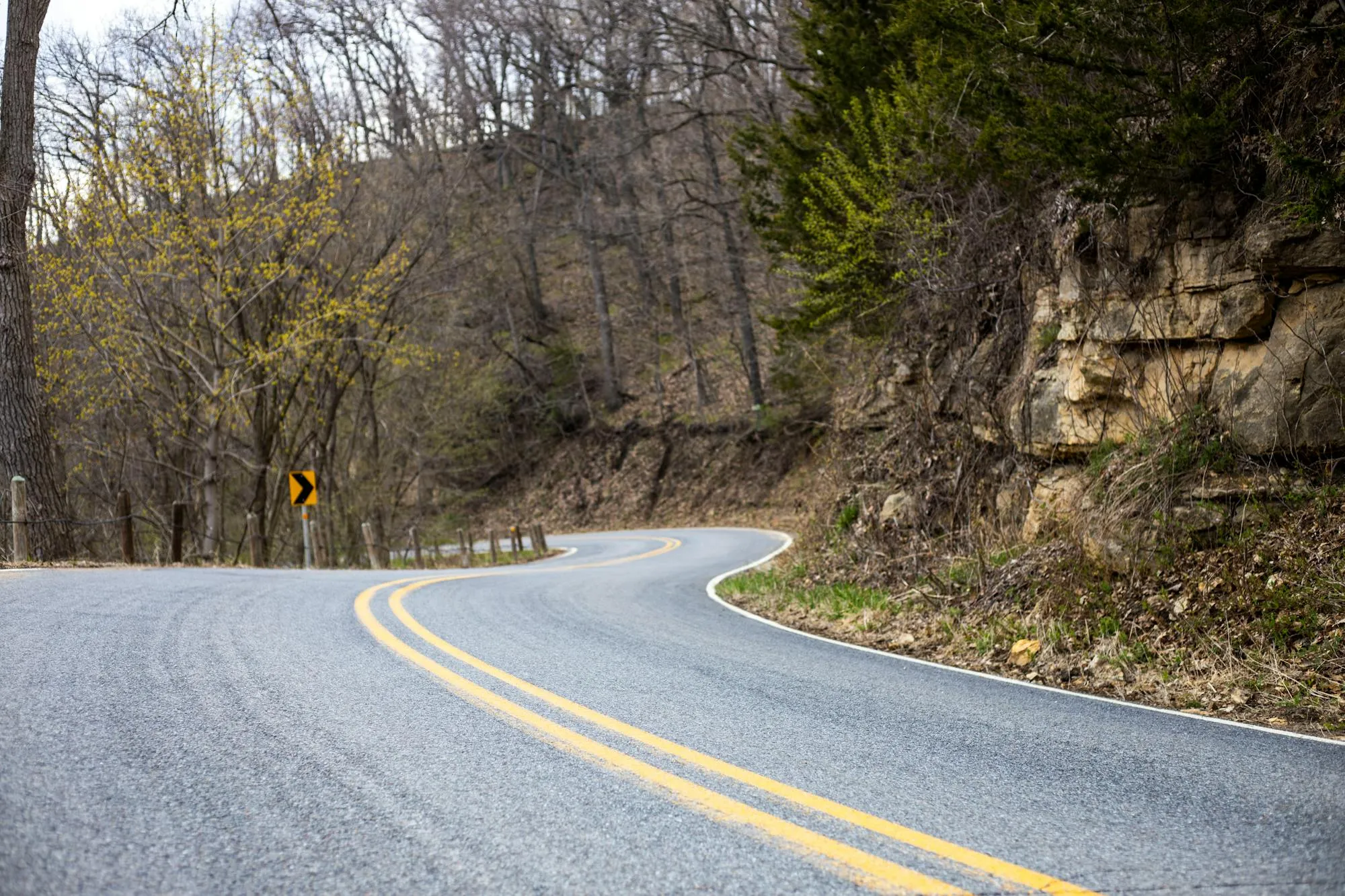
A winding two-lane asphalt road in the Appalachian mountains, photographed in dry daylight. Yellow double-center line markings guide through a series of tight left-hand curves. Dense deciduous and evergreen forest flanks both sides; a rock cut is visible on the right. The road surface and geometry suggest a technical, high-traffic riding corridor popular with motorcyclists.
Chris Flaten / Pexels

The Truth on the Street

Over the years I've gathered what R3 owners tell me: in the paddock, over coffee at club nights, in chats at the gas pump, and in the emails and messages riders send me directly. For the 2019–2024 R3 the pattern is consistent. Owners praise how it handles and how the engine revs. The complaints gather around the front brake, the damping for bigger riders, and an equipment list that riders felt fell behind the class.

A chassis new riders and racers share

Riders mention the chassis first. The word they keep using is predictable. New riders feel at home on it, and sport riders say it never feels under-suspended when they push. Many owners call the post-2019 KYB fork and firmer rear shock a step above other small supersports from the same years. The twin gets steady praise too. Owners describe it as smooth at sustained revs and happy to spin all the way to around 12,500 rpm. Riders who tuck in also credit the bodywork: fairing, screen, tank and clip-ons work together once you get low.

Spongy brake, soft rebound

The most common complaint is the front brake. Owners widely describe the single disc and two-piston caliper as fine for the street but short of power for hard road riding or track days. The words spongy and weak initial bite come up again and again. Suspension draws a second, more specific gripe. Even with the fork upgrade, heavier and more aggressive riders find the rebound damping too soft. Owners at around 200 lb (90 kg) and up say the rear shock is under-sprung, and preload is the only adjustment available.

The price of the racing crouch

Opinion on comfort depends on posture. Some owners report wrist, shoulder and lower-back fatigue on longer days, so despite the big tank they don't see it as a distance bike. Sit up behind the race-style screen and you take the full blast of the wind. Equipment rounds out the list. Riders point out that there is no slipper clutch, and from 2022 on they note that rivals in the class had one. Aftermarket retrofits exist. Owners also mention the missing traction control, ride modes and quickshifter, which left the R3 behind newer entries in the class.

Known issues

  • Front brake lever may fracture under hard grip due to casting porosities

    brakes occasional Recall

    Internal porosities (voids) in the brake-lever casting can cause it to break under strong gripping force. Affects a narrow production window only — lot stamps "K3 9A 16" and "K4 9A 16", produced 2019-02-06 to 2019-03-06.

  • Front brake hose may chafe against horn lead wire under bar movement

    brakes occasional Recall

    When handlebars move lock-to-lock, the front brake hose can rub against the horn lead wire due to incorrect routing. Repeated chafing damages the hose and can lead to brake-fluid leak.

  • Rear reflector lens fails to meet FMVSS reflectivity standard

    bodywork occasional Recall

    Mold contamination during reflector manufacturing produced lenses with reflective properties below the US Federal Motor Vehicle Safety Standard. Reduced rear-visibility in low-light/night conditions.

  • Front brake hose holder may detach from fork bracket

    brakes occasional Recall

    The hose holder may detach from its fork-bracket mount due to incorrect hook shape. Once detached, the protector cover wears, then the brake hose itself begins to chafe — eventually causing fluid leak and reduced braking performance.

  • Federal certification label VIN may not match stamped frame VIN

    bodywork occasional Recall

    The VIN reproduced on the FMVSS-567 certification label may differ from the VIN stamped on the frame, due to assembly-line workers verifying only the last digits during application. The frame VIN itself is correct. NHTSA explicitly classified this as no safety risk; impact is on future recall lookup, registration documents, and ownership transfer.

The Expert Benchmark

Where this Yamaha YZF-R3 pulls ahead of — or falls behind — its rivals on the numbers, and the typical bike in its class on character.

What kind of bike this is — character vs. the class

This bike Class average

The shape of the Yamaha YZF-R3 — numbers and character vs. the average Supersport

Head-to-head: Yamaha YZF-R3 vs. its rivals

The Handshake Score

Forget spec-sheet bragging. Here's who the YZF-R3 is actually built for.

A scenic view of Angeles Crest Highway winding through rugged Southern California canyon terrain. Rocky mountainsides with golden earth tones frame the asphalt road with tight sweeping curves. Double yellow center line visible, sparse vegetation along the shoulders, clear blue sky with white clouds. Daylight, dry conditions. Iconic location for canyon-road enthusiasts.
Josh Sorenson / Pexels

Best motorcycle for Angeles Crest?

For Angeles Crest weekends this is a joyful, precise tool. It will not win a horsepower fight, but the light steering and trustworthy front end let you ride the twisty stuff at a genuinely quick, satisfying pace.

Made for Angeles Crest Highway · Coronado Trail / US 191 · Highway 1 / Big Sur
Best motorcycle for Tail of the Dragon?

On the Dragon and Cherohala, where skill beats speed, the R3 is in its element. Light, communicative and easy to place, it lets you focus on clean lines and repetition instead of wrestling the bike.

Made for Tail of the Dragon · Back of the Dragon · Blue Ridge Parkway

Best motorcycle for Texas Hill Country?

Perfect for Hill Country loops. It is fun and frugal on the twisties, though the modest power and 3.7 gal tank mean the long interstate slogs between the good roads will test your patience.

Made for Austin / Texas Hill Country · Texas Hill Country BDR-X · Twisted Sisters