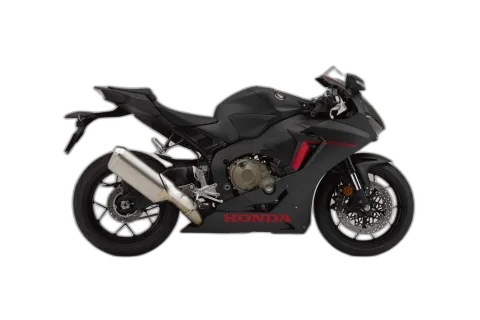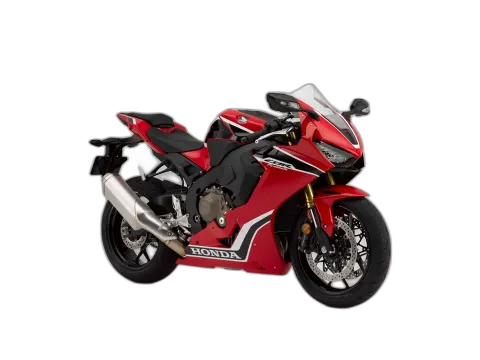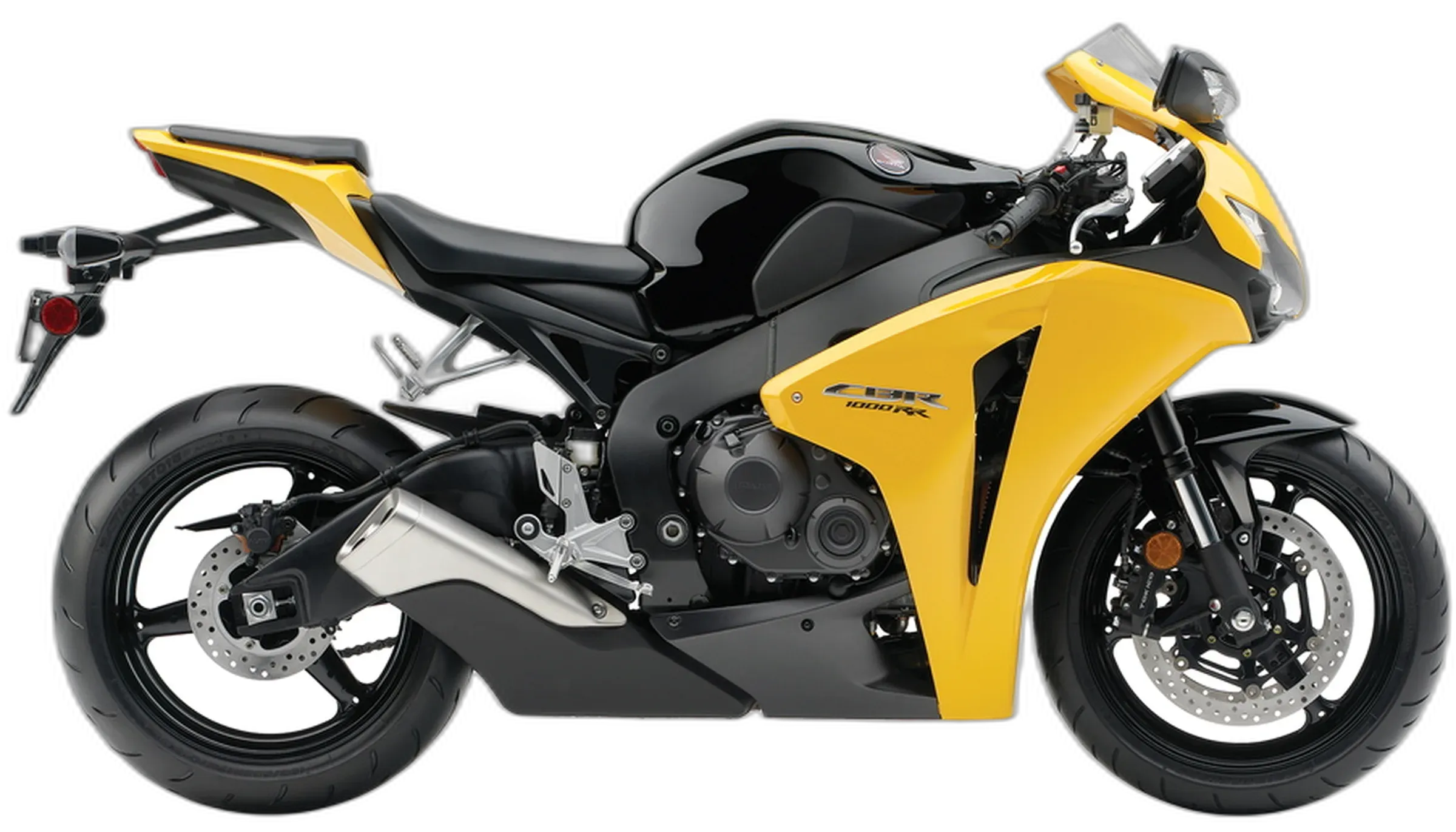

Honda CBR1000RR (SC59) — Supersport
Honda Press

2008–2011 · Supersport · Buyer's Guide

CBR1000RR (SC59)

Lightweight Precision At Its Sharpest

The Machine's Character

Honda built this generation of the CBR1000RR around one idea: strip mass out of the machine and pull what's left toward the center. The result is a 999 cc inline-four claiming 178 hp at 12,000 rpm and 83 lb-ft at 8,500 rpm in a package that scales at 439 lb wet, which is why it turns like something a class smaller. Steering is sharp, the chassis stays planted, and the fully adjustable fork and shock feed back exactly what the tires are doing. A steering damper and a slipper clutch come standard. Electronics do not: no traction control, no ride modes, no IMU.

Ridden hard, it feels honest. Power builds in a long linear pull to the 13,000 rpm redline instead of hitting in a step, so you can use most of it on a real road without a computer minding the rear tire. The flip side is that nothing catches you. On cold pavement or a bad throttle hand, this bike expects an experienced rider. Build quality holds up and reliability is genuinely strong, though 2008–2009 bikes can drink oil (up to a liter per 600 mi / 1,000 km) from a factory piston ring shortfall, and there was a safety recall for a fuel pump impeller that can swell and lock, stalling the engine. Check both before you buy.

Hard Numbers

Spec sheets don't ride bikes, but they set the baseline.

Show full specs & equipment Hide specs & equipment
Key specifications
Power 178 hp (131 kW) @ 12,000 rpm
Torque 83 lb-ft (112 Nm) @ 8,500 rpm
Displacement 999 cc
Engine Inline-four
Cooling Liquid-cooled
Gearbox 6-speed
Final drive Chain
Fork Upside-down (USD)
Front brake 320 mm
Front tire 120/70-17
Rear tire 190/50-17
Wheelbase 55.4 in (1407 mm)
Seat height 32.3 in (820 mm)
Wet weight 439 lb (199 kg)
Fuel capacity 4.7 gal (17.7 L)
Fuel economy 30 mpg (US)

Equipment check

Chassis

  • Front Suspension Adjustable Standard
  • Rear Suspension Adjustable Standard
  • Steering Damper Standard

Drivetrain

  • Slipper Clutch Standard

Safety

  • ABS Optional

The Voice of Experience

Portrait of NastyNils

The test ride

The first thing you notice is how little there is to move. Roll it off the stand and the weight sits low and close, so the bike changes direction with your shoulders rather than your arms. The riding position is committed but not cruel: a 32.3 in seat, a firm reach to the bars, and a fairing that actually keeps wind off your chest above 70 mph. The inline-four is smooth to the point of being deceptive. There's very little buzz through the pegs or the grips, the intake note stays civilized until you're past 8,000 rpm, and speed arrives without much drama to mark it. Ground clearance is enormous, so at road pace you simply never find the end of the lean angle. What you do find is information: every input comes back through the fork and the seat with real clarity. It's a demanding bike to ride slowly and a remarkably easy one to ride quickly.

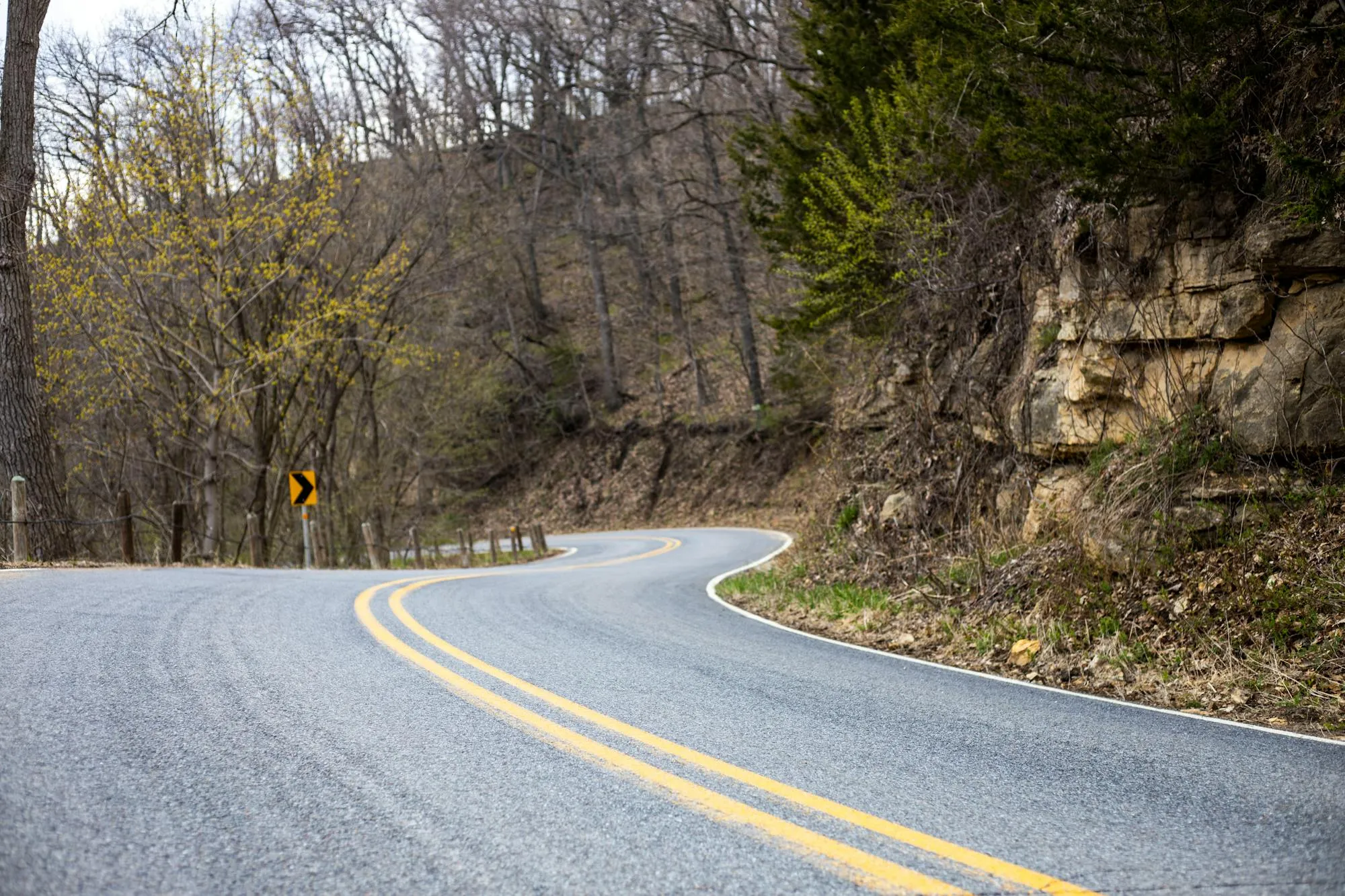
A winding two-lane asphalt road in the Appalachian mountains, photographed in dry daylight. Yellow double-center line markings guide through a series of tight left-hand curves. Dense deciduous and evergreen forest flanks both sides; a rock cut is visible on the right. The road surface and geometry suggest a technical, high-traffic riding corridor popular with motorcyclists.
Chris Flaten / Pexels

The Truth on the Street

This one is not my ride, it's theirs. Twenty-odd years of paddock talk, club-night conversations and the messages owners send me directly have built a fairly consistent picture of the SC59. The praise lands in the same places almost every time, and so do the complaints.

Where The Chassis Earns Its Reputation

Confidence is the word that comes up most. Riders talk about a machine that stays composed when they're hard on the brakes and still composed as they tip in, holding whatever line they picked without needing a second correction. The slipper clutch collects a lot of that credit; owners describe stacking downshifts into a corner without the rear stepping around, and several say it changed how relaxed they felt on the way into a turn. The chassis takes the rest, rated by riders on road and track alike as one of the most trustworthy they have ridden.

The Engine Splits Opinion

Most owners describe the inline-four as turbine smooth, building cleanly to high rpm and paying out best when it is kept spinning. Riders who use it that way talk about the top end as the reason they bought the bike and the reason they kept it. Not everyone reads it the same way. A smaller group finds the delivery so even that it ends up short on character, without the punch or edge they wanted from a liter bike.

What Owners Would Change First

The front brake comes up more often than any other complaint. Riders describe a soft lever, short on initial bite and vague about what the front tire is doing, and the rubber hoses take the blame. Suspension is the next one. As it leaves the factory it is set for the road, and owners who push hard on track report it going soft and wallowing until they fit stiffer springs or have it revalved. Styling draws the occasional shrug too, with some calling the bodywork clean but too plain beside the sharper machinery of its era.

Known issues

  • Fuel pump impeller stalling (safety recall)

    fuel system occasional Recall

    A manufacturing defect in the fuel pump can cause the rubber impeller to swell and lock, cutting off fuel flow and causing the engine to stall without warning. Honda issued a safety recall for affected 2008–2016 CBR1000RR models to inspect and replace the fuel pump assembly.

  • Excessive oil consumption

    engine common

    Many 2008–2009 models suffer from high oil consumption (up to 1L/1000km) due to an insufficient number of oil rings on the pistons from the factory. Honda later revised the piston ring design, but affected bikes may require a top-end rebuild or engine replacement to cure the issue.

  • Cam chain tensioner noise

    engine occasional

    Some owners report a rattling or whining noise from the cam chain tensioner, especially on higher-mileage bikes. The tensioner can become noisy and may require replacement.

The Expert Benchmark

Where this Honda CBR1000RR pulls ahead of — or falls behind — its rivals on the numbers, and the typical bike in its class on character.

What kind of bike this is — character vs. the class

This bike Class average

The shape of the Honda CBR1000RR — numbers and character vs. the average Supersport

Head-to-head: Honda CBR1000RR vs. its rivals

The Handshake Score

Forget spec-sheet bragging. Here's who the CBR1000RR is actually built for.

A scenic view of Angeles Crest Highway winding through rugged Southern California canyon terrain. Rocky mountainsides with golden earth tones frame the asphalt road with tight sweeping curves. Double yellow center line visible, sparse vegetation along the shoulders, clear blue sky with white clouds. Daylight, dry conditions. Iconic location for canyon-road enthusiasts.
Josh Sorenson / Pexels

Best motorcycle for Angeles Crest?

This is the bike for Angeles Crest on a clear morning. It changes line without effort and never runs out of lean, but with no traction control you carry the responsibility for the rear tire yourself.

Made for Angeles Crest Highway · Coronado Trail / US 191 · Highway 1 / Big Sur
Best motorcycle for Tail of the Dragon?

On tight, repeating Appalachian corners the light steering and the feedback through the fork are exactly what you want. It rewards clean technique rather than covering for sloppy inputs.

Made for Back of the Dragon · Blue Ridge Parkway · Cherohala Skyway

Best motorcycle for Laguna Seca?

A genuinely capable trackday bike with huge lean clearance, adjustable suspension at both ends, and deep aftermarket support. You'll be setting it up by hand, since there are no electronics to lean on.

Made for Barber Motorsports Park · WeatherTech Raceway Laguna Seca · Circuit of the Americas