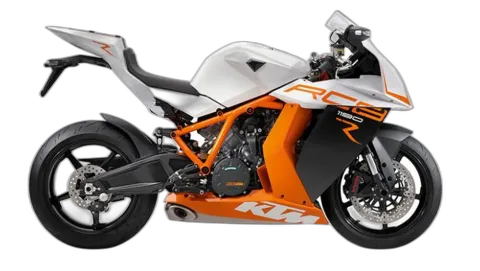
KTM 1190 RC8 R (MY2010) — Supersport
NastyNils / KTM Press

2010–2011 · Supersport · Buyer's Guide

1190 RC8 R (MY2010)

Orange Precision With A Bite

The Machine's Character

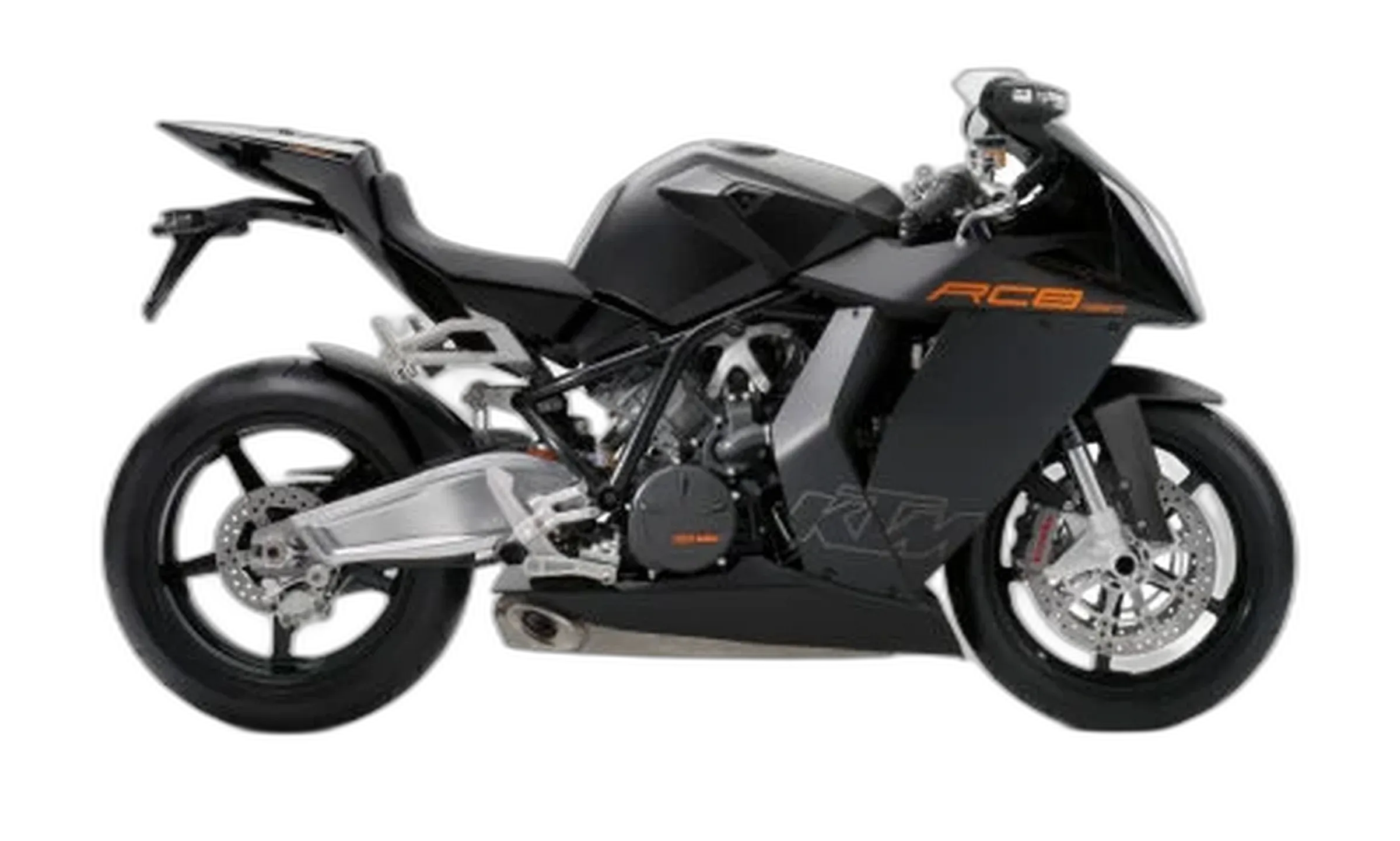
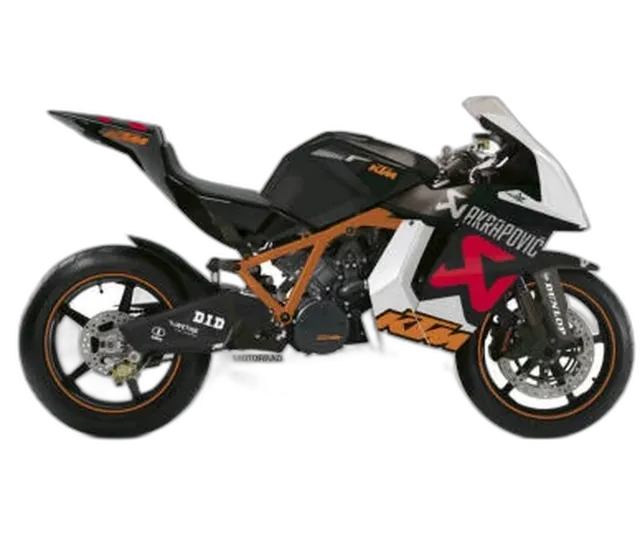
KTM built the RC8 R as a literbike that refuses the inline-four template. At its heart sits a 1195 cc 75° V-twin making 169 hp, slung in an exposed steel trellis frame with a WP fork and Brembo stoppers. The reworked cylinder head, four valves and two plugs per cylinder, cleaned up the fueling so the throttle responds instead of snapping. The faceted orange bodywork and deeply set ergonomics tell you the priority before it fires: chassis feel, mass kept low and central, and rider involvement over a headline horsepower number.

On road and track it rewards a rider who wants to feel the machine work. The chassis is firm and faithful, the front end honest, and it holds its line when you lean on it hard. That sharpness carries a price. Down low the V-twin needs managing, the suspension stays hard even backed off, and the electronics are sparse by modern standards. This is a bike for skilled hands chasing intensity and feedback, not a soft all-rounder. Stay on top of the known weak spots and the quality hardware holds its level under sustained abuse.

Hard Numbers

Spec sheets don't ride bikes, but they set the baseline.

Show full specs & equipment Hide specs & equipment
Key specifications
Power 169 hp (124 kW) @ 10,000 rpm
Torque 91 lb-ft (123 Nm) @ 8,000 rpm
Displacement 1195 cc
Engine 75° V-twin
Bore × stroke 105 × 69 mm
Compression 13.5:1
Cooling Liquid-cooled
Fuel system Fuel injection
Gearbox 6-speed
Final drive Chain
Frame Steel trellis
Fork Upside-down (USD)
Front brake 320 mm
Rear brake 220 mm
Front tire 120/70 ZR17
Rear tire 190/55 ZR17
Wheelbase 56.3 in (1430 mm)
Seat height 31.7 in (805 mm)
Fuel capacity 4.4 gal (16.5 L)
Top speed 174 mph (280 km/h)
Fuel economy 36 mpg (US)

Equipment check

Chassis

  • Front Suspension Adjustable Standard
  • Rear Suspension Adjustable Standard
  • Steering Damper Standard

Drivetrain

  • Slipper Clutch Standard

Safety

  • ABS Optional

The Voice of Experience

Portrait of NastyNils

The test ride

Swing a leg over and the first surprise is space. For something built this close to a racer, your forearms aren't ground into the bars and the knee angle stays bearable, and the pegs bolt one notch lower for long days. That goodwill runs straight into the chassis. Even softened off, the suspension is hard, and alpine frost heaves and broken edges arrive at your hands and backside undiluted. Every gearchange announces itself, not dangerous, just abrasive over a full day. The clutch is heavy enough that stop-and-go traffic turns into a left-forearm workout. Yet the front never stops feeding you what the contact patch is doing, and once the road opens up the bike plants itself and carries real speed without a hint of nervousness. By the end of a hard day, the adrenaline outweighs every gripe.

Rated point by point — where it earns its keep

My own 0–100 score for this bike against the class, area by area — the marker on each bar is the class average.

What stays with me is how composed the chassis is when the surface falls apart. Over the worst track bumps the front wheel hops, yet nothing translates to the bars; it absorbs the hit and keeps tracking. Where the pavement breaks up and the rest of the group has to ease off and run wide, I can hold the tight line and carry the speed. The WP fork and steering damper give you a platform you can dial to your own weight and pace, and it stays taut and consistent the harder you lean on it. The one place it bites back is on track: with a big V-twin, coast into a corner instead of staying hard on the brakes or back on the gas and the engine braking scrubs speed off fast, then asks real work to recover cleanly at the exit. Street riding hides that. The track exposes it.

Point it through a fast sequence and it stops imitating a race bike and becomes one. The uphill double-right at Mugello climbs away over broken surface and takes every bit of commitment you dare give it; the bike plants you and slings you around like the banked wall of a roller coaster, a feeling no spec sheet can promise. On a good mountain road the same arrives at speed. And because the throttle is one you can finally lean on mid-corner, the corner speeds climb for riders who aren't pros, with no new geometry or rider aids doing the work.

The standout for me is control. I can meter entry speed with real precision, then ask for everything and get it: the bite arrives immediately and completely, with no vagueness in between. That confidence holds as long as the road and the rubber are warm. Turn the temperature down and the picture changes, since there is no electronic margin sitting underneath you to cover a stop you misjudge.

The R earns its letter where it counts. Down a long straight at full throttle it keeps pace with the field, never showing the top-end fadeout you'd expect from a big twin against the litre-four field. The bigger surprise came high in the Alps: on a long climb, where thin air quietly robs other engines, the mid-range just keeps pulling cleanly through the gears. That advantage isn't free. At corner exit the drive is there, but it asks more concentration than a smooth four-cylinder, and using it consistently out of a tight chicane takes real skill rather than a fistful of throttle. At a relaxed pace the very character that makes the engine exciting is also what makes it work you. And honest as the delivery has become, it is still a large V-twin; anyone expecting seamless inline-four smoothness will feel the difference.

Ridden flat out from the first session to the last with no breather between, neither the brakes nor the suspension faded on me, and the chassis held its level under continuous abuse. Look closely and you see why: every major component wears a name you know, and the fit and finish match the hardware, with nothing up close that reads as sourced cheap. The one mark against it is what left. The forged wheels gave way to standard cast items, a visible step down for anyone who knows what to look for.

For a machine built this close to a racer, the position genuinely works in the real world and not only on a circuit. The reason matters: KTM engineered this for larger, European-sized riders instead of sizing it to some other market's average build, so the cockpit fits a larger rider rather than folding him into it. Over a long day it asked the least of me of anything in the group, the one I could step off without feeling wrung out. None of that makes it plush. The chassis was built for the track first, and your body keeps a quiet tally of that on a long road stint. Still, measured against what this kind of bike usually demands, the room it leaves you is more than I expected to climb onto.

Here is where the changes show up plainly. The old RC8 fought you at parking-lot pace; roundabouts, tight switchbacks, anything that wanted slow and measured throttle work was genuinely miserable. This version flows through all of it. You point it where you want at low speed and it goes, without making you wrestle it the whole way. For a bike with this much focus, that turns city riding from a chore into something I stopped dreading.

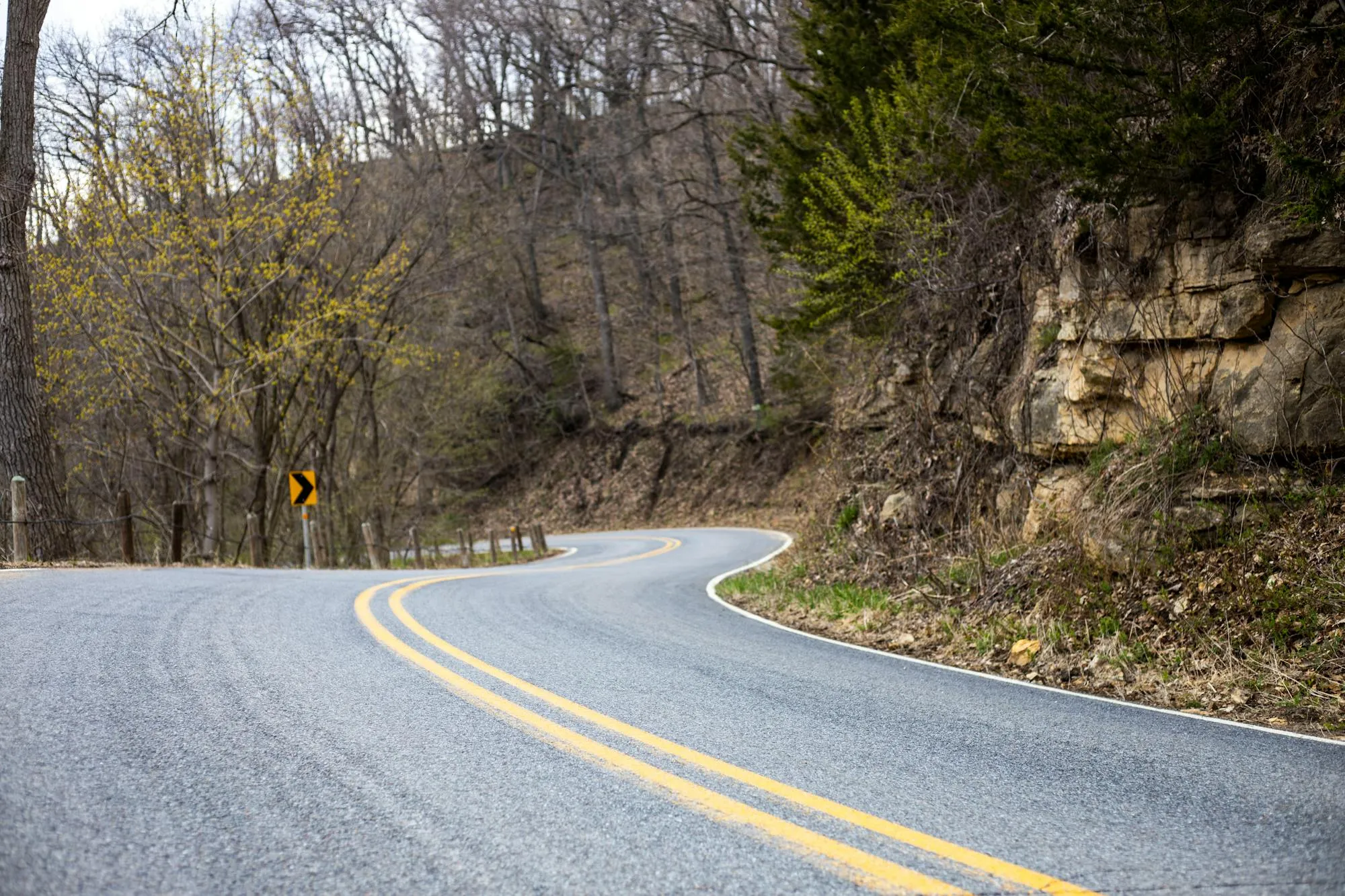
A winding two-lane asphalt road in the Appalachian mountains, photographed in dry daylight. Yellow double-center line markings guide through a series of tight left-hand curves. Dense deciduous and evergreen forest flanks both sides; a rock cut is visible on the right. The road surface and geometry suggest a technical, high-traffic riding corridor popular with motorcyclists. No motorcycle, no person visible.
Chris Flaten / Pexels

The Truth on the Street

This isn't from a single test ride. It's what's surfaced over years of reading YouTube comments, following forum threads, talking with owners in the paddock, and the messages riders send me directly. For the RC8 R the chatter lands consistently: real respect for the engine and chassis, set against a short list of gripes that keep returning.

Where the praise lands

The strongest theme is the engine. Riders consistently praise the big V-twin for pulling hard through the mid-range, valuing that drive out of corners over chasing peak numbers. The chassis ranks close behind, with owners rating its light, neutral, planted feel above the inline-fours of its day. The factory-adjustable cockpit and the strong, fade-free brakes round out the recurring praise.

The gripes that keep returning

The loudest complaint is heat. With the rear cylinder close to the right leg, riders report the V-twin throws serious warmth in slow traffic, worst in summer. Nearly as common is the missing electronics: no traction control or ride modes, which owners say dated the bike fast. Many find the firm, narrow seat hard to take past about an hour, and riders outside Europe regularly mention long waits for parts and dealers unfamiliar with the V-twin.

Known issues

  • Hydraulic clutch slave cylinder seal failure

    drivetrainoccasional

    The clutch slave cylinder seal can degrade and weep fluid, causing a soft lever and eventual clutch disengagement issues; replacement of the slave-cylinder assembly is the common fix.

  • Fuel pump reliability

    fuel systemoccasional

    Owners report intermittent in-tank fuel pump failures presenting as hard starting, low-rpm cutting out or pump electrical-noise complaints; replacement under warranty is typical when caught early.

  • Regulator/rectifier heat-related failure

    electricsoccasional

    The voltage regulator/rectifier is known to overheat and fail on early RC8 R units, leading to charging-system warning lights and eventual battery drain; uprated aftermarket units are a common owner remedy.

  • Rear shock linkage bearing wear

    suspensionoccasional

    The rear linkage bearings can develop play if servicing intervals are missed, manifesting as a clunk over bumps and degraded rear damping; preventive regreasing every ~15,000 km is widely recommended.

  • Cam chain tensioner noise on cold start

    engineoccasional

    Some owners report audible rattle from the cam chain tensioner area on cold start, usually traced to the hydraulic tensioner; updated parts are available from KTM dealers.

The Expert Benchmark

Where this KTM 1190 RC8 R pulls ahead of — or falls behind — its rivals on the numbers, and the typical bike in its class on character.

What kind of bike this is — character vs. the class

This bike Class average

The shape of the KTM 1190 RC8 R — numbers and character vs. the average Supersport

Head-to-head: KTM 1190 RC8 R vs. its rivals

The Handshake Score

Forget spec-sheet bragging. Here's who the 1190 RC8 R is actually built for.

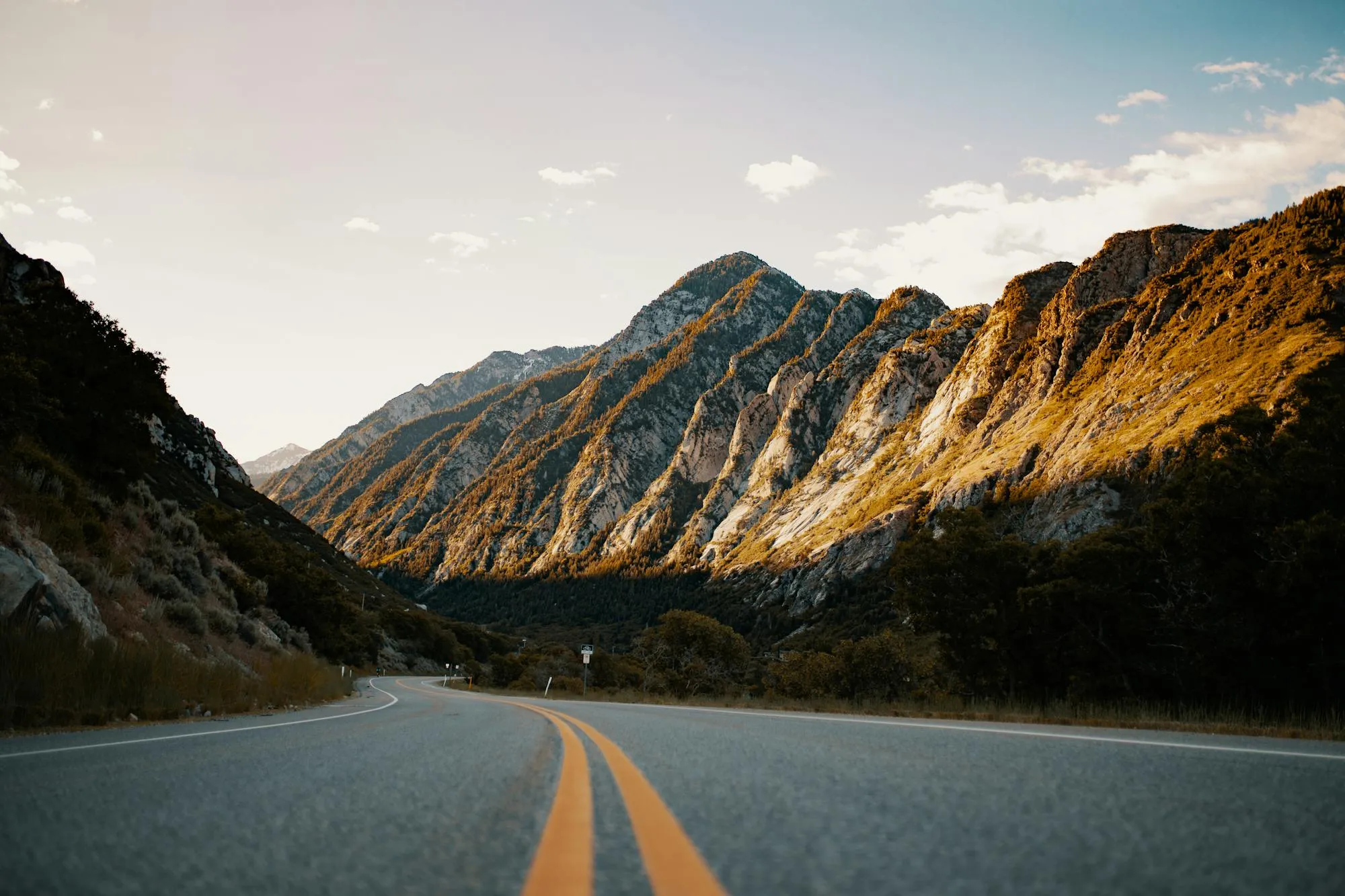
A scenic view of Angeles Crest Highway winding through rugged Southern California canyon terrain. Rocky mountainsides with golden earth tones frame the asphalt road with tight sweeping curves. Double yellow center line visible, sparse vegetation along the shoulders, clear blue sky with white clouds. Daylight, dry conditions. No motorcycle or rider visible. Iconic location for canyon-road enthusiasts.
Josh Sorenson / Pexels

Best motorcycle for Angeles Crest?

On the canyons it carves a precise, planted line and undercuts most rivals on weight, and the livable cockpit makes the slog to the good roads bearable. Below the fun zone, expect to manage a fussy V-twin and a stiff ride.

Made for Angeles Crest Highway · Coronado Trail / US 191 · Highway 1 / Big Sur
Best motorcycle for Laguna Seca?

This is your tool. The chassis holds its line when the track breaks up, the brakes never fade across a full day, and the front talks to you through fast corners. Just respect that there's no ABS or traction net to lean on.

Made for Barber Motorsports Park · WeatherTech Raceway Laguna Seca · Circuit of the Americas

Best motorcycle for Tail of the Dragon?

Tight technical twisties suit its knife-edge turn-in, and it's light enough to flick through repeated changes of direction. The heavy clutch and fussy low-speed manners will wear on you in the slow first-gear sections.

Made for Back of the Dragon · Blue Ridge Parkway · Cherohala Skyway

What's new versus the previous generation

If you're cross-shopping the older generation, here's what changed.

KTM 1190 RC8 (MY2008)

Previous generation · 2008

KTM 1190 RC8 (MY2008)

KTM's First Superbike, Delivered

Compare to the previous model →

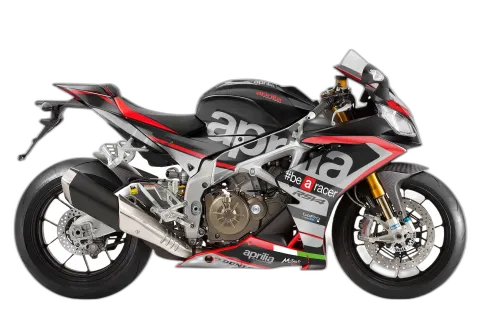
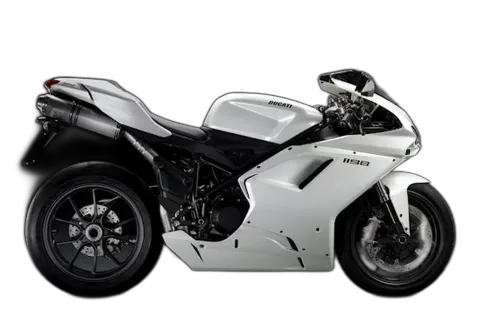
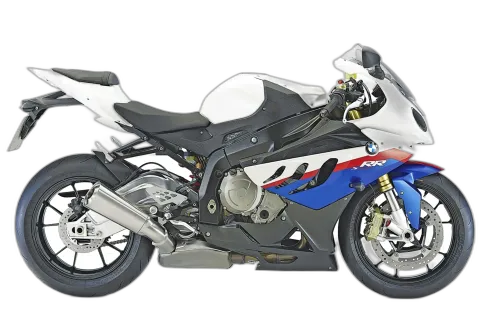
Alternatives to the KTM 1190 RC8 R

If this one isn't quite the fit, these are the bikes worth riding back-to-back against it.

Any price note compares both bikes at the same age — the youngest age both have on the used market — against this KTM 1190 RC8 R. “cheaper/pricier” is what that bike costs second-hand, not how worn it is.