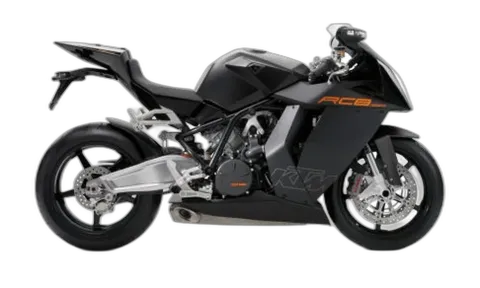
KTM 1190 RC8 (MY2008) — Supersport
NastyNils / KTM Press

2008 · Supersport · Buyer's Guide

1190 RC8 (MY2008)

KTM's First Superbike, Delivered

The Machine's Character

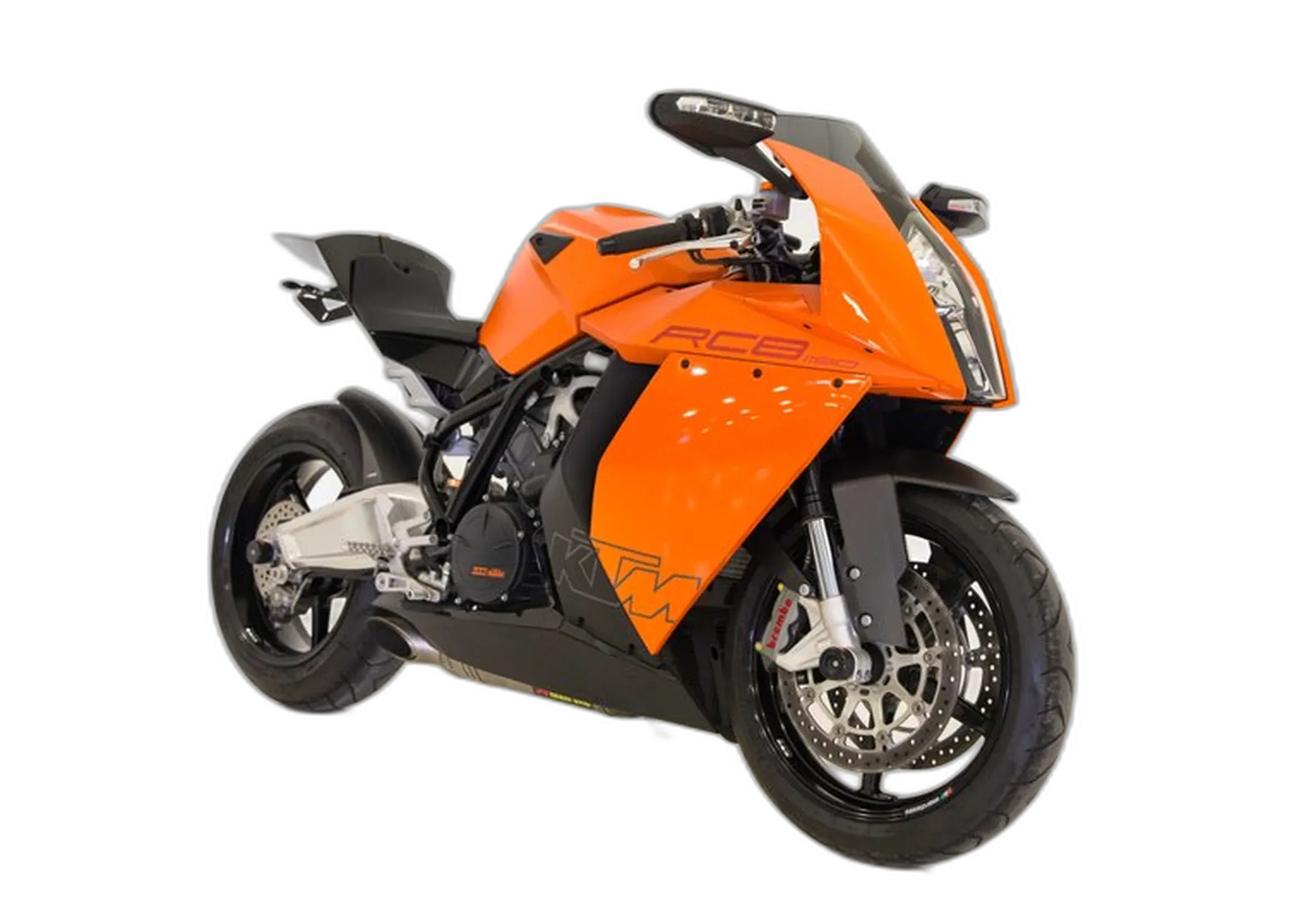
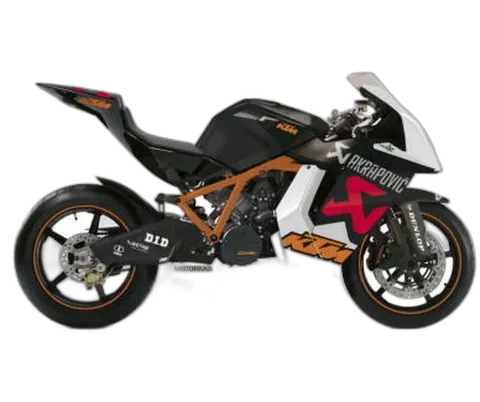
KTM's first production superbike dropped the LC8 75° V-twin into a purpose-built sportbike chassis, and the result still reads clearly today. The 1148 cc engine makes 155 hp and 89 lb-ft, fed through a steel trellis frame, fully adjustable WP suspension, and Brembo monoblock brakes. There is no electronic intervention here: no traction control, no rider modes, nothing reading the throttle for you. Where most of this class chases a screaming inline-four, the RC8 leans on torque and an almost relaxed linearity, which makes its performance far easier to place mid-corner than the spec sheet would have you guess.

On the road it rides calmer than the orange bodywork promises, holding its line through switchbacks and shrugging off a closed throttle when livestock appears. The trade is character: KTM polished the V-twin's mid-range into a smooth, linear pull tuned for lap times rather than drama, and on long straights it gives ground to better-prepped liter bikes. The engine itself is proven for high mileage, though the cooling and charging systems run close to their limits and most owners upgrade both early. This one is for the rider who wants real feedback and zero electronic filter, and accepts the homework that comes with it.

Hard Numbers

Spec sheets don't ride bikes, but they set the baseline.

Show full specs & equipment Hide specs & equipment
Key specifications
Power 155 hp (114 kW) @ 10,000 rpm
Torque 89 lb-ft (120 Nm) @ 8,000 rpm
Displacement 1148 cc
Engine 75° V-twin
Cooling Liquid-cooled
Gearbox 6-speed
Final drive Chain
Fork Upside-down (USD)
Front brake 320 mm
Front tire 120/70 ZR17
Rear tire 190/55 ZR17
Wheelbase 56.3 in (1430 mm)
Seat height 31.7 in (805 mm)
Fuel capacity 4.4 gal (16.5 L)

Equipment check

Chassis

  • Front Suspension Adjustable Standard
  • Rear Suspension Adjustable Standard
  • Steering Damper Standard

The Voice of Experience

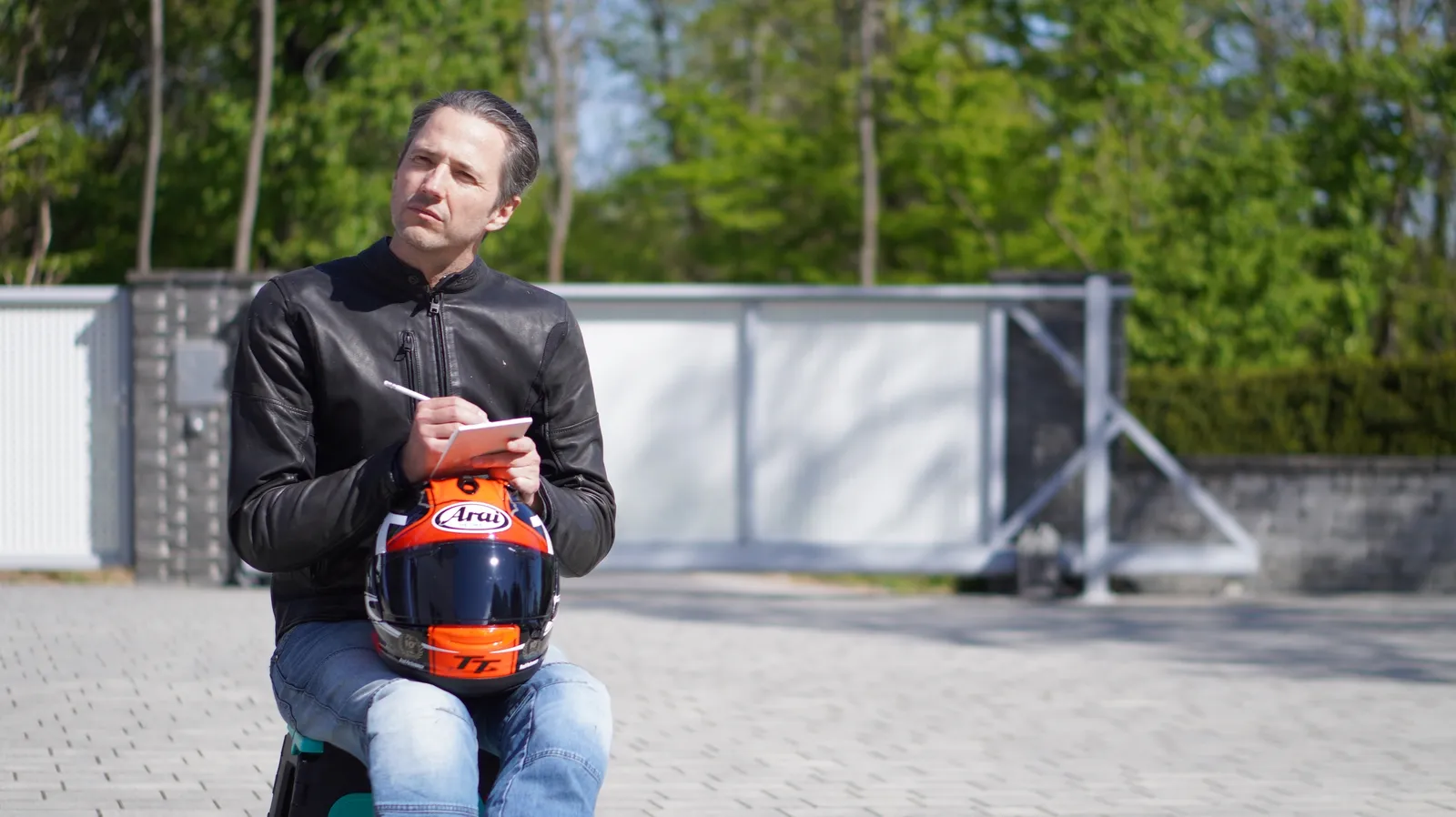
Portrait of NastyNils

The test ride

Spend a day on it and the adjustability becomes the whole story. Seat height, rear section, footpegs, and clip-on position all move through a genuine range, and a competent shop can swap between a road setup and a full track configuration inside one afternoon. Fitted to your body, the riding triangle stops being a compromise. The chassis talks constantly through the bars and the seat, so by the first few corners you already know what the front tire is doing and lean on it without flinching. Wind protection and seat comfort run better than the aggressive shape implies, and three days of real mountain miles leave you in decent shape at the end. Two sour notes intrude: the rear brake squeals at every stoplight, and at crawling traffic speeds the big twin gets fussy and wants more managing than you would like.

Rated point by point — where it earns its keep

My own 0–100 score for this bike against the class, area by area — the marker on each bar is the class average.

The thing that stays with me is how clearly the rear end talks to you. You can place the back of this bike with real precision, and on track that turns into something concrete: you get off the brakes and pick the throttle back up sooner than instinct says you should, because the information coming up through the seat is honest enough that you stop bracing for it to break loose. It doesn't, and lap after lap you commit a little more. That confidence arrives fast, too. Get on it cold and by the end of the opening lap you're already carrying serious lean, not from bravery but because the bike makes the angle feel earned rather than risky. The stability underneath all of it never turns into stubbornness; it simply gives you a settled base to work from. What surprised me most was the suspension's stamina. After long back-to-back sessions at a pace that would leave lesser hardware fading, both ends still had real adjustment range left before the limit, with nothing going soft or vague as the day wore on. For club-level track work the stock setup is genuinely all you need, which isn't something I get to say often. The honest edge sits right there: that margin is finite. A faster rider chasing the absolute limit would eventually want more, but for the track riding most owners will actually do, this chassis hands you plenty to grow into.

Where this bike widens its appeal is on real roads, not just the track. Riders moving up from a naked or a supermoto feel at home on it almost immediately, which is rare for a full supersport. The flip side is temperament: crack it open at a corner exit and it answers cleanly, without drama, and for the rider who turned up wanting to wrestle something half-wild into line, that very composure is the letdown. Not everyone who buys a liter supersport came looking for it to behave.

The front is exactly what a bike at this level needs. The radial Brembos come on strong from the first touch and stay smooth right through, so you can keep leaning on them through repeated hard stops without the bite turning sharp or washing out. The only thing worth flagging is purely acoustic: the rear squeals, loudly and without fail, at every stop. It does nothing to how the bike pulls up, but on a machine this serious it's an odd note to leave in.

This is a motor you ride by trusting it rather than working around it. You can crack the throttle while still well over on the side of the tire and the power simply arrives at the rear, smooth and metered, with no surge and no step in the delivery to upset the line. Off a closed throttle the response is just as honest: it doesn't hunt or spike, so you always know exactly what you'll get when you roll back on. On the road that calibration buys real flexibility, because it pulls cleanly from well below its peak, and a downshift before a slower corner becomes optional far more often than you'd think. The upshot is a bike you can ride genuinely hard without spending any attention on the engine itself. It does its job so cleanly that you can put it out of mind and keep your focus on the road ahead.

The detail owners keep pointing to is the build quality of the steel tube frame. People who've spent years wrenching on a lot of different machines single out the welds for their precision and durability, and that's not something riders usually bother to praise. The WP suspension and Brembo brakes that came fitted as standard have held up just as well over the long haul. On the engine side, the standout for me is how stable the valve clearances stay; owners report going well past the service intervals a performance V-twin would normally demand before anything needs attention, which tells you a lot about how the motor was put together. The one real reservation is reputation rather than a fault. The Japanese supersports have spent years proving they'll run season after season without complaint, and this bike is simply too new to have built that same record. If your plan is to race it hard over many seasons, that unproven quantity is worth weighing honestly.

Of everything this bike does well, the way it fits its rider is the one I'd put at the very top. That isn't a happy accident. This is a machine built by people who clearly intended to put real distance on it, and it shows in how seriously the ergonomics were thought through rather than tacked on after the styling was settled. The catch, and it's a fair one, is that the payoff is conditional. You have to invest the time to set the bike up properly to your own body before any of that comfort shows up. Do that work and a hard-edged supersport turns into something you can genuinely live with through a long day in the saddle. Skip it, treat the setup as a quick parking-lot fiddle, and you'll never see what the bike is actually willing to give you. It rewards patience, and it pays that patience back generously.

The instrumentation is more useful than I expected on a bike this focused. The lap timer covers both road and track use, triggered either with a press of the left thumb or automatically off a trackside infrared sensor, and it works without fuss. The programmable shift light earns its keep for a specific reason: the power is so linear that the engine note alone won't reliably tell you when to grab the next gear, and the light fills that gap. Small touches, but ones you actually reach for.

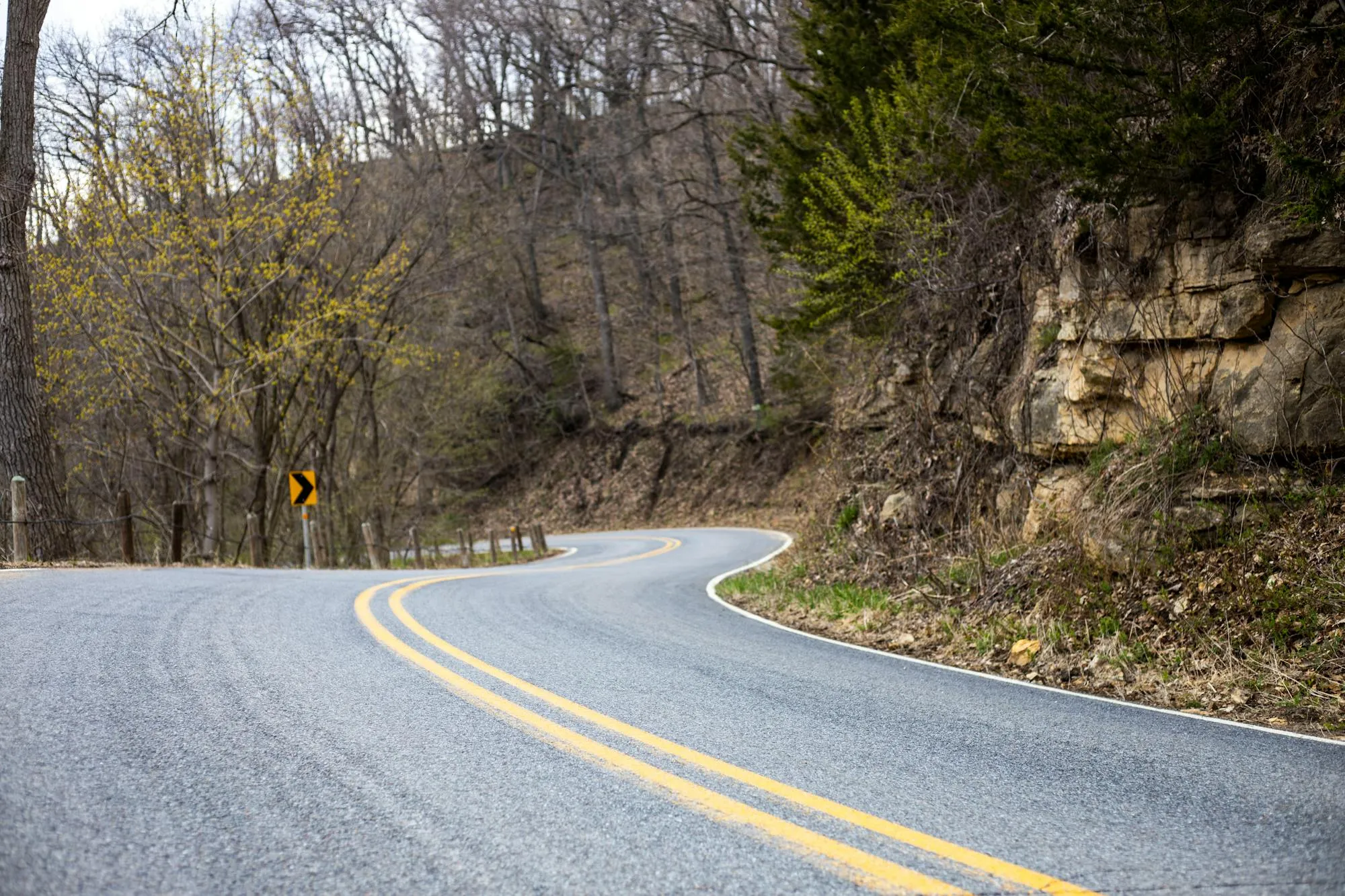
A winding two-lane asphalt road in the Appalachian mountains, photographed in dry daylight. Yellow double-center line markings guide through a series of tight left-hand curves. Dense deciduous and evergreen forest flanks both sides; a rock cut is visible on the right. The road surface and geometry suggest a technical, high-traffic riding corridor popular with motorcyclists.
Chris Flaten / Pexels

The Truth on the Street

I've spent years listening to what RC8 owners actually say, in paddock conversations, long message threads, and the notes riders send me after living with one. The pattern holds steady: people value this bike for how it feels and how it fits far more than for anything on its spec sheet.

What riders keep coming back to

Fit comes up first. Owners consistently praise how the footpegs, bar position, seat height, and lever reach all move through a real range, letting very different bodies get comfortable in a way riders seldom manage in this class. The torque-rich V-twin draws nearly as much, pulling cleanly from low in the rev range, and the fully adjustable WP suspension with Brembo radial front brakes wins trust on road and track alike. Plenty also call out the faceted bodywork and orange frame as a look nothing else from its era shares.

The gripes that recur

The complaints run just as consistent. Loudest is the missing safety net: no ABS, no traction control, no ride modes. Some note the roughly 155 hp output sits behind the quickest liter bikes of its day. The styling divides riders, loved by some and rejected by others who wanted a more familiar shape. And several flag the thin dealer presence of the time, which made service and parts a chore.

Known issues

  • Regulator/rectifier failure

    electricscommon

    The voltage regulator/rectifier on early RC8 units is known to overheat and fail, causing charging-system issues and occasional battery problems. Aftermarket Mosfet-style replacements are a common owner remedy.

  • Fuel pump and fuel system noise/failure

    fuel systemoccasional

    Some owners report fuel pump whining or premature failure, occasionally accompanied by fuel-pressure related running issues.

  • Front-end shimmy/headshake under hard acceleration

    chassisoccasional

    Owners and tester reports note that the chassis can exhibit headshake when accelerating hard out of corners on bumpy surfaces, even with the standard steering damper.

  • Clutch slave cylinder leaks

    drivetrainoccasional

    The hydraulic clutch slave cylinder is reported to develop seal weeping over time, requiring rebuild or replacement.

The Expert Benchmark

Where this KTM 1190 RC8 pulls ahead of — or falls behind — its rivals on the numbers, and the typical bike in its class on character.

What kind of bike this is — character vs. the class

This bike Class average

The shape of the KTM 1190 RC8 — numbers and character vs. the average Supersport

Head-to-head: KTM 1190 RC8 vs. its rivals

The Handshake Score

Forget spec-sheet bragging. Here's who the 1190 RC8 is actually built for.

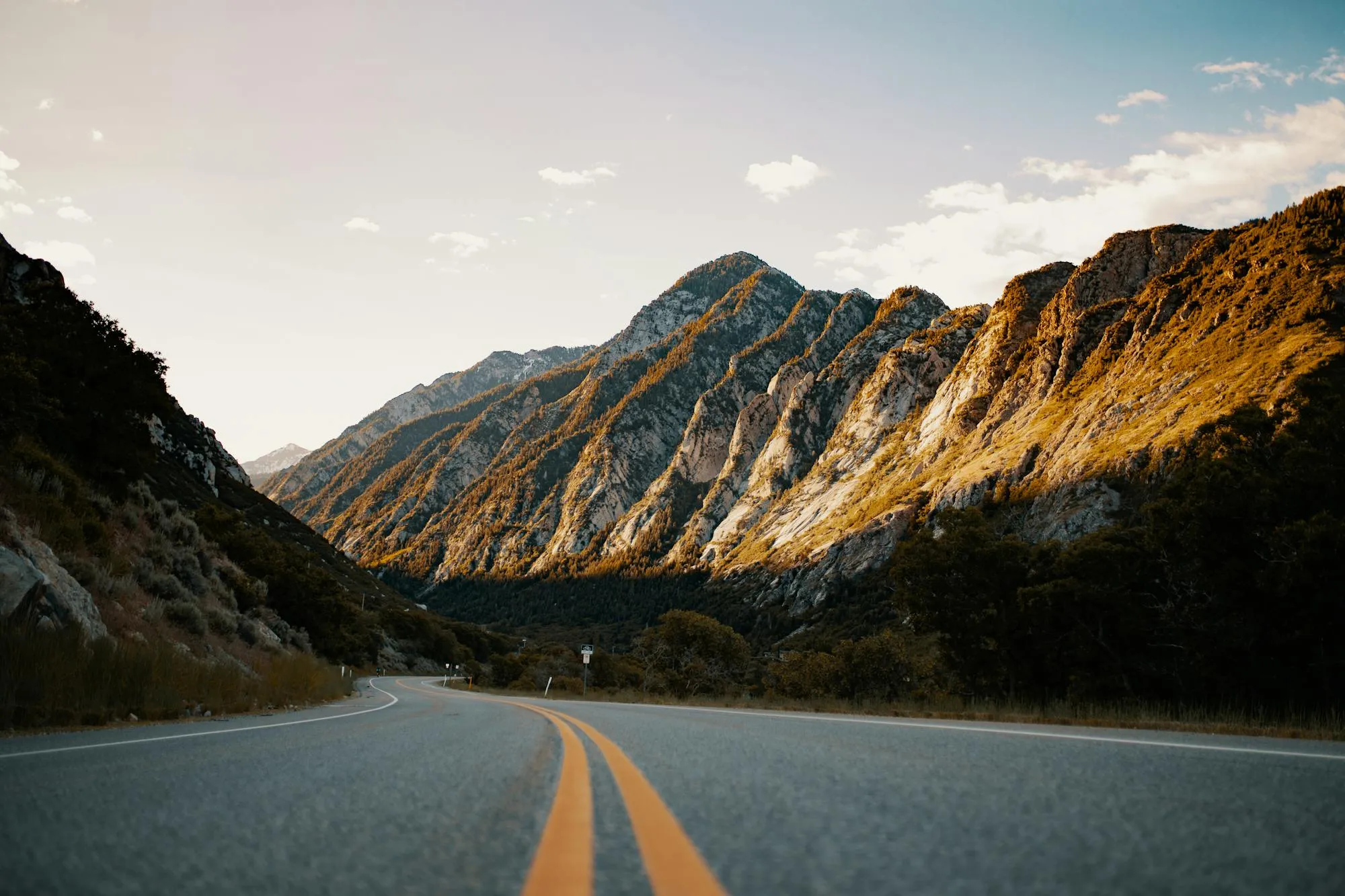
A scenic view of Angeles Crest Highway winding through rugged Southern California canyon terrain. Rocky mountainsides with golden earth tones frame the asphalt road with tight sweeping curves. Double yellow center line visible, sparse vegetation along the shoulders, clear blue sky with white clouds. Daylight, dry conditions. Iconic location for canyon-road enthusiasts.
Josh Sorenson / Pexels

Best motorcycle for Angeles Crest?

Built for your pace. It stays planted through fast sweepers, feeds back everything the front does, and rides composed enough to enjoy the run out and back. Just know there's no electronic net underneath you.

Made for Angeles Crest Highway · Coronado Trail / US 191 · Highway 1 / Big Sur
Best motorcycle for Tail of the Dragon?

Your kind of road. The feedback and line precision reward technical riding, and the adjustable ergonomics fit it to you. One catch: tight, hard-braked corners ask for committed, deliberate bar input.

Made for Back of the Dragon · Blue Ridge Parkway · Cherohala Skyway

Best motorcycle for Laguna Seca?

Track-ready as bought: footpegs, clip-ons, and WP suspension that holds a full hard day. The feedback lets you push from lap one. Accept that it's down on straight-line power and runs zero electronic aids.

Made for Barber Motorsports Park · WeatherTech Raceway Laguna Seca · Circuit of the Americas

Alternatives to the KTM 1190 RC8

If this one isn't quite the fit, these are the bikes worth riding back-to-back against it.

Any price note compares both bikes at the same age — the youngest age both have on the used market — against this KTM 1190 RC8. “cheaper/pricier” is what that bike costs second-hand, not how worn it is.