
BMW M 1000 R (K69) — Hyper Naked
BMW press archive

2023–2024 · Hyper Naked · Buyer's Guide

M 1000 R (K69)

BMW's Superbike Engine, Unclothed

The Machine's Character

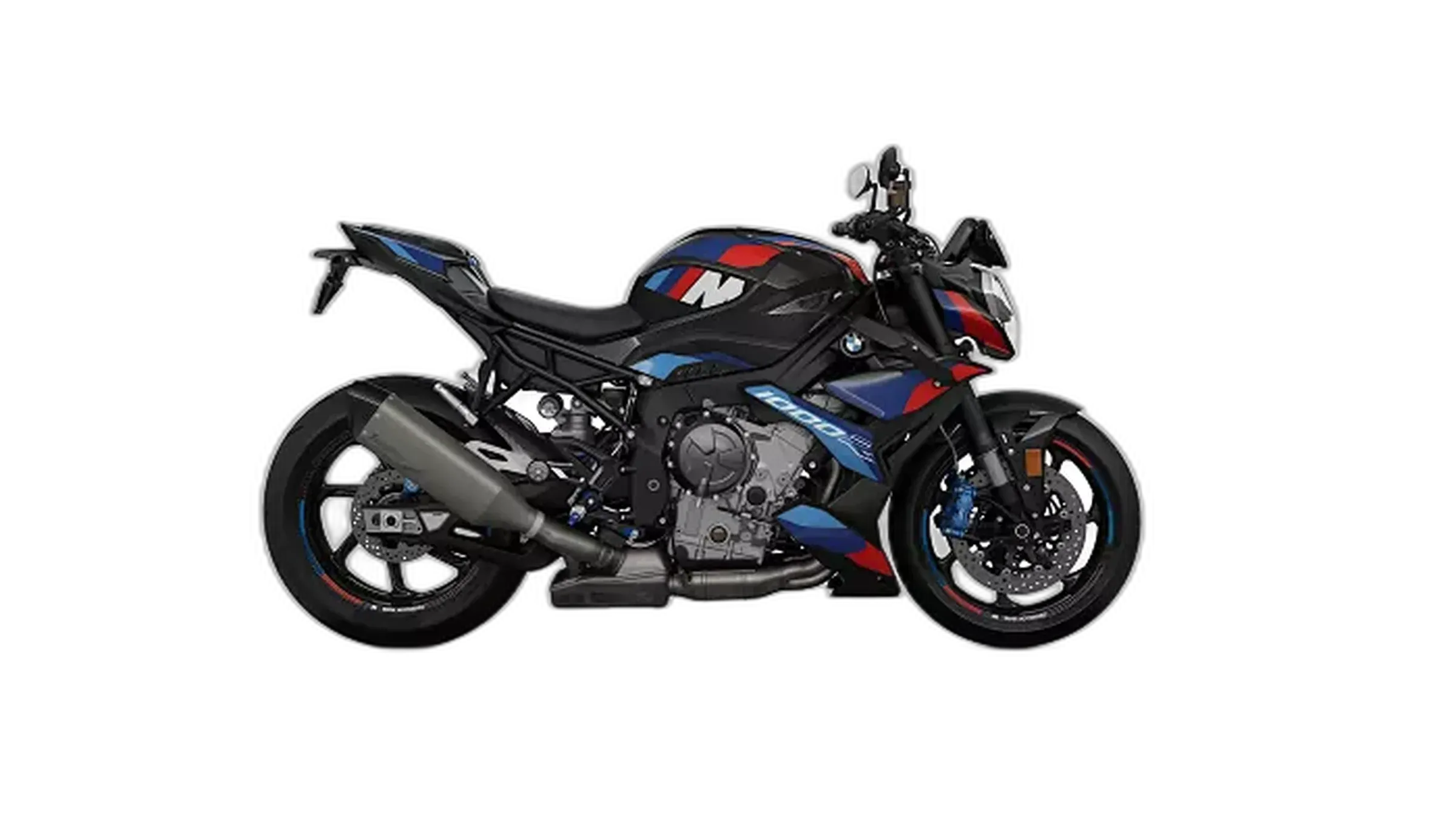
BMW's M badge on a roadster means the M 1000 RR's ShiftCam inline-four loses its fairing and goes to work on the street. 999 cc, 209 hp at 13,750 rpm, 83 lb-ft at 11,000 rpm, with a 200-section rear tire and a 57.1 in wheelbase holding it all in line. What keeps the K69 coherent instead of silly is everything built around that engine. Dynamic Damping Control reads the road continuously, Ride Modes Pro sets the boundaries, and M forged or carbon wheels reduce what the suspension has to manage. This is the top rung of BMW's roadster ladder, above the S 1000 R, and it behaves like it.

Ridden hard, it feels like a superbike that traded bodywork for leverage. 439 lb wet, wide bars, and enough electronics that the performance stays usable rather than intimidating. That is the BMW signature at work: real speed delivered without theater. It suits an experienced rider who wants track-grade hardware on a road bike and will actually use the adjustment range instead of leaving everything on default. The honest part is that this is a narrow machine. A 33.1 in seat, a 4.4 gal tank, no luggage system and no center stand from the factory. It rewards intent and gives very little back to anyone riding it gently.

Hard Numbers

Spec sheets don't ride bikes, but they set the baseline.

Show full specs & equipment Hide specs & equipment
Key specifications
Power 209 hp (154 kW) @ 13,750 rpm
Torque 83 lb-ft (113 Nm) @ 11,000 rpm
Displacement 999 cc
Engine Inline-four
Cooling Liquid-cooled
Gearbox 6-speed
Final drive Chain
Front brake 320 mm
Front tire 120/70 ZR17
Rear tire 200/55 ZR17
Wheelbase 57.1 in (1450 mm)
Seat height 33.1 in (840 mm)
Wet weight 439 lb (199 kg)
Fuel capacity 4.4 gal (16.5 L)
Top speed 174 mph (280 km/h)
Fuel economy 37 mpg (US)

Equipment check

Chassis

  • Electronic Suspension BMW Dynamic Damping Control (DDC) Realtime road adaptationBrake dive control Standard
  • Front Suspension Adjustable Standard
  • Rear Suspension Adjustable Standard
  • Steering Damper Standard
  • Cruise Control Standard

Comfort

  • Heated Grips Standard

Connectivity

  • TFT Display Standard
  • Smartphone Connectivity Standard
  • USB Charging Port Standard
  • Keyless System Standard
  • Tire Pressure Monitoring (TPMS) Standard

Drivetrain

  • Quickshifter BMW Gear Shift Assistant Pro Clutchless ridingSeamless power shifts Standard
  • Slipper Clutch Standard

Lighting

  • LED Headlight Standard

Safety

  • ABS Standard
  • Cornering ABS Standard
  • Traction Control Standard
  • Ride Modes BMW Ride Modes Pro Selectable ride modesLean sensitive traction Standard
  • Wheelie Control Standard
  • Launch Control Standard

Signature Tech

The named systems that set this bike apart — and what each one does for you.

Connectivity

  • BMW M GPS-Laptrigger Optional
    • Onboard data logging

Lighting

  • BMW Headlight Pro (Adaptive Cornering LED) Standard
    • Cornering light visibility

Wheels

  • BMW M Carbon Wheels Optional
    • Reduced unsprung rotating mass
    • Agile weight reduction
    • Brake fade resistance
  • BMW M Forged Wheels Standard
    • Reduced unsprung rotating mass
    • Agile weight reduction

The Voice of Experience

Portrait of NastyNils

The test ride

The first surprise is how compact it feels for what the spec sheet says. At 439 lb with a 33.1 in seat you sit high and slightly forward, wrists lightly loaded, knees locked into a tank narrow enough to grip properly. Intake noise builds behind the headstock and the sport exhaust stays civil until the revs climb, then it hardens up. There is no wind protection at all, so anything past 90 mph is a full-body event and your neck knows it by the end of a long straight. Sit at a steady 6,000 rpm and the bars start buzzing: the mirrors turn to smear and your fingertips go numb inside twenty minutes. The switchgear is the good news on a long day out. Heated grips, cruise control, a clear TFT, and a shifter you can use up and down without thinking about it.

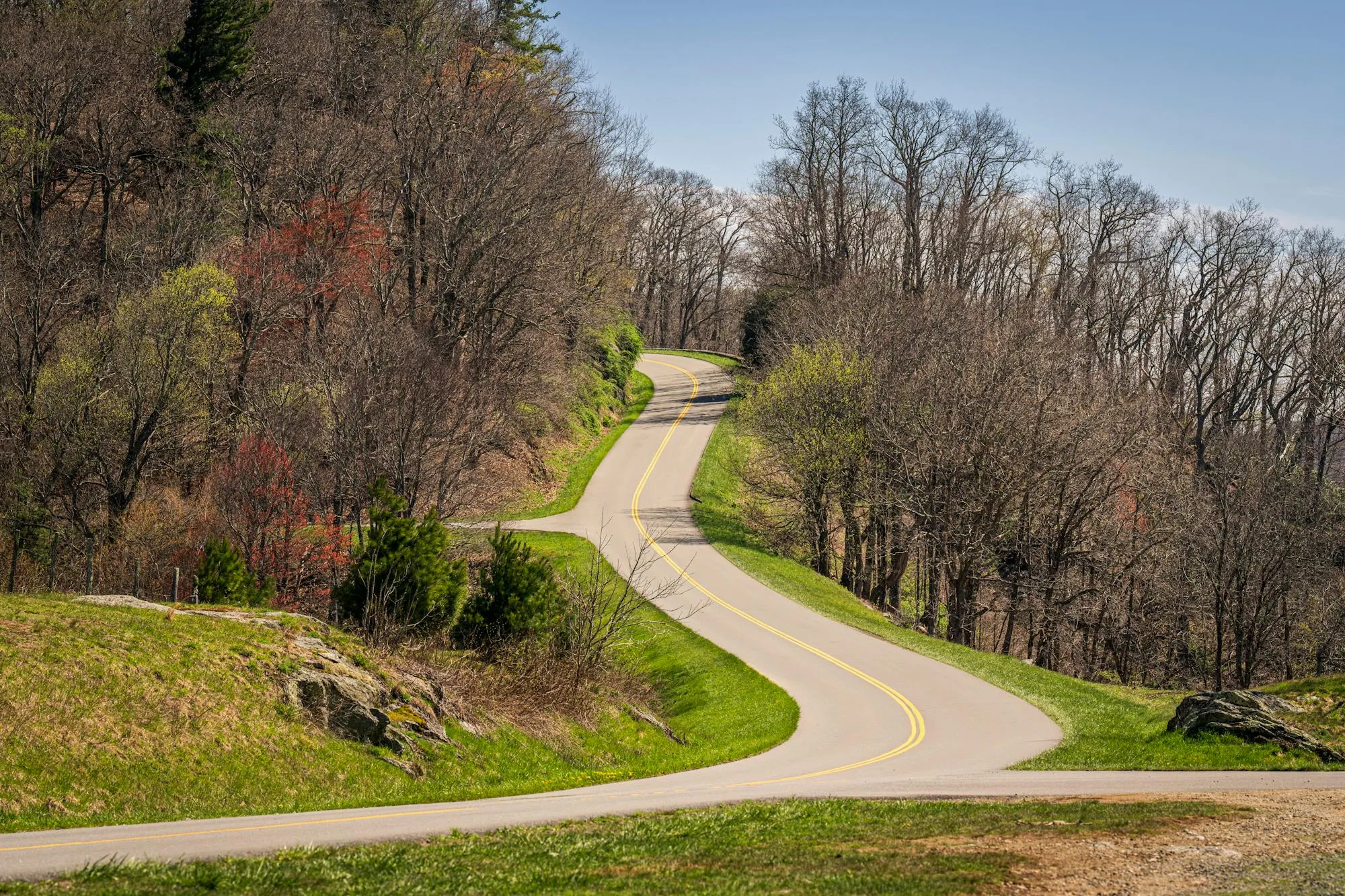
A winding asphalt road descending through the Appalachian Mountains, likely the famous Tail of the Dragon section in Tennessee and North Carolina. Multiple technical right-hand and left-hand curves are visible in this aerial perspective, surrounded by deciduous forest in spring foliage. Clear sunny conditions, well-maintained asphalt with yellow center lines marking the curves.
Mark Stebnicki / Pexels

The Truth on the Street

I did not ride my way to this section. It comes from years of listening: pit-lane conversations, parking-lot talk after a ride, club evenings, and the messages riders send me directly once they have lived with one of these. Sort all of that and the shape is easy to read. The hardware collects respect and very little argument, and what riders push back on sits on personality and side effects rather than capability.

Where the M badge earns its keep

Riders who know both this and the standard roadster describe the M upgrade as substance rather than trim, and the braking system is usually the first thing they name. It draws steady credit for feel at the lever and for control you can meter deep into a corner, and this is the first roadster to carry it. The engine is the other constant. Taken from the M superbike, it keeps real drive available through the middle of the range thanks to the variable intake, then hardens into a long top end that riders describe as sustained rather than spiky. The gearbox comes up nearly as often, with owners rating the shift action against anything else currently on sale. Semi-active damping and the lean-sensitive rider aids fill out what riders call one of the most complete electronic packages in the class.

The character riders argue about

Below 6,000 rpm the motor splits the room. Riders arriving from twins, triples and V4s call the inline-four subdued down there, short on noise and short on event, and they raise it as a question of flavor rather than pace. The buzz through the bars in that same window gets filed under platform behavior by most of the people reporting it, read as belonging to this family of engines rather than to this model alone. The winglets draw comment from two directions. Riders report more shove from side wind at highway speed, with several describing the sensation as carrying a sail, and nobody reports feeling any benefit at legal road pace, since the downforce only registers at track speed. A smaller group mentions the fitted tires wanting heat in them before they give full grip on cold pavement.

Known issues

  • Front-end wobble / weave at sustained top-speed riding

    chassis occasional

    Owners and at least one trade test report front-end wobble or weave at sustained top speed above approximately 180 km/h (111 mph). Owners commonly report that fitting a sport windscreen alleviates the symptom significantly. The behaviour is reported as a recurring pattern on the platform rather than as an isolated incident.

  • Handlebar and mirror vibrations around 6,000 rpm

    engine common

    At cruising RPM around 6,000 rpm, the handlebar transmits significant vibration that blurs the mirror image and causes finger tingling. A secondary resonance has been reported around 4,000 rpm originating from the exhaust manifold area. The vibration pattern is reported by multiple owners; it is described as inherent to the S/M 1000 inline-four platform rather than a per-unit defect.

  • Cush drive early wear / out-of-spec slack

    drivetrain occasional

    Multiple owners report that the rear hub rubber damper ("cush drive" / "Ruckdämpfer") develops out-of-spec slack at low mileage and requires early replacement. This is a known issue across the K63 / K67 / K69 BMW S/M 1000 platform, not unique to the M 1000 R K69 — but it does carry over to the K69 and is documented by M 1000 R owners.

The Expert Benchmark

Where this BMW M 1000 R pulls ahead of — or falls behind — its rivals on the numbers, and the typical bike in its class on character.

What kind of bike this is — character vs. the class

This bike Class average

The shape of the BMW M 1000 R — numbers and character vs. the average Hyper Naked

Head-to-head: BMW M 1000 R vs. its rivals

The Handshake Score

Forget spec-sheet bragging. Here's who the M 1000 R is actually built for.

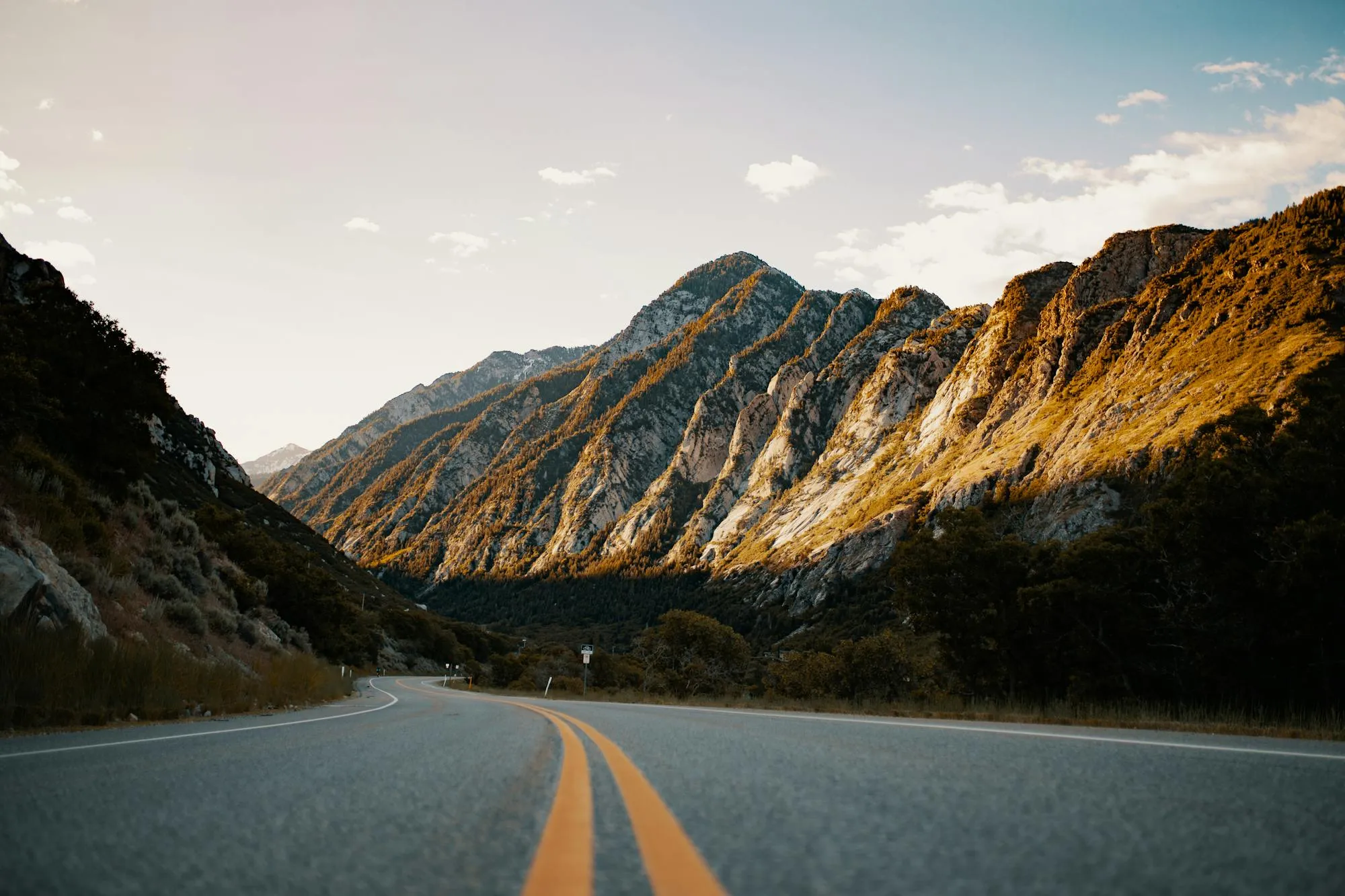
A scenic view of Angeles Crest Highway winding through rugged Southern California canyon terrain. Rocky mountainsides with golden earth tones frame the asphalt road with tight sweeping curves. Double yellow center line visible, sparse vegetation along the shoulders, clear blue sky with white clouds. Daylight, dry conditions. Iconic location for canyon-road enthusiasts.
Josh Sorenson / Pexels

Best motorcycle for Laguna Seca?

The hardware was built with your day in mind: M GPS-Laptrigger, carbon wheel option, damping you can change between sessions. Bring good tires and it will outlast your reference points.

Made for Barber Motorsports Park · WeatherTech Raceway Laguna Seca · Circuit of the Americas
Best motorcycle for Angeles Crest?

Angeles Crest is exactly its habitat. The chassis is happy at canyon pace and the electronics keep 209 hp civil in traffic on the way out. Plan fuel stops around the 4.4 gal tank.

Made for Angeles Crest Highway · Coronado Trail / US 191 · Highway 1 / Big Sur

Best motorcycle for Tail of the Dragon?

On Dragon-tight corners you will use a fraction of the engine, and that is fine. The chassis is precise at low speed too, though the bar buzz turns up on the highway slog to get there.

Made for Back of the Dragon · Blue Ridge Parkway · Cherohala Skyway

Alternatives to the BMW M 1000 R

If this one isn't quite the fit, these are the bikes worth riding back-to-back against it.

Any price note compares both bikes at the same age — the youngest age both have on the used market — against this BMW M 1000 R. “cheaper/pricier” is what that bike costs second-hand, not how worn it is.