By NastyNils·
Motorcycle comparison · Supersport
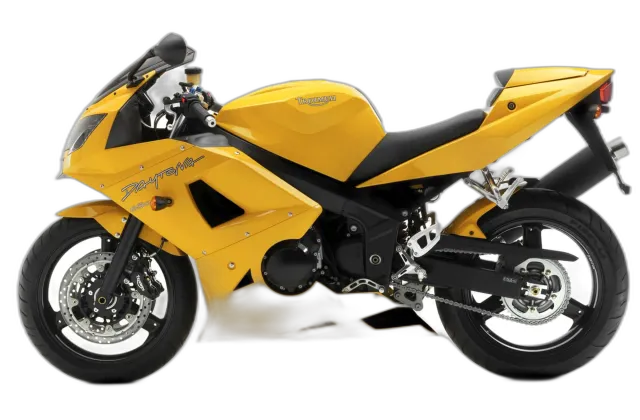
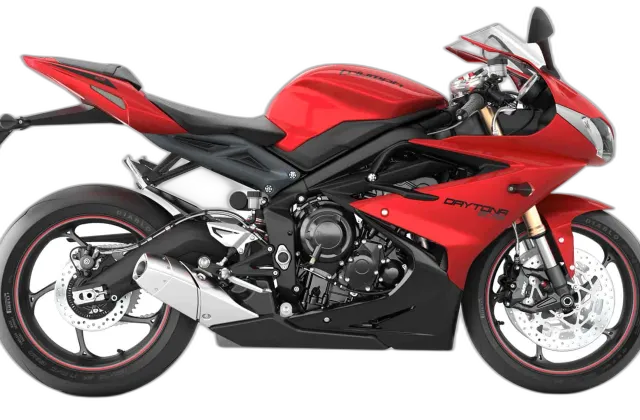
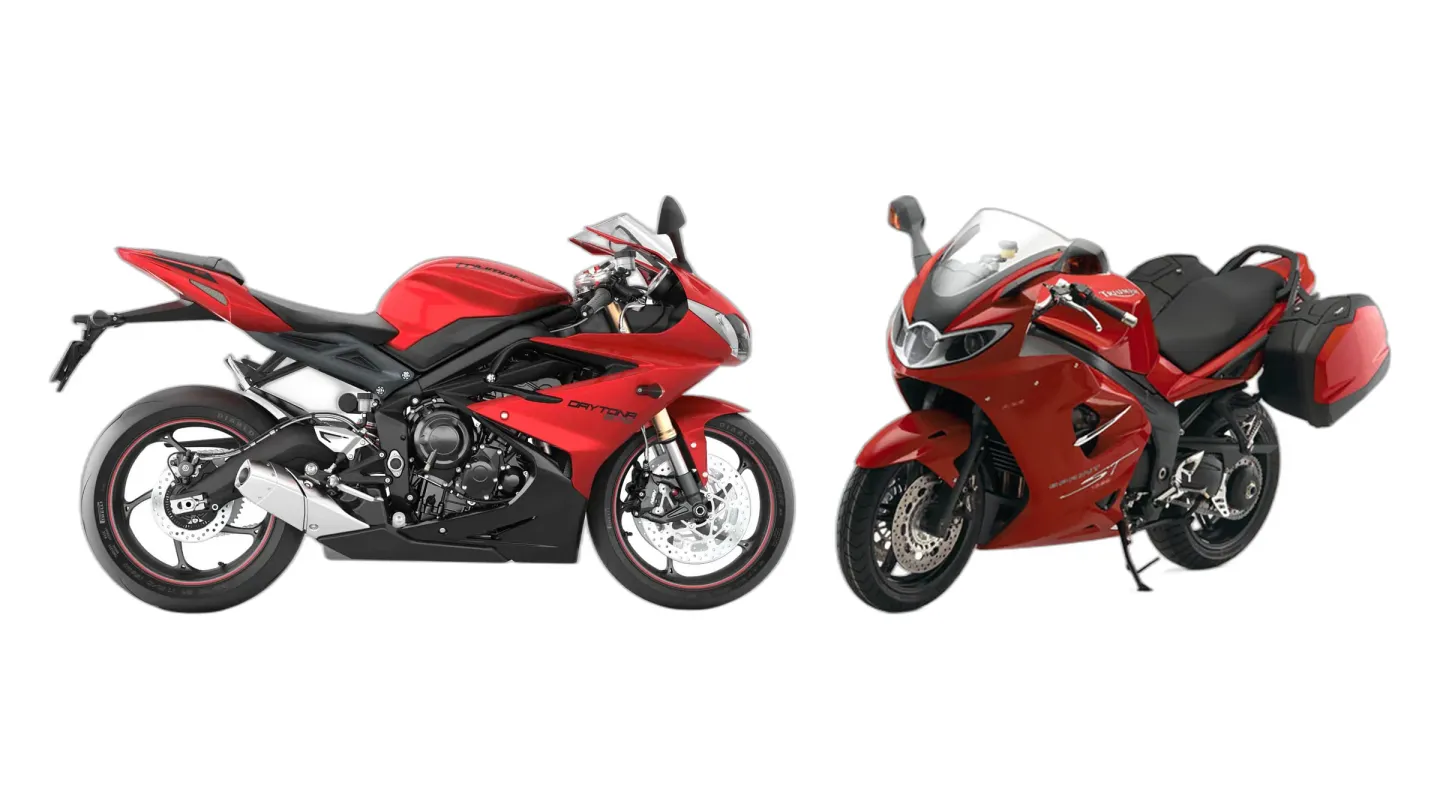
Triumph Daytona 675 (MY2013) vs Daytona 675 (D67LC)
Turn the 2013 Triumph Daytona 675 into a bend and it's quick to fold over, and the front's talking to you all the way in. The 2006 Triumph Daytona 675 doesn't make you wrestle its bars to turn in. It drops onto exactly the line you point at.
So which one do you buy?
The 2013 Daytona 675 has the edge if…
Racetrack use
A touch ahead: 2013 Daytona 675
For track days, the 2013 Daytona 675 comes out a touch ahead. Your setup and tires matter just as much.
Sporty riding on twisty roads
Nose ahead: 2013 Daytona 675
The 2013 Daytona 675 nudges ahead once the pavement starts to wiggle. Don't expect a night-and-day difference.
What makes each one tick
2013 Daytona 675
With a light chassis and precise steering, the 2013 Daytona 675 changes direction off a gentle push on the clip-ons. Hard on the front brake and still leaned over, its fork keeps telling you what the tire's doing. There's pull low down in the triple, and it keeps building toward the top end. Its intake howl chases the tach.
2006 Daytona 675
Slim from the tank back, the 2006 Daytona 675 flicks from one side to the other through an S-section. On a lazy throttle in second gear, the triple doesn't protest anywhere from hairpins out to fast sweepers. Ripples and broken edges at the apex don't unsettle the chassis. Corner exit stays quiet on the throttle.
The Voice of Experience

What actually separates them
- ABS: option on the 2013 Daytona 675, not offered on the 2006 Daytona 675.
- Quickshifter: option on the 2013 Daytona 675, not offered on the 2006 Daytona 675.
- Slipper Clutch: standard on the 2013 Daytona 675, not offered on the 2006 Daytona 675.
Which one for the way you ride
Comfortable long-distance riding
Not built for this
Long-haul comfort is a weak spot for both. If you tour, shop with that in mind.
These two run dead level on commuting and running costs. Sit on both in the showroom and trust what your body says.
Who each one is built for
What's good, and what you'll live with
2013 Daytona 675
What owners say
Strengths
- Superb handling and agility
- Thrilling triple‑cylinder engine
- Confidence‑inspiring front‑end feedback
- Excellent value in the middleweight class
2006 Daytona 675
Strengths
- Goes Exactly Where You Point
- Settled On Rough Corners
- Holds Up To Hard Use
- One Gear, Most Situations
- Characterful inline-triple engine
Trade-offs
- Throttle Lag Off A Closed Corner
- Rear Moves Under Hard Braking In Lean
- Track Tires Wear Fast
- Cramped, track-focused ergonomics
Known problems to check before you buy
2013 Daytona 675
- Transmission pivot plate wear The factory pivot plate can wear, leading to imprecise gear shifts or difficulty shifting.
- EXUP valve cable stretching The exhaust valve cables stretch over time, causing a check engine light and potentially altering exhaust back‑pressure. Resolved by dealer adjustment, replacing the cables, or installing a servo buddy.
- Counter shaft oil seal leak Oil weeps from the counter shaft seal on the left side of the engine.
2006 Daytona 675
- Regulator/rectifier overheating and failure Recall 12V445000 The regulator/rectifier can overheat, preventing charging and causing the motorcycle to stall. An NHTSA recall (12V445000) was issued covering 2006–2009 Daytona 675 models.
- EXUP valve sticking The exhaust valve (EXUP) can seize or become noisy, triggering the check engine light and potentially affecting mid-range power. Often requires adjustment or replacement.
What they share
- Displacement
- 675 cc
- Engine
- Inline-three
- Cooling
- Liquid-cooled
- Peak power at
- 12,600 rpm
- Gearbox
- 6-speed
- Final drive
- Chain
- Fork
- Upside-down (USD)
- Front tire
- 120/70-17
- Rear tire
- 180/55-17
Where the spec sheets split
| 2013 Daytona 675 | 2006 Daytona 675 | |
|---|---|---|
| Seat height | 32.3 in (820 mm) | 32.5 in (825 mm) |
| Wet weight | 406 lb (184 kg) | 408 lb (185 kg) |
| 2013 Daytona 675 | 2006 Daytona 675 | |
|---|---|---|
| Power | 126 hp (94 kW) | 123 hp (92 kW) |
| Torque | 55 lb-ft (74 Nm) | 53 lb-ft (72 Nm) |
| Peak torque at | 11,900 rpm | 11,750 rpm |
| 2013 Daytona 675 | 2006 Daytona 675 | |
|---|---|---|
| Fuel capacity | 4.6 US gal (17.4 L) | 4.6 US gal (17.5 L) |
| 2013 Daytona 675 | 2006 Daytona 675 | |
|---|---|---|
| Front brake | 310 mm | 308 mm |
What comes fitted, what costs extra
| 2013 Daytona 675 | 2006 Daytona 675 | |
|---|---|---|
| ABS | Option | Not offered |
| Quickshifter | Option | Not offered |
| Slipper Clutch | Standard | Not offered |
Head to head, area by area
Both bikes on the same scale, one area at a time.