By NastyNils·
Motorcycle comparison · Supersport
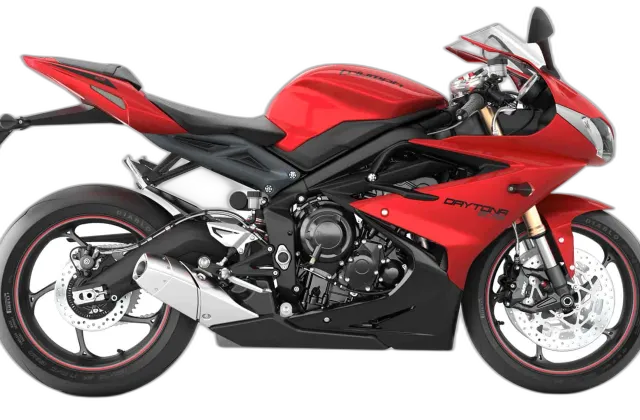
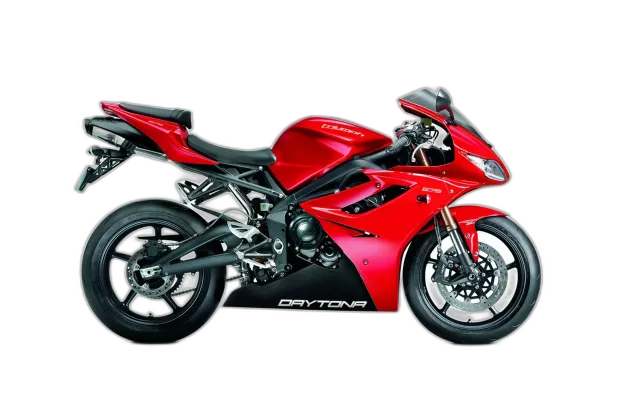
Triumph Daytona 675 (MY2013) vs Daytona 675 (D67LC2)
Brake hard on the 2013 Triumph Daytona 675 and the fork's reporting exactly how much grip the front tire has left. The 2009 Triumph Daytona 675's front end passes along the same clear grip picture under that load. Its Kayaba fork settles on damping you've tuned yourself.
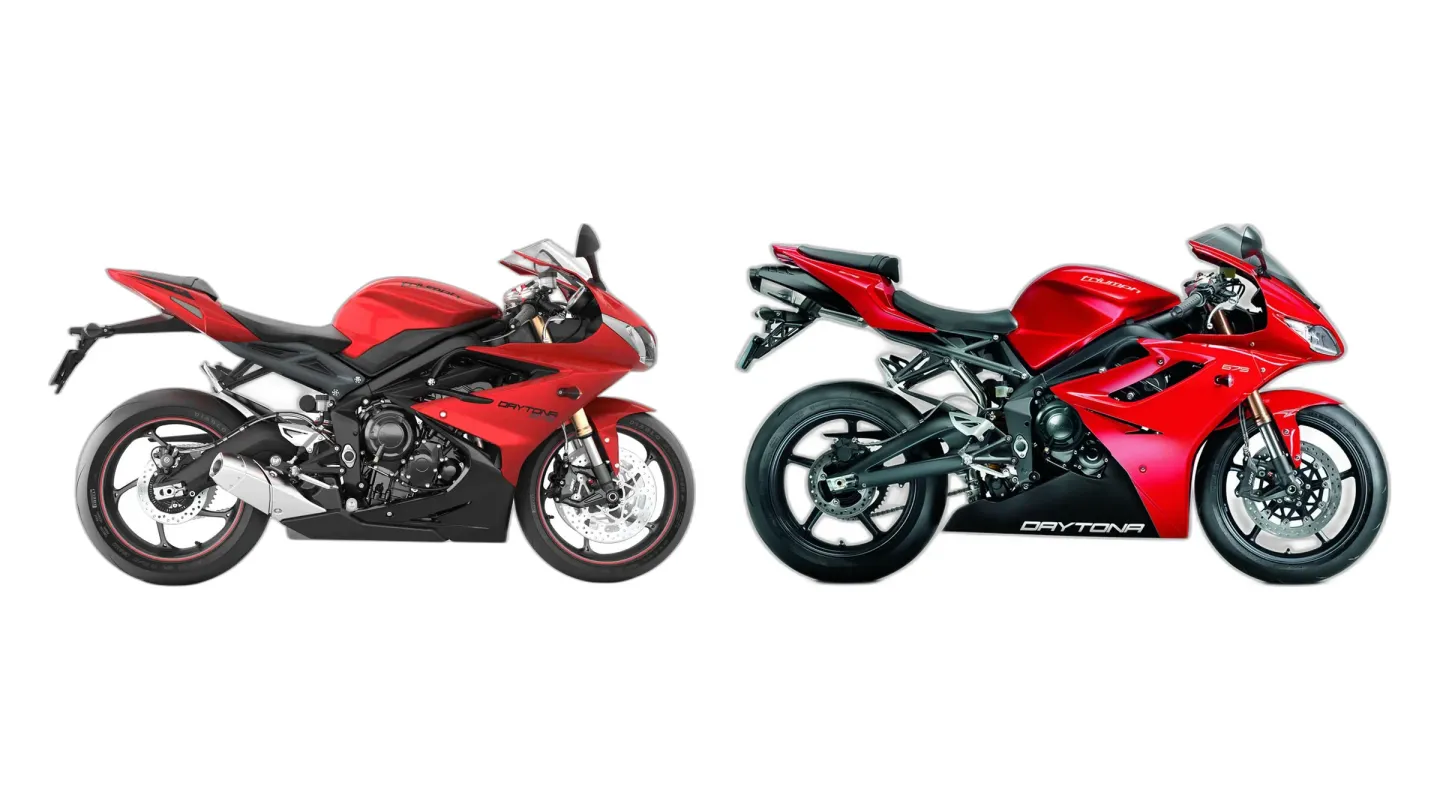
So which one do you buy?
The 2013 Daytona 675 has the edge if…
Racetrack use
A touch ahead: 2013 Daytona 675
On a closed course, the 2013 Daytona 675 edges ahead. Not by enough to settle it.
Sporty riding on twisty roads
Small edge: 2013 Daytona 675
Through a string of corners, the 2013 Daytona 675 feels a little more eager. The gap is small, so ride both.
What makes each one tick
2013 Daytona 675
There's a howl from the intake of the 2013 Daytona 675's triple, and the pull doesn't thin out from the middle revs to the top. At corner entry the compact chassis doesn't argue with the bars. It turns in on a thought. The nose drops into the apex where you aim it.
2009 Daytona 675
Low revs already carry real shove in the 2009 Daytona 675's triple, and its exhaust throbs on the way up. Tall footpegs and low-set clip-ons fold you into a race crouch that can wear you down on a long street ride. There's a separate setting at each end for the sharp hit of a bump and the slower heave of a dip. The narrow chassis flicks between curbs.
Nils rode the 2009 Daytona 675 in Spain in 2008 (NastyNils Testride).
The Voice of Experience

What actually separates them
- The 2013 Daytona 675 has the lower wet weight: 406 lb (184 kg) vs 417 lb (189 kg).
- ABS: option on the 2013 Daytona 675, not offered on the 2009 Daytona 675.
- Steering Damper: standard on the 2009 Daytona 675, not offered on the 2013 Daytona 675.
Which one for the way you ride
Comfortable long-distance riding
Not their thing
For all-day comfort, both fall short. Keep the rides short and you'll get on fine with either.
They come out level on commuting and running costs. The better-kept used example is the smarter money.
Who each one is built for
What's good, and what you'll live with
2013 Daytona 675
What owners say
Strengths
- Superb handling and agility
- Thrilling triple‑cylinder engine
- Confidence‑inspiring front‑end feedback
- Excellent value in the middleweight class
2009 Daytona 675
What owners say
Strengths
- Addictive exhaust note
- Torquey, characterful inline-triple engine
- High-quality suspension adjustability
Trade-offs
- Cramped supersport ergonomics
- Poor fuel economy for class
Known problems to check before you buy
2013 Daytona 675
- Transmission pivot plate wear The factory pivot plate can wear, leading to imprecise gear shifts or difficulty shifting.
- EXUP valve cable stretching The exhaust valve cables stretch over time, causing a check engine light and potentially altering exhaust back‑pressure. Resolved by dealer adjustment, replacing the cables, or installing a servo buddy.
- Counter shaft oil seal leak Oil weeps from the counter shaft seal on the left side of the engine.
2009 Daytona 675
- Indicator stem recall (NHTSA 13V-104) Recall 13V104000 Affected 2012-2013 Daytona 675 models may have defective indicator stems that require replacement. This is a safety recall due to potential loss of turn signal functionality.
- Oil/water heat exchanger failure The oil-to-water heat exchanger can internally fail, allowing coolant and oil to mix. This can lead to engine damage if not caught early. Aftermarket delete kits are popular.
- Regulator/rectifier failure Recall 12V445000 The R/R can overheat, leading to charging system failure and potentially leaving the rider stranded. Covered by NHTSA recall campaign 12V445000 for 2006-2009 models.
- EXUP valve seizing The exhaust valve in the collector box can seize due to corrosion or carbon buildup, triggering the check engine light. Often occurs around 15,000 miles; can be freed by adjustment or removed.
What they share
- Seat height
- 32.3 in (820 mm)
- Displacement
- 675 cc
- Engine
- Inline-three
- Cooling
- Liquid-cooled
- Power
- 126 hp (94 kW)
- Peak power at
- 12,600 rpm
- Fuel capacity
- 4.6 US gal (17.4 L)
- Gearbox
- 6-speed
- Final drive
- Chain
- Fork
- Upside-down (USD)
- Front tire
- 120/70-17
- Rear tire
- 180/55-17
Where the spec sheets split
| 2013 Daytona 675 | 2009 Daytona 675 | |
|---|---|---|
| Wet weight | 406 lb (184 kg) | 417 lb (189 kg) |
| 2013 Daytona 675 | 2009 Daytona 675 | |
|---|---|---|
| Torque | 55 lb-ft (74 Nm) | 54 lb-ft (73 Nm) |
| 2013 Daytona 675 | 2009 Daytona 675 | |
|---|---|---|
| Fuel economy | 31 mpg (US) / 7.6 L/100 km | 32 mpg (US) / 7.24 L/100 km |
| 2013 Daytona 675 | 2009 Daytona 675 | |
|---|---|---|
| Front brake | 310 mm | 308 mm |
What comes fitted, what costs extra
| 2013 Daytona 675 | 2009 Daytona 675 | |
|---|---|---|
| ABS | Option | Not offered |
| Steering Damper | Not offered | Standard |
| Quickshifter | Option | Not offered |
| Slipper Clutch | Standard | Not offered |
Head to head, area by area
Both bikes on the same scale, one area at a time.