By NastyNils·
Motorcycle comparison · Supersport
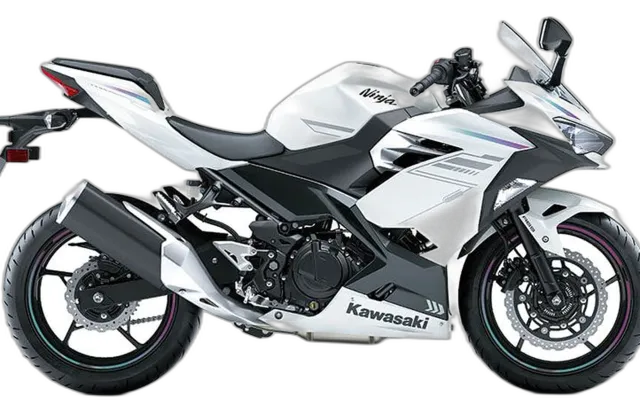
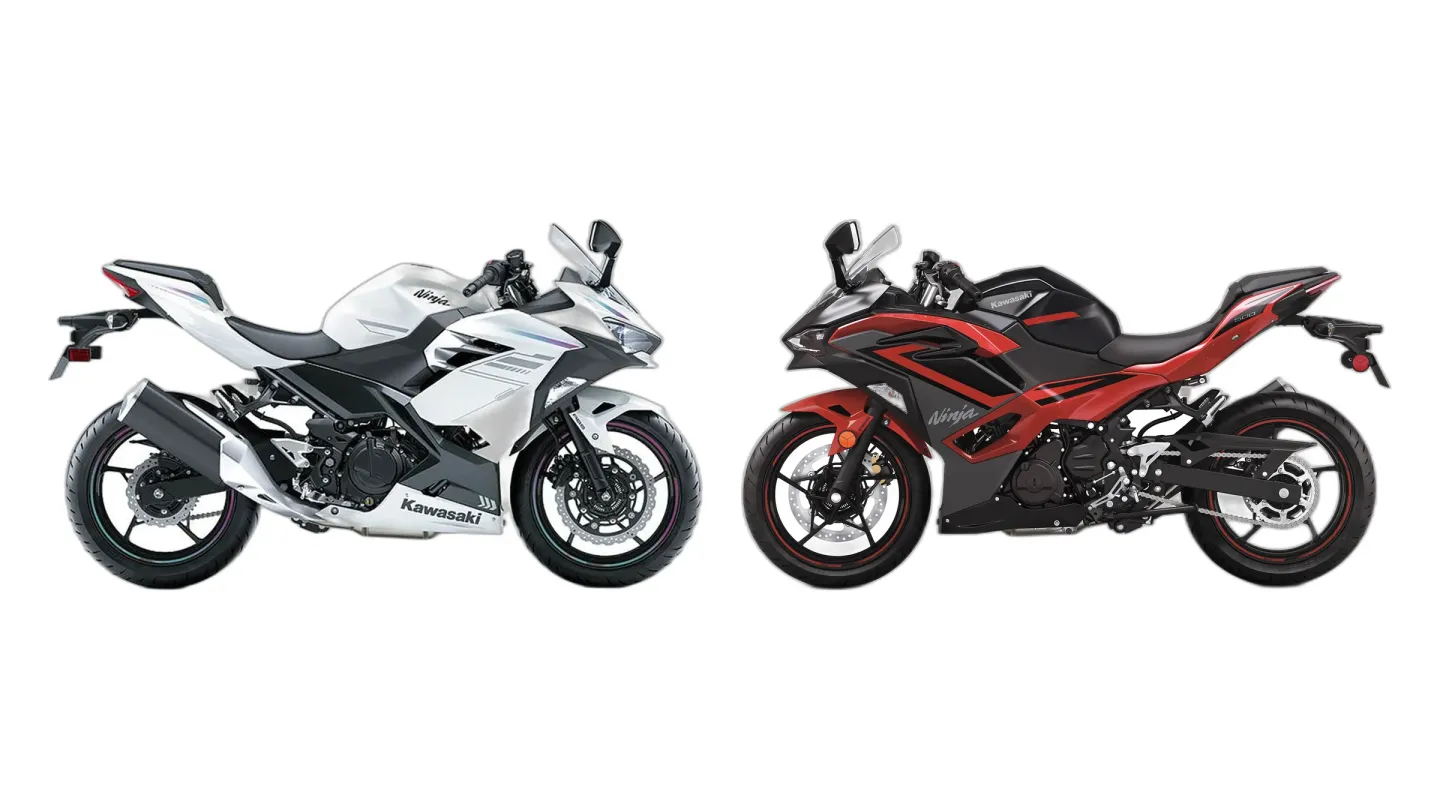
Kawasaki Ninja 400 (MY2018) vs Ninja 500 (MY2024)
Kawasaki Ninja 400 vs Ninja 500: one garage spot. Here's what should decide it.
Late on the brakes into a tight bend, the Kawasaki Ninja 400 doesn't squirm and turns in right where you aim it. The Kawasaki Ninja 500's front lever bites at once, and you're slowing before you've squeezed it far. Pressure climbs in step with your fingers.
So which one do you buy?
Which one's the smarter buy
Nothing in it on value
The Ninja 400 and Ninja 500 sit close enough in price that neither is the clear better buy for the money.
What makes each one tick
Ninja 400
Along Angeles Crest Highway, the Ninja 400 swaps from one footpeg to the other with barely a nudge at the bars, since there's so little weight and spinning mass to shift. The chassis holds each line it's given and tracks every bar input without drama. Its twin's no toy. On street tires, the soft fork soaks up bumps.
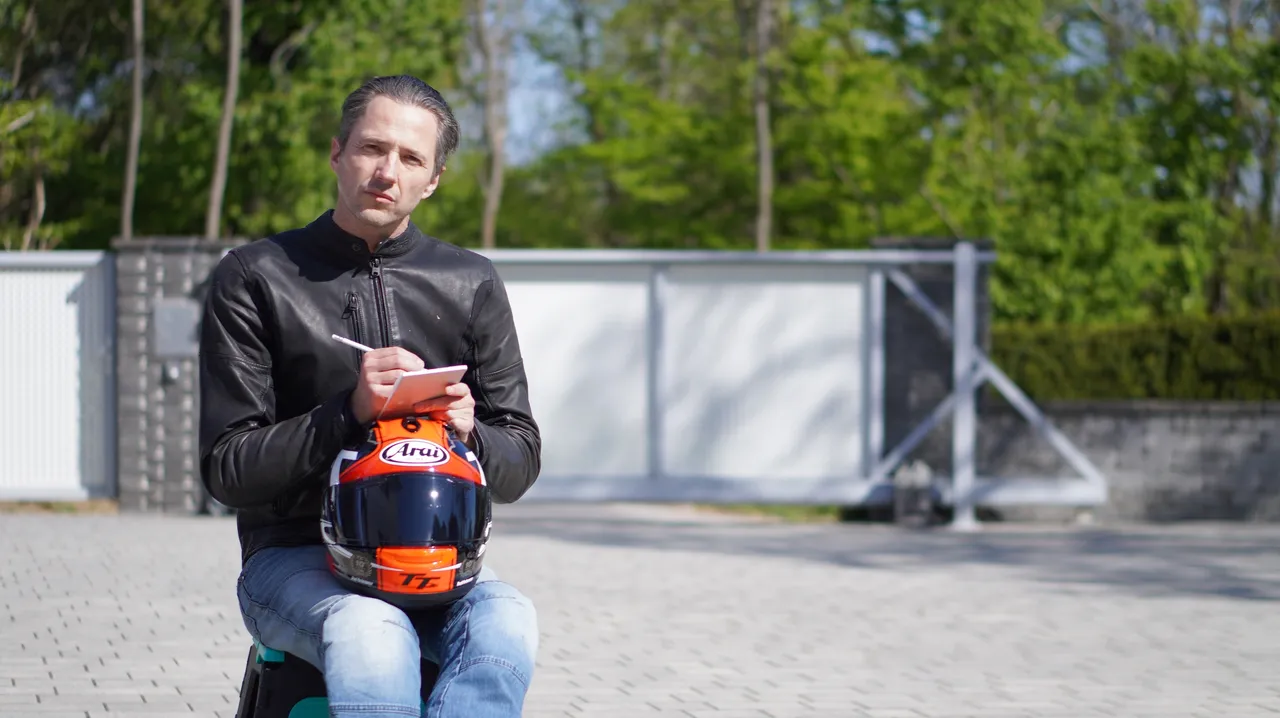
Nils rode the Ninja 400 in Slovakia in 2023 (NastyNils Testride).
Ninja 500
There's usable pull in the Ninja 500's twin from low revs, and it stays smooth as they rise, with no sudden rush waiting near redline. The throttle answers city traffic with a steady shove, never a lurch. The chassis stays settled mid-corner.
The Voice of Experience
What actually separates them
- The Ninja 400 has the lower wet weight: 362 lb (164 kg) vs 379 lb (172 kg).
- The Ninja 500 makes more peak power: 52 hp (38 kW) vs 45 hp (33 kW).
- The Ninja 500 makes more peak torque: 32 lb-ft (43 Nm) vs 28 lb-ft (38 Nm).
Which one for the way you ride
Comfortable long-distance riding
Both fall short
Long-haul comfort is a weak spot for both. If you tour, shop with that in mind.
Look at track days, commuting, twisty roads, and running costs and you'll find two bikes doing the same job equally well. Fit is what breaks the tie.
Who each one is built for
What's good, and what you'll live with
Ninja 400
Strengths
- Agile without ever going nervous
- Goes exactly where you point it
- Zero learning curve
- The seat is actually soft
- 45 hp feels like enough
Trade-offs
- Mixed-power groups kill it
- Suspension is set for the street
- One front disc, real limits
- Slicks overwhelm the chassis
- Weak front brake feel and bite
Ninja 500
What owners say
Strengths
- Powerful, communicative brakes
Known problems to check before you buy
Ninja 400
- Assist & Slipper Clutch premature wear — slipping, false neutrals, gear dropping Premature wear of the assist and slipper clutch is one of the most frequently reported problems on the Ninja 400. The cable-operated clutch has little wear margin, and the assist-and-slipper ramp design adds to it, so the clutch pack can start slipping early in the bike's life. The first symptom is usually the clutch slipping under moderate to hard acceleration, most noticeably in the higher gears. Some owners also report false neutrals between the upper gears, gears not engaging cleanly and the transmission jumping out of gear. Track riding and aggressive launches make it worse. The usual fix is new friction plates and springs, along with a check of the clutch cable free play.
- OEM cylinder coolant seal deformation causing external coolant leak The rubber coolant seal between the crankcase and cylinder block at the front of the engine tends to deform, fold over, and allow coolant to leak externally. The factory seal is a tall, narrow rubber piece sitting in an open cavity without mechanical retention. Once deformed, coolant weeps from the front of the engine.
Ninja 500
- Clutch release shaft weld failure (Safety Recall) Recall 25V146000 On units built between January 22 and February 6, 2024, an improperly welded clutch release shaft may cause the lever to separate, making clutch disengagement impossible. This recall (NHTSA 25V146 / Kawasaki MC25-04) affected 3,742 motorcycles and requires shaft replacement.
What they cost used
These prices compare a 2-year-old Ninja 400 with a 2-year-old Ninja 500.
- Ninja 400
- about $4,800
- Ninja 500
- about $5,000
What they share
- Seat height
- 30.9 in (785 mm)
- Engine
- Parallel twin
- Cooling
- Liquid-cooled
- Fuel capacity
- 3.7 US gal (14 L)
- Gearbox
- 6-speed
- Final drive
- Chain
- Fork
- Telescopic
- Front tire
- 110/70-17
- Rear tire
- 150/60-17
Where the spec sheets split
| Ninja 400 | Ninja 500 | |
|---|---|---|
| Wet weight | 362 lb (164 kg) | 379 lb (172 kg) |
| Ninja 400 | Ninja 500 | |
|---|---|---|
| Displacement | 399 cc | 451 cc |
| Power | 45 hp (33 kW) | 52 hp (38 kW) |
| Torque | 28 lb-ft (38 Nm) | 32 lb-ft (43 Nm) |
What comes fitted, what costs extra
| Ninja 400 | Ninja 500 | |
|---|---|---|
| ABS | Option | Standard |
| TFT Display | Not offered | Option |
| Smartphone Connectivity | Not offered | Standard |
Head to head, area by area
Both bikes on the same scale, one area at a time.