By NastyNils·
Motorcycle comparison · Supersport vs Sport Tourer
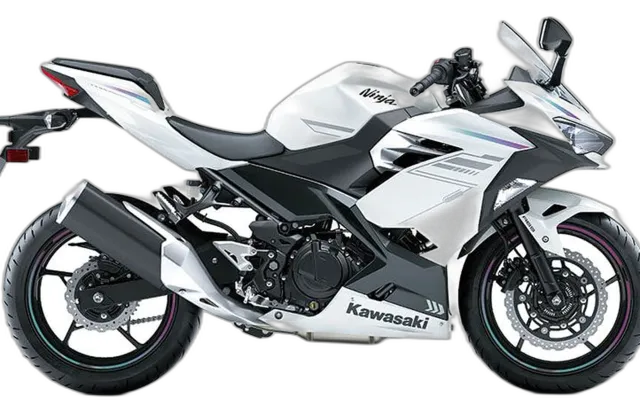
Kawasaki Ninja 400 (MY2018) vs Honda CBR500R (PC 57)
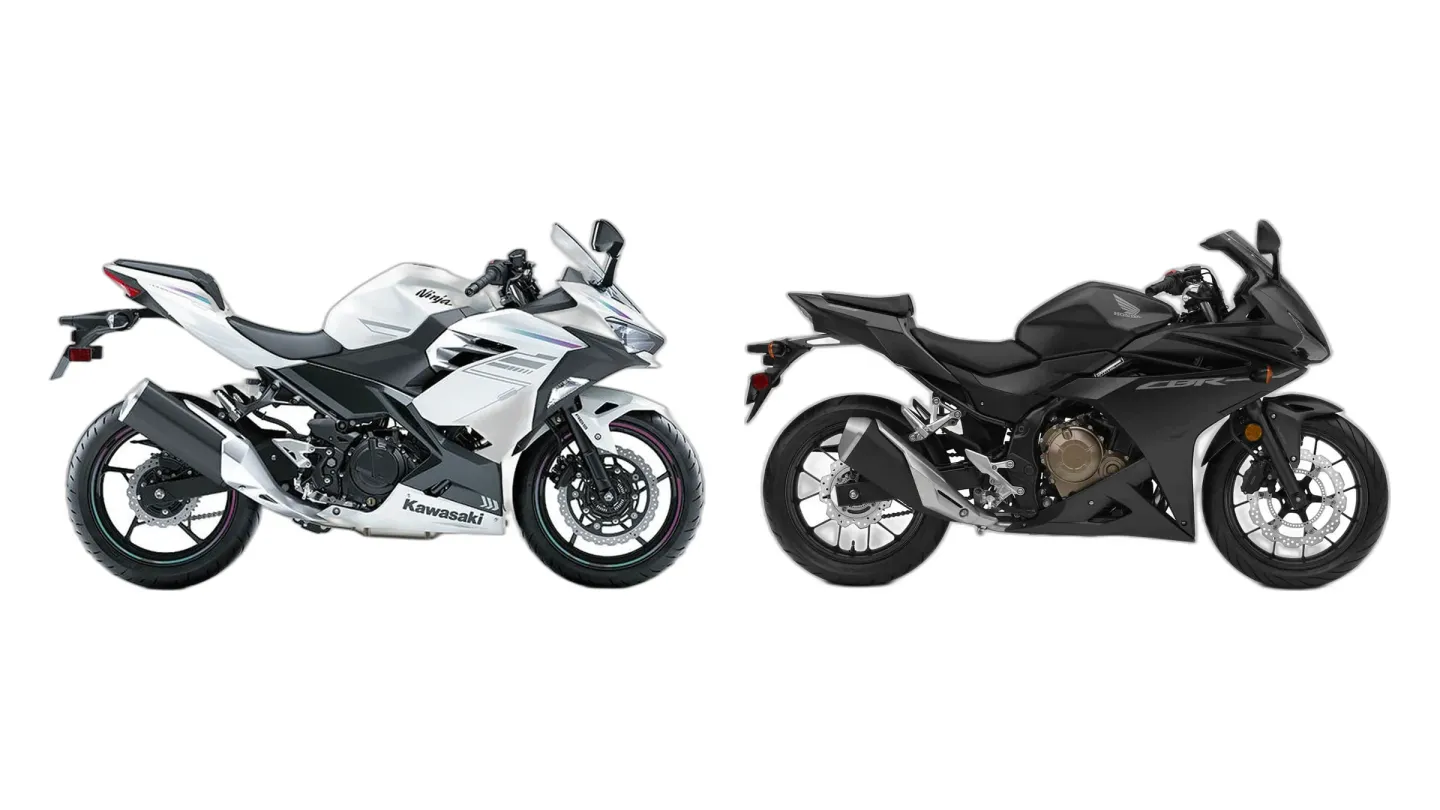
Kawasaki Ninja 400 vs Honda CBR500R: different classes, one choice. Here's how to make it.
Halfway through a fast sweeper, the Kawasaki Ninja 400 doesn't wander off the line you've picked. The Honda CBR500R sits down and shrugs off crosswinds.
So which one do you buy?
The Ninja 400 has the edge if…
Sporty riding on twisty roads
Slight edge: Ninja 400
Back-road fun leans slightly toward the Ninja 400. It's a narrow call, so trust your test ride.
The CBR500R has the edge if…
Daily commuting & city riding
By a nose: CBR500R
For the ride to work, the CBR500R noses ahead. Thank simpler maintenance for that. Don't let that alone make the call.
Keeping running costs low
Narrow edge: CBR500R
The CBR500R should be a little cheaper to keep on the road. It's a small gap.
Which one's the smarter buy
Different bikes, different deals
These bikes sit in different classes, so there's no clear better buy for the money. The Ninja 400 costs less, but that doesn't make it the value winner.
What makes each one tick
Ninja 400
With only 362 lb (164 kg) to swing over, the Ninja 400 flicks between corners at a light push on the bars. On the Angeles Crest Highway, the front tracks wherever the bars aim it, and it doesn't fight back. A bump on street tires isn't a problem for the soft fork and shock. The twin takes abrupt throttle cleanly.
Nils rode the Ninja 400 in Slovakia in 2023 (NastyNils Testride).
CBR500R
The CBR500R's twin pulls evenly from low revs to the top of the tach, and there's no step in the throttle. The front doesn't dart at corner entry; it turns in at a measured pace. Freeway speed barely stirs the fairing.
The Voice of Experience

What actually separates them
- The Ninja 400 has the lower wet weight: 362 lb (164 kg) vs 428 lb (194 kg).
- The CBR500R makes more peak power: 48 hp (35 kW) vs 45 hp (33 kW).
- The CBR500R makes more peak torque: 32 lb-ft (43 Nm) vs 28 lb-ft (38 Nm).
Which one for the way you ride
Comfortable long-distance riding
Neither is a natural fit
Big miles aren't where either one shines. You'll be watching for the next rest stop.
Nothing splits them on a first bike. Ride both back to back and the decision usually makes itself.
Who each one is built for
What's good, and what you'll live with
Ninja 400
Strengths
- Agile without ever going nervous
- Goes exactly where you point it
- Zero learning curve
- The seat is actually soft
- 45 hp feels like enough
Trade-offs
- Mixed-power groups kill it
- Suspension is set for the street
- One front disc, real limits
- Slicks overwhelm the chassis
- Weak front brake feel and bite
CBR500R
What owners say
Strengths
- Smooth and tractable parallel-twin engine
- Excellent highway stability
Known problems to check before you buy
Ninja 400
- Assist & Slipper Clutch premature wear — slipping, false neutrals, gear dropping Premature wear of the assist and slipper clutch is one of the most frequently reported problems on the Ninja 400. The cable-operated clutch has little wear margin, and the assist-and-slipper ramp design adds to it, so the clutch pack can start slipping early in the bike's life. The first symptom is usually the clutch slipping under moderate to hard acceleration, most noticeably in the higher gears. Some owners also report false neutrals between the upper gears, gears not engaging cleanly and the transmission jumping out of gear. Track riding and aggressive launches make it worse. The usual fix is new friction plates and springs, along with a check of the clutch cable free play.
- OEM cylinder coolant seal deformation causing external coolant leak The rubber coolant seal between the crankcase and cylinder block at the front of the engine tends to deform, fold over, and allow coolant to leak externally. The factory seal is a tall, narrow rubber piece sitting in an open cavity without mechanical retention. Once deformed, coolant weeps from the front of the engine.
CBR500R
No confirmed faults on file yet. That's not the same as fault-free.
What they cost used
These prices compare an 8-year-old Ninja 400 with an 8-year-old CBR500R.
- Ninja 400
- about $3,900
- CBR500R
- about $4,400
At eight years old, the Kawasaki Ninja 400 sits around $3,900 while the Honda CBR500R runs about $4,400. That's a $500 gap in the Ninja's favor. These are US market estimates, not live listings.
What they share
- Seat height
- 30.9 in (785 mm)
- Engine
- Parallel twin
- Cooling
- Liquid-cooled
- Gearbox
- 6-speed
- Final drive
- Chain
- Fork
- Telescopic
Where the spec sheets split
| Ninja 400 | CBR500R | |
|---|---|---|
| Wet weight | 362 lb (164 kg) | 428 lb (194 kg) |
| Ninja 400 | CBR500R | |
|---|---|---|
| Displacement | 399 cc | 471 cc |
| Power | 45 hp (33 kW) | 48 hp (35 kW) |
| Torque | 28 lb-ft (38 Nm) | 32 lb-ft (43 Nm) |
| Top speed | 117 mph (188 km/h) | 112 mph (180 km/h) |
| Ninja 400 | CBR500R | |
|---|---|---|
| Fuel economy | 44 mpg (US) / 5.4 L/100 km | 74 mpg (US) / 3.17 L/100 km |
| Fuel capacity | 3.7 US gal (14 L) | 4.4 US gal (16.7 L) |
| Ninja 400 | CBR500R | |
|---|---|---|
| Front brake | 310 mm | 320 mm |
| Front tire | 110/70-17 | 120/70-17 |
| Rear tire | 150/60-17 | 160/60-17 |
What comes fitted, what costs extra
| Ninja 400 | CBR500R | |
|---|---|---|
| ABS | Option | Standard |
| Manually Adjustable Front Suspension | Not offered | Standard |
| Slipper Clutch | Standard | Not offered |
| USB Charging Port | Option | Not offered |
| Heated Grips | Not offered | Option |
Head to head, area by area
Both bikes on the same scale, one area at a time.