By NastyNils·
Motorcycle comparison · Supersport
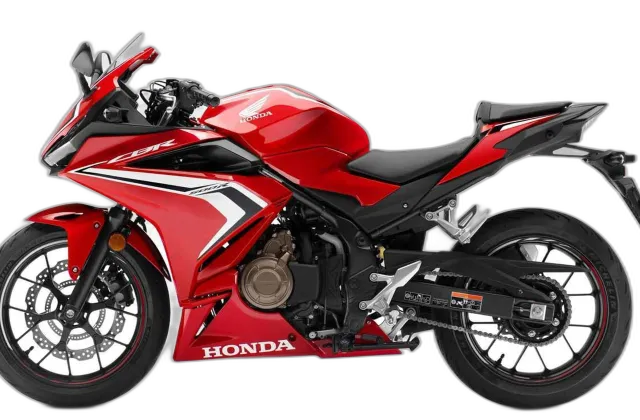
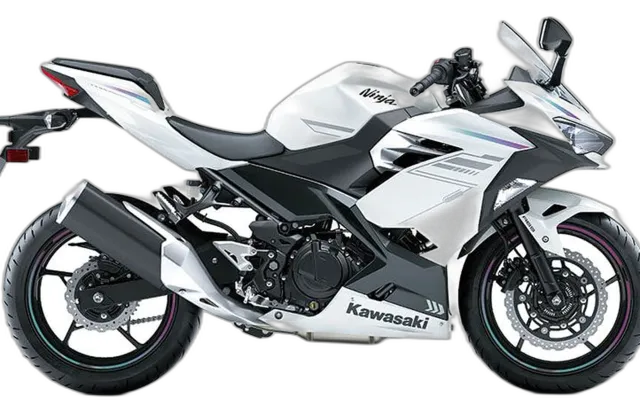
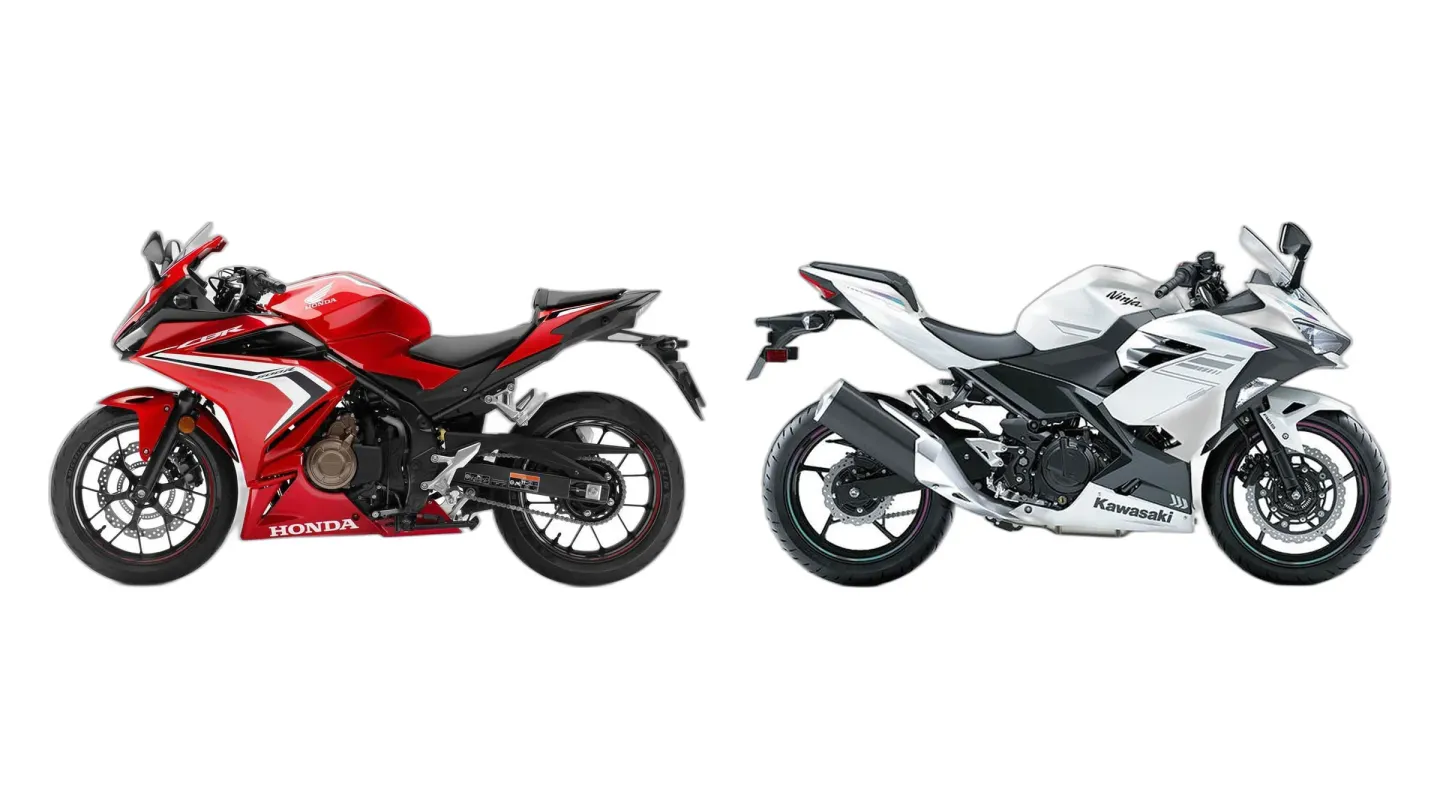
Honda CBR500R (PC62) vs Kawasaki Ninja 400 (MY2018)
Honda CBR500R vs Kawasaki Ninja 400: which one to buy for the riding you do.
You'll feel the Honda CBR500R settle into a tight bend without fidgeting or wallowing, and it doesn't balk as you push for real pace. The Kawasaki Ninja 400 tracks the exact line you pick.
So which one do you buy?
The CBR500R has the edge if…
Keeping running costs low
Edges it: CBR500R
For the money you spend after the purchase, the CBR500R nudges ahead. The gap is too small to plan a budget around.
Daily commuting & city riding
Small edge: CBR500R
For the ride to work, the CBR500R noses ahead. It's down to lower running costs. Don't let that alone make the call.
The Ninja 400 has the edge if…
Sporty riding on twisty roads
Slight edge: Ninja 400
The Ninja 400 is a touch more fun when the road starts bending. Just a touch.
Racetrack use
Nose ahead: Ninja 400
For a day at the track, the Ninja 400 makes slightly more sense. The reason: more lean clearance. Tires and suspension setup can easily flip a gap like that.
Which one's the smarter buy
No clear winner on value
Neither bike is the clear better buy at these used prices. The Ninja 400 costs less, but that doesn't make it the smarter spend.
What makes each one tick
CBR500R
Long before you're near its limit, the CBR500R makes a quick lap feel like you've gotten away with one, with room left in the chassis as you get quicker. At Barber Motorsports Park, the brake lever works Nissin radial calipers that haul the bike down off the straights. Off a corner, the twin won't snap forward until the revs climb toward the limiter, and you'll work for each exit. The frame holds its arc.
Ninja 400
Nothing on the Ninja 400 needs learning, and you're grinning before the shift lever finds second. At corner entry, its 362 lb (164 kg) needs only a nudge at the bars before it drops in. The twin doesn't stumble on a snapped throttle. Up top, the twin hauls hardest.
Nils rode the Ninja 400 in Slovakia in 2023 (NastyNils Testride).
The Voice of Experience

What actually separates them
- The Ninja 400 has the lower wet weight: 362 lb (164 kg) vs 423 lb (192 kg).
- The CBR500R makes more peak torque: 32 lb-ft (43 Nm) vs 28 lb-ft (38 Nm).
- The CBR500R has the larger engine: 471 cc vs 399 cc.
Which one for the way you ride
Comfortable long-distance riding
Not their thing
Neither of these is a mile-muncher. If big days are the plan, keep looking.
Who each one is built for
What's good, and what you'll live with
CBR500R
From Nils' own saddle time
Strengths
- Adjustable suspension holds up on both road and track
- Balanced geometry that doesn't punish or bore
- Build Quality You Can Bank On
- Controls Just Work
- Geometry Lands In The Sweet Spot
Trade-offs
- All-season tires run out of grip in track heat
- Brakes Fine For Street, Soft On Track
- Engine Can't Cash The Bodywork's Checks
- Exhaust contacts before the chassis runs out
Ninja 400
Strengths
- Agile without ever going nervous
- Goes exactly where you point it
- Zero learning curve
- The seat is actually soft
- 45 hp feels like enough
Trade-offs
- Mixed-power groups kill it
- Suspension is set for the street
- One front disc, real limits
- Slicks overwhelm the chassis
- Weak front brake feel and bite
Known problems to check before you buy
CBR500R
- ABS modulator brake fluid leak due to excessive grease (NHTSA Recall 21V-690) Recall 21V690000 Excessive grease applied to the O-ring of the ABS modulator's reservoir piston during assembly. Continued use allows foreign matter to adhere to grease and get stuck in the check valve during braking, causing brake fluid to leak. Can increase braking distance when ABS is not activated.
- Rear reflector lens insufficient photometric performance (NHTSA Recall 21V-382) Recall 21V382000 A change in the manufacturing process produced rear reflex reflectors that return less light than the applicable federal lighting standard requires. The bike is less conspicuous to following traffic when its reflector is lit by their headlights, particularly at night or in poor visibility.
- Fairing panels and dashboard rattle/vibrate at certain RPMs Fairing panels vibrate and rattle, particularly noticeable at approximately 4,900–5,000 rpm. Dashboard can develop rattle requiring removal and re-seating with padding material. Windscreen vibration reported separately. Some owners report persistent fairing vibrations that dealers cannot resolve.
- Handlebar vibration causing numb hands at sustained highway speed Noticeable vibration through handlebars above 5,000–6,500 rpm (roughly 60+ mph (100+ km/h) in higher gears). Can cause completely numb hands during prolonged motorway riding. Mirrors become blurred/unreadable at certain RPM ranges. Inherent characteristic of the 180-degree parallel twin's firing order. Heavier bar-end weights reduce vibration; lighter aftermarket bar-ends worsen it.
- Cam chain tensioner not self-adjusting properly, causing engine rattle Honda's automatic cam chain tensioner can fail to advance properly, causing a rattle/ticking noise particularly audible on the right side of the engine at idle and around 3,500 rpm. Noise increases momentarily when blipping the throttle. Can be resolved with a manual tensioner reset ( bolt on right side of engine) or tensioner replacement.
Ninja 400
- Assist & Slipper Clutch premature wear — slipping, false neutrals, gear dropping Premature wear of the assist and slipper clutch is one of the most frequently reported problems on the Ninja 400. The cable-operated clutch has little wear margin, and the assist-and-slipper ramp design adds to it, so the clutch pack can start slipping early in the bike's life. The first symptom is usually the clutch slipping under moderate to hard acceleration, most noticeably in the higher gears. Some owners also report false neutrals between the upper gears, gears not engaging cleanly and the transmission jumping out of gear. Track riding and aggressive launches make it worse. The usual fix is new friction plates and springs, along with a check of the clutch cable free play.
- OEM cylinder coolant seal deformation causing external coolant leak The rubber coolant seal between the crankcase and cylinder block at the front of the engine tends to deform, fold over, and allow coolant to leak externally. The factory seal is a tall, narrow rubber piece sitting in an open cavity without mechanical retention. Once deformed, coolant weeps from the front of the engine.
What they cost used
These prices compare a 5-year-old CBR500R with a 5-year-old Ninja 400.
- CBR500R
- about $6,400
- Ninja 400
- about $4,500
At five years old, the Honda CBR500R sits around $6,400 while the Kawasaki Ninja 400 lands near $4,500. That's a $1,900 gap in the Ninja 400's favor. These are estimates from earlier market records, not live listings.
What they share
- Seat height
- 30.9 in (785 mm)
- Engine
- Parallel twin
- Cooling
- Liquid-cooled
- Top speed
- 117 mph (188 km/h)
- Gearbox
- 6-speed
- Final drive
- Chain
- Fork
- Telescopic
Where the spec sheets split
| CBR500R | Ninja 400 | |
|---|---|---|
| Wet weight | 423 lb (192 kg) | 362 lb (164 kg) |
| CBR500R | Ninja 400 | |
|---|---|---|
| Displacement | 471 cc | 399 cc |
| Power | 48 hp (35 kW) | 45 hp (33 kW) |
| Torque | 32 lb-ft (43 Nm) | 28 lb-ft (38 Nm) |
| CBR500R | Ninja 400 | |
|---|---|---|
| Fuel economy | 56 mpg (US) / 4.2 L/100 km | 44 mpg (US) / 5.4 L/100 km |
| Fuel capacity | 4.5 US gal (17.1 L) | 3.7 US gal (14 L) |
| CBR500R | Ninja 400 | |
|---|---|---|
| Front brake | 320 mm | 310 mm |
| Front tire | 120/70-17 | 110/70-17 |
| Rear tire | 160/60-17 | 150/60-17 |
| Wheelbase | 55.5 in (1410 mm) | 53.9 in (1370 mm) |
What comes fitted, what costs extra
| CBR500R | Ninja 400 | |
|---|---|---|
| ABS | Standard | Option |
Head to head, area by area
Both bikes on the same scale, one area at a time.