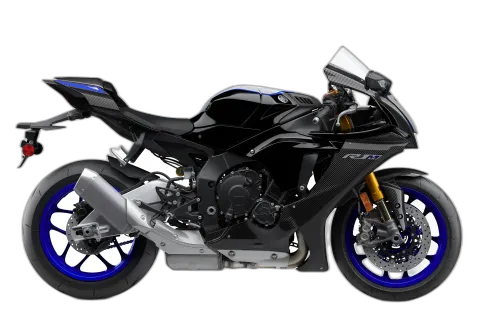

Yamaha YZF-R1M (RN49M) — Supersport
Yamaha press archive

2017–2019 · Supersport · Buyer's Guide

YZF-R1M (RN49M)

Track Electronics, Street Legal

The Machine's Character

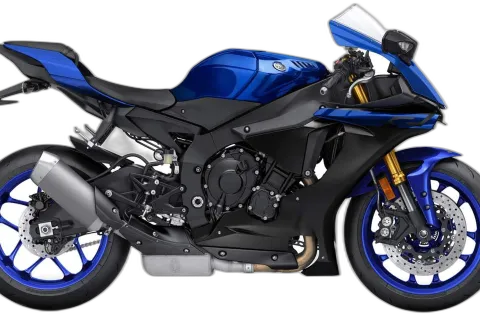
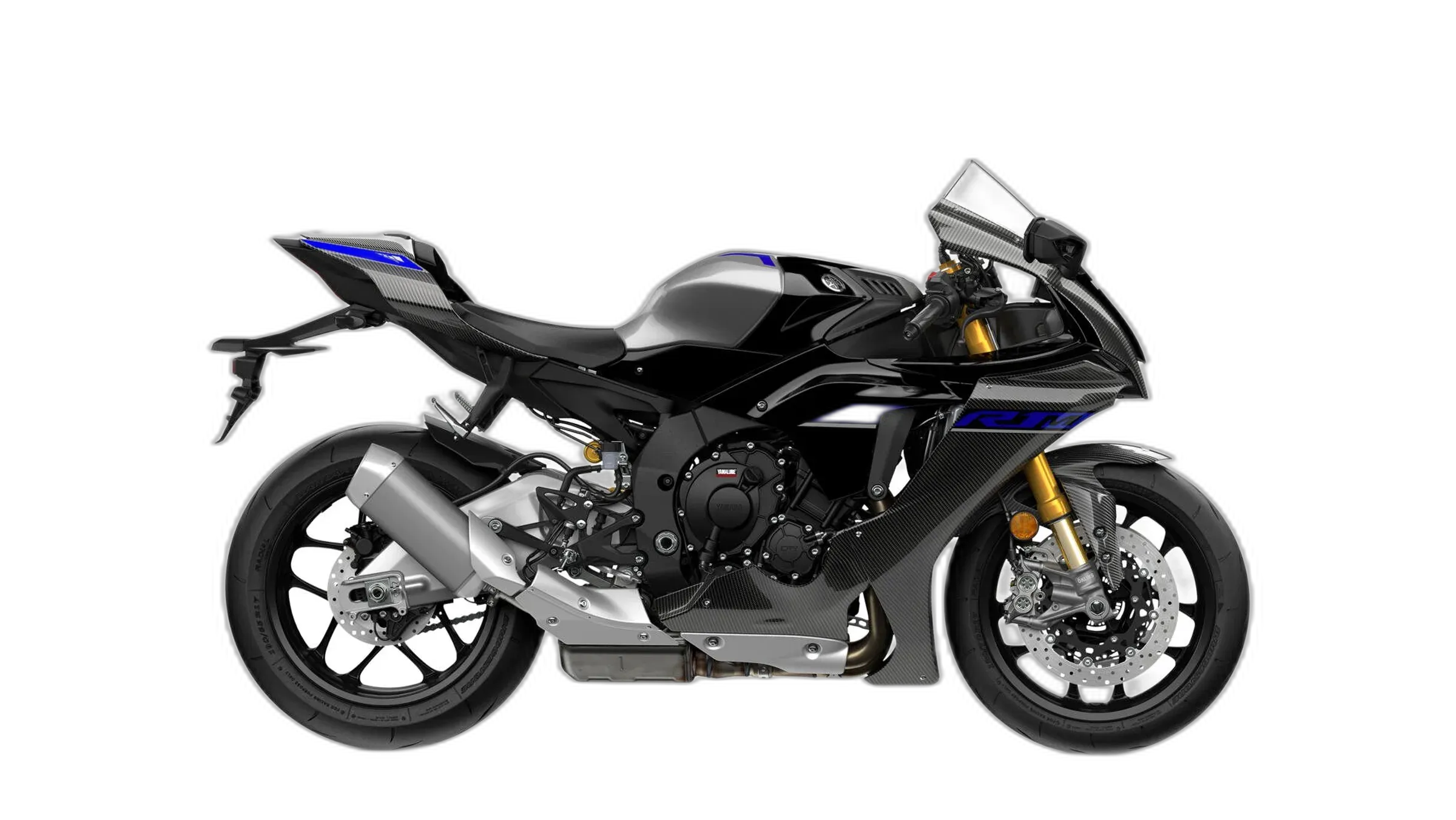
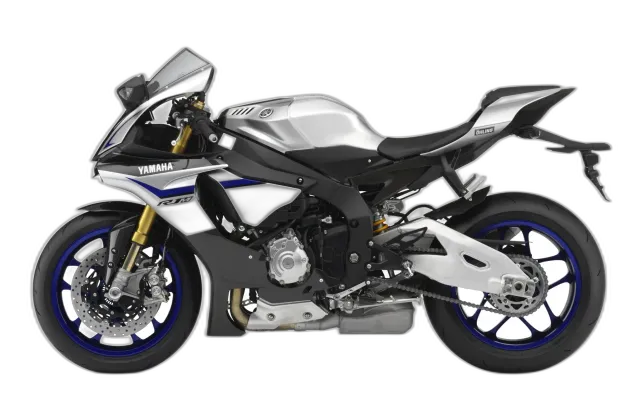
Yamaha built the R1M as the sharp end of its supersport line, and the hardware backs that up. The crossplane inline-four displaces 998 cc, makes 200 hp at 13,500 rpm and 83 lb-ft at 11,500 rpm, and sits in a chassis wrapped in carbon bodywork. Öhlins Smart EC 2.0 handles the damping electronically, the Communication Control Unit logs what you did with it, and a full rider-aid package works underneath: cornering ABS, traction control, wheelie control, launch control, ride modes. This is the flagship, not a softened version of one.

It never lets you forget what it is. At 441 lb wet with a 33.7 in seat, it rewards a rider who stays busy and ignores one who sits still. It ages well: build quality is high and aftermarket support is deep, so hard use and updates don't wear out its appeal. It belongs to experienced riders with track days in the calendar and a genuine appetite for corner speed. The honest caveat is that the semi-active suspension makes its own decisions, and anyone who likes turning clickers by hand has to let go of that habit.

Hard Numbers

Spec sheets don't ride bikes, but they set the baseline.

Show full specs & equipment Hide specs & equipment
Key specifications
Power 200 hp (147 kW) @ 13,500 rpm
Torque 83 lb-ft (112 Nm) @ 11,500 rpm
Displacement 998 cc
Engine Inline-four
Cooling Liquid-cooled
Gearbox 6-speed
Final drive Chain
Fork Upside-down (USD)
Front brake 320 mm
Front tire 120/70-17
Rear tire 200/55-17
Wheelbase 55.3 in (1405 mm)
Seat height 33.7 in (855 mm)
Wet weight 441 lb (200 kg)
Fuel capacity 4.5 gal (17 L)
Fuel economy 35 mpg (US)

Equipment check

Chassis

  • Front Suspension Adjustable Standard
  • Rear Suspension Adjustable Standard
  • Steering Damper Standard

Connectivity

  • TFT Display Standard

Drivetrain

  • Slipper Clutch Standard

Lighting

  • LED Headlight Standard

Safety

  • ABS Standard
  • Cornering ABS Standard
  • Traction Control Standard
  • Ride Modes Standard
  • Wheelie Control Standard
  • Launch Control Standard

Signature Tech

The named systems that set this bike apart — and what each one does for you.

Connectivity

  • Yamaha Communication Control Unit (CCU) Standard
    • Onboard data logging

Suspension

  • Öhlins Smart EC 2.0 Standard
    • Realtime road adaptation
    • Brake dive control
    • Acceleration stability
    • Wider usable range

The Voice of Experience

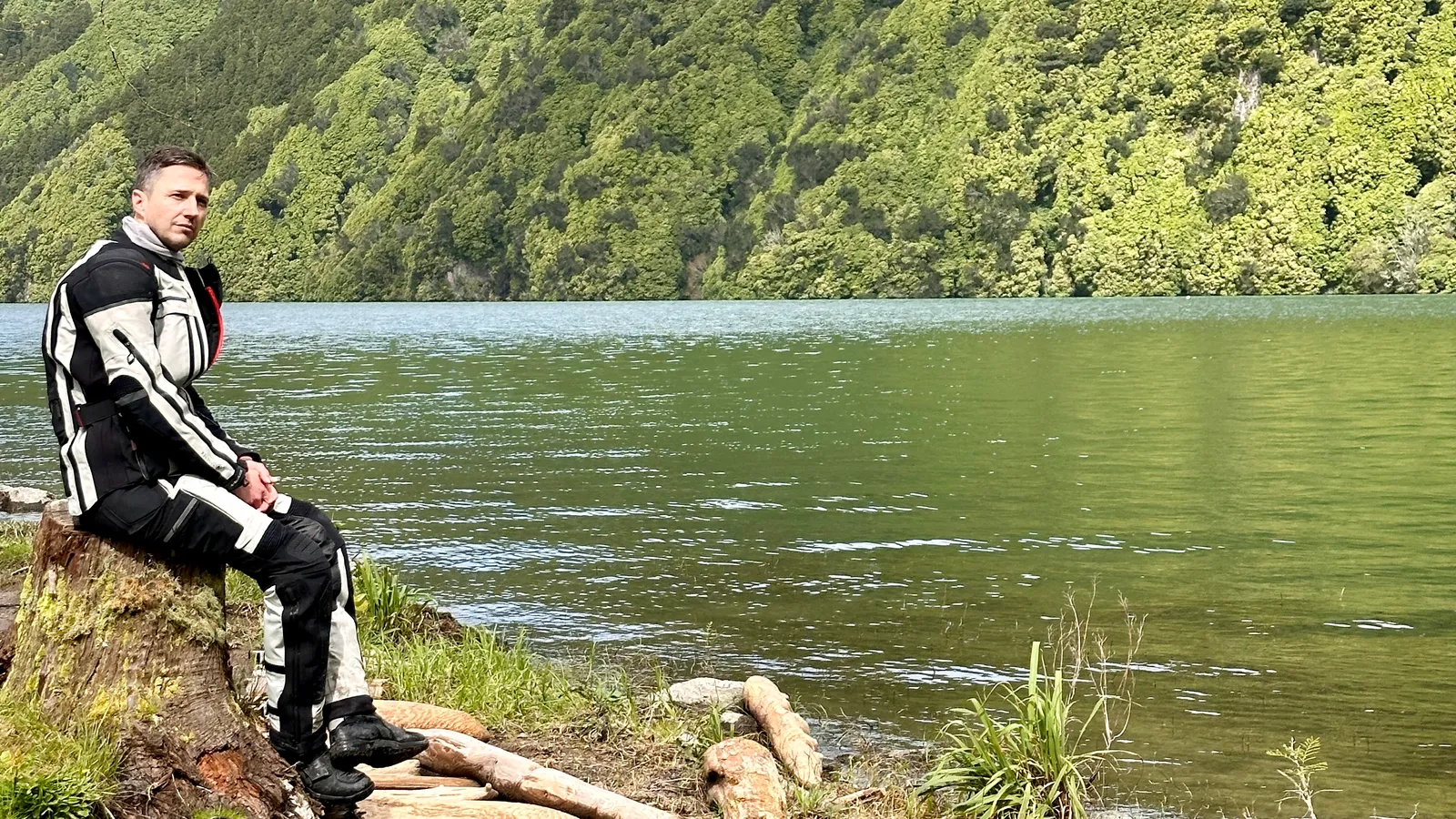
Portrait of NastyNils

The test ride

The first thing that registers is the noise. The crossplane engine has a voice of its own, a hard uneven bark rather than the flat scream you brace for at this displacement, and it fills the cockpit as soon as the revs climb. The riding position puts your weight forward and your knees high. It is a small space and it wants you working in it: shoulders low, inside elbow down, chest across the tank. Do that and the feedback through the bars and pegs is unusually honest. You always know what the tires are doing. Lean clearance is generous enough that you run out of nerve long before anything touches down. At real road pace the whole machine feels tightly wound and quiet in the chassis, waiting for you to ask.

Rated point by point — where it earns its keep

My own 0–100 score for this bike against the class, area by area — the marker on each bar is the class average.

The previous version of this system wanted a hard rider before it would do its best work. This one skips that requirement. Softest damping, a cold and greasy surface, traction control wound right up and the gentlest throttle map selected, and the chassis was already reading the pavement properly on the opening lap. What impresses me more is how far the character travels without a tool ever coming out of the box. A couple of menu inputs and the temperament underneath me has changed completely. Suspension used to be a chain of trade-offs, where firm enough for the brake zone meant harsh at full lean; here the brake phase, mid-corner and drive each carry their own damping, so I never have to split the difference. The cost is legibility. Riders who tune by feel and clicker count will struggle to follow it, because the bike makes decisions faster than they can account for them.

What stays with me is how little relearning it demands. I can be off one of these for months, throw a leg over and, within a couple of corners, find the bike exactly where I left it. The update sharpened the package without thinning out the character that made it matter in the first place, which happens less often than it should. Performance you can reach immediately is worth more than performance you have to negotiate for, and this one hands it over early.

Response is what I judge this motor on, not the peak. It sits right on the throttle, so the drive arrives with the request and there is nothing dull in the first fraction of the opening. Just as valuable is how clearly the rear reports back while it works. I get a genuine read on grip instead of a guess, which is what lets me lean on the drive early. The revised mapping and reworked wheelie control are polished to the point of invisibility, which is the highest compliment that kind of software gets.

Comfort here is really a question of effort, and this bike asks for a lot of it. It was built around an active rider who gets off the seat, puts weight through the front and keeps working the whole way through a turn. Do that and the machine cooperates. Sit in it the way you would on something built for distance and it will not meet you halfway, and every corner becomes work you created for yourself. None of that is an oversight, and anyone shopping in this part of the market already knows the deal.

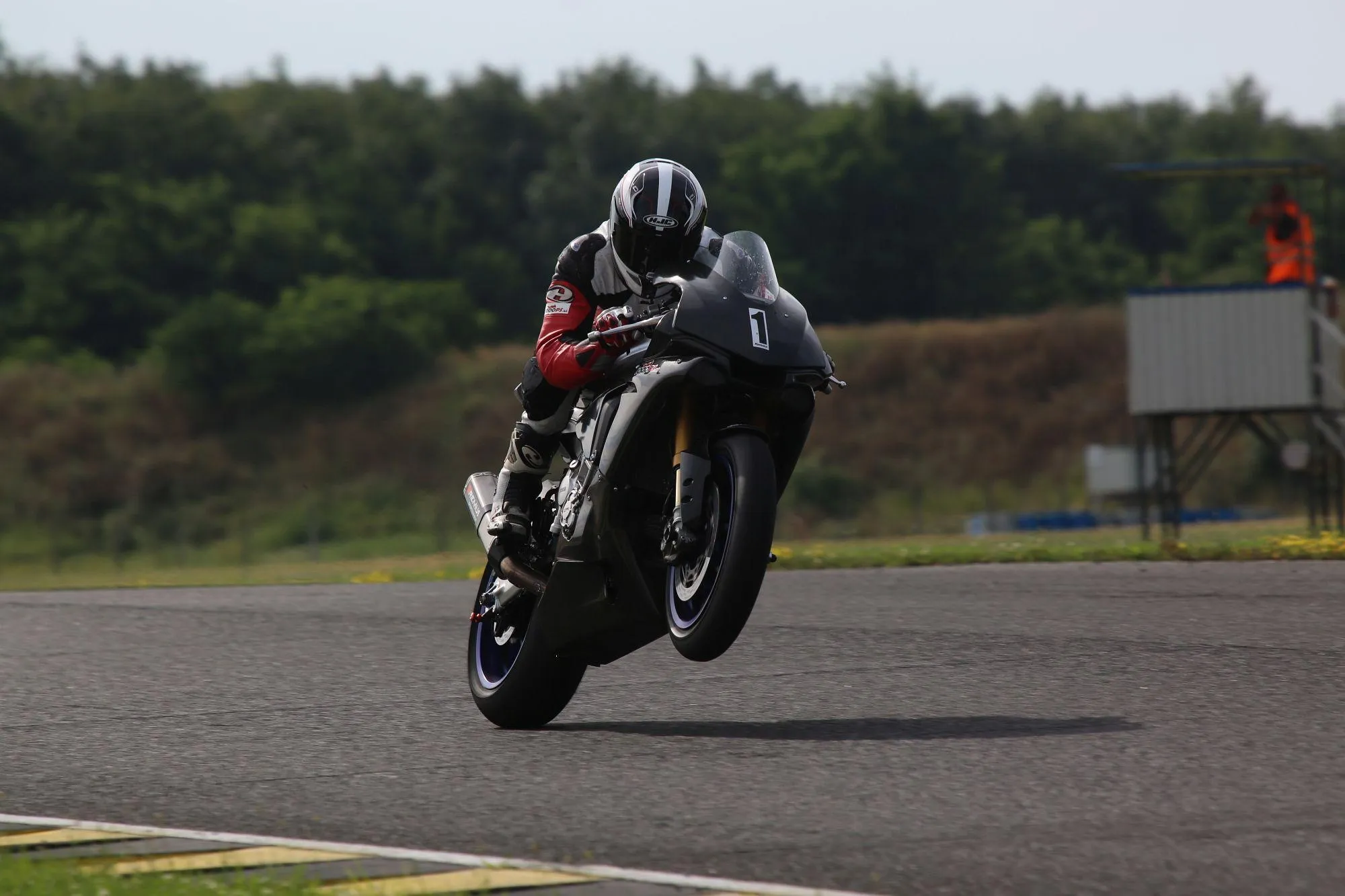
NastyNils performs a wheelie on a Yamaha YZF-R1M at the Pannoniaring racetrack in Hungary, 2019. The front wheel is fully airborne as the rider drives hard down the straight. Gold Öhlins inverted front forks and carbon-finish body panels identify the R1M variant. Rider wears full leathers in black, red, and white with an HJC full-face helmet. A trackside marshal post with safety crew in orange high-vis is visible in the background.
NastyNils / Nastynils.com
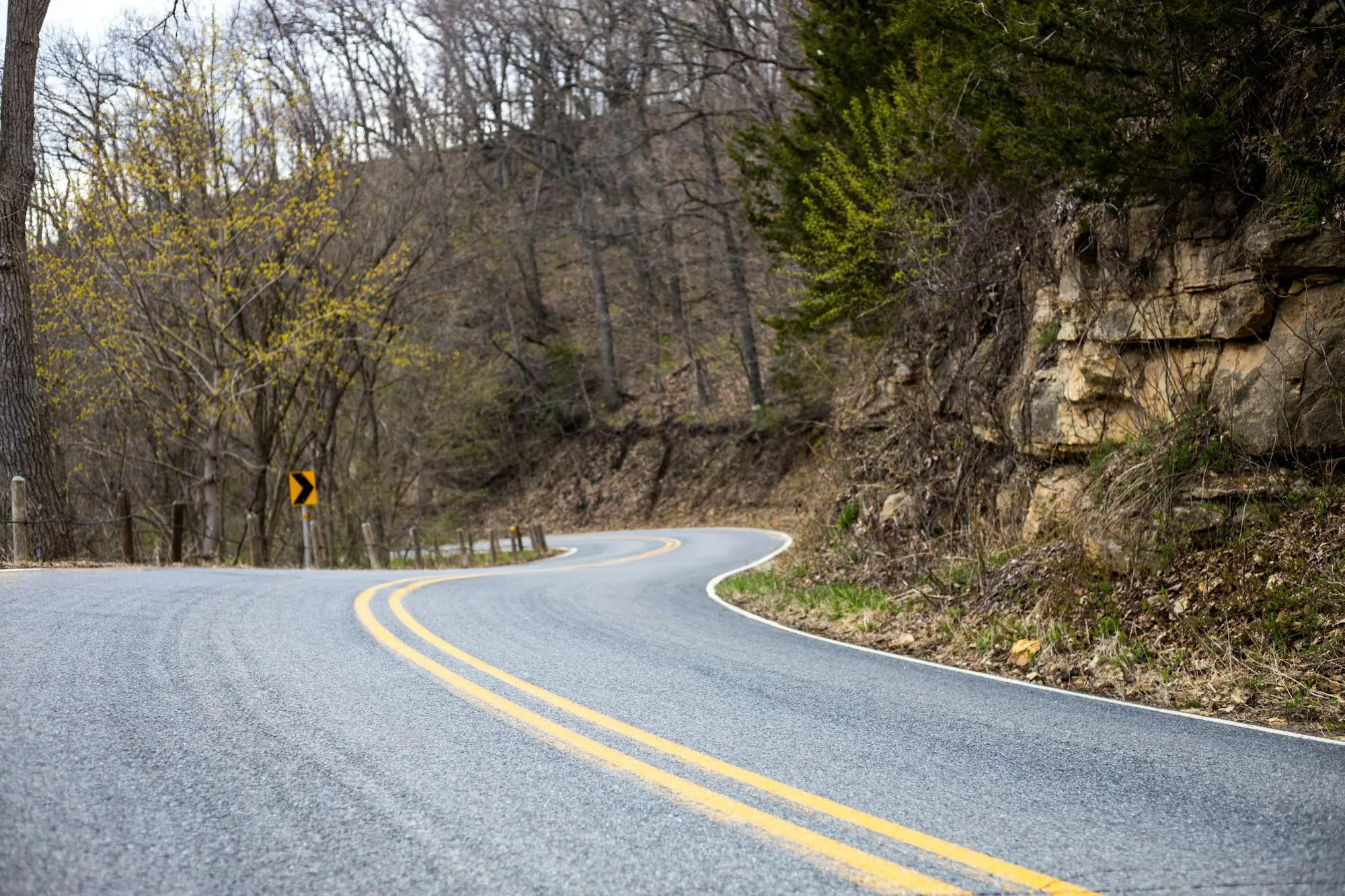
A winding two-lane asphalt road in the Appalachian mountains, photographed in dry daylight. Yellow double-center line markings guide through a series of tight left-hand curves. Dense deciduous and evergreen forest flanks both sides; a rock cut is visible on the right. The road surface and geometry suggest a technical, high-traffic riding corridor popular with motorcyclists.
Chris Flaten / Pexels

The Truth on the Street

The sentiment here comes from years of slow accumulation: paddock conversations between sessions, owners talking at club nights, and the messages riders send me directly once they have lived with a bike for a season. For the R1M the pattern is easy to read. The praise clusters tightly around three things, and the few objections that exist all belong to low speed.

What owners keep coming back to

Owners return to the crossplane four first and most often: a voice unlike anything else in the class, real weight in the mid-range, and a top end that keeps pulling. The chassis comes next. The semi-active Öhlins setup and the rigid frame earn credit for confidence through fast corners and for clear feedback, which is why the track rating runs high. Cornering ABS, multi-stage traction, slide and launch control get named as the package that separates it from rivals.

Where the complaints show up

A handful of riders call it awkward in slow, tight bends, saying it will not change direction as willingly as other machines they know. Some mention abrupt fueling low in the revs, tiring in town. Fuel use rounds it out: roughly 35 mpg US (6.8 L/100km) when ridden hard, so stops come around often.

Known issues

  • Throttle snatchiness

    fuel system occasional

    Abrupt on/off throttle transition at low RPM can cause jerky low-speed maneuvering. Often addressed by ECU remap or aftermarket fueling module.

The Expert Benchmark

Where this Yamaha YZF-R1M pulls ahead of — or falls behind — its rivals on the numbers, and the typical bike in its class on character.

What kind of bike this is — character vs. the class

This bike Class average

The shape of the Yamaha YZF-R1M — numbers and character vs. the average Supersport

Head-to-head: Yamaha YZF-R1M vs. its rivals

The Handshake Score

Forget spec-sheet bragging. Here's who the YZF-R1M is actually built for.

A scenic view of Angeles Crest Highway winding through rugged Southern California canyon terrain. Rocky mountainsides with golden earth tones frame the asphalt road with tight sweeping curves. Double yellow center line visible, sparse vegetation along the shoulders, clear blue sky with white clouds. Daylight, dry conditions. Iconic location for canyon-road enthusiasts.
Josh Sorenson / Pexels

Best motorcycle for Laguna Seca?

This is the bike you are shopping for. The suspension adapts on track without a wrench, the aids let you push at your own rate, and it rewards exactly the technique work you go to trackdays to do.

Made for Barber Motorsports Park · WeatherTech Raceway Laguna Seca · Circuit of the Americas
Best motorcycle for Angeles Crest?

Superb on Angeles Crest if you ride it properly, because it wants physical commitment in every corner. Expect the snatchy low-rpm throttle to annoy you in LA traffic on the way out there.

Made for Angeles Crest Highway · Coronado Trail / US 191 · Highway 1 / Big Sur

Best motorcycle for Tail of the Dragon?

The feedback and line precision suit Dragon and Cherohala corner work perfectly. The catch is pace: on tight, slow East Coast twisties you only ever use a fraction of the engine.

Made for Back of the Dragon · Blue Ridge Parkway · Cherohala Skyway

What's new versus the previous generation

If you're cross-shopping the older generation, here's what changed.

Yamaha YZF-R1M (RN32M)

Previous generation · 2015–2016

Yamaha YZF-R1M (RN32M)

The Track Bike That Rewards Commitment

Compare to the previous model →