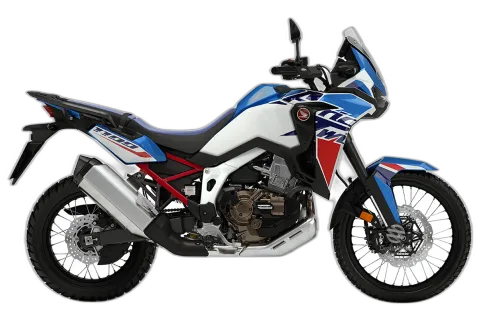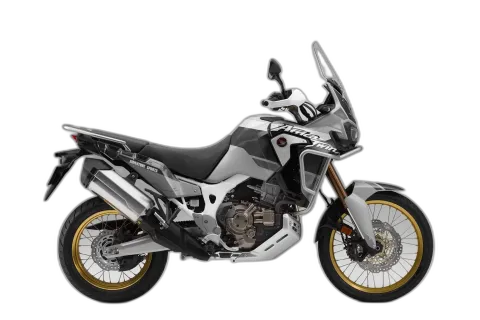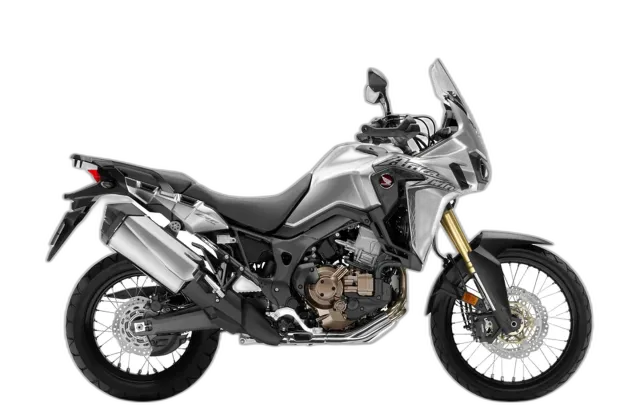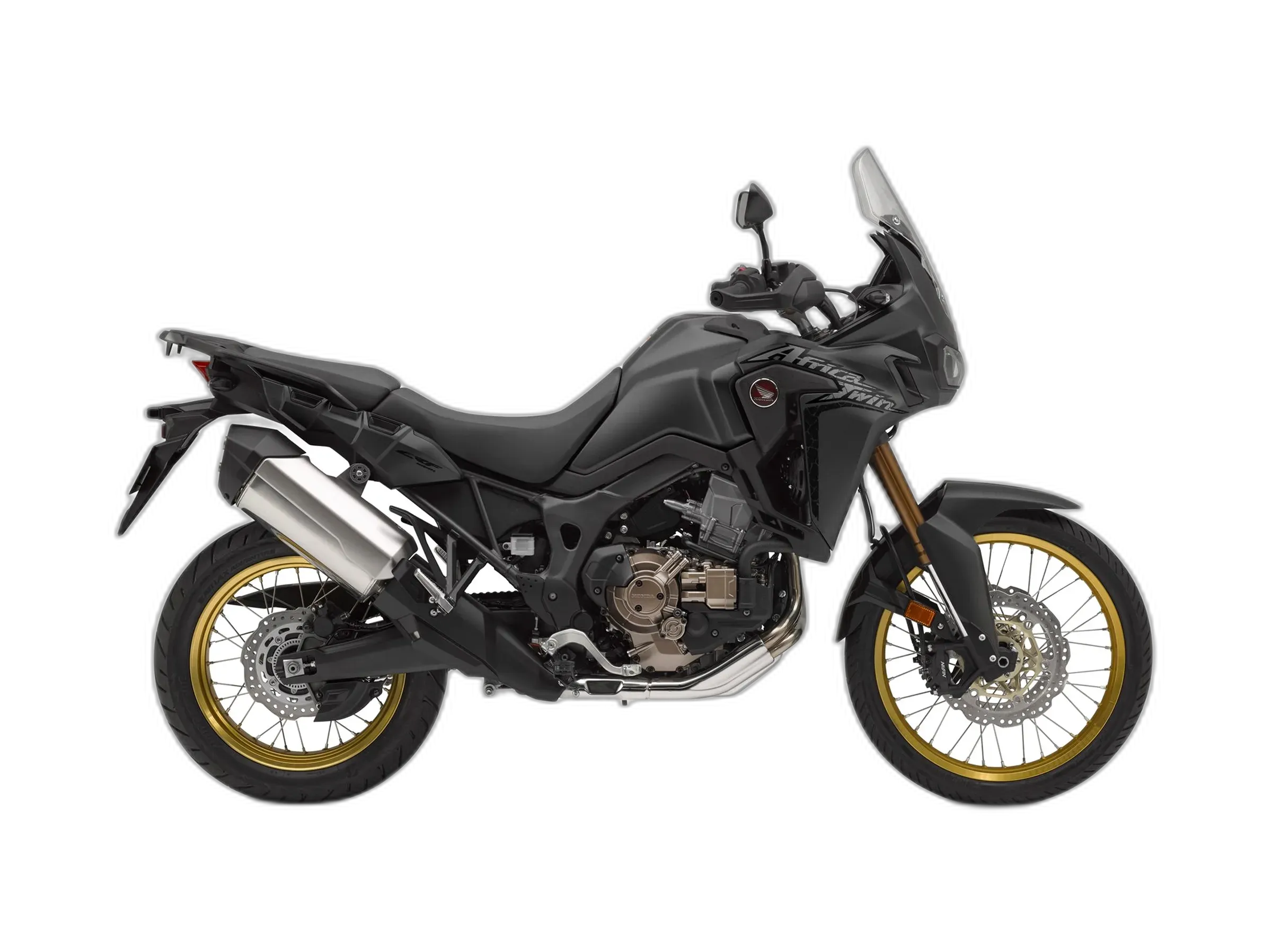

Honda CRF1000L Africa Twin (SD 04-DCT) — Adventure
Honda press archive

2016–2019 · Adventure · A variant of the CRF1000L Africa Twin

CRF1000L Africa Twin DCT (SD 04-DCT)

Differences between the standard CRF1000L Africa Twin and the DCT

4 / 5 NastyNils Rating · against its class

Built to Be Trusted

The Machine's Character

Honda built this one around a 998 cc parallel twin with an offset crank, making 95 hp and 72 lb-ft laid out for traction rather than headline numbers. What matters just as much is the hardware wrapped around it: a 21-inch front wheel, 9.1 in (230 mm) of front travel, 9.8 in (250 mm) of ground clearance and a steel double cradle frame. That is genuine adventure bike architecture, not a road chassis wearing knobby tires. ABS, traction control and ride modes are standard across the range, and this version builds on that equipment with the dual clutch transmission.

It rides like a machine designed by people who actually go places. The default suspension setting leans toward comfort, the adjusters have real range when the ground turns serious, and one configuration covers a highway morning and a gravel afternoon without you touching anything. It ages the way you want a travel bike to age: reliability is the strongest thing about it, and a steel frame can be welded back together by whatever shop you find after a get-off a long way from home. This one is for riders who cover distance and want pavement to be optional. At 534 lb (242 kg), slow technical trail work is not where it shines.

Hard Numbers

Spec sheets don't ride bikes, but they set the baseline.

Show full specs & equipment Hide specs & equipment
Key specifications
Power 95 hp (70 kW)
Torque 72 lb-ft (98 Nm)
Displacement 998 cc
Engine Parallel twin
Cooling Liquid-cooled
Gearbox 6-speed
Final drive Chain
Front tire 90/90-21
Rear tire 150/70-18
Ground clearance 9.8 in (250 mm)
Front travel 9.1 in (230 mm)
Rear travel 8.7 in (220 mm)
Seat height 34.3 in (870 mm)
Wet weight 534 lb (242 kg)
Fuel capacity 5.0 gal (18.8 L)

Equipment check

Chassis

  • Front Suspension Adjustable Standard
  • Rear Suspension Adjustable Standard

Comfort

  • Heated Grips Optional
  • Adjustable Seat Height Standard
  • Luggage System Optional

Drivetrain

  • Quickshifter Optional
  • Automatic Shift (DCT / ASA / AMT) Honda DCT (2nd generation) Clutchless ridingAutomatic gear selection Standard

Safety

  • ABS Standard
  • Traction Control Standard
  • Ride Modes Standard

What the CRF1000L Africa Twin DCT Adds — Differences vs the Standard CRF1000L Africa Twin

The CRF1000L Africa Twin DCT (SD 04-DCT) builds on the standard CRF1000L Africa Twin: the upgraded hardware, the key spec changes and where its character shifts. The full ride, specs, scoring and verdict are all right here on this page.

Equipment the DCT adds vs the standard CRF1000L Africa Twin

Now standard
Automatic Shift (DCT / ASA / AMT)

Hard spec differences

SpecStandard CRF1000L Africa TwinDCTΔ
Wet weight 511 lb 534 lb +22 lb
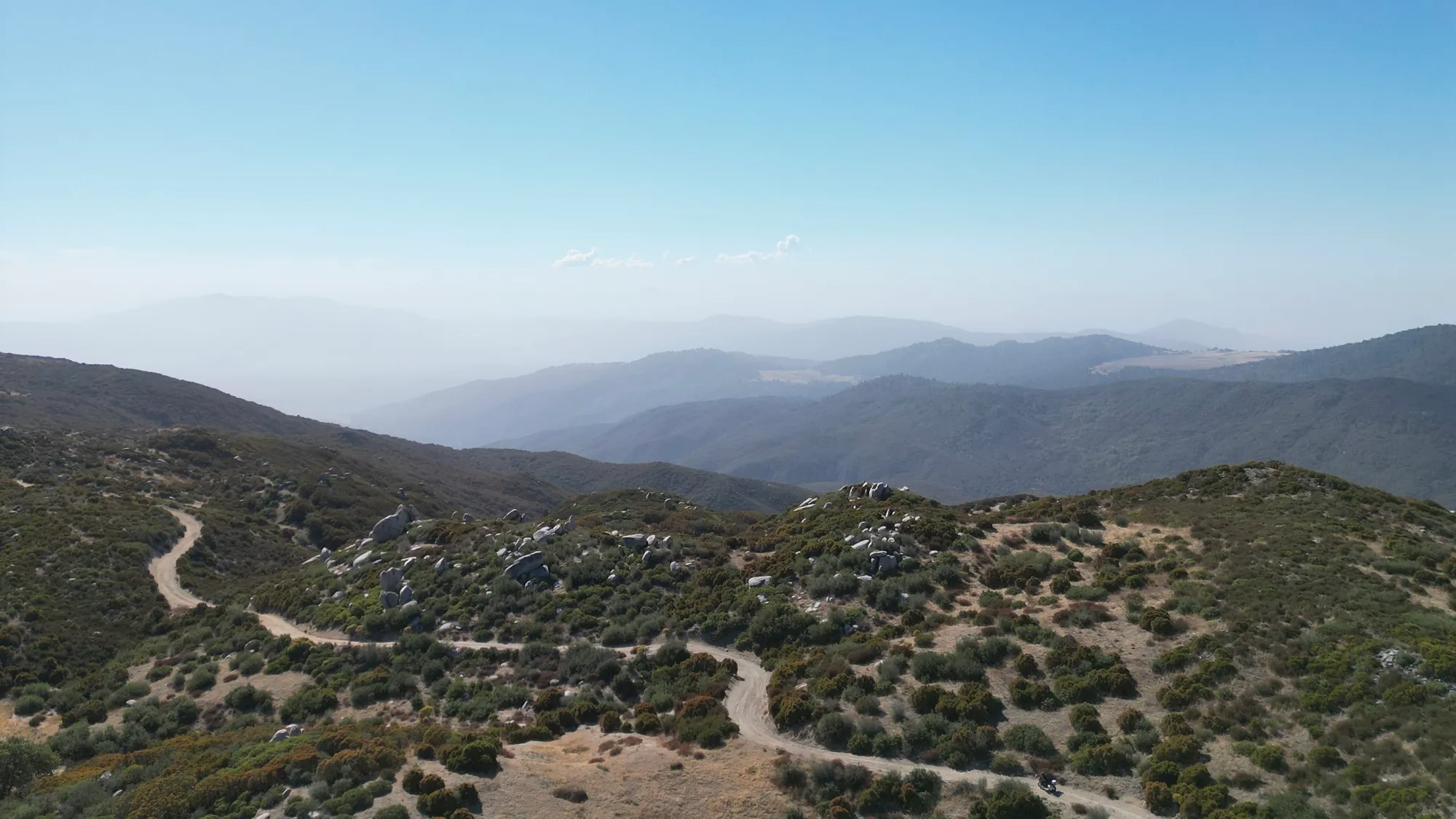
Aerial drone view of Palomar Divide Road winding through chaparral-covered mountain ridges in San Diego County. Multiple S-curve sections descend through sparse vegetation with distant valley views visible in the haze. Gravel and packed-earth surface.

The Truth on the Street

This part isn't my ride. It's the pooled voice of riders I've listened to over the years: paddock conversations, owners talking at gas stops and club nights, and the messages and emails people send me once they've lived with a bike. For this generation the chatter sorts itself the same way nearly every time. Praise runs to where the bike will take you, and the gripes gather around what it doesn't carry and how it copes with weight on board.

The dirt credibility riders keep citing

The loudest thread by far is off-road. Riders describe this as the big adventure bike of its era that stayed genuinely honest in the dirt, and they land on the same reasons: the tall front wheel, the long-travel suspension, a chassis that stays slim between the knees. Weight belongs in that conversation too, with owners saying it feels lighter and narrower than machines of similar size, most of all at walking pace and on loose ground. The engine gets folded in as well, riders pointing to a broad spread of torque and fueling clean enough to trust on surfaces where a sharp throttle would put them down. Ergonomics round it out: a roomy riding triangle, a seat owners say holds up over long days, and a stance that works when they get on the pegs. The automatic gearbox draws its own praise, described as something nothing else in the class offered.

Where the highway miles pinch

Put the same riders on a highway and the tone changes. The complaint that returns most often is the missing cruise control; on long stages, holding the throttle by hand is what owners say wears them down. Wind protection sits right behind it: the stock screen is short and fixed, riders report buffeting and thin cover at speed, and a taller screen is one of the first changes many owners make. Fuel range draws as much comment, with the tank falling short of what touring days ask and bigger aftermarket tanks a common answer. The dash gets steadier, lower-grade grumbling. Owners call the display dated next to the color screens of those years, and several find it hard to read in direct sun.

Loaded up, and feet down

The other steady cluster is physical. Seat height and a high center of gravity come up constantly from shorter riders, who describe low-speed maneuvering and getting a boot down as the part they never made peace with, even with the seat in its lower position. Loading changes the suspension story too. Solo, owners say the damping is sorted; add luggage and a passenger, and they report the bike running out of spring on rough roads. A smaller group says something similar about the motor: fully loaded, or lining up a quick overtake, they want more than it has. And a few owners mention the automatic gearbox left to itself, holding a gear longer than they expect or dropping one sharply enough to break the rhythm.

Known issues

  • Switchgear corrosion causing electrical faults

    electrics occasional

    Moisture ingress into the handlebar switch clusters leads to corrosion, resulting in intermittent DCT shifting errors, headlight malfunctions, and starting issues. Cleaning and treating with anti-corrosion spray often fixes it.

  • Intermittent cold start difficulty

    engine occasional

    Some owners report that the engine struggles to start or turns over slowly when cold, particularly after being ridden for over 19,000 mi (30,000 km). The cause is often linked to the starter switch or fuel system.

  • DCT transmission can stick in neutral or fail to shift

    drivetrain occasional

    Some owners report the dual-clutch transmission occasionally refusing to shift, holding a single gear, or dropping into neutral with a flashing neutral indicator and a fault warning. The cause is usually traced to the electronic shift control system, such as the shift actuator motor, the gear position or shift spindle angle sensors, or their wiring connectors, rather than internal gearbox wear. A dealer diagnostic check and a software reset or sensor replacement usually resolves it.

  • Corrosion on spokes and fasteners

    bodywork common

    Nickel-plated spokes and various steel fasteners are prone to rust, especially when exposed to wet conditions or salted roads. Some owners have had wheels replaced under warranty, but the issue persists.

  • Rear shock soft / fade when loaded

    suspension common

    The OEM Showa rear shock is regarded as under-damped when the bike is heavily loaded with luggage and pillion, with fade reported on long fast highway runs.

  • Cam chain tensioner noise / wear

    engine occasional

    Some early SD04 units exhibit audible cam chain rattle on startup or at low rpm, traced to the cam chain tensioner. Updated tensioners were fitted in service and on later production.

  • DCT clutch judder at very low speeds

    drivetrain occasional

    On DCT-equipped models, some owners notice a low-speed shudder or judder when creeping in first gear, particularly when cold. Considered a characteristic rather than a defect by Honda.

  • Headlight condensation / moisture ingress

    electrics common

    Owners frequently report condensation inside the LED headlight units, particularly after washing or in humid conditions; usually cosmetic but sometimes warrantied.

The Expert Benchmark

Where this Honda CRF1000L Africa Twin pulls ahead of — or falls behind — its rivals on the numbers, and the typical bike in its class on character.

What kind of bike this is — character vs. the class

This bike Class average

The shape of the Honda CRF1000L Africa Twin — numbers and character vs. the average Adventure

Head-to-head: Honda CRF1000L Africa Twin vs. its rivals

The Long-Haul Verdict

Forget spec-sheet bragging. Here's who the CRF1000L Africa Twin is actually built for.

Aerial view of a winding asphalt road cutting through volcanic terrain on La Gomera, Canary Islands. The road curves through sparse green vegetation with rocky volcanic peaks visible in the background and a settled valley to the left. Clear lane markings, dry climate, partly cloudy sky.

Best motorcycle for Moab?

Fast gravel and open desert two-track suit it perfectly. At a crawl, or in deep sand, 534 lb (242 kg) and a motor that won't snap the front up start working against you, so go in knowing where the limit sits.

Made for Bar M / Kane Creek · Imperial Sand Dunes · Johnson Valley OHV Area
Best touring motorcycle for long distance?

This is its natural habitat: upright, planted at speed, 5.0 gal (18.8 L) of fuel and a riding position you can live with all day. Loaded two-up with luggage, the rear shock goes soft, so budget for a better one.

Made for Beartooth Highway · Blue Ridge Parkway · Going-to-the-Sun Road

Best motorcycle for Highway 1?

Composed through fast sweepers and unbothered by patched pavement, it turns 200 to 400 mi days into easy ones. Accept that road feel arrives filtered compared with a short-travel street machine and it fits.

Made for Black Hills · Blue Ridge Parkway · Cherohala Skyway

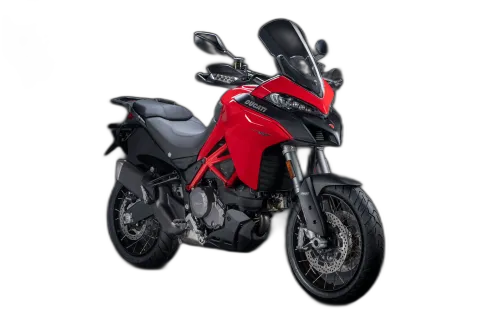
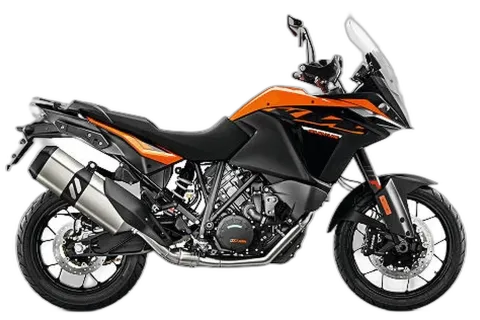
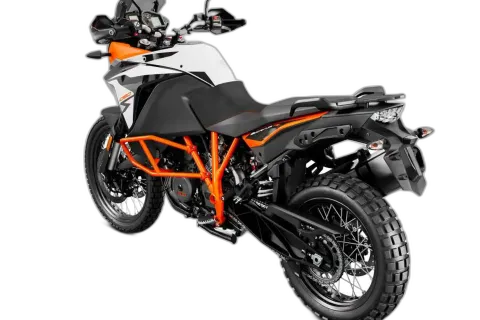
Alternatives to the Honda CRF1000L Africa Twin

If this one isn't quite the fit, these are the bikes worth riding back-to-back against it.

Any price note compares both bikes at the same age — the youngest age both have on the used market — against this Honda CRF1000L Africa Twin. “cheaper/pricier” is what that bike costs second-hand, not how worn it is.