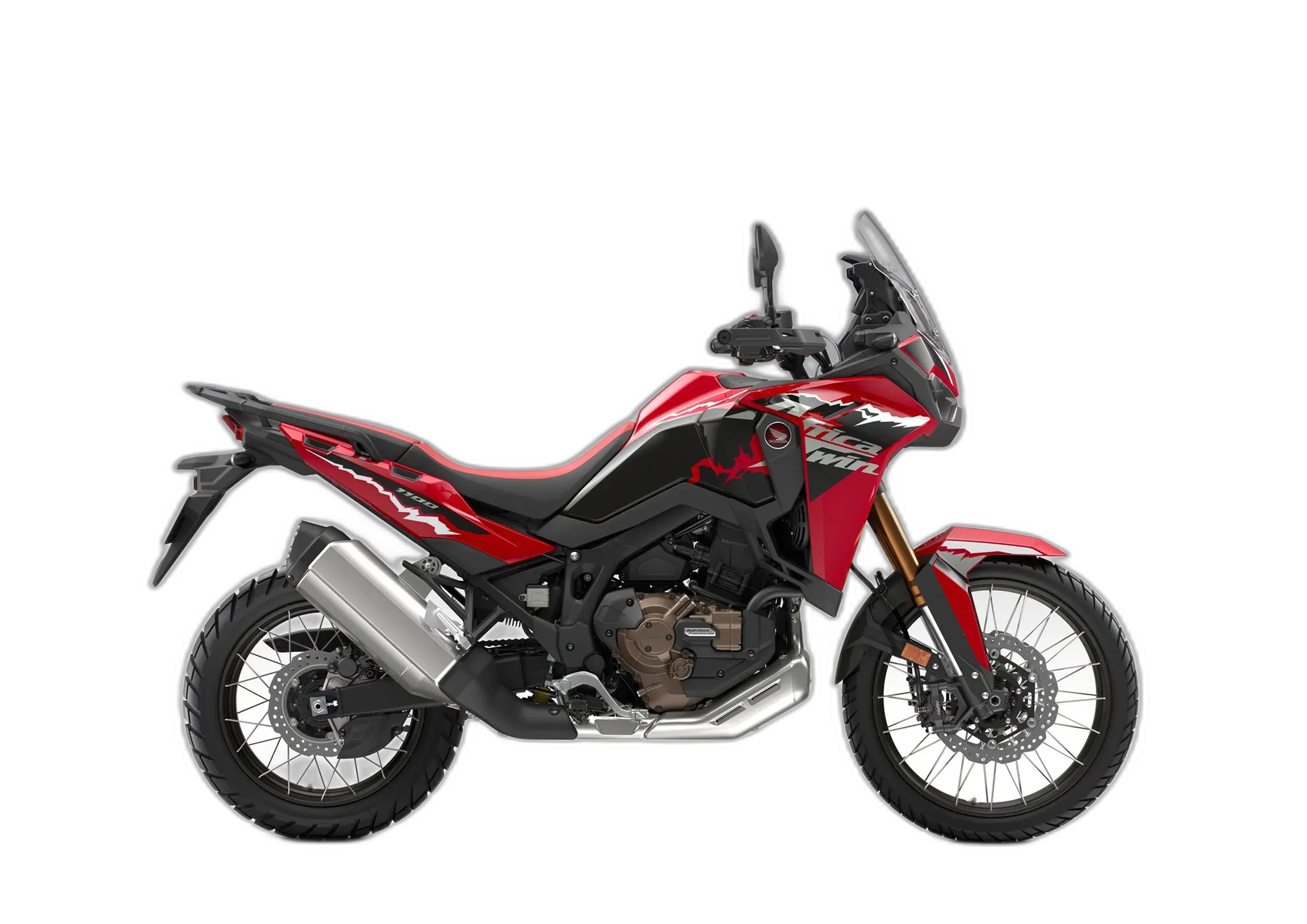

Honda CRF1100L Africa Twin (SD 08-DCT/ES) — Adventure
Honda press archive

2020–2026 · Adventure · A variant of the CRF1100L Africa Twin

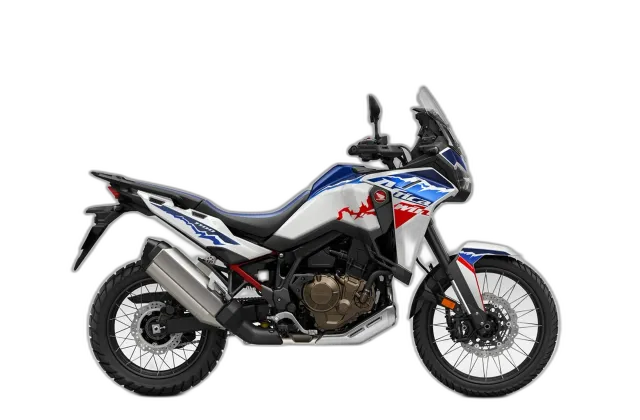
CRF1100L Africa Twin DCT/ES (SD 08-DCT/ES)

Differences between the standard CRF1100L Africa Twin and the DCT/ES

4.5 / 5 NastyNils Rating · against its class

The Dual Clutch Distance Partner

The Machine's Character

The 1084 cc parallel twin puts out 102 hp at 7,500 rpm and 83 lb-ft at 5,500, but the arrangement matters more than the peaks: the pull sits low and stays useful everywhere you actually ride. Around it sits genuine adventure hardware, a 21-inch front wheel, 9.1 inches of fork travel, 8.7 at the rear and 9.8 inches of ground clearance. This trim runs Honda's DCT in place of a hand clutch, with Showa EERA electronic suspension available on top of the fork and shock adjustment every version already has. ABS, traction control, ride modes, wheelie control and cruise are standard equipment.

It rides big and settles fast, and nothing about it feels highly strung. That is the point. In this class the confidence comes from predictability, and this generation earns its keep by being a non-issue on day nine of a trip rather than by making a scene on day one. It suits the rider who covers real distance, carries gear, and wants to think about the route instead of the machine. The honest caveat is size. A 33.5-inch seat and 498 lb wet are real numbers, and while the seat height adjusts, a shorter rider on loose ground will feel every pound.

Hard Numbers

Spec sheets don't ride bikes, but they set the baseline.

Show full specs & equipment Hide specs & equipment
Key specifications
Power 102 hp (75 kW) @ 7,500 rpm
Torque 83 lb-ft (112 Nm) @ 5,500 rpm
Displacement 1084 cc
Engine Parallel twin
Cooling Liquid-cooled
Gearbox 6-speed
Final drive Chain
Fork Upside-down (USD)
Front brake 310 mm
Front tire 90/90-21
Rear tire 150/70-18
Wheelbase 62.0 in (1575 mm)
Ground clearance 9.8 in (250 mm)
Front travel 9.1 in (230 mm)
Rear travel 8.7 in (220 mm)
Seat height 33.5 in (850 mm)
Wet weight 498 lb (226 kg)
Fuel capacity 5.0 gal (18.8 L)

Equipment check

Chassis

  • Electronic Suspension Showa EERA (Electronically Equipped Ride Adjustment) Realtime road adaptationBrake dive control Optional
  • Front Suspension Adjustable Standard
  • Rear Suspension Adjustable Standard
  • Cruise Control Standard

Comfort

  • Heated Grips Optional
  • Adjustable Windscreen Standard
  • Adjustable Seat Height Standard
  • Luggage System Optional

Connectivity

  • TFT Display Standard

Drivetrain

  • Automatic Shift (DCT / ASA / AMT) Honda DCT (3rd generation) Clutchless ridingAutomatic gear selection Standard

Lighting

  • LED Headlight Standard

Safety

  • ABS Standard
  • Traction Control Standard
  • Ride Modes Standard

What the CRF1100L Africa Twin DCT/ES Adds — Differences vs the Standard CRF1100L Africa Twin

The CRF1100L Africa Twin DCT/ES (SD 08-DCT/ES) builds on the standard CRF1100L Africa Twin: the upgraded hardware, the key spec changes and where its character shifts. The full ride, specs, scoring and verdict are all right here on this page.

Equipment the DCT/ES adds vs the standard CRF1100L Africa Twin

Now standard
Automatic Shift (DCT / ASA / AMT)

Premium hardware the DCT/ES brings

  • Suspension Electronic Suspension Semi-active electronic suspension that adapts its damping on the move — the standard runs conventional, manually-set suspension.

Hard spec differences

SpecStandard CRF1100L Africa TwinDCT/ESΔ
Torque 77 lb-ft 83 lb-ft +5 lb-ft
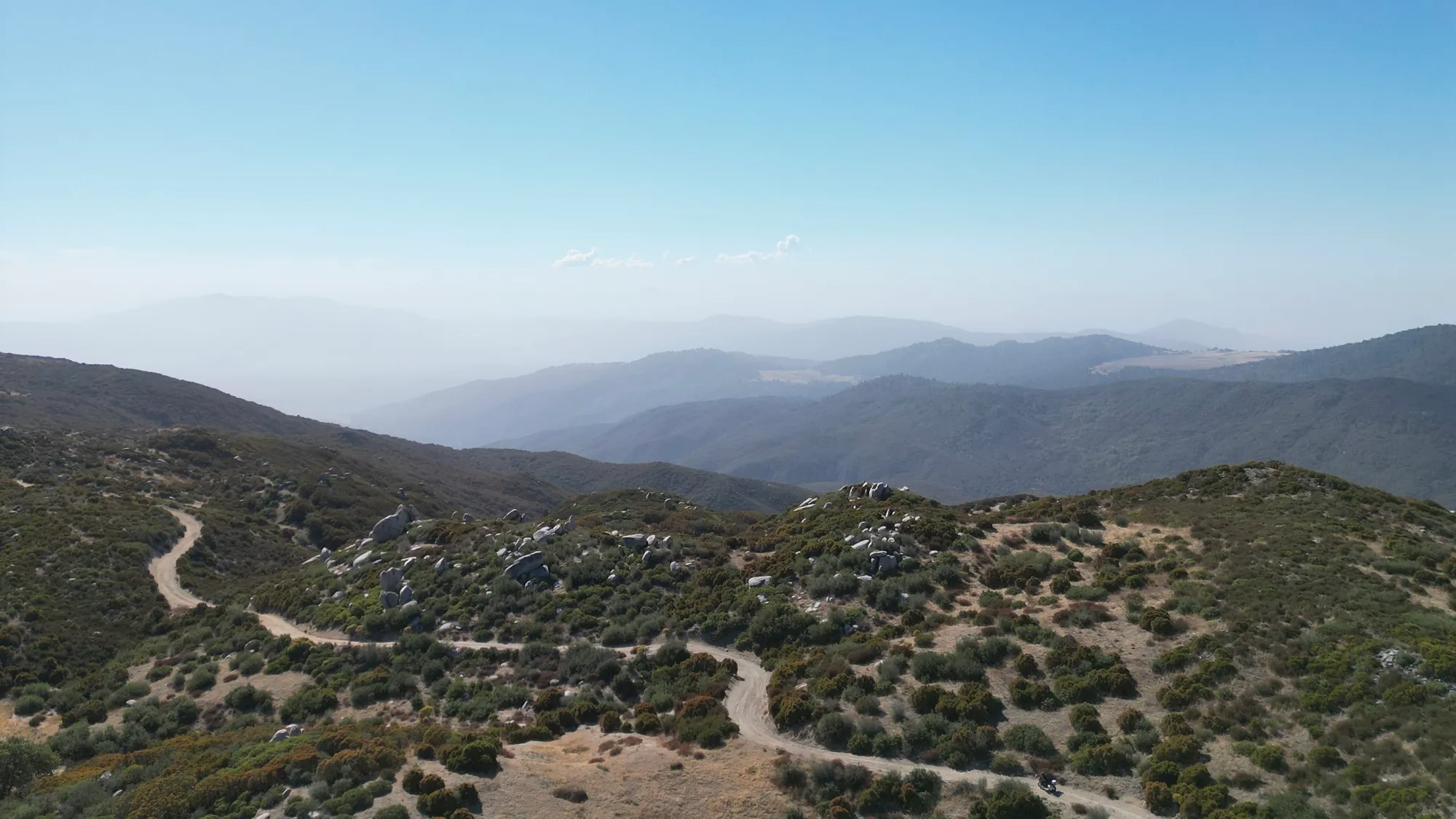
Aerial drone view of Palomar Divide Road winding through chaparral-covered mountain ridges in San Diego County. Multiple S-curve sections descend through sparse vegetation with distant valley views visible in the haze. Gravel and packed-earth surface.

The Truth on the Street

Over the years I've listened to a lot of Africa Twin owners. That means paddock conversations, talk at the fuel stop after a group ride, club-night chatter, and the emails and messages riders send me directly. Put together, their view of this generation is consistent. They describe a bike that is credible on dirt and composed on pavement, with an engine and gearbox they genuinely like, while the complaints gather around the controls, the seat and outright road pace.

Equally at home on dirt and tarmac

The praise riders repeat most often is about range. Owners describe a bike that takes rough trails in stride and then settles into calm, composed manners once the road turns paved again. Many call it the most off-road-capable machine in its weight and price bracket, and they point to the ground clearance and the aluminum subframe. The chassis earns its own share of trust. Riders consistently say the fully adjustable Showa suspension soaks up broken ground without unsettling the bike, and that the balance of the whole package lets them relax on surfaces where they would otherwise tense up. The one limit owners bring up here is deep sand, where they name the weight as the limiting factor.

A twin with a pulse, a gearbox with fans

The 270-degree parallel twin gets steady affection. Owners describe a torquey pulse with real character that sets it apart from the smoother boxers and triples in the class, and riders consistently call the 2024 torque increase a meaningful improvement in everyday riding. The DCT collects nearly as much praise. Riders call it seamless and effortless, and they value it most on long touring days and in technical off-road sections where both hands stay on the bars. Owners also say the 2022 and 2024 refinement updates took the edge off its old low-speed roughness. When the talk turns to ownership, riders report high reliability, reasonable servicing bills and build quality they rate highly. Many also point out that it undercuts the premium European adventure bikes on price while offering a comparable electronics package.

Buttons, seat and outright punch

The most persistent complaint concerns the controls. Riders describe the switch cluster and menu structure as cluttered and unintuitive, with a layout some liken to a Goldwing's and far more involved than it needs to be. Add the number of ride modes and settings, and owners say it takes real time before the system feels second nature. The seat comes next. It is repeatedly described as firm, fine for a short ride but wearing over a full highway day, and some owners only settle the issue with an aftermarket seat. A few add that the high pegs take their own toll on long-range comfort. Taller riders on the standard version report that its small screen leaves them exposed at highway speeds. Riders who have spent time on the more powerful European adventure bikes make one more recurring point: on the road, the Africa Twin can feel less potent by comparison.

Known issues

  • Left handlebar switch harness corrosion

    electrics rare Recall

    Fretting corrosion at joint terminals can cause intermittent or complete loss of horn and high-beam light switch. Honda issued a safety recall (NHTSA #25V583) for 2020-2022 and 2024-2025 models to replace the switch assembly.

  • TFT display failures

    electrics occasional

    Some units experience screen blackouts, flickering, or touch unresponsiveness. Honda extended the warranty on TFT modules to 2033, covering replacements.

  • DCT stalls and erratic engine braking

    engine rare

    Some owners report occasional engine stalling when coming to a stop with DCT, and inconsistent engine braking feel in certain ride modes.

  • Rust on white-framed models

    bodywork occasional

    White-painted frames, particularly on tricolour editions, show surface rust prematurely, especially at weld points, likely due to paint quality.

  • High-speed headshake / weave when carrying top box and panniers

    chassis occasional

    At sustained highway speeds with a top box and side panniers fitted, the raised and rearward load can set off a slow weave or a shake through the handlebars, most noticeably when the top box is loaded heavily. The bike leaves the factory without a steering damper, so owners typically cut top box weight, shift heavy items low into the panniers, and fit an aftermarket damper to settle the front end.

  • 6.5″ TFT touchscreen becoming unresponsive or registering false touches

    electrics occasional

    The 6.5″ TFT touchscreen has been reported as becoming unresponsive to input, registering "phantom" touches by itself, or going to a temporary blackout. Cold weather makes symptoms worse. The issue has persisted after four years without any permanent fix. Replacement screens have exhibited the same behavior — pointing to a design rather than a manufacturing root cause.

  • Ride-by-wire throttle snatchiness in 1st–2nd gear at low speed

    engine occasional

    In the lower gears at low engine speeds, ride-by-wire throttle response can feel oscillating or snatchy, and it is most noticeable on the automatic dual-clutch version in stop-and-go city traffic, where engine braking on a closed throttle adds to the effect. Honda revised the lower gear ratios and the automatic shift program partway through the production run, which noticeably reduced the sensation.

The Expert Benchmark

Where this Honda CRF1100L Africa Twin pulls ahead of — or falls behind — its rivals on the numbers, and the typical bike in its class on character.

What kind of bike this is — character vs. the class

This bike Class average

The shape of the Honda CRF1100L Africa Twin — numbers and character vs. the average Adventure

Head-to-head: Honda CRF1100L Africa Twin vs. its rivals

The Long-Haul Verdict

Forget spec-sheet bragging. Here's who the CRF1100L Africa Twin is actually built for.

Aerial view of a winding asphalt road cutting through volcanic terrain on La Gomera, Canary Islands. The road curves through sparse green vegetation with rocky volcanic peaks visible in the background and a settled valley to the left. Clear lane markings, dry climate, partly cloudy sky.

Best motorcycle for Moab?

The 21-inch front, 9.8 inches of clearance and full travel mean it genuinely goes there. At 498 lb it also punishes mistakes, so it rewards riders who already have the skills.

Made for Moab · Bar M / Kane Creek · Imperial Sand Dunes
Best touring motorcycle for long distance?

This is the bike's home ground. Two-up with hard luggage over Beartooth or Going-to-the-Sun it has the range, the comfort and the reliability. Just keep the top box light at sustained highway speed.

Made for Beartooth Highway · Blue Ridge Parkway · Going-to-the-Sun Road

Best motorcycle for Highway 1?

For 200 to 400 mile days on the Blue Ridge or Highway 1 this is more bike than you strictly need, and that is fine. Comfort, cruise and the automatic shift make long twisty days easy.

Made for Highway 1 / Big Sur · Black Hills · Blue Ridge Parkway

What's new versus the previous generation

If you're cross-shopping the older generation, here's what changed.

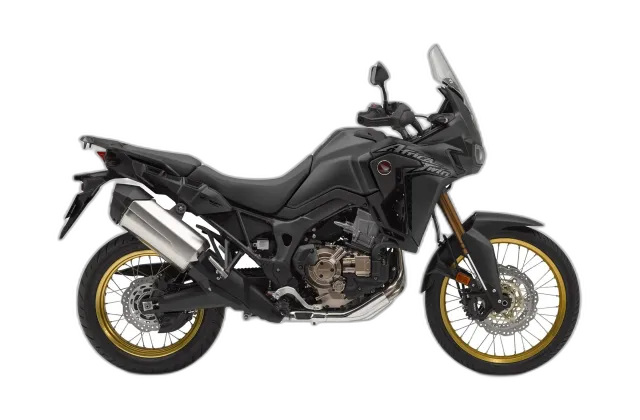
Honda CRF1000L Africa Twin (SD 04-DCT)

Previous generation · 2016–2019

Honda CRF1000L Africa Twin (SD 04-DCT)

Built to Be Trusted

Compare to the previous model →

Alternatives to the Honda CRF1100L Africa Twin

If this one isn't quite the fit, these are the bikes worth riding back-to-back against it.

Any price note compares both bikes at the same age — the youngest age both have on the used market — against this Honda CRF1100L Africa Twin. “cheaper/pricier” is what that bike costs second-hand, not how worn it is.