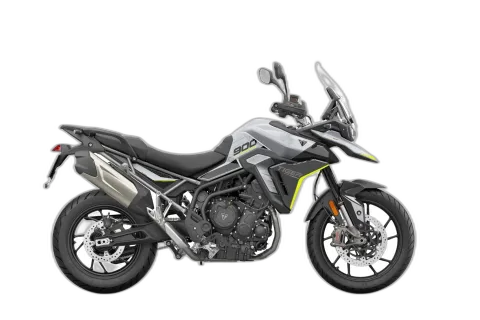
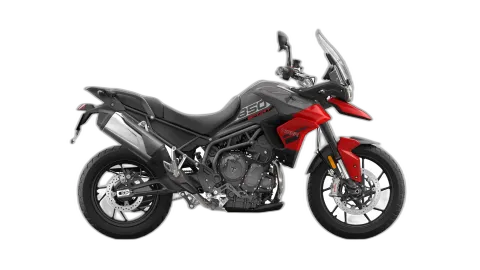
Triumph Tiger 900 (C701) — Adventure
NastyNils / Triumph press archive

2020–2023 · Adventure · Buyer's Guide

Tiger 900 (C701)

Two Souls, One Triple

The Machine's Character

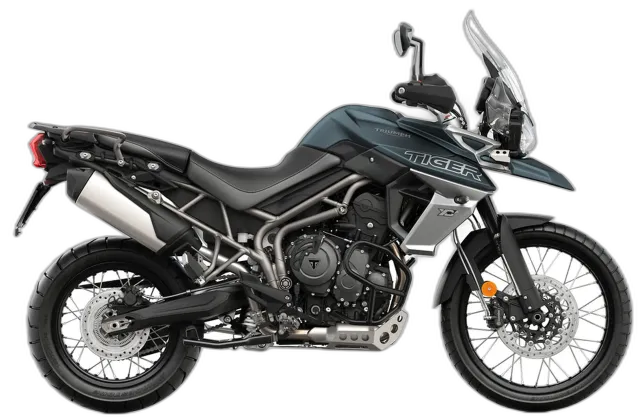
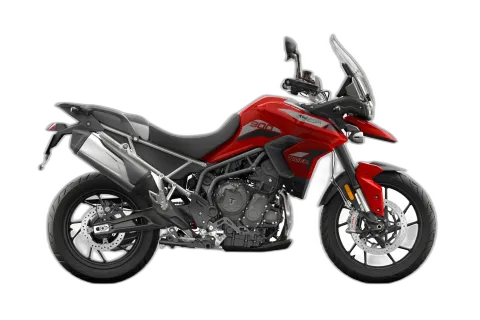
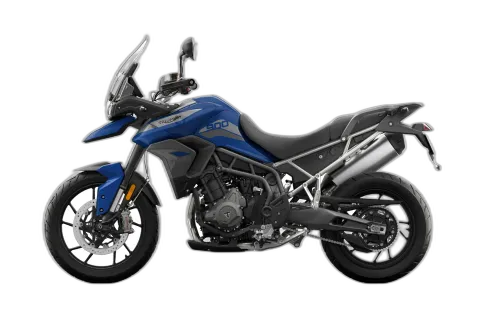
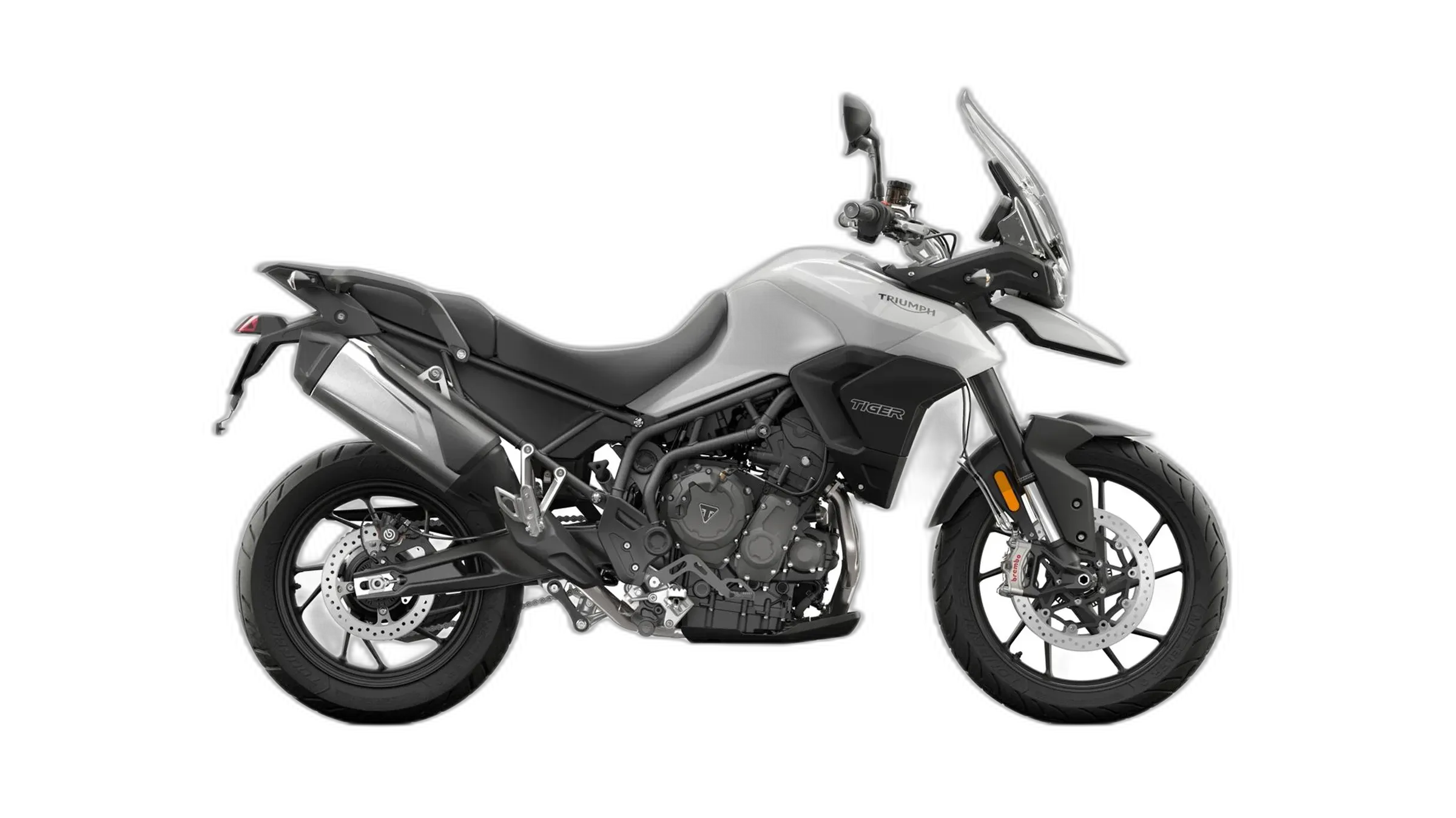
The Tiger 900 is built around an 888cc inline-three that doesn't behave like any other. Triumph's T-plane crank hands it two personalities in one engine: a low end that thumps and pulls like a big twin, then a proper triple wail that arrives up top. Peak figures read 94 hp and 64 lb-ft, but the story here is delivery, not the spec sheet. On a 19-inch front wheel this is the road-leaning Tiger, set up to eat pavement first, with ABS, Cornering ABS, Traction Control, and Ride Modes standard. It slots in as the mid-weight adventure-tourer with genuine character.

Ride it and the appeal holds up. At 472 lb wet it feels manageable for the class, the chassis stays composed at a touring pace, and the whole bike carries the tactile quality Triumph buyers come for. It ages best as a road-biased traveler that can dip onto easy trails, not as a hardcore off-roader. The honest caveat: this generation has a reputation for low-rpm stalling on closed-throttle downshifts, worst in Rain mode, plus brake niggles worth checking on any used example. Buy with eyes open and it rewards you.

Hard Numbers

Spec sheets don't ride bikes, but they set the baseline.

Show full specs & equipment Hide specs & equipment
Key specifications
Power 94 hp (70 kW) @ 8,750 rpm
Torque 64 lb-ft (87 Nm) @ 7,250 rpm
Displacement 888 cc
Engine Inline-three
Cooling Liquid-cooled
Gearbox 6-speed
Final drive Chain
Front brake 320 mm
Front tire 100/90-19
Rear tire 150/70R17
Wheelbase 61.3 in (1556 mm)
Ground clearance 8.3 in (210 mm)
Rear travel 6.7 in (170 mm)
Seat height 31.9 in (810 mm)
Wet weight 472 lb (214 kg)
Fuel capacity 5.3 gal (20 L)
Top speed 127 mph (205 km/h)

Equipment check

Chassis

  • Electronic Suspension Optional
  • Front Suspension Adjustable Standard
  • Rear Suspension Adjustable Standard
  • Cruise Control Standard

Comfort

  • Heated Grips Optional
  • Adjustable Windscreen Standard
  • Adjustable Seat Height Standard
  • Luggage System Optional

Connectivity

  • TFT Display Standard
  • Smartphone Connectivity Optional
  • Navigation My Triumph Connectivity System Integrated navigationHandsfree phone integration Optional
  • USB Charging Port Standard
  • Tire Pressure Monitoring (TPMS) Standard

Drivetrain

  • Quickshifter Optional
  • Slipper Clutch Standard

Lighting

  • LED Headlight Standard

Safety

  • ABS Standard
  • Cornering ABS Standard
  • Traction Control Standard
  • Ride Modes Triumph Ride-by-Wire Throttle Maps Selectable ride modesRefined throttle response Standard

The Voice of Experience

Portrait of NastyNils

The test ride

Thumb the starter and the split character is immediately audible: a gruff, offbeat throb at idle that cleans into a hard metallic howl as the revs climb. The ride-by-wire throttle feels honest, giving your right wrist a direct read on the rear wheel. The 31.9-inch seat and upright bars put you in a commanding, all-day posture, and the screen keeps the worst of the blast off your chest at highway speed. Push the pace through a fast sweeper and it plants itself with real high-speed stability, tracking a line without fuss. The controls fall to hand cleanly, the mirrors stay usable, and loaded with luggage it never feels flustered. This is a bike that shrinks around you the longer you stay on it.

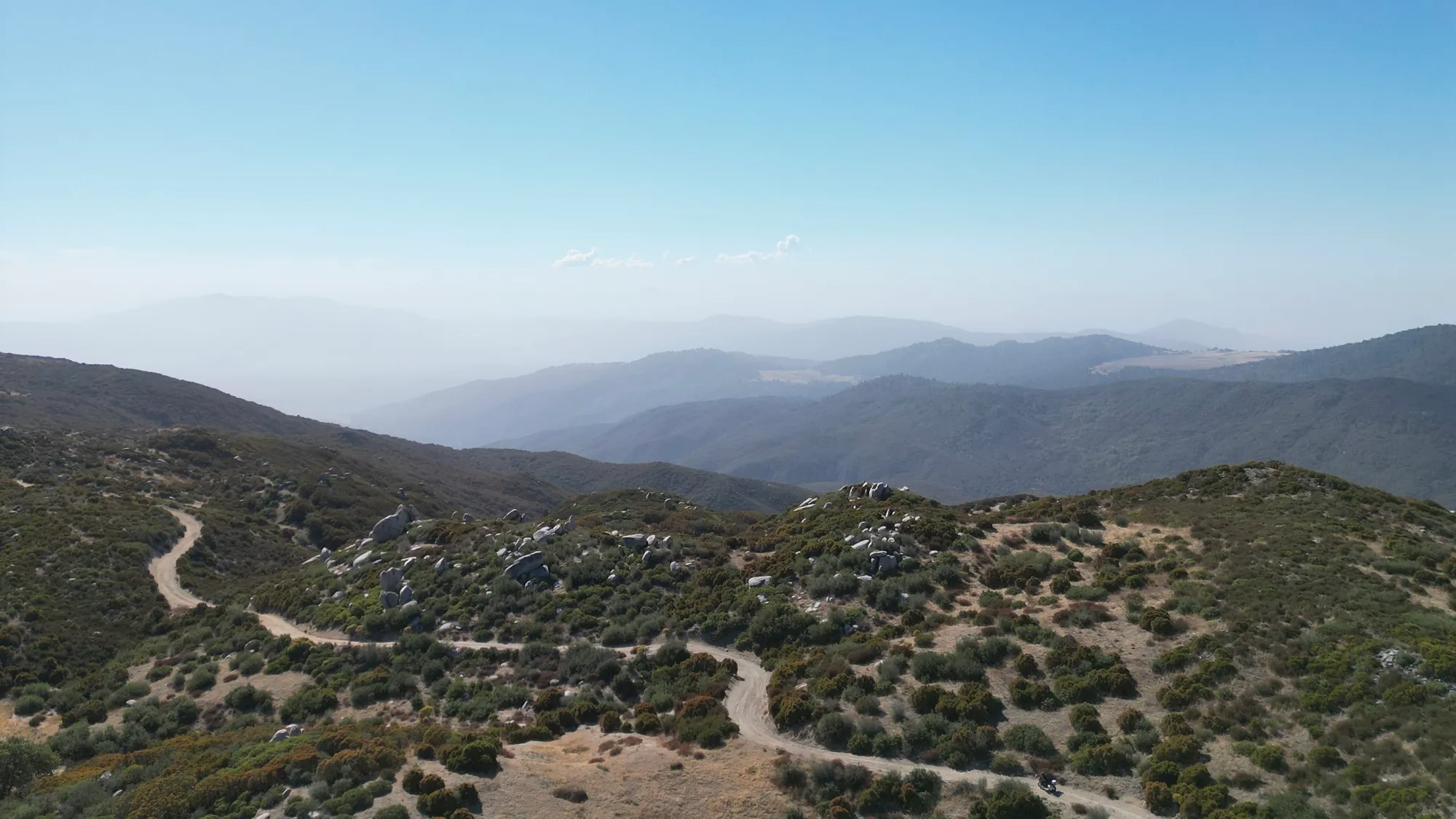
Aerial drone view of Palomar Divide Road winding through chaparral-covered mountain ridges in San Diego County. Multiple S-curve sections descend through sparse vegetation with distant valley views visible in the haze. Gravel and packed-earth surface.

The Truth on the Street

None of this comes from a spec sheet. It's what has filtered back to me over years of listening to the people who actually own these bikes: paddock conversations, long message threads, and the emails riders send after they've racked up real miles. On the Tiger 900, that chatter settles into a clear shape. There's steady praise for a handful of things, and a short list of complaints that keep resurfacing.

Where the praise lands

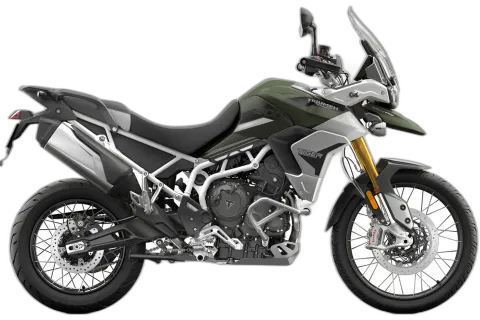
The front brake draws consistent respect. Riders call it strong and progressive, with good feel at the lever, and a real step up from the previous Tiger. On the Rally versions, owners point to the sealed tubeless spoked wheels as a practical win, since a puncture on the trail is far less of a headache than it is on traditional tubed off-road rims. The split between the road-focused and off-road-focused models earns credit for being real. Riders who have thrown a leg over both say the two families genuinely behave differently, rather than wearing different clothes over the same bike.

Where the complaints cluster

Most of the recurring criticism is about comfort over distance. At sustained highway speed, a lot of riders notice vibration coming up through the handlebars. Many also report wind turbulence at the helmet, and note that the adjustable screen doesn't fully settle it for taller riders, which is why aftermarket screens get fitted so often. The standard seat comes in for the same treatment on long days, with the Comfort Seat accessory a common swap. Beyond comfort, two other themes surface. The scheduled valve-clearance check gets called out as expensive against what rivals ask, and some riders find the TFT screen packs in too much information to read cleanly at a glance.

Known issues

  • Engine stalling on 3rd-to-2nd downshift or low-rpm clutch-up, particularly in Rain mode

    engineoccasional

    Stalling reported on closed-throttle downshifts and at low-rpm clutch-up, more frequently in Rain ride mode (different fuel map). Anti-stall logic occasionally fails to intervene; some cases require dealer ECU reflash.

  • Rear brake caliper sticks; pads and disc overheat

    brakesoccasional

    Rear caliper sticks; disc and pads overheat after relatively short rides; weak pad-spreader spring identified as a recurring cause; pads wear quickly. Resolved by caliper rebuild and spring replacement.

  • Front brake disc warping with judder under braking

    brakescommon

    Pulsing / judder felt through the front brake lever and bars under braking. Some owners measure runout exceeding the factory limit (>0.15 mm), with one detailed report citing approx. 1 mm at 12,000 km. The judder can return after disc machining, suggesting heat-cycle sensitivity rather than mounting issues. Multiple fleet operators report all bikes returning under warranty for warped discs.

  • Intermittent no-start due to faulty right-side switch block

    electricsoccasional

    Pressing the start button does not prime the fuel pump or initiate cranking. Right-side switch block recognised by Triumph dealers as a known faulty assembly; full switchblock replaced under warranty.

  • Quickshifter intermittent or fails after wet conditions or pressure-washing

    drivetraincommon

    The shift-rod sensor on the up/down quickshifter is sensitive to water ingress; quickshifter becomes intermittent or non-functional. Heat-related intermittents reported separately. Multiple replacements under warranty are common (one detailed report cites three replacements within 2,750 miles). Affects only `[GT-Pro]` and `[Rally-Pro]` (variants with Triumph Shift Assist standard).

  • Bluetooth module pairing unresponsive or unstable

    electricscommon

    The Bluetooth module on Pro variants sometimes ships not enabled, or the pairing menu is unresponsive; iOS pairing requires two simultaneous Bluetooth connections (music and navigation) which is fragile. Dealer-side software fixes (including VIN-entry corrections in the ECU) are commonly required. Affects only `[GT-Pro]` and `[Rally-Pro]`.

  • TFT display corruption or failure after water exposure

    electricsoccasional

    TFT shows blue or hexadecimal corruption in heavy rain; in some cases the dash becomes loose due to faulty mounting screws. Recovery after drying is possible but not consistent — replacement under warranty is common. Affects the 7-inch TFT fitted to all marketed variants.

  • Oil seep at alternator-cover wire-harness exit

    engineoccasional

    Engine oil seeps from the alternator/stator cover at the point where the wire harness exits, travelling down the cable and pooling at the connector. Triumph has issued a redesigned cover as a service replacement. Generally addressed under warranty as a good-will repair. Cross-platform Triumph issue but documented for the Tiger 900 specifically.

  • Front fork seal leaks at relatively low mileage

    suspensionoccasional

    Left fork seal leaks reported at relatively low mileage; Triumph treats as a wear item rather than warranty. Dust/sand ingress accelerates the failure; aftermarket fork-leg protectors can in some cases trap debris and worsen the problem.

  • Heated grips heat briefly then shut off; switch unresponsive

    electricsoccasional

    Grips heat for a few seconds then shut off; control switch becomes unresponsive. Common cause is a chafed positive wire at the bar exit; fuse #4 (10A) protects the circuit.

  • TPMS false low-pressure warnings and sensor battery failures

    electricscommon

    Tight pressure tolerances trigger low-pressure warnings even at correct cold pressures (warnings reported at 39–44 PSI). Sensor battery failures reported after several years of use. TigerTool reset sometimes works; aftermarket 433 MHz-compatible sensors are now available as out-of-warranty replacements. Affects only `[GT-Pro]` and `[Rally-Pro]`.

  • Water condensation builds inside indicator lenses

    electricscommon

    Condensation accumulates inside all four indicator lenses after rain or pressure-washing; lens seal weak with no weep hole. Cosmetic but consistently reported; some dealers replace under warranty.

The Expert Benchmark

Where this Triumph Tiger 900 pulls ahead of — or falls behind — its rivals on the numbers, and the typical bike in its class on character.

What kind of bike this is — character vs. the class

This bike Class average

The shape of the Triumph Tiger 900 — numbers and character vs. the average Adventure

Head-to-head: Triumph Tiger 900 vs. its rivals

The Long-Haul Verdict

Forget spec-sheet bragging. Here's who the Tiger 900 is actually built for.

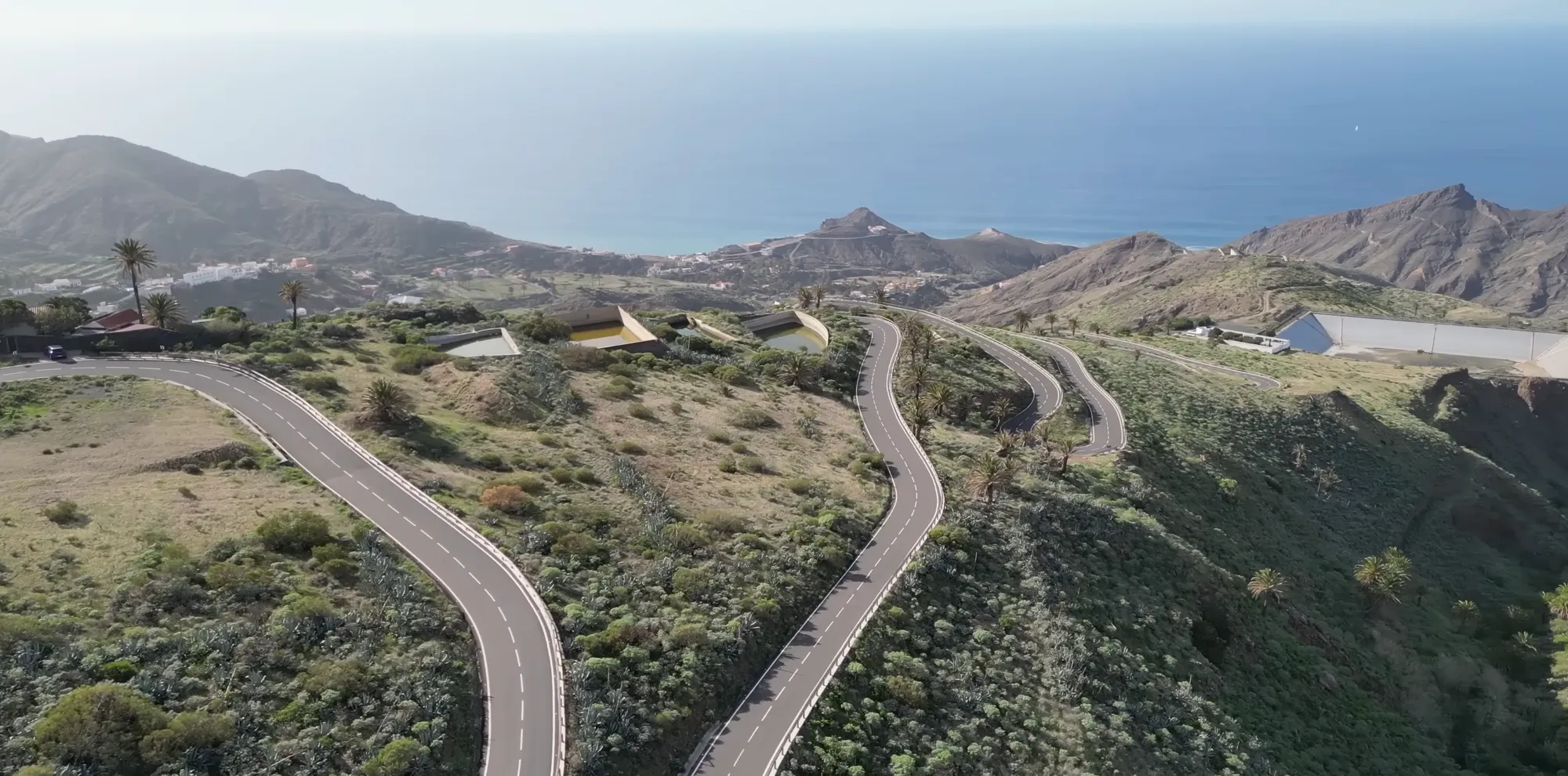
Aerial view of a winding asphalt road cutting through volcanic terrain on La Gomera, Canary Islands. The road curves through sparse green vegetation with rocky volcanic peaks visible in the background and a settled valley to the left. Clear lane markings, dry climate, partly cloudy sky.

Best motorcycle for Moab?

For genuine slickrock and sand, this road-leaning 19-inch Tiger at 472 lb isn't the sharpest technical tool. It handles dirt roads and easy trails with confidence, but hard desert work asks for something lighter.

Made for Bar M / Kane Creek · Imperial Sand Dunes · Johnson Valley OHV Area

Best motorcycle for Highway 1?

This is where the 900 shines. Composed at speed, comfortable all day, and full of character, it links canyon roads and long scenic stretches without wearing you down.

Made for Black Hills · Blue Ridge Parkway · Cherohala Skyway

Best touring motorcycle for long distance?

With strong luggage capacity, a 5.3-gal tank, and rock-steady high-speed manners, it makes a willing coast-to-coast partner. Just budget for the brake and stalling niggles on a used one.

Made for Beartooth Highway · Blue Ridge Parkway · Going-to-the-Sun Road

Alternatives to the Triumph Tiger 900

If this one isn't quite the fit, these are the bikes worth riding back-to-back against it.

Any price note compares both bikes at the same age — the youngest age both have on the used market — against this Triumph Tiger 900. “cheaper/pricier” is what that bike costs second-hand, not how worn it is.