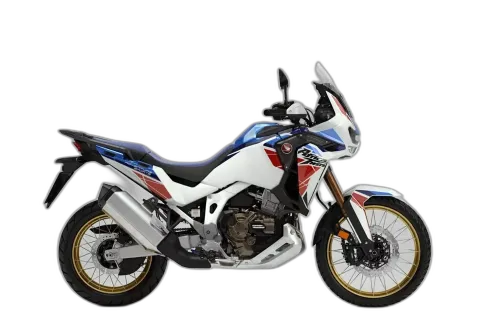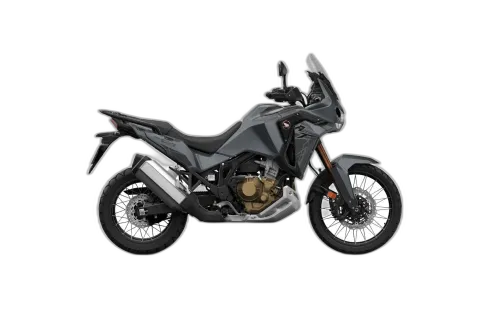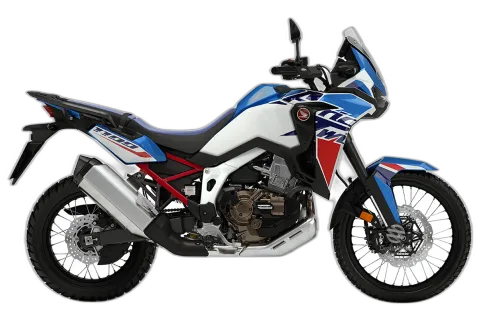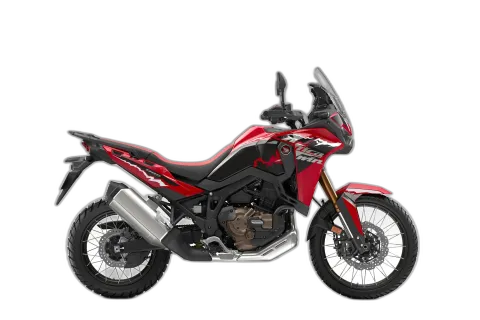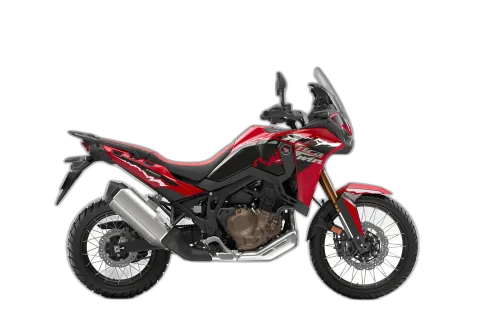
Honda CRF1100L Africa Twin (SD 08) — Adventure
Honda press archive

2020–2023 · Adventure · Buyer's Guide

CRF1100L Africa Twin (SD 08)

Dependable Miles, Done Right

The Machine's Character

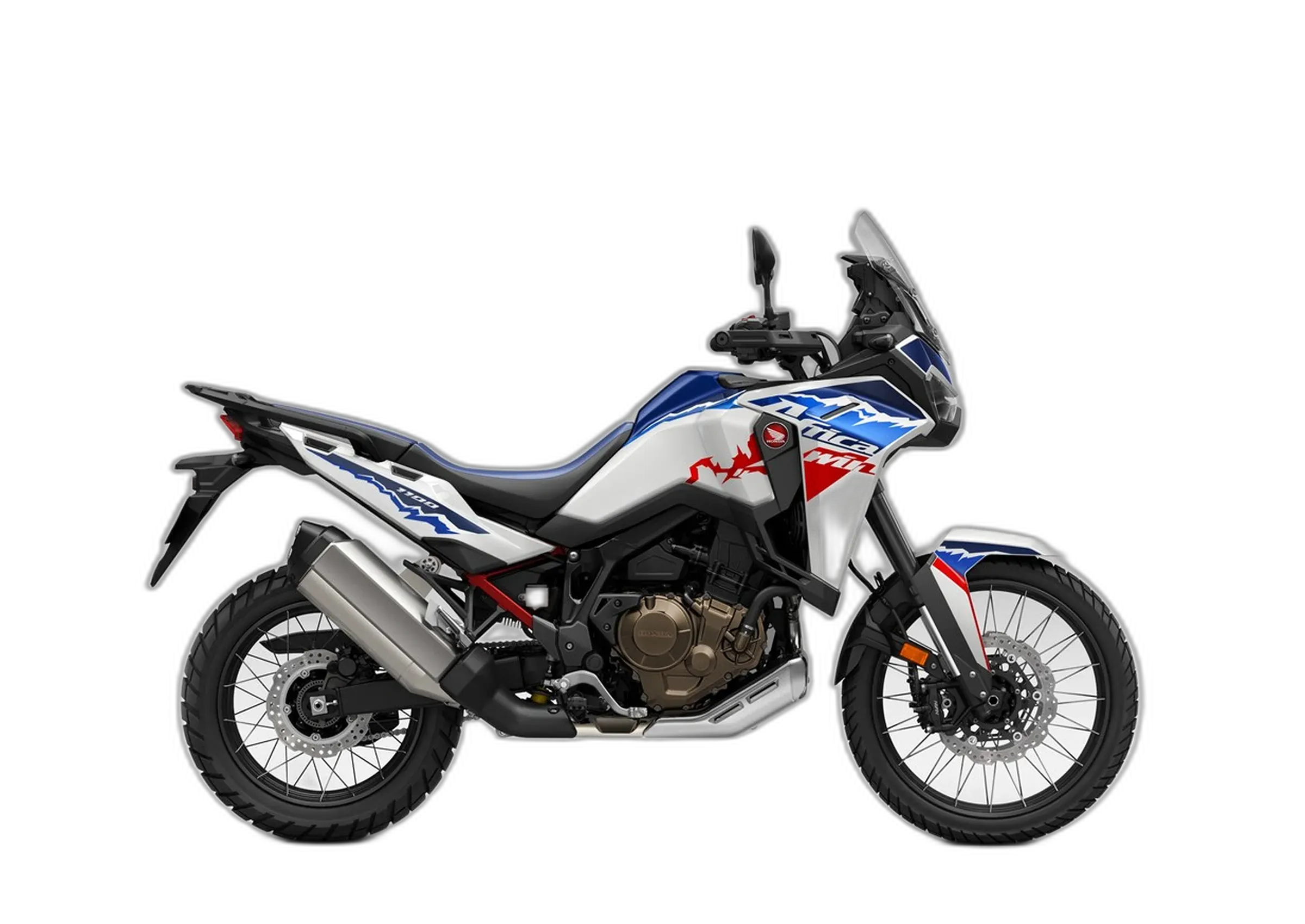
Honda built this Africa Twin around a 1084 cc parallel twin with a 270-degree crank, and that firing order is the whole point: the pulse feels closer to a V-twin than to a smooth in-line engine, and the 77 lb-ft peak arrives where you actually ride. 102 hp is enough for sustained highway work without ever feeling frantic. A narrow aluminum subframe and a swingarm derived from the CRF450R keep the waist slim, so a 498 lb (226 kg) bike changes direction more willingly than the number suggests. A 21-inch front, 9.1 in (230 mm) of front travel and 9.8 in (250 mm) of ground clearance mark it as genuine dirt-capable hardware, not a styling exercise.

This is the Africa Twin that grew up. It runs cornering ABS, traction control, ride modes and wheelie control as standard, with cruise control, adjustable suspension at both ends and a TFT screen carrying Apple CarPlay, and it ages the way Hondas age: quietly, without drama, with reliability that is close to bulletproof. It suits the rider who wants one bike for national parks in July and a technical desert trail in October. The honest caveat is the 33.5 in (850 mm) seat, and the fact that loading a top box plus panniers can set off a slow weave at sustained highway speed.

Hard Numbers

Spec sheets don't ride bikes, but they set the baseline.

Show full specs & equipment Hide specs & equipment
Key specifications
Power 102 hp (75 kW) @ 7,500 rpm
Torque 77 lb-ft (105 Nm) @ 6,250 rpm
Displacement 1084 cc
Engine Parallel twin
Cooling Liquid-cooled
Gearbox 6-speed
Final drive Chain
Front brake 310 mm
Front tire 90/90-21
Rear tire 150/70-18
Wheelbase 62.0 in (1575 mm)
Ground clearance 9.8 in (250 mm)
Front travel 9.1 in (230 mm)
Rear travel 8.7 in (220 mm)
Seat height 33.5 in (850 mm)
Wet weight 498 lb (226 kg)
Fuel capacity 5.0 gal (18.8 L)
Fuel economy 48 mpg (US)

Equipment check

Chassis

  • Front Suspension Adjustable Standard
  • Rear Suspension Adjustable Standard
  • Cruise Control Standard

Comfort

  • Heated Grips Optional
  • Adjustable Seat Height Standard
  • Luggage System Optional

Connectivity

  • TFT Display Standard
  • Smartphone Connectivity Standard
  • USB Charging Port Standard

Drivetrain

  • Quickshifter Optional
  • Slipper Clutch Standard
  • Automatic Shift (DCT / ASA / AMT) Honda DCT (3rd generation) Clutchless ridingAutomatic gear selection Optional

Lighting

  • LED Headlight Standard

Safety

  • ABS Standard
  • Cornering ABS Standard
  • Traction Control Standard
  • Ride Modes Standard

The Voice of Experience

Portrait of NastyNils

The test ride

The first thing your body registers is how narrow it is between your knees. You sit in the bike rather than on top of it, and at walking pace in a parking lot or picking a line through rocks, that slimness does more for your confidence than any electronic setting. The 270-degree twin thumps rather than hums, a low pulse you feel through the pegs at cruising rpm that never turns into numb buzz in your palms. Reach to the bar is upright and roomy, the seat wide enough for a full day, and the switchgear falls where your thumbs expect it. On a fast sweeping road it sits dead calm on its wheelbase. On the DCT version, crawling through town at low revs, the ride-by-wire can hunt a little and you feel that oscillation through the chassis.

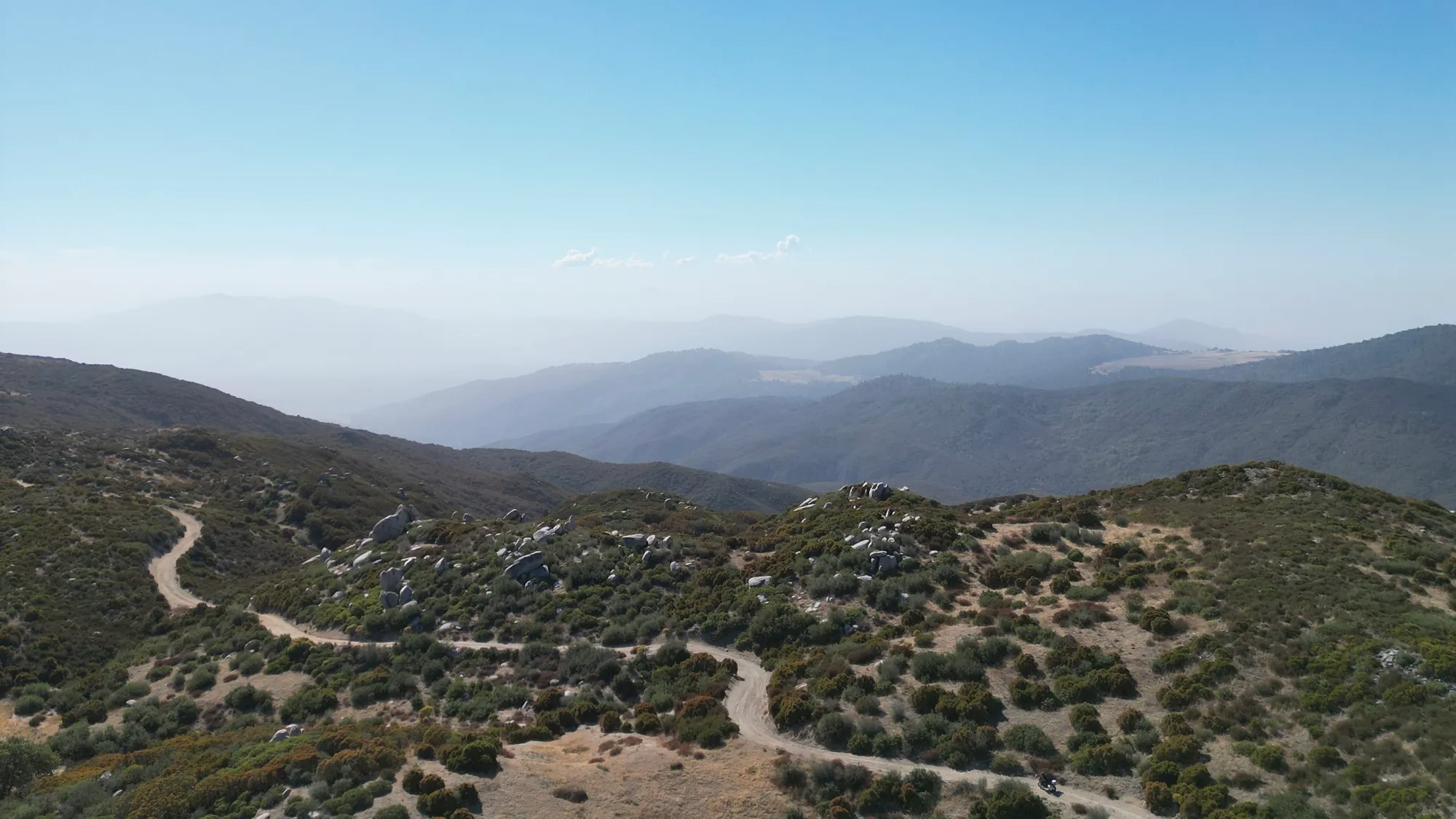
Aerial drone view of Palomar Divide Road winding through chaparral-covered mountain ridges in San Diego County. Multiple S-curve sections descend through sparse vegetation with distant valley views visible in the haze. Gravel and packed-earth surface.

The Truth on the Street

What follows is the community talking, not me. It gets collected the slow way, over years: conversations at rallies and fuel stops, questions from riders a few thousand miles into ownership, and the messages that show up after someone's first big trip. On this Africa Twin the chatter sorts itself around distance. Riders covering ground supply most of the praise, and riders moving slowly over hard terrain supply most of the caveats.

The riders who count fuel stops

Owners of the Adventure Sports variant keep coming back to the tank. They report a real touring range of roughly 300 to 310 miles (480 to 500 km) from the 6.5 gallon (24.8 L) tank, which is at the long end of anything fitted from the factory in this class, with economy sitting around 48 mpg US (4.9 L/100km). It comes up as a touring point rather than a spec point: how a day gets planned, and how often the day has to be interrupted.

Where the weight sets the ceiling

The other constant runs the opposite way. Riders who take it into tight, slow going are consistent that the bike is heavy for that kind of terrain, and that the weight, not the traction or the gearing, is what sets the limit. Deep sand is the example that surfaces most. Owners of the automatic-transmission trims, the heaviest of the range, raise it more than anyone else. Very few of them describe it as a surprise. They describe it as the point where a machine this size stops helping.

Known issues

  • High-speed headshake / weave when carrying top box and panniers

    chassis occasional

    At sustained highway speeds with a top box and side panniers fitted, the raised and rearward load can set off a slow weave or a shake through the handlebars, most noticeably when the top box is loaded heavily. The bike leaves the factory without a steering damper, so owners typically cut top box weight, shift heavy items low into the panniers, and fit an aftermarket damper to settle the front end.

  • 6.5″ TFT touchscreen becoming unresponsive or registering false touches

    electrics occasional

    The 6.5″ TFT touchscreen has been reported as becoming unresponsive to input, registering "phantom" touches by itself, or going to a temporary blackout. Cold weather makes symptoms worse. The issue has persisted after four years without any permanent fix. Replacement screens have exhibited the same behavior — pointing to a design rather than a manufacturing root cause.

  • Ride-by-wire throttle snatchiness in 1st–2nd gear at low speed

    engine occasional

    In the lower gears at low engine speeds, ride-by-wire throttle response can feel oscillating or snatchy, and it is most noticeable on the automatic dual-clutch version in stop-and-go city traffic, where engine braking on a closed throttle adds to the effect. Honda revised the lower gear ratios and the automatic shift program partway through the production run, which noticeably reduced the sensation.

The Expert Benchmark

Where this Honda CRF1100L Africa Twin pulls ahead of — or falls behind — its rivals on the numbers, and the typical bike in its class on character.

What kind of bike this is — character vs. the class

This bike Class average

The shape of the Honda CRF1100L Africa Twin — numbers and character vs. the average Adventure

Head-to-head: Honda CRF1100L Africa Twin vs. its rivals

The Long-Haul Verdict

Forget spec-sheet bragging. Here's who the CRF1100L Africa Twin is actually built for.

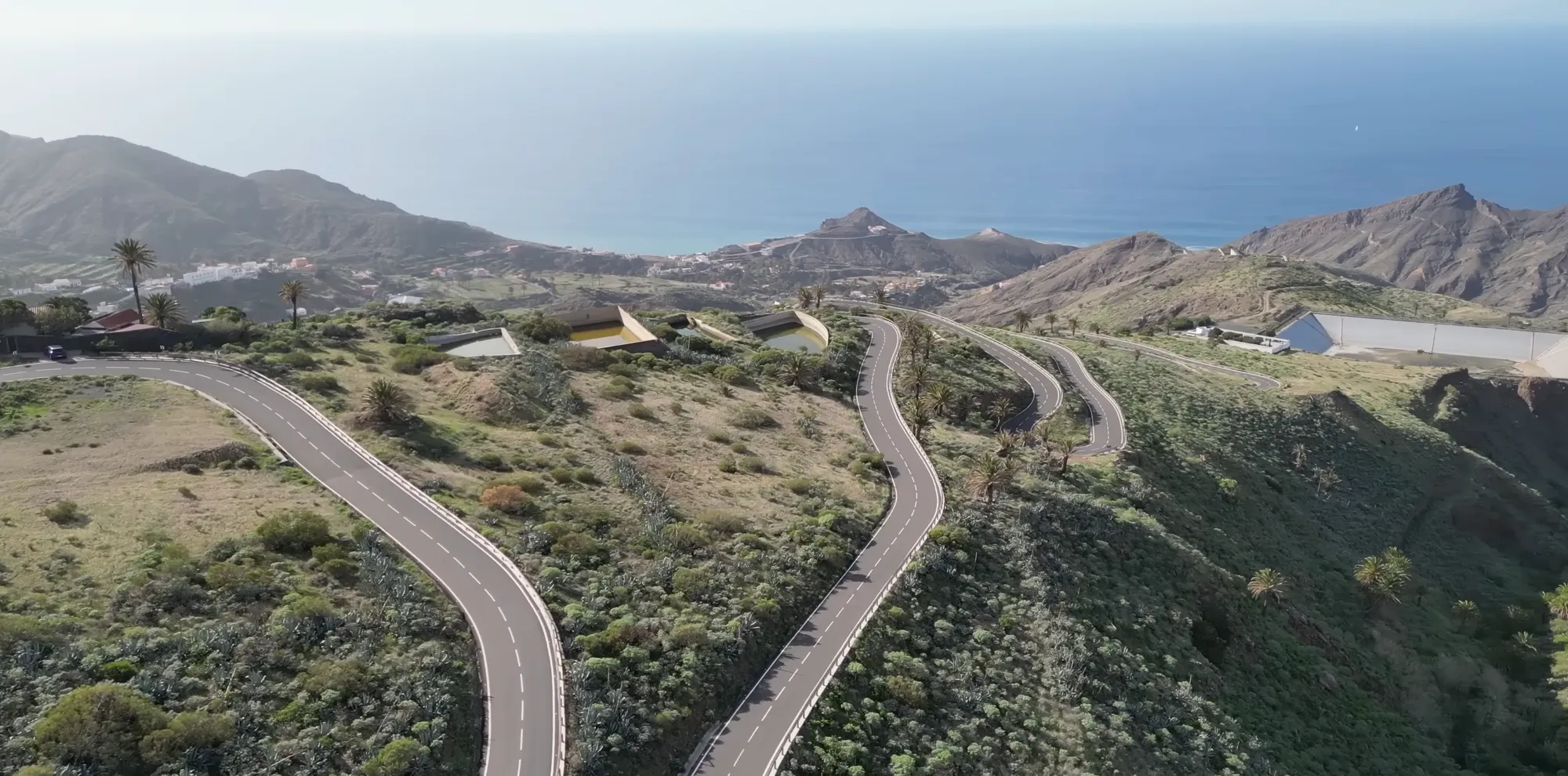
Aerial view of a winding asphalt road cutting through volcanic terrain on La Gomera, Canary Islands. The road curves through sparse green vegetation with rocky volcanic peaks visible in the background and a settled valley to the left. Clear lane markings, dry climate, partly cloudy sky.

Best touring motorcycle for long distance?

Trail Ridge, Going-to-the-Sun, Beartooth: this bike eats those days whole, two-up or loaded. Just be deliberate about how you pack the top box, because a heavy one can set off a weave at highway speed.

Made for Beartooth Highway · Blue Ridge Parkway · Going-to-the-Sun Road
Best motorcycle for Moab?

The 21-inch front, the travel and the slim waist give you real capability on technical ground. It is still a 498 lb bike, so it rewards skill and punishes a lazy line.

Made for Bar M / Kane Creek · Imperial Sand Dunes · Johnson Valley OHV Area

Best motorcycle for Highway 1?

For 200 to 400 mile days on Highway 1 or the Blue Ridge it is comfortable, calm and quick enough. You give up some sharpness to the pure road bikes, and you gain the option to keep going when the pavement ends.

Made for Black Hills · Blue Ridge Parkway · Cherohala Skyway

What's new versus the previous generation

If you're cross-shopping the older generation, here's what changed.

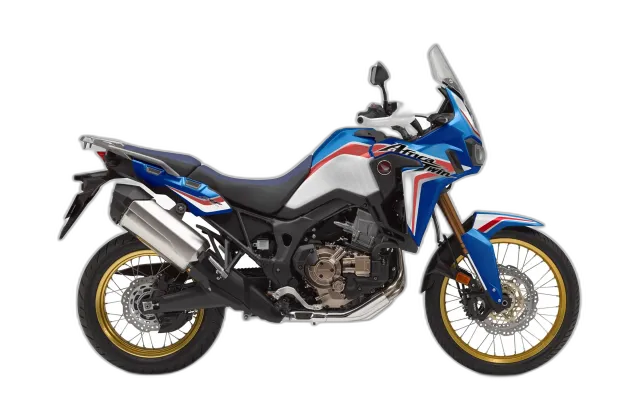
Honda CRF1000L Africa Twin (SD 06)

Previous generation · 2018–2019

Honda CRF1000L Africa Twin (SD 06)

Reliable Enough to Trust Anywhere

Compare to the previous model →

Alternatives to the Honda CRF1100L Africa Twin

If this one isn't quite the fit, these are the bikes worth riding back-to-back against it.