

·

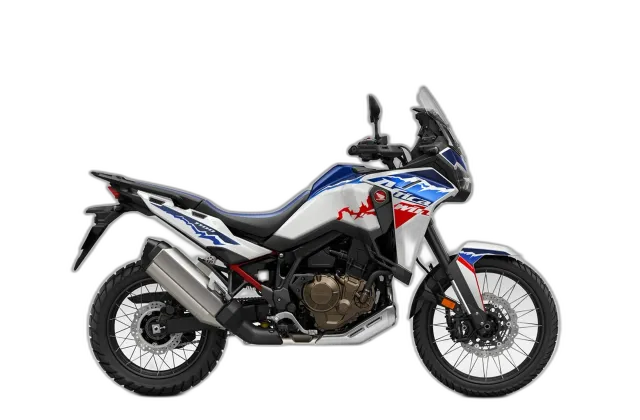
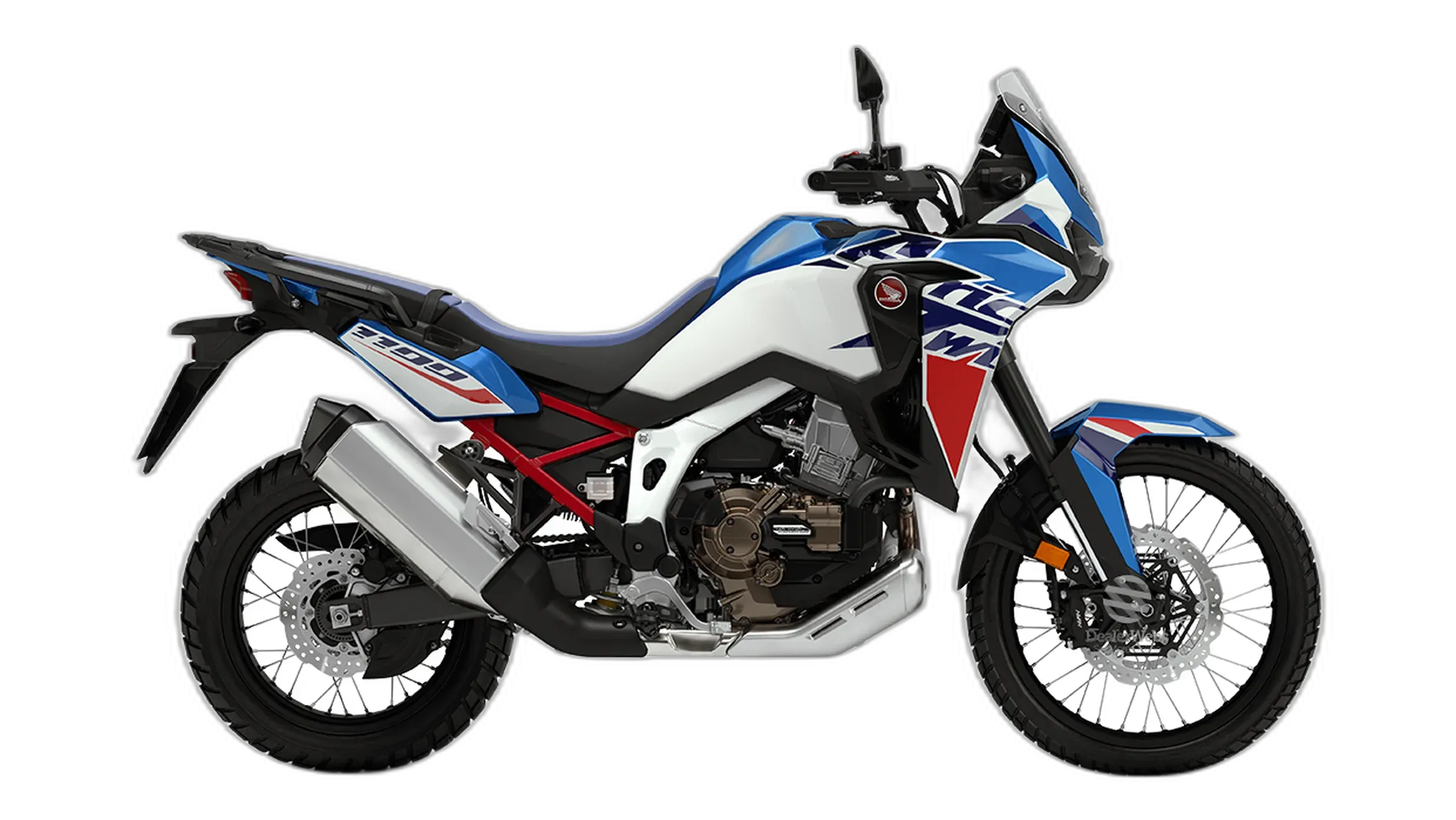
Honda CRF1100L Africa Twin (SD 08-DCT) — Adventure
Honda press archive

2020–2023 · Adventure · A variant of the CRF1100L Africa Twin

CRF1100L Africa Twin DCT (SD 08-DCT)

Differences between the standard CRF1100L Africa Twin and the DCT

4.5 / 5 NastyNils Rating · against its class

Automatic Gearbox, Genuine Dirt

The Machine's Character

This is Honda's big adventure platform in its automatic form. The 1084 cc parallel twin makes 102 hp and 77 lb-ft, and in this chassis that output arrives with real physical shove rather than polite delivery. The off-road hardware is genuine rather than decorative: a 21-inch front wheel, 9.1 in (231 mm) of fork travel, 9.8 in (249 mm) of ground clearance. A 6-axis IMU feeds ABS and traction control with lean, incline and gradient data before either system acts. Ride modes, wheelie control, cruise control, navigation and a 6.5-inch TFT display are all standard on this trim.

The dual-clutch gearbox is what defines the bike day to day. It carries a real weight penalty over the manual, and you pay for that in slow, technical going, but it also removes the one thing that most often ends a hard climb badly. Reliability is the strongest thing about this motorcycle, and it ages well. Buy it if you want a bike that can do a week of interstate and a week of gravel with the same set of tools. The honest caveat: a heavily loaded top box can set off a weave at sustained highway speed.

Hard Numbers

Spec sheets don't ride bikes, but they set the baseline.

Show full specs & equipment Hide specs & equipment
Key specifications
Power 102 hp (75 kW) @ 7,500 rpm
Torque 77 lb-ft (105 Nm) @ 6,250 rpm
Displacement 1084 cc
Engine Parallel twin
Cooling Liquid-cooled
Gearbox 6-speed
Final drive Chain
Fork Upside-down (USD)
Front brake 310 mm
Front tire 90/90-21
Rear tire 150/70-18
Wheelbase 62.0 in (1575 mm)
Ground clearance 9.8 in (249 mm)
Front travel 9.1 in (231 mm)
Rear travel 8.7 in (221 mm)
Seat height 33.5 in (850 mm)
Wet weight 520 lb (236 kg)
Fuel capacity 5.0 gal (18.8 L)
Fuel economy 51 mpg (US)

Equipment check

Chassis

  • Front Suspension Adjustable Standard
  • Rear Suspension Adjustable Standard
  • Cruise Control Standard

Comfort

  • Heated Grips Optional
  • Adjustable Seat Height Standard

Connectivity

  • TFT Display Standard
  • Smartphone Connectivity Standard
  • Navigation Standard
  • USB Charging Port Standard
  • Android Auto Android Auto (Wireless) Integrated navigationHandsfree phone integration Standard

Drivetrain

  • Automatic Shift (DCT / ASA / AMT) Honda DCT (3rd generation) Clutchless ridingAutomatic gear selection Standard

Lighting

  • LED Headlight Standard

Safety

  • ABS Standard
  • Traction Control Standard
  • Ride Modes Standard

Signature Tech

The named systems that set this bike apart — and what each one does for you.

Connectivity

  • Apple CarPlay (Wireless) Optional
    • Integrated navigation
    • Handsfree phone integration

The Voice of Experience

Portrait of NastyNils

The test ride

Seat height is 33.5 in (850 mm) and the bike is narrow where your legs go, so at a stop you get more boot down than 520 lb (236 kg) has any right to allow. Stand on the pegs and nothing fights you; the bar, tank and screen let you move around freely. The display stayed legible in every light I rode in, and if you don't want a full information layout you can strip it back to a large, clean tach and speedo. The waterproof USB socket sits right in the cockpit, so a tank bag runs off the bike with no loose cables draped over the bars. On knobbies in Sardinia the thing felt cheerfully overpowered, more motorcycle than the trail was asking for, and I never once wished for less of it.

What the CRF1100L Africa Twin DCT Adds — Differences vs the Standard CRF1100L Africa Twin

The CRF1100L Africa Twin DCT (SD 08-DCT) builds on the standard CRF1100L Africa Twin: the upgraded hardware, the key spec changes and where its character shifts. The full ride, specs, scoring and verdict are all right here on this page.

Equipment the DCT adds vs the standard CRF1100L Africa Twin

Added
Navigation
Now standard
Automatic Shift (DCT / ASA / AMT)

Hard spec differences

SpecStandard CRF1100L Africa TwinDCTΔ
Wet weight 498 lb 520 lb +22 lb

Rated point by point — where it earns its keep

My own 0–100 score for this bike against the class, area by area — the marker on each bar is the class average.

The caveat I carry away from this bike is not a wear item, it is mass. The dual-clutch hardware weighs meaningfully more than the plain manual gearbox, and that is not an abstraction on a spec sheet. Out on the highway you will never once think about it. Picking your way through slow, technical ground at walking pace, holding the bike upright with your legs, you will think about it more than once. That is the price of admission for what the automatic gives you everywhere else.

The 6-axis inertial unit is the reason this bike feels analog again. It reads lean, incline and gradient before ABS or traction control does anything, so the brakes let you go deeper before they act, and when they do act they let go again quietly. Traction control leaves a genuinely wide window: enough room for the front to come up and for a deliberate slide at the back. Riders who normally switch this stuff off end up keeping it on, because it mostly stays out of the conversation.

Comfort on this bike is as much mental as physical. The instrument panel reads clearly in every light I rode it in, a clear step up from the outgoing cluster, and if you would rather not manage a full information layout you can cut it back to a big, clean tach and speedo. What grates over time is the setup routine. One press of the mode button sorts throttle response, engine braking and ABS for road or dirt, and that part is faultless. Traction control sits outside it, and the DCT's sportier mapping will not follow you off the tarmac either. A system this sophisticated should not ask for this much hand-adjusting.

Put this bike in real dirt and it gives you more motorcycle than the situation is asking for, which I mean as a compliment. I rode a full day in auto mode across changing ground and could not fault a single gear selection; the box read the terrain the way a decent rider reads it, and it never took the lazy option to protect itself. The revised bodywork backs that up. The shorter screen and the trimmed tail section make it look sharper and far less touring-oriented than before, and on proper off-road rubber the way it behaved on gravel matched what it looked like sitting still. One honest limit. If your style involves snapping the front wheel up with a hard, abrupt input, that technique does not transfer cleanly to an automatic gearbox. You either learn a different way to get the front light or you let that trick go.

What the lighter chassis does for this engine is change the way the power lands on you. The same output in the heavier Adventure Sports feels like something you watch happen. Here it feels like something happening to you. Roll it open from the saddle and you get a direct, physical shove rather than a bike that simply gathers speed around you. That immediacy is the single best argument for this version over its bigger sibling.

The most useful thing about this bike is how much of the mechanical workload it absorbs for you. I watched riders with no dirt background thread tight gravel switchbacks without a moment of drama, simply because they had nothing to manage except the line. Nobody was being carried, either; the riders who did know what they were doing just spent the freed attention on going faster or looking around. The cockpit follows the same logic. The weatherproof USB connector runs Honda's tank bag and puts Apple CarPlay on the screen, and there is a 12V outlet next to it, so nothing has to be improvised.

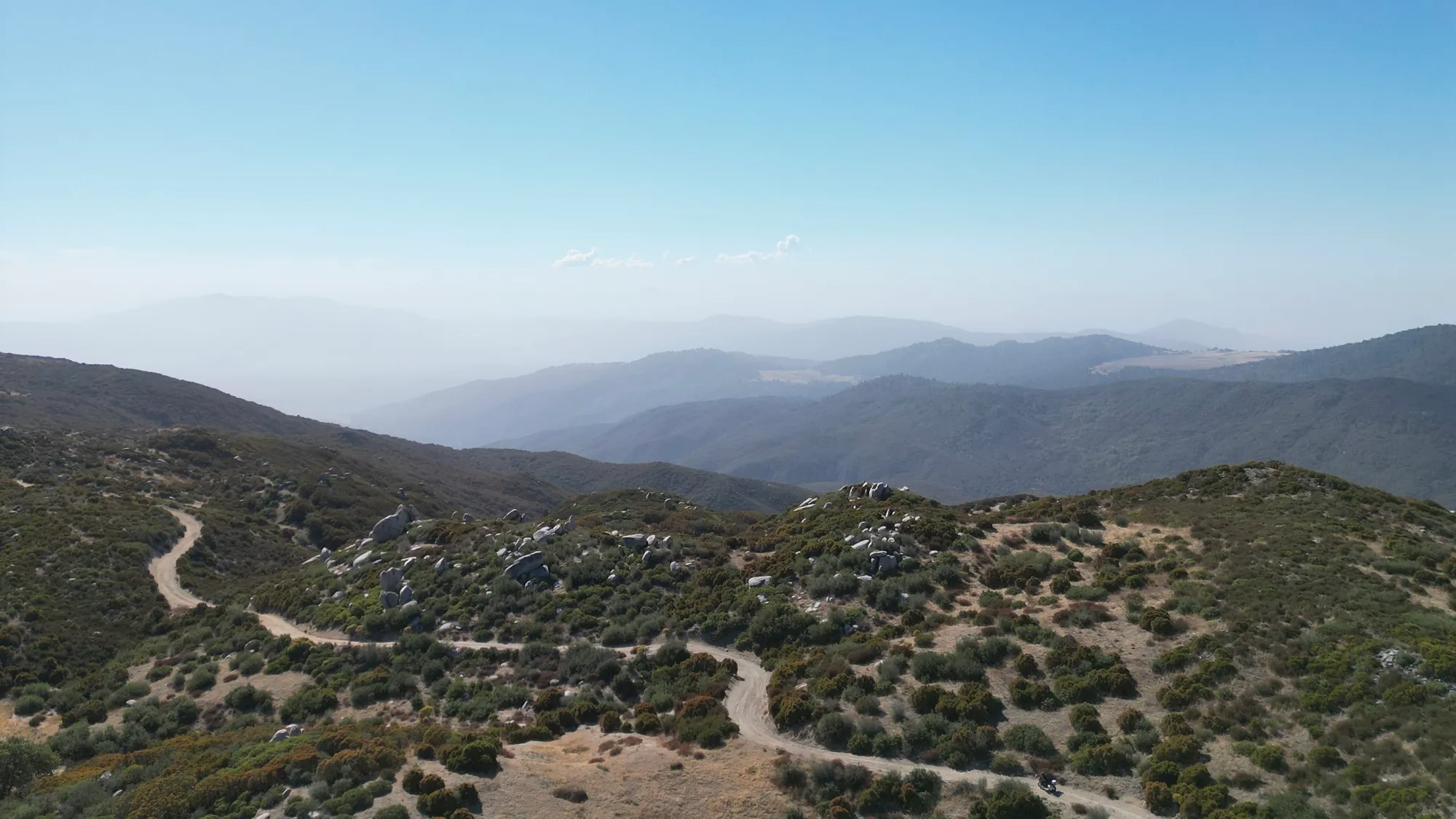
Aerial drone view of Palomar Divide Road winding through chaparral-covered mountain ridges in San Diego County. Multiple S-curve sections descend through sparse vegetation with distant valley views visible in the haze. Gravel and packed-earth surface.

The Truth on the Street

Over the years I have collected what owners say about this bike in paddocks, at club nights, over coffee at fuel stops and in the messages riders send me directly. On the CRF1100L the picture is fairly consistent. Riders love how it behaves in the dirt and how the engine feels. They rate the gearbox on long road days. The grumbles center on the controls, the seat and a shortage of highway punch once the bike is loaded.

Dirt manners and a twin with a pulse

The most repeated praise is about what happens off the pavement. Owners describe a slim, poised bike that stays calm and confidence-building when the ground turns rough, and many call it the most capable off-roader in its weight and price bracket. The engine gets almost as much attention. Riders talk about a 270-degree twin with a torquey pulse that feels distinct from the smoother boxers and triples in the class. They say it pulls cleanly from low revs and keeps rewarding you toward the top. Owners who came from the previous generation say it is far more engaging.

Easy highway miles, harder on the backside

On the road, owners mention the DCT more than anything else. The shifts are smooth and there's no clutch to work, and riders say that takes a lot of strain out of traffic and long highway stints. Several also point out that it came in cheaper than the premium European adventure bikes while offering a comparable electronics package. The comfort story is less tidy. A recurring complaint is the firm seat: fine for a short ride, wearing thin over a full touring day, and narrow enough that some riders feel it after a couple of hours. The high seat and pegs suit taller riders, yet taller riders are also the ones who say the small screen leaves them in the wind at highway speed. The most common engine gripe is output. With 102 hp, riders feel it comes up short against the bigger liter-class rivals, especially with luggage on a fast interstate. At walking pace a smaller group finds the DCT hesitant and lurchy, missing the finesse of a clutch lever in parking lots and tricky dirt.

Too many buttons, too many menus

The loudest complaint that has nothing to do with the riding is the interface. Owners consistently describe the switch cluster on the bars as cluttered and unintuitive, with a layout that feels borrowed from a Gold Wing and far more complicated than it needs to be. The menu structure on the 6.5-inch display draws the same criticism. Riders also say the screen takes around 20 seconds to boot and that the sheer number of buttons and menus is overwhelming at first. The owner's manual runs past 350 pages, and riders read that as a sign of how steep the learning curve is.

Known issues

  • Wheelie control software recall

    engine rare Recall

    A software error in the fuel injection ECU caused the wheelie control feature to malfunction. Honda issued a recall (NHTSA 24V-882) to reprogram the ECU, affecting 2022 and 2024-2025 models.

  • DCT engine stalling (ECU recall)

    engine rare Recall

    Improper ECU programming can cause communication loss and clutch release, leading to unexpected engine stalling or loss of drive power. A recall was issued for 2020-2021 DCT models with free ECU reprogramming.

  • TFT display failures

    electrics occasional

    The 6.5-inch colour TFT screen can suffer from intermittent blackouts, flickering, or complete failure, often requiring unit replacement. Honda extended the warranty for this component to 2033.

  • Premature rust on white-framed models

    chassis occasional

    Tricolour and white-framed Africa Twins are prone to rust forming on the steel frame, particularly around welds and exposed metal, attributed to thin water-based paint and poor surface preparation.

  • High-speed headshake / weave when carrying top box and panniers

    chassis occasional

    At sustained highway speeds with a top box and side panniers fitted, the raised and rearward load can set off a slow weave or a shake through the handlebars, most noticeably when the top box is loaded heavily. The bike leaves the factory without a steering damper, so owners typically cut top box weight, shift heavy items low into the panniers, and fit an aftermarket damper to settle the front end.

  • 6.5″ TFT touchscreen becoming unresponsive or registering false touches

    electrics occasional

    The 6.5″ TFT touchscreen has been reported as becoming unresponsive to input, registering "phantom" touches by itself, or going to a temporary blackout. Cold weather makes symptoms worse. The issue has persisted after four years without any permanent fix. Replacement screens have exhibited the same behavior — pointing to a design rather than a manufacturing root cause.

  • Ride-by-wire throttle snatchiness in 1st–2nd gear at low speed

    engine occasional

    In the lower gears at low engine speeds, ride-by-wire throttle response can feel oscillating or snatchy, and it is most noticeable on the automatic dual-clutch version in stop-and-go city traffic, where engine braking on a closed throttle adds to the effect. Honda revised the lower gear ratios and the automatic shift program partway through the production run, which noticeably reduced the sensation.

The Expert Benchmark

Where this Honda CRF1100L Africa Twin pulls ahead of — or falls behind — its rivals on the numbers, and the typical bike in its class on character.

What kind of bike this is — character vs. the class

This bike Class average

The shape of the Honda CRF1100L Africa Twin — numbers and character vs. the average Adventure

Head-to-head: Honda CRF1100L Africa Twin vs. its rivals

The Long-Haul Verdict

Forget spec-sheet bragging. Here's who the CRF1100L Africa Twin is actually built for.

Aerial view of a winding asphalt road cutting through volcanic terrain on La Gomera, Canary Islands. The road curves through sparse green vegetation with rocky volcanic peaks visible in the background and a settled valley to the left. Clear lane markings, dry climate, partly cloudy sky.

Best touring motorcycle for long distance?

Cruise control, heated grips, a 5.0 gal tank and 51 mpg make the long days genuinely easy. Load a top box high and heavy, though, and it can start a slow weave at sustained highway speed.

Made for Beartooth Highway · Blue Ridge Parkway · Going-to-the-Sun Road
Best motorcycle for Highway 1?

Stable and comfortable at real road pace, and the automatic gearbox takes the work out of a 300 mi day of curves. The 21-inch front and long travel trade some sharpness for that reach.

Made for Black Hills · Blue Ridge Parkway · Cherohala Skyway

Best motorcycle for BDR routes?

Real 21-inch, long-travel hardware and the kind of reliability that gets you home. It's a lot of motorcycle for tight going, and the DCT weight shows when the trail slows to walking pace.

Made for AZBDR — Arizona Backcountry Discovery Route · California BDR South · COBDR — Colorado Backcountry Discovery Route

What's new versus the previous generation

If you're cross-shopping the older generation, here's what changed.

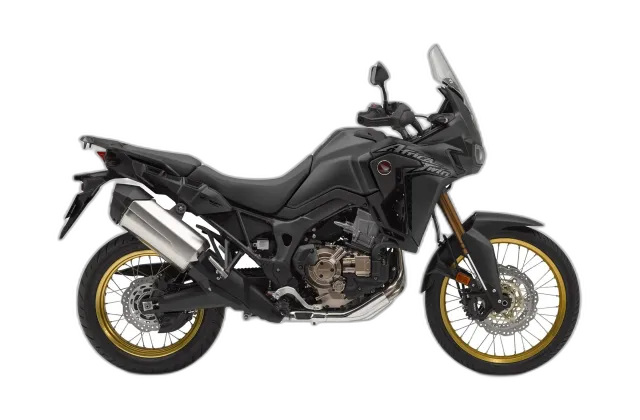
Honda CRF1000L Africa Twin (SD 04-DCT)

Previous generation · 2016–2019

Honda CRF1000L Africa Twin (SD 04-DCT)

Built to Be Trusted

Compare to the previous model →

Alternatives to the Honda CRF1100L Africa Twin

If this one isn't quite the fit, these are the bikes worth riding back-to-back against it.

Any price note compares both bikes at the same age — the youngest age both have on the used market — against this Honda CRF1100L Africa Twin. “cheaper/pricier” is what that bike costs second-hand, not how worn it is.