·

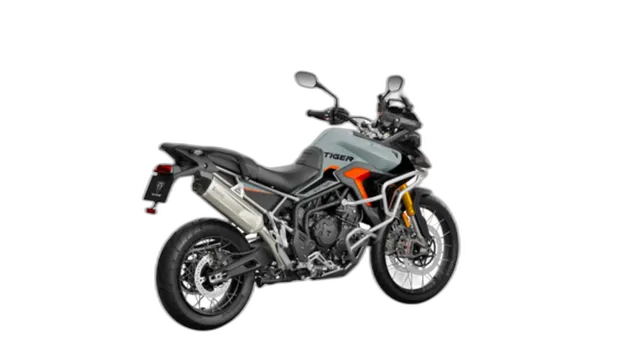
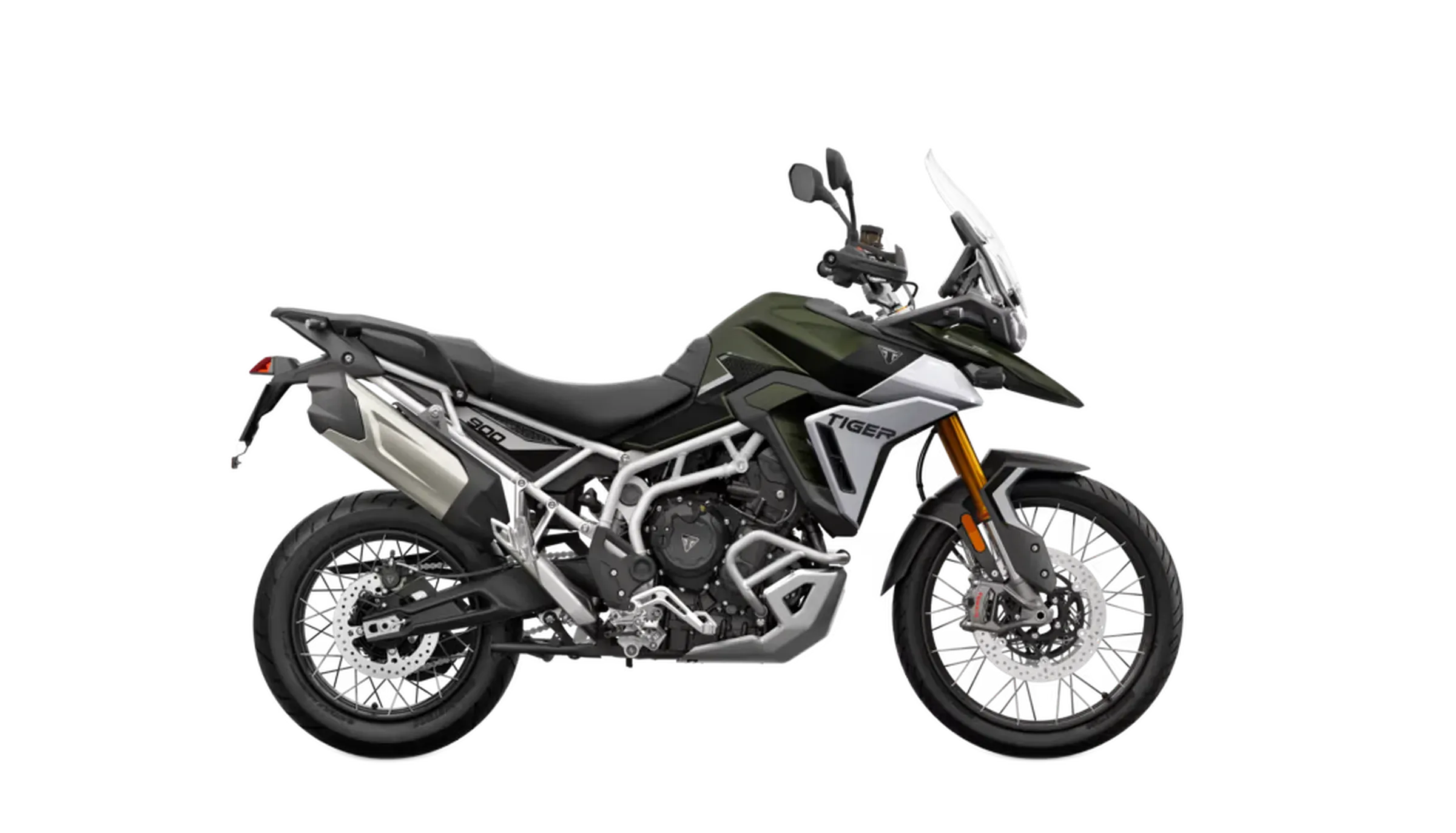
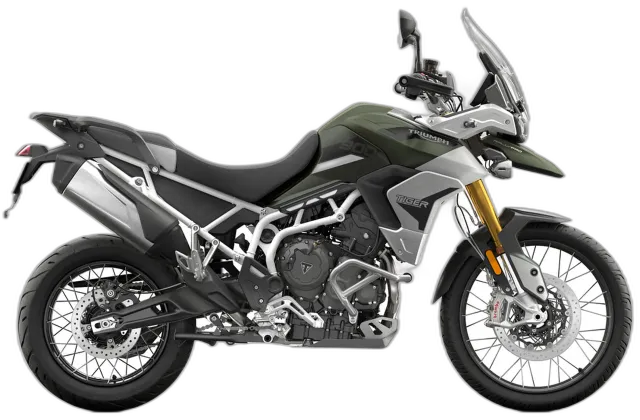
Triumph Tiger 900 (C080-RallyPro) — Adventure
NastyNils / Triumph press archive

2024 · Adventure · A variant of the Tiger 900

Tiger 900 Rally Pro (C080-RallyPro)

Differences between the standard Tiger 900 and the Rally Pro

The Triple That Travels Far

The Machine's Character

The heart of this Tiger is the T-plane triple, an 888cc inline-three that fires with an uneven beat to give it low-rev grunt where a smoother engine would feel flat. It makes 107 hp and 66 lb-ft, and the way it carries that pull from the bottom of the range to the top is what sets it apart in the adventure middleweight class. Wrap that around fully adjustable Showa long-travel suspension, a 21-inch front wheel, and Brembo Stylema brakes with cornering ABS, and you have a bike built to go properly off the pavement, not just look the part.

On the road it rides settled and confident, and the standard rider aids (ABS, cornering ABS, traction control, ride modes) stay in the background until you actually need them. This is a machine for the rider who wants one bike to cover the commute, the weekend, and the two-week trip. The honest caveat: load it with full luggage and a passenger and the easy composure slips a little, and the spec has climbed enough that the old budget-friendly middle ground has mostly closed. You are paying for a properly equipped adventure bike now, and it rides like one.

Hard Numbers

Spec sheets don't ride bikes, but they set the baseline.

Show full specs & equipment Hide specs & equipment
Key specifications
Power 107 hp (80 kW) @ 9,500 rpm
Torque 66 lb-ft (90 Nm) @ 6,850 rpm
Displacement 888 cc
Engine Inline-three
Cooling Liquid-cooled
Gearbox 6-speed
Final drive Chain
Front brake 320 mm
Front tire Bridgestone Battlax Adventure 90/90-21
Rear tire Bridgestone Battlax Adventure 150/70-R17
Wheelbase 61.1 in (1551 mm)
Front travel 9.4 in (240 mm)
Rear travel 9.1 in (230 mm)
Seat height 33.9 in (860 mm)
Wet weight 503 lb (228 kg)
Fuel capacity 5.3 gal (20 L)
Fuel economy 50 mpg (US)

Equipment check

Chassis

  • Front Suspension Adjustable Standard
  • Rear Suspension Adjustable Standard
  • Cruise Control Standard

Comfort

  • Heated Grips Optional
  • Adjustable Windscreen Standard
  • Adjustable Seat Height Standard
  • Luggage System Optional

Connectivity

  • TFT Display Standard
  • Smartphone Connectivity Standard
  • Navigation My Triumph Connectivity System Integrated navigationHandsfree phone integration Optional
  • USB Charging Port Standard
  • Tire Pressure Monitoring (TPMS) Standard

Drivetrain

  • Quickshifter Standard
  • Slipper Clutch Standard

Lighting

  • LED Headlight Standard
  • Cornering Lights Standard

Safety

  • ABS Standard
  • Cornering ABS Standard
  • Traction Control Standard
  • Ride Modes Triumph Ride-by-Wire Throttle Maps Selectable ride modesRefined throttle response Standard

Signature Tech

The named systems that set this bike apart — and what each one does for you.

Braking

  • Brembo Stylema CaliperStandard
    • Stronger consistent braking
    • Brake fade resistance
    • Firm brake lever feel
    • Agile weight reduction

The Voice of Experience

Portrait of NastyNils

The test ride

Swing a leg over and the first thing you register is the seat. It sits tall at 33.9 inches, but the cushion is the real story, the kind that's still comfortable deep into the final day of a multi-day run when everything else has started to ache. The bars are rubber-damped, so the buzz that can creep into a triple stays out of your hands on a long highway leg. Roll onto broken pavement and the long-travel suspension soaks it up without unsettling the bike, even with bags strapped on. The quickshifter snicks clean in both directions, the kind of thing you stop thinking about and just use. At a real touring pace, two-up and loaded, it stays planted and quiet, the sort of bike you climb off less tired than you expected.

What the Tiger 900 Rally Pro Adds — Differences vs the Standard Tiger 900

The Tiger 900 Rally Pro (C080-RallyPro) builds on the standard Tiger 900: the upgraded hardware, the key spec changes and where its character shifts. The full ride, specs, scoring and verdict are all right here on this page.

Equipment the Rally Pro adds vs the standard Tiger 900

Now standard
Cruise Control

Premium hardware the Rally Pro brings

  • Lighting Cornering Lights Cornering lights that fill in the dark as you lean, where the standard runs fixed beams.
  • Transmission Quickshifter Up A quickshifter for clutchless upshifts the standard goes without.

Hard spec differences

SpecStandard Tiger 900Rally ProΔ
Wet weight 489 lb 503 lb +13 lb
Seat height 32.3 in 33.9 in +1.6 in

How the Rally Pro shifts the character

Where the Rally Pro does more
  • More suspension adjustment to dial in

Rated point by point — where it earns its keep

My own 0–100 score for this bike against the class, area by area — the marker on each bar is the class average.

Plenty of adventure bikes lean on suspension to sell their comfort, and this one pulls its weight there, but the seat is the piece riders actually register. Hours into a long stint two-up, the cushion kept doing its job where a lesser perch would have started to grind on you. My passenger stayed content back there mile after mile, and to me that's the only test that counts. A weak saddle shows itself fast over big distances, and this one gave nothing away.

The system links front and rear, and that earns its keep the moment you need to haul down hard with someone on the back. Grab the front and a touch of rear feeds in on its own, so the bike settles square and refuses to pitch or squirm under heavy two-up deceleration. What I value most is that it takes the decision off my plate. I never found myself weighing how much to give each end in a hurry; the bike portions it out and keeps the chassis in check.

Light or solo, the chassis sits calm and planted, and I could press on across patched, broken tarmac with the suspension working away quietly beneath me. Reaching that same settled feel two-up with full bags meant winding in far more rear preload than the bike ships with. Even dialed in, there's an honest ceiling. Pile on the weight and it surrenders a little of its steadiness, the kind of stability that heavier touring rigs tend to hold onto when you ask the same of them.

My one hesitation isn't about durability so much as what the Tiger has become. It arrives fully kitted, with the complete electronics suite, adjustable suspension, and premium fittings all present. That's a lot of bike, but it changes what it is. The model that used to be the easy mid-pack choice in the adventure ranks has moved up, and the daylight that once separated it from the segment's best, in both equipment and what you pay, has mostly vanished.

The optional nav setup won me over with how little fuss it asked for. I pulled in a GPX route from a third-party planner, paired my phone, and was rolling inside a few minutes. The part that sold me came when a closure blocked my path and it quietly built a new way through without any prompting from me. A full cross-country leg went by on the display arrows alone, and I never had to dig the handset out to check it.

I went into a run of forest switchbacks expecting the load to flatten the experience, and it just didn't. Two-up with bags strapped down, the bike stayed eager through the curves and gave me real reason to keep pushing rather than nursing it around. The engine carries the credit there. Even with all that weight hanging off it, the drive out of corners stayed honest, so the road stayed genuine fun instead of turning into work.

The triple's defining trait for me is that it never makes a fuss. Pulling out to overtake with a passenger and a full load behind me, the power gathers in a single steady sweep with nothing peaky about it, so the rider stays relaxed and so does whoever's on the back. The gearbox matches that temperament. Up or down, the shifts land clean every time, and over a long day of constant cog-swapping that steadiness is what I came to lean on without thinking.

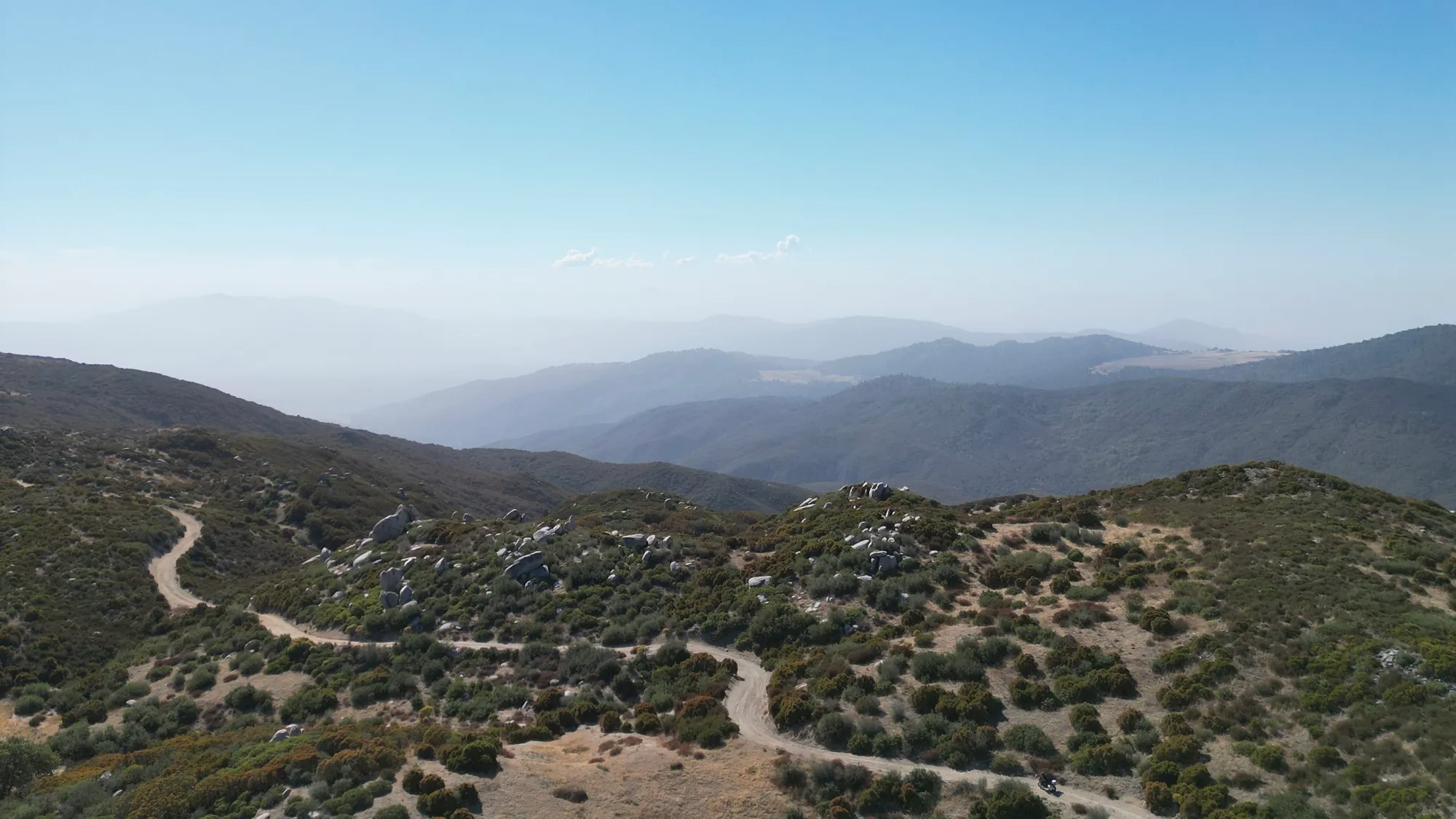
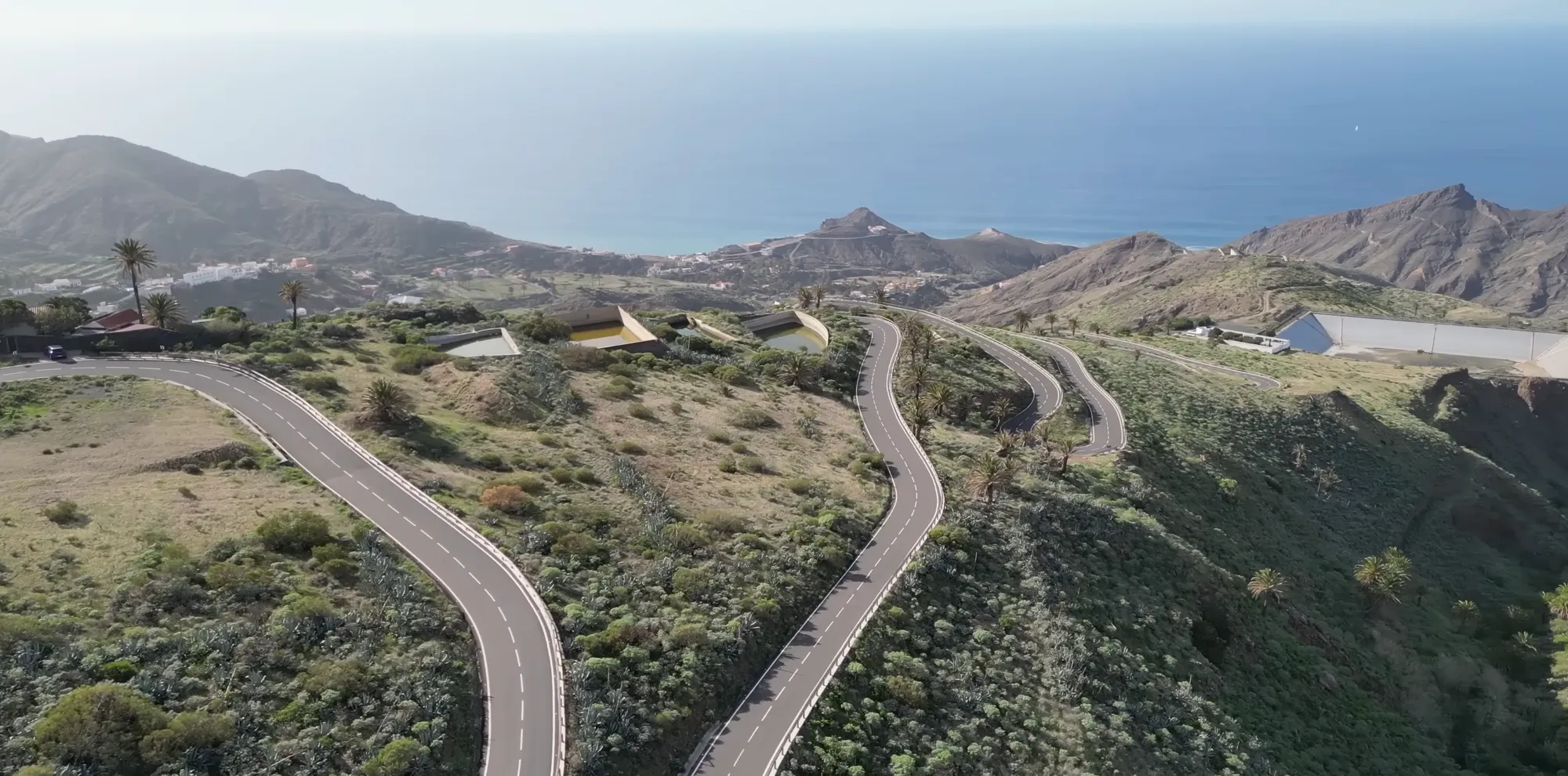
Aerial drone view of Palomar Divide Road winding through chaparral-covered mountain ridges in San Diego County. Multiple S-curve sections descend through sparse vegetation with distant valley views visible in the haze. Gravel and packed-earth surface.

The Truth on the Street

I've spent years listening to the people who actually live with this bike: long owner threads comparing notes, conversations in the paddock, and the steady run of emails and messages riders send me directly. Pool all of it together and a consistent picture forms for the Tiger 900 Rally Pro. Riders rate it as an easy bike to own and travel on, with most of the friction showing up at the edges, off the pavement and in a few rough control details.

What makes it easy to live with

The praise riders return to most often is how little the Tiger asks of you over a long ownership run. Owners single out the finish: switchgear, panel fit, and the cockpit feel all read as a step above the merely functional. The trip electronics earn the same nod, with the 7-inch screen, cruise control, and ride modes described as simple to set and then forget on a long day. On the cost side, the stretched valve-check interval at 18,000 miles comes up again and again as real money saved over the years, and real-world economy of around 50 mpg from the tank gives better than 200 miles between fills. Riders who owned the previous version also note that the bar buzz of the older triple has been noticeably reduced.

Where the weight and wheels show

Take the Tiger properly off the pavement and the tone of the feedback shifts. The most common reservation is mass: at roughly 503 lb (228 kg) with a full tank, riders find it a handful on tight, technical single-track, and less-experienced off-road riders especially feel it. The other recurring point is the 17-inch rear wheel, which several riders say narrows the choice of serious knobby tires next to rivals running a larger rear hoop. Neither stops the bike from going off-road, but both come up consistently from owners who push it there.

The rough edges riders flag

A handful of smaller complaints surface often enough to mention. The new screen draws criticism for how long it takes to wake at ignition, and for feeling slow to respond at times. On the brakes, riders who otherwise rate the stopping power say the front bites too hard right off the lever, with little of the gentle early travel they'd want; the rear gets a similar note for grabbing with little modulation, which makes low-speed control fiddlier. Some also flag the front fork's lack of preload adjustment, which can leave it overwhelmed on rough roads or under hard braking. And despite the calmer bars, a few owners still report a high-frequency buzz around 5,000 rpm that wears on them over a long motorway slog.

Known issues

  • "Transmission Fault" warning followed by complete engine shutdown

    electricsoccasional

    Multiple MY2024 Rally Pro and GT Pro owners report a "Transmission Fault" warning appearing on the TFT followed by complete engine shutdown mid-ride, sometimes accompanied by a TCS error and a loss of gear-position display. After shutdown, the TFT, horn, indicators, and fuel pump are dead. Diagnostic codes reported in forum threads include P154, P06A4 (5V sensor circuit D — ride-by-wire throttle related), and P1135. Dealer-attempted fixes include throttle position sensor replacement, harness inspection, and ECM software reflash; the fault has reappeared after these fixes for at least one documented owner.

  • Cold-start difficulty requiring multiple crank attempts

    fuel systemoccasional

    Multiple MY2024 Tiger 900 Rally Pro and GT Pro owners report that the engine requires 2–8 crank attempts to fire on a cold engine, sometimes occurring at moderate ambient temperatures (~13 °C / 55 °F). Some bikes start and immediately stall on the first attempt. Root cause is unconfirmed; dealers have replaced cold-start sensors and TFT instrument clusters as attempted fixes with mixed results.

  • TFT instrument cluster glitches and crashes

    electricsoccasional

    The 7" TFT instrument panel has been documented to exhibit failures including: hexadecimal/core-dump strings on screen after the 500-mile first-service software update; vertical grey lines; blocks of solid white obscuring the gear indicator; blue tint in heavy rain; and total black-out while cruising. The TFT has also been noted for slow processing time and slow boot at ignition.

  • Rear brake dragging and TPMS warnings

    brakesoccasional

    Some owners report rear brake dragging and overheating, causing grooved disc, along with intermittent tire pressure monitoring system (TPMS) warnings and occasional damper error messages. Issue may be linked to linked braking system.

The Expert Benchmark

Where this Triumph Tiger 900 pulls ahead of — or falls behind — its rivals on the numbers, and the typical bike in its class on character.

What kind of bike this is — character vs. the class

This bike Class average

The shape of the Triumph Tiger 900 — numbers and character vs. the average Adventure

Head-to-head: Triumph Tiger 900 vs. its rivals

The Long-Haul Verdict

Forget spec-sheet bragging. Here's who the Tiger 900 is actually built for.

Aerial view of a winding asphalt road cutting through volcanic terrain on La Gomera, Canary Islands. The road curves through sparse green vegetation with rocky volcanic peaks visible in the background and a settled valley to the left. Clear lane markings, dry climate, partly cloudy sky.

Best motorcycle for Moab?

You want real technical terrain, and the 21-inch front and long-travel Showa back you up off the pavement. Just know it's 503 lb wet, which is a handful to muscle through the tightest, slowest sections.

Made for Bar M / Kane Creek · Imperial Sand Dunes · Johnson Valley OHV Area
Best motorcycle for Highway 1?

This is where the Tiger shines. It carves sweepers with poise, the seat keeps you fresh on 300-mile days, and it links curves and scenery without forcing you into the heavyweight bagger camp.

Made for Black Hills · Blue Ridge Parkway · Cherohala Skyway

Best touring motorcycle for long distance?

Long days, full loads, two-up to the national parks: this is the Tiger's home turf. Comfortable seat, planted at highway pace, plenty of carrying capacity. Just add rear preload before you load it heavy.

Made for Beartooth Highway · Blue Ridge Parkway · Going-to-the-Sun Road

Alternatives to the Triumph Tiger 900

If this one isn't quite the fit, these are the bikes worth riding back-to-back against it.

Any price note compares both bikes at the same age — the youngest age both have on the used market — against this Triumph Tiger 900. “cheaper/pricier” is what that bike costs second-hand, not how worn it is.