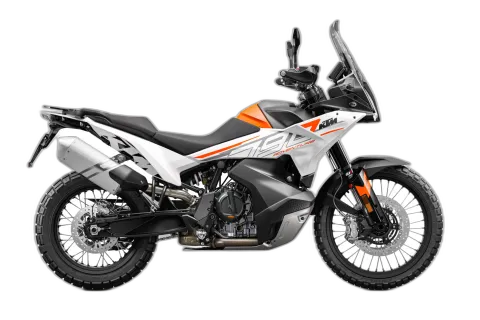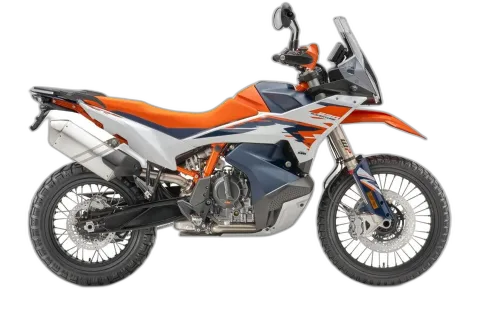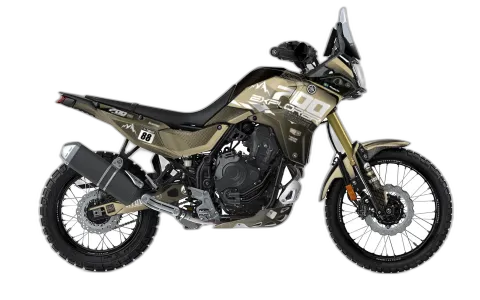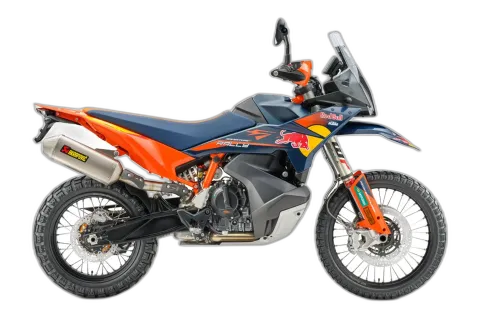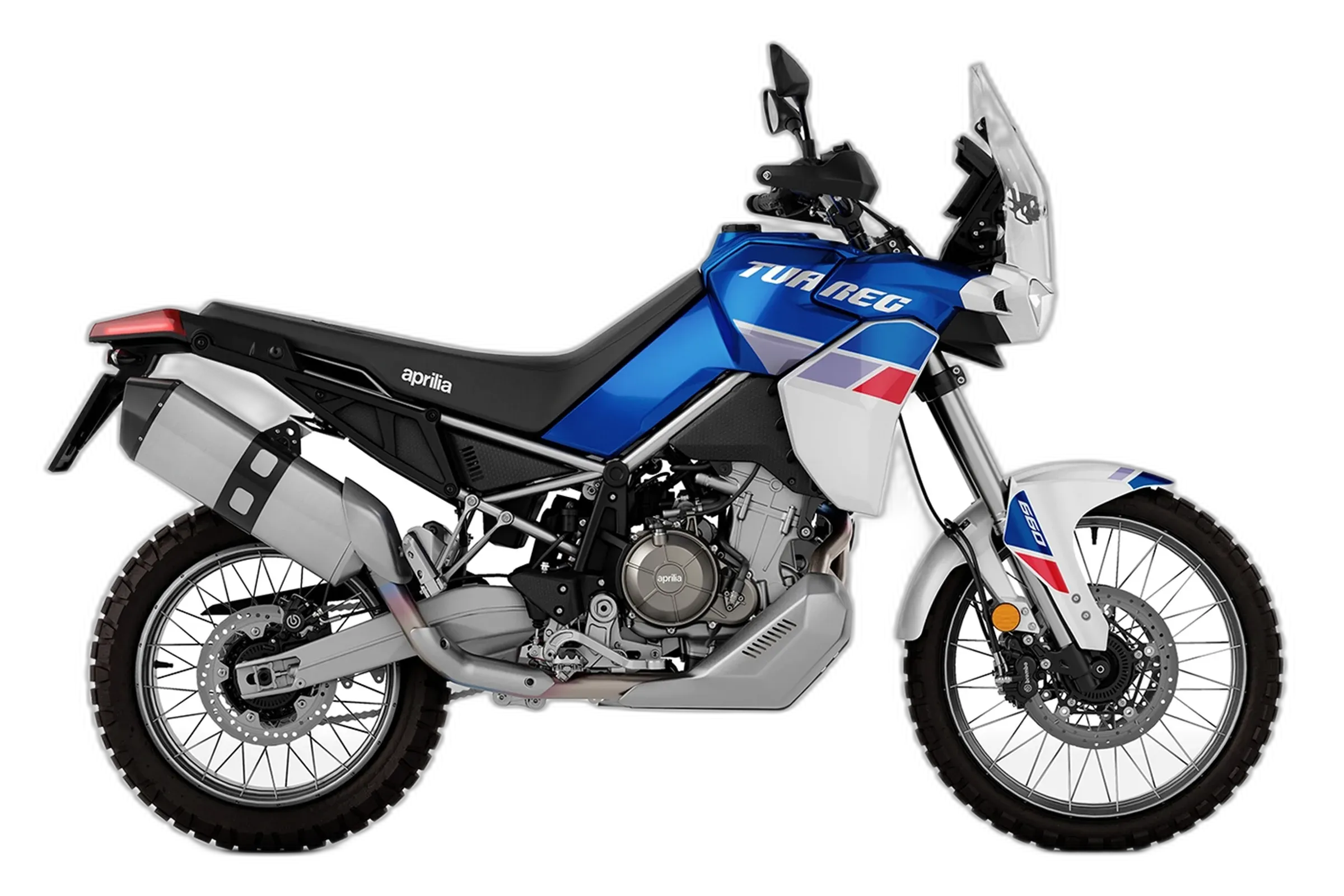
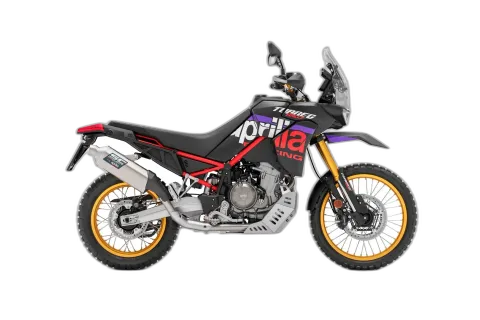
Aprilia Tuareg 660 (ZD4XB) — Adventure
NastyNils / Aprilia press archive

2022 · Adventure · Buyer's Guide

Tuareg 660 (ZD4XB)

Aprilia's Sharpest Dirt Handler

The Machine's Character

The Tuareg 660 runs the same 270-degree parallel twin as Aprilia's RS 660 and Tuono 660 siblings, retuned for dirt rather than revs. Where those bikes chase the top end, this one flattens the curve into a linear 80 hp and 52 lb-ft that builds without spikes or dips. Underneath sits a steel frame designed specifically for this bike, fully adjustable Kayaba suspension with 9.4 inches of travel at both ends, and a 21-inch front paired with an 18-inch rear. At 450 lb wet, with ABS, traction control, and ride modes standard, it lands as a genuine middleweight adventure tool.

On the road it rides light and sharp, tracking a line with the kind of composure that reads as confidence rather than mass, and it stays fun whether you potter or push hard. The honest caveat is the engine's bottom end. There's little punch below the mid-range, so you keep the revs up to find drive. Wind protection is mediocre, several practical items are absent from stock, and real-world range comes up short of the spec sheet. Early units had teething faults too, from side-stand switch glitches to cam chain rattle on cold starts, all addressed under warranty. Buy it for the chassis.

Hard Numbers

Spec sheets don't ride bikes, but they set the baseline.

Show full specs & equipment Hide specs & equipment
Key specifications
Power 80 hp (59 kW) @ 9,250 rpm
Torque 52 lb-ft (70 Nm) @ 6,500 rpm
Displacement 659 cc
Engine Parallel twin
Cooling Liquid-cooled
Gearbox 6-speed
Final drive Chain
Fork Upside-down (USD)
Front brake 300 mm
Front tire 90/90-21
Rear tire 150/70 R18
Wheelbase 60.0 in (1525 mm)
Ground clearance 9.4 in (240 mm)
Front travel 9.4 in (240 mm)
Rear travel 9.4 in (240 mm)
Seat height 33.9 in (860 mm)
Wet weight 450 lb (204 kg)
Fuel capacity 4.8 gal (18 L)
Fuel economy 52 mpg (US)

Equipment check

Chassis

  • Front Suspension Adjustable Standard
  • Rear Suspension Adjustable Standard
  • Cruise Control Standard

Comfort

  • Heated Grips Optional

Connectivity

  • TFT Display Standard
  • Smartphone Connectivity Standard
  • Navigation Optional
  • USB Charging Port Optional
  • Tire Pressure Monitoring (TPMS) Optional

Drivetrain

  • Quickshifter Aprilia Quick Shift (AQS) Bidirectional Full throttle upshiftClutchless riding Optional
  • Slipper Clutch Standard

Lighting

  • LED Headlight Standard

Safety

  • ABS Standard
  • Traction Control Standard
  • Ride Modes Standard

The Voice of Experience

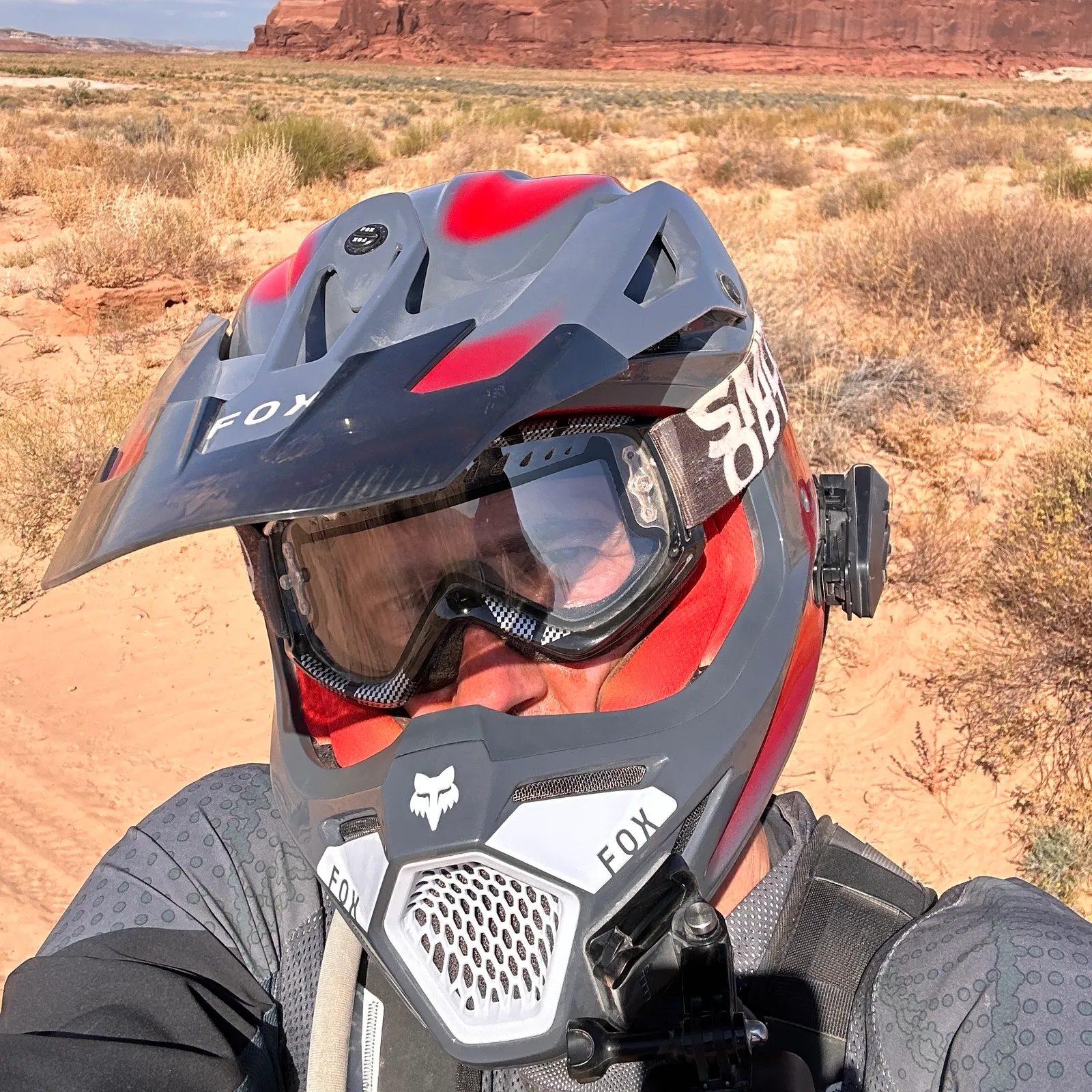
Portrait of NastyNils

The test ride

Swing a leg over the 33.9-inch seat and it puts taller riders exactly where they want to be. The knee angle is right out of the box, and standing on the pegs off-road feels natural from the first trail section, no adjustment needed. The gearbox is a highlight for your left foot, with short throws that heavy enduro boots don't fight and the Aprilia Quick Shift bidirectional holding up under real abuse. The brakes give you real resolution at the lever, easy to feed in and release on loose ground. What you will feel over a long day is the buzz. Because the motor likes to sit high in the range, footpeg vibration climbs with the revs and settles into your boots. And that tall screen looks protective in the showroom, but at speed the wind still finds your shoulders, and rain gets there too.

Rated point by point — where it earns its keep

My own 0–100 score for this bike against the class, area by area — the marker on each bar is the class average.

This is the bike's signature. It tips in fast, settles onto a line without complaint, and threads technical sequences that would leave a heavier machine scrapping. Lean harder and it snaps through quick direction changes with the eagerness of something far lighter, keen yet fully planted, and that Aprilia knack for pairing bite with calm shows up in the first technical stretch. The poise holds as speed climbs; out on the highway and deep into the brakes it sits square and unbothered, steady in a way that reads as balance, not bulk.

I fit this bike the moment I sat down, and I'm a tall rider. The reach to the bars, the bend at the knee, the way I stand on the pegs off-road, all of it landed right without me touching a thing, and that put it at the top of its group for me. The gearbox backs up the good first impression: the lever moves a short distance, my thick footwear never snagged it, and the quickshifter kept its manners through hard use. Two things wear on you over a long day. The motor lives high in the rev range, so the pegs get busier the faster you spin it, and you accept that rather than dodge it. The tall screen also promises more cover than it gives, leaving your upper body exposed once the pace or the weather picks up.

What sticks with me is how well it covers both ends of the pace. Ride it slowly and it stays relaxed, never pestering you to get on with it. Open it up and a sharper machine turns up, happy to be worked, and it moves between those two temperaments on its own instead of resisting. That breadth is rarer than it sounds. Most bikes commit to one mode and go flat outside it. Doing the gentle and the hard with equal conviction is what I keep coming back to.

Here it's about control rather than drama. There's plenty of stopping power on tap, yet the front never turns grabby, building bite evenly as you squeeze and releasing just as cleanly, which makes feeding a little brake into a corner easy to judge. The rear is just as simple to lean on. Together they give you the fine control to meter exactly the amount of stopping you want as the grip changes underneath, and they manage it without demanding careful hands.

The useful part is that traction control and the ride modes can be changed on the move, and the menu is logical enough to learn once and then ignore. After that the gaps show. From stock there's no USB or accessory socket, the switchgear doesn't light up at night, and while four modes are on offer, none is a straightforward wet setting and the names aren't intuitive. Range disappoints more: it falls noticeably short of the claimed figure, and an imprecise fuel gauge adds to the doubt on longer legs between fills.

The delivery is what I trust here. Power arrives in a steady climb with no sudden step to unsettle you, and that predictability pays off in tight switchbacks where you want to know exactly what your right hand will produce. On and off the gas it behaves as one piece, the engine braking easing in gently rather than snatching. The catch is a hollow bottom end. Below the middle there's little to pull on, so you keep it spinning, and anyone used to a torquey twin needs a ride or two to adjust.

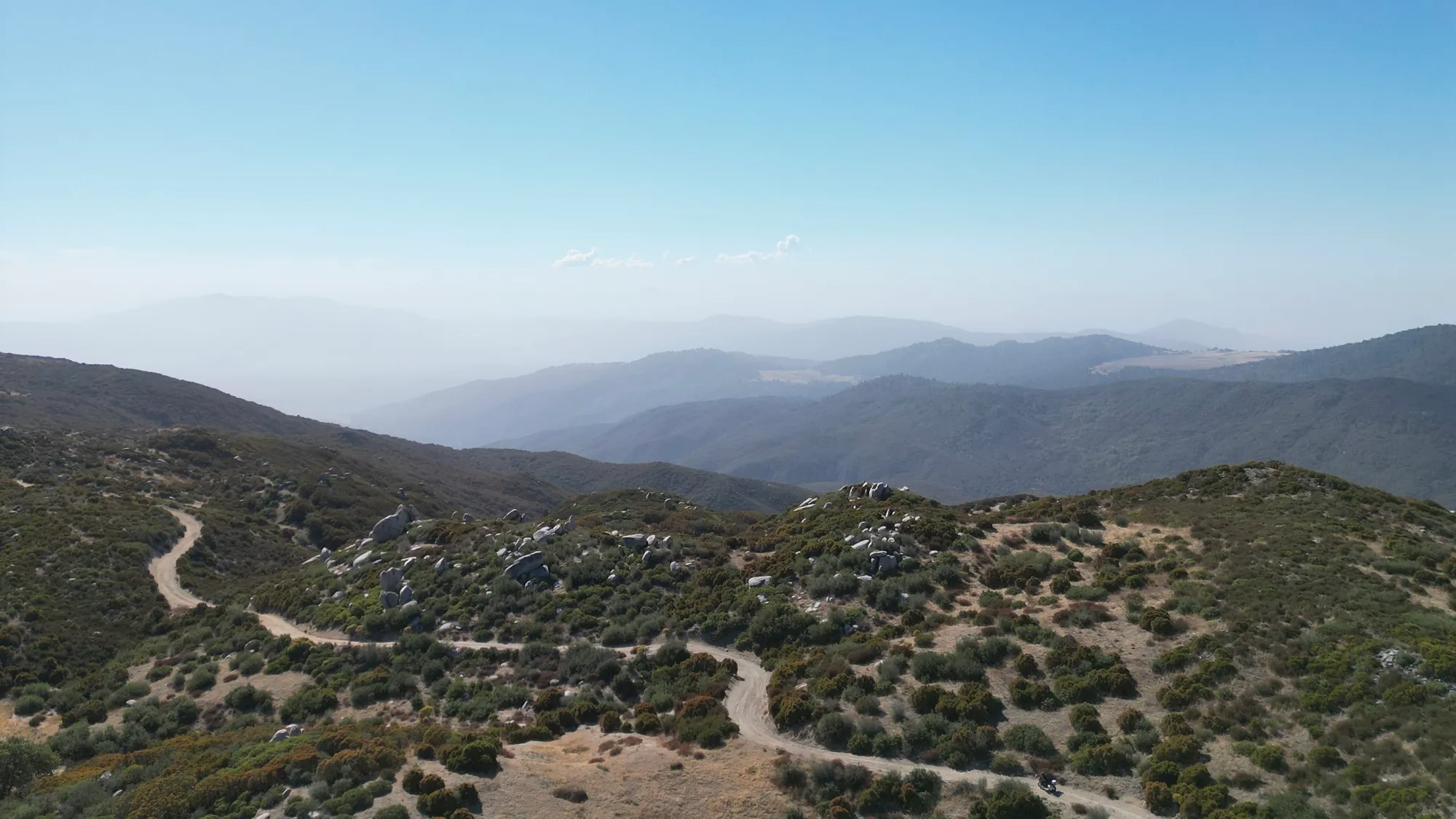
Aerial drone view of Palomar Divide Road winding through chaparral-covered mountain ridges in San Diego County. Multiple S-curve sections descend through sparse vegetation with distant valley views visible in the haze. Gravel and packed-earth surface.

The Truth on the Street

What's here didn't come from my own miles on the Tuareg. It's the residue of years spent paying attention: conversations I follow at a distance, chatter at gatherings, the back-and-forth with people who actually own one, and the notes riders fire off to me directly. The picture they paint is remarkably consistent.

Where the praise piles up

Off-road ability is the drum riders beat hardest. The consensus puts the Tuareg in a small club of middleweight adventure bikes that arrive trail-ready with no prep, and its modest weight for the class earns repeated thanks once the going gets tight and technical. Owners also like the smooth, usable spread of torque from the twin low in the range, rate its electronics package as fuller than most of what shares its price, and call attention to the full range of suspension adjustment front and rear.

The knocks that keep surfacing

The complaints land on the periphery, not the riding. Weather protection draws the most heat, since the factory screen churns up buffeting at pace and pushes many owners toward a bigger aftermarket unit. Taller riders are fine; anyone shorter tends to call the seat a stretch, and the lower accessory perch only helps so much. A smaller group misses lean-sensitive brakes and traction the bike goes without, and those planning long hauls voice steady concern about how sparse Aprilia's service and parts network is.

Known issues

  • Side-stand cut-off switch failures

    electricsoccasional

    Some owners report intermittent no-start or stalling traced to a faulty side-stand safety switch; addressed by switch replacement or contact cleaning.

  • TFT dash software glitches in early units

    electricsoccasional

    Early MY2022 owners reported sporadic TFT freezes or display anomalies; resolved via dealer ECU/dash firmware updates.

  • Cam chain tensioner noise on early units

    engineoccasional

    Some early MY2022 bikes exhibit audible cam chain rattle on cold starts; Aprilia released a revised tensioner under warranty for affected units.

The Expert Benchmark

Where this Aprilia Tuareg 660 pulls ahead of — or falls behind — its rivals on the numbers, and the typical bike in its class on character.

What kind of bike this is — character vs. the class

This bike Class average

The shape of the Aprilia Tuareg 660 — numbers and character vs. the average Adventure

Head-to-head: Aprilia Tuareg 660 vs. its rivals

The Long-Haul Verdict

Forget spec-sheet bragging. Here's who the Tuareg 660 is actually built for.

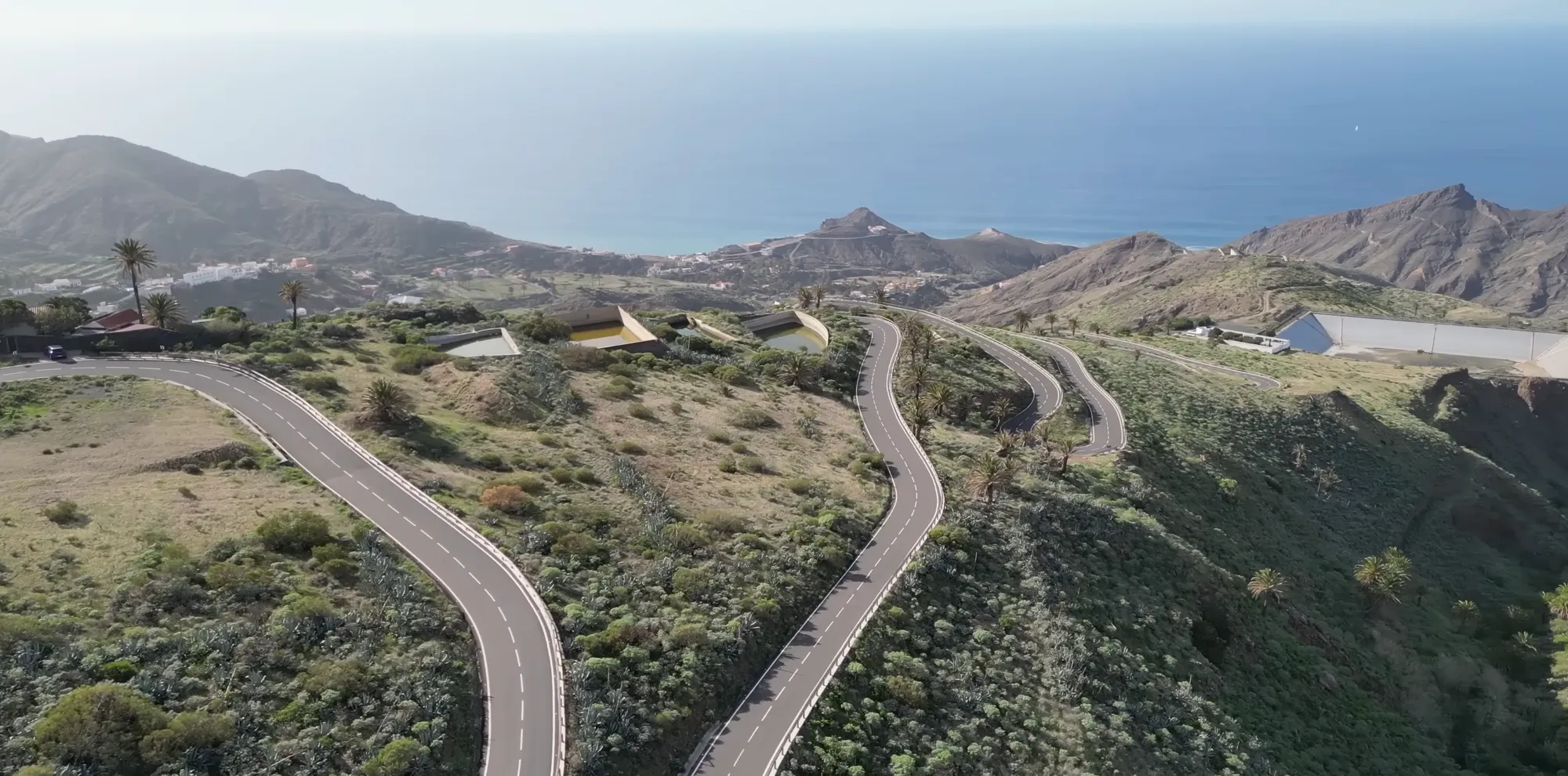
Aerial view of a winding asphalt road cutting through volcanic terrain on La Gomera, Canary Islands. The road curves through sparse green vegetation with rocky volcanic peaks visible in the background and a settled valley to the left. Clear lane markings, dry climate, partly cloudy sky.

Best motorcycle for Moab?

This is your bike. Light at 450 lb, sharp in the technical stuff, with a 21-inch front and 9.4 inches of travel that let you attack slickrock and sand without fighting the weight.

Made for Bar M / Kane Creek · Imperial Sand Dunes · Johnson Valley OHV Area
Best motorcycle for Highway 1?

The chassis loves a twisty day, sharp and composed at pace. Just know the screen won't shield you much on long highway slogs, so it rewards back roads over droning interstate miles.

Made for Black Hills · Blue Ridge Parkway · Cherohala Skyway

Best touring motorcycle for long distance?

It will cover distance, but be honest with yourself. Weak wind protection, thin low-end, and a real-world range that undershoots the claim mean long two-up days ask more of you here.

Made for Beartooth Highway · Blue Ridge Parkway · Going-to-the-Sun Road

Alternatives to the Aprilia Tuareg 660

If this one isn't quite the fit, these are the bikes worth riding back-to-back against it.

Any price note compares both bikes at the same age — the youngest age both have on the used market — against this Aprilia Tuareg 660. “cheaper/pricier” is what that bike costs second-hand, not how worn it is.