Honda CRF1000L Africa Twin (SD 04) — Adventure
NastyNils / Honda press archive

2015–2017 · Adventure · Buyer's Guide

CRF1000L Africa Twin (SD 04)

Honda's Dirt-Honest Comeback

The Machine's Character

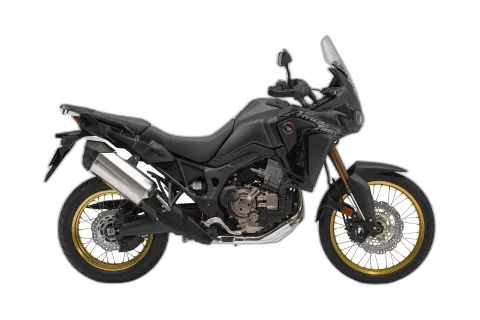
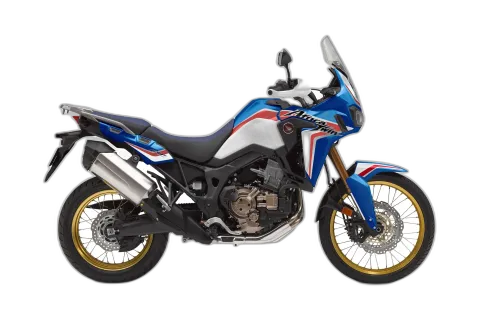
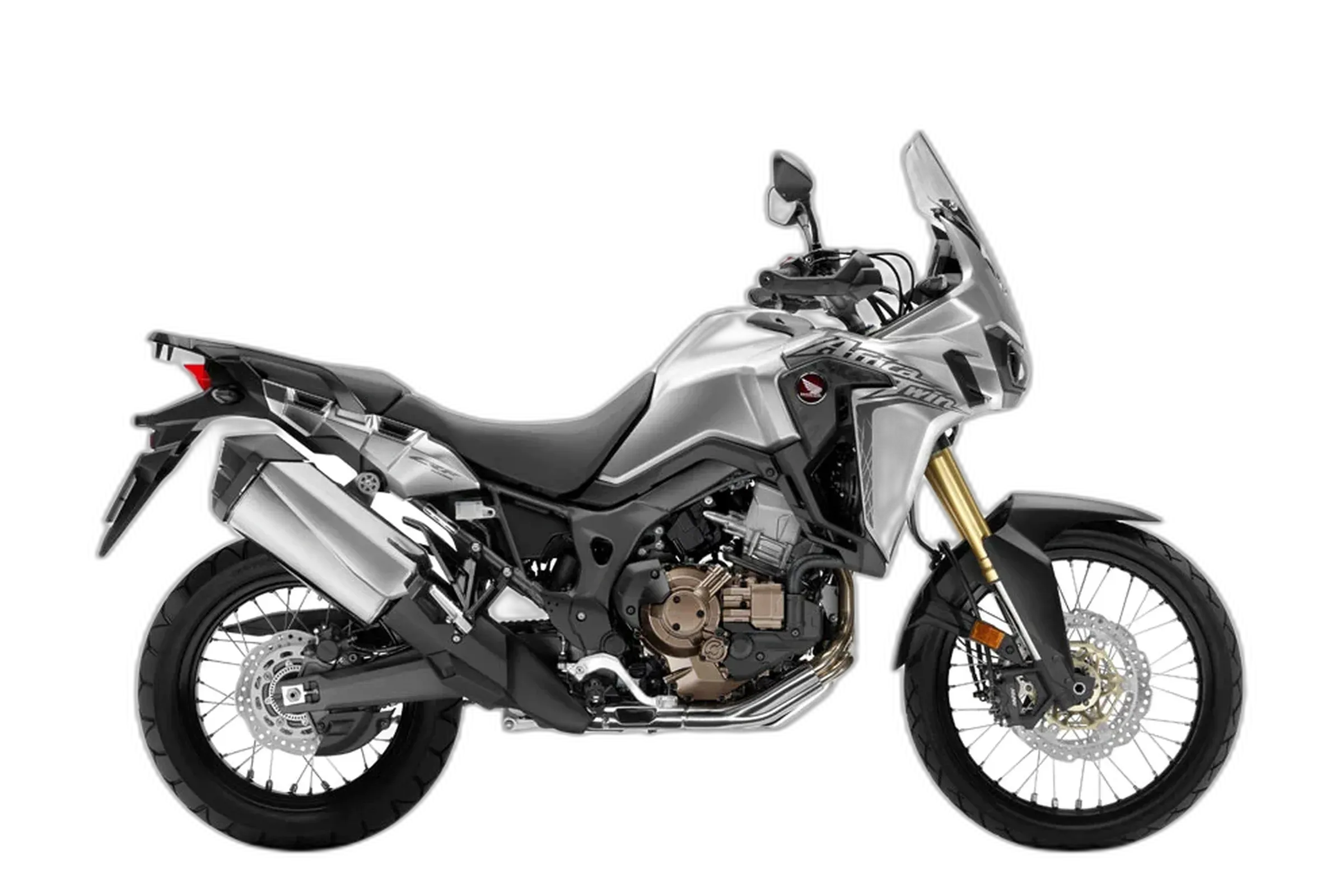
Honda's return to the big adventure class arrived as a genuinely dirt-honest machine, not a road tourer wearing knobbies. The 998cc parallel twin runs a 270-degree crank, so it sounds and fires like a V-twin, with 95 hp and 72 lb-ft that build low and pull clean. A 21-inch front wheel, long-travel suspension, and a slim, tall stance give it real off-road credibility. The optional second-generation Honda DCT makes it the rare big adventure bike you can run as a full automatic when the terrain gets busy.

On the road it settles into a relaxed, planted cruise that eats highway miles without fuss, and the same suspension soaks up broken gravel later the same day with no fiddling. The steel frame adds weight but can be welded back together almost anywhere, which is exactly the confidence a long-haul rider wants. It ages the way a Honda should, quietly and dependably. The honest caveat: road feedback comes filtered through all that travel, it wants real enduro inputs rather than street-bike habits, and the weight tells against you when the trail slows to a technical crawl.

Hard Numbers

Spec sheets don't ride bikes, but they set the baseline.

Show full specs & equipment Hide specs & equipment
Key specifications
Power 95 hp (70 kW) @ 7,500 rpm
Torque 72 lb-ft (98 Nm) @ 6,000 rpm
Displacement 998 cc
Engine Parallel twin
Cooling Liquid-cooled
Gearbox 6-speed
Final drive Chain
Fork Upside-down (USD)
Front brake 310 mm
Front tire 90/90-21
Rear tire 150/70 R18
Wheelbase 62.0 in (1575 mm)
Ground clearance 9.8 in (250 mm)
Front travel 9.1 in (230 mm)
Rear travel 8.7 in (220 mm)
Seat height 34.3 in (870 mm)
Wet weight 511 lb (232 kg)
Fuel capacity 5.0 gal (18.8 L)
Fuel economy 49 mpg (US)

Equipment check

Chassis

  • Front Suspension Adjustable Standard
  • Rear Suspension Adjustable Standard

Comfort

  • Heated Grips Optional
  • Adjustable Seat Height Standard
  • Luggage System Optional

Drivetrain

  • Slipper Clutch Standard
  • Automatic Shift (DCT / ASA / AMT) Honda DCT (2nd generation) Clutchless ridingAutomatic gear selection Optional

Lighting

  • LED Headlight Standard

Safety

  • ABS Standard
  • Traction Control Standard

The Voice of Experience

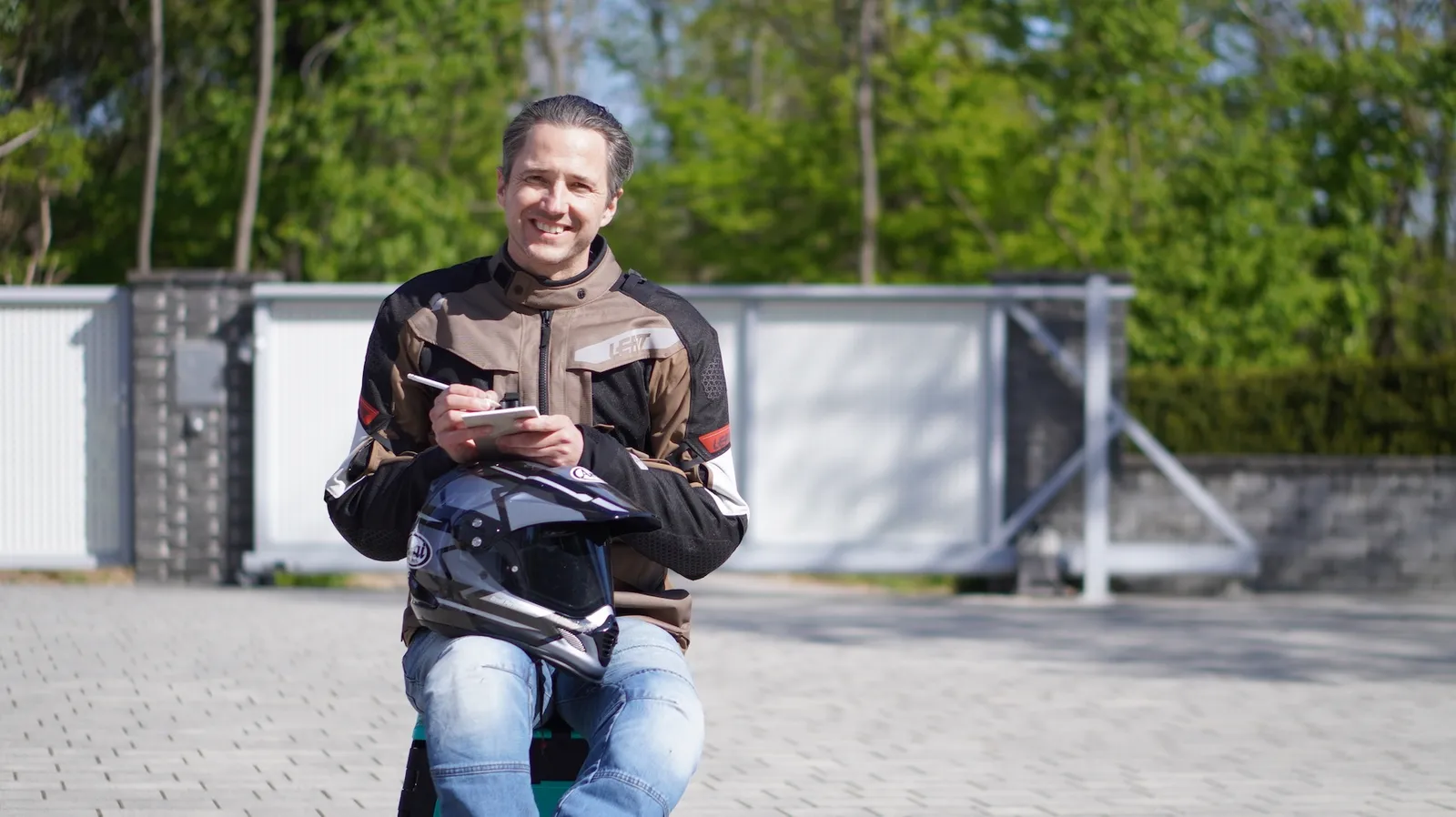
Portrait of NastyNils

The test ride

Swing a leg over and the first surprise is how narrow it feels. It looks wide up front, but everything tucks behind the cylinders, so your knees sit against a genuinely slim waist, and the broad bar leaves you room to work. Fire it up and the uneven beat gives you something to listen to. Out on rough pavement you can feel the chassis moving under you, working constantly, never nervous, and that movement stays in the bike instead of your spine. On loose gravel the confidence climbs fast, and with the automatic box the drive never breaks between gears, so nothing snatches at the rear as you roll on. After two hard days across every surface it still leaves you wanting more road.

Rated point by point — where it earns its keep

My own 0–100 score for this bike against the class, area by area — the marker on each bar is the class average.

What tips the decision when you're heading somewhere genuinely far from help isn't on any spec sheet. It's the name on the tank. Honda's standing for going remote wasn't handed to them; it was earned across decades of bikes quietly doing exactly what they promised, the first Africa Twin among them. When the nearest workshop is a day's ride away, that track record shifts the math in a way no printed figure ever could.

One button press is the whole story. Hit it and the ABS drops into an off-road mode that leaves the rear wheel completely alone while still watching over the front. Rolling into a loose corner you can lock the rear and steer with it the way you always would in the dirt, and if you overcook the entry the front is still there to catch you. It's a simple idea, executed exactly the way a rider actually works.

What keeps surprising me on this bike is how little it asks of me once I read it right. Drop into a fast, aggressive corner with the pegs scraping and no margin left, and it just sorts the mess out while I stay focused on what's coming next. Steering is honest and light: look through the bend, lean on that wide bar, and it takes the line and holds it. Link a set of quick sweepers together and it carries itself like a real enduro rather than a road bike playing dress-up. The electronics earn their place off the tarmac too. Coming down a rocky descent, the automatic box reads my throttle and speed on the overrun and drops a gear to add engine braking on its own, so a less experienced rider can spend all their attention on line and balance. And running traction control at its softest setting actually put me through the dirt quicker than switching it off, because it lets the rear slip just enough to keep momentum without letting the whole thing go loose. The honest limit shows up in deep sand. The forward weight bias that makes it so solid on gravel now works against me, pushing the front into the soft stuff, and getting my body back where it needs to be is harder than it should be because the split seat cuts off how far I can slide. On hardpack and gravel it inspires real trust. In sand you fight the geometry.

The thing worth knowing here is the adjustment range, and that it actually does something. Out of the box the setup leans toward comfort, which suits long tarmac hauls where it stays composed and unfussy. Add a few clicks of preload and damping and the character sharpens up noticeably for rougher, faster ground. On a bike that might cover a highway slog and a technical gravel section inside the same afternoon, having that spread and being able to act on it in a minute matters more than any single fixed tune. The cockpit backs it up. The handlebar is broad, your hands fall where they should, and nothing about the controls fights you for room to move around and get comfortable over a long day. It's a big machine that asks very little of your body once you're rolling.

Skip the automatic box and the bike shows a rawer, more playful side off-road. With the manual gearbox every upshift kicks the rear out of line, the clutch snaps and sprays gravel sideways, and the whole thing scrambles its way up a climb with you wrestling it. On the clock it was measurably slower through the technical stuff than the auto. It was also a good deal more fun, and that counts for something out here.

The party trick I keep reaching for is G-Mode on the automatic box. Point it up a steep, loose climb, pick your speed with the throttle, and gear choice stops being your job; the transmission holds drive through every shift so there's no torque gap right when the ground is about to break loose. None of the engineering that lets it cross a continent makes it a chore on a Tuesday commute either. My gripe is the sheer number of things you can set. Between ABS, traction control, and the auto box, the configurations stack up to a point where I spent the test second-guessing whether I had it right at all. For what it's worth, traction control on its least intrusive setting covered every surface I found over two full days, so I'd set that and stop fiddling. And I'll be honest: a short tarmac demo won't sell you on the automatic. Its real case only lands once the terrain turns mixed.

Honda offset the crankshaft, and you feel it the instant it lights up. There's a real pulse and character to the way it runs, the sort of personality you'd assume a parallel twin would have to do without. It simply isn't missing here. On a big adventure bike that spends hours at a steady gait, having an engine with something to say makes the miles better company.

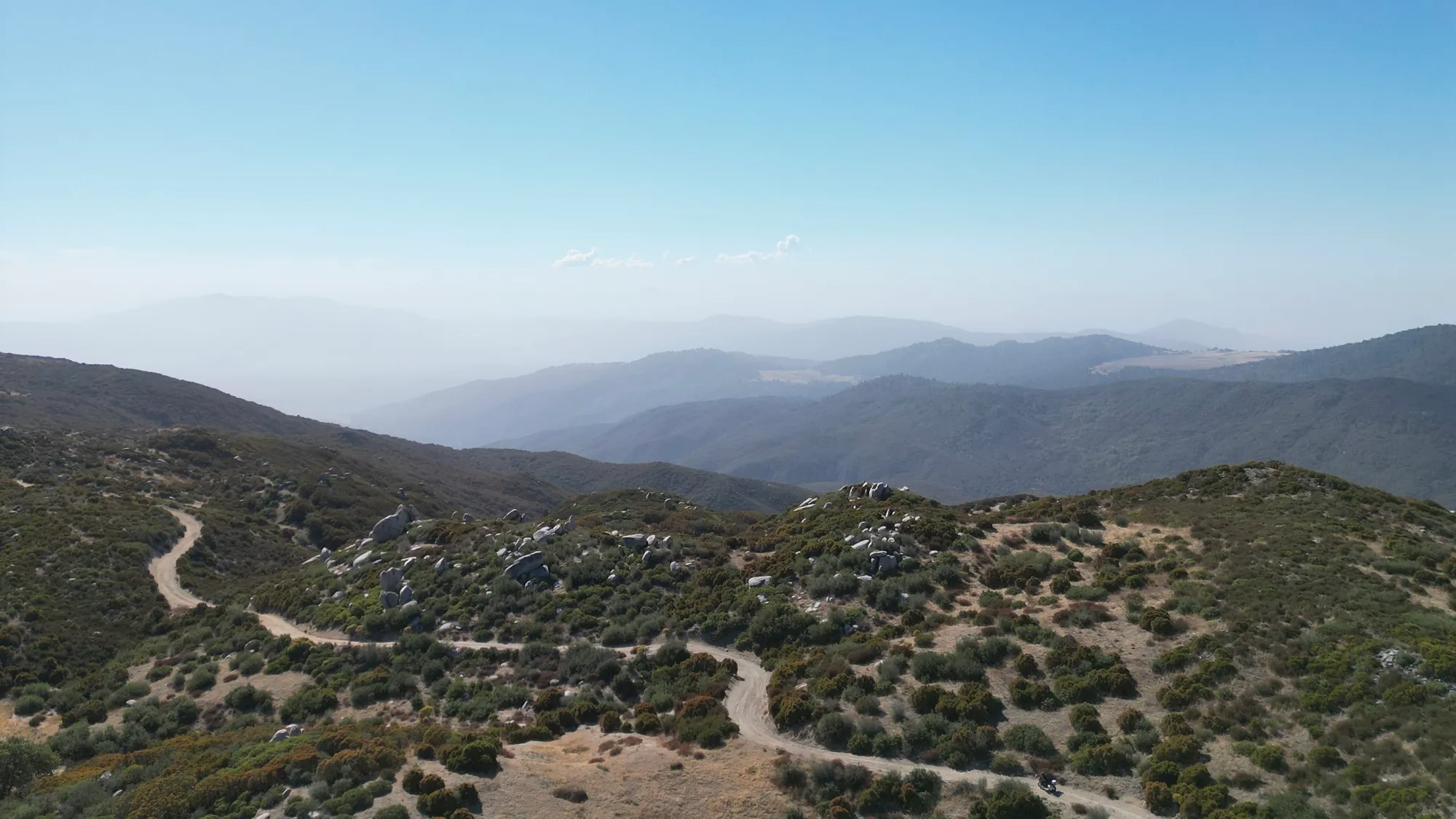
Aerial drone view of Palomar Divide Road winding through chaparral-covered mountain ridges in San Diego County. Multiple S-curve sections descend through sparse vegetation with distant valley views visible in the haze. Gravel and packed-earth surface.

The Truth on the Street

This isn't from one test ride. It's what I've heard from riders over years of paddock talk, owner conversations, and the messages that land in my inbox from people who live with this bike. The pattern that comes back is consistent: real respect for how it works once the road turns rough, and a short, honest list of things owners wish were different.

The praise that keeps coming back

The praise that comes back most often is off-road capability. Riders rate it as the most credible big adventure bike of its era once the pavement ends, and they tie that to a chassis that feels narrower and lighter than others in the class, easier to place at low speed than the bigger rivals it gets measured against. The uneven-firing twin draws steady affection for its character and strong midrange, with fueling clean enough to trust on slippery ground. Owners describe the engine as durable and trouble-free, the Honda dependability they showed up for. Those who choose the available automatic gearbox single it out as unusually well matched to rough going, and many like being able to shut off rear ABS and step traction control through its levels as conditions change.

The gripes owners live with

The complaints are consistent too. The most common is the tall seat and top-heavy feel at a stop; shorter riders especially struggle with footing and low-speed maneuvers, and the lower seat option only helps so much. Nearly as often, touring riders flag the cable throttle, which leaves the bike without cruise control or engine ride modes for long highway stages. The short stock windscreen draws regular gripes about buffeting and thin upper-body protection at speed, enough that many owners fit a taller aftermarket screen.

Where it shows its age

A few more show up once the bike is worked hard. Loaded with luggage and a passenger, the stock suspension can feel under-sprung on rougher roads, even though it's well sorted solo. The LCD dash reads as dated beside the newer screens of the period and can wash out in direct sun. And several owners find the fuel range short for a machine this size, which is why larger aftermarket tanks turn up so often.

Known issues

  • Side stand switch recall (NHTSA 17V-624)

    electricsoccasionalRecall

    The side stand switch could fail and cause the engine to stall or fail to start, or in some cases the engine could run with the side stand down. Honda recalled affected 2016-2017 CRF1000L units to replace the switch.

  • Side stand bracket cracking / weld failure

    chassisoccasional

    A subset of owners report cracking of the side stand mounting bracket or its weld, especially after heavy off-road use or drops. Replacement brackets and reinforcement plates are widely discussed.

  • Rear shock soft / fade when loaded

    suspensioncommon

    The OEM Showa rear shock is regarded as under-damped when the bike is heavily loaded with luggage and pillion, with fade reported on long fast highway runs.

  • Fuel pump failure / fuel pump recall in some markets

    fuel systemoccasionalRecall

    Reports of fuel pump failures causing stalling or no-start, with regional recall actions covering the fuel pump on a subset of 2016-2017 units.

  • Cam chain tensioner noise / wear

    engineoccasional

    Some early SD04 units exhibit audible cam chain rattle on startup or at low rpm, traced to the cam chain tensioner. Updated tensioners were fitted in service and on later production.

  • DCT clutch judder at very low speeds

    drivetrainoccasional

    On DCT-equipped models, some owners notice a low-speed shudder or judder when creeping in first gear, particularly when cold. Considered a characteristic rather than a defect by Honda.

  • Headlight condensation / moisture ingress

    electricscommon

    Owners frequently report condensation inside the LED headlight units, particularly after washing or in humid conditions; usually cosmetic but sometimes warrantied.

The Expert Benchmark

Where this Honda CRF1000L Africa Twin pulls ahead of — or falls behind — its rivals on the numbers, and the typical bike in its class on character.

What kind of bike this is — character vs. the class

This bike Class average

The shape of the Honda CRF1000L Africa Twin — numbers and character vs. the average Adventure

Head-to-head: Honda CRF1000L Africa Twin vs. its rivals

The Long-Haul Verdict

Forget spec-sheet bragging. Here's who the CRF1000L Africa Twin is actually built for.

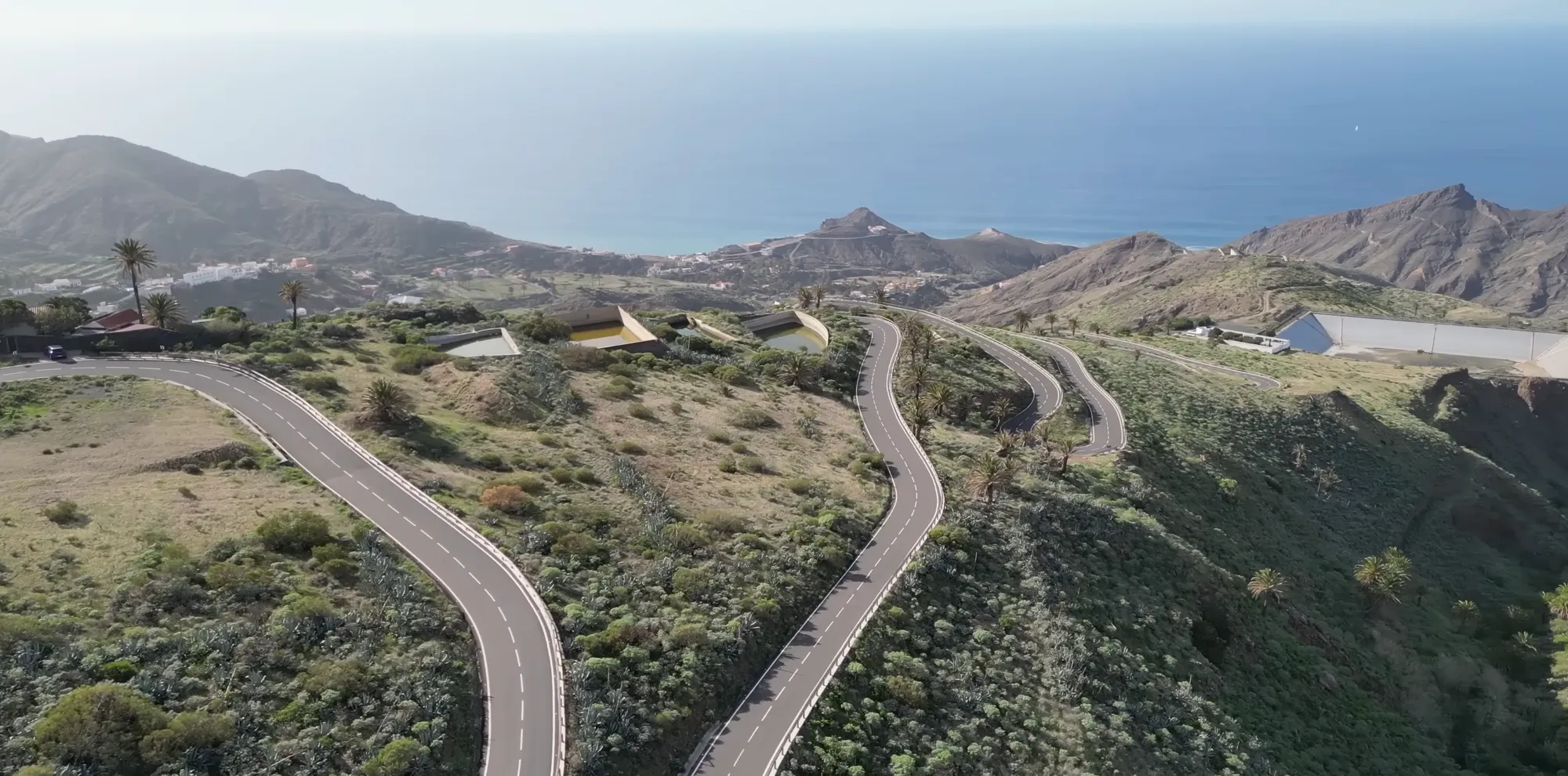
Aerial view of a winding asphalt road cutting through volcanic terrain on La Gomera, Canary Islands. The road curves through sparse green vegetation with rocky volcanic peaks visible in the background and a settled valley to the left. Clear lane markings, dry climate, partly cloudy sky.

Best motorcycle for Moab?

Its planted, trust-building manners on gravel suit you, but be honest about the mass: on slow technical rock and deep sand the front-biased weight fights back, so it earns its keep on the faster stuff.

Made for Bar M / Kane Creek · Imperial Sand Dunes · Johnson Valley OHV Area
Best touring motorcycle for long distance?

This is your bike. It cruises planted and comfortable all day, carries a load and a pillion, and the Honda dependability means the only thing you plan around is the next view.

Made for Beartooth Highway · Blue Ridge Parkway · Going-to-the-Sun Road

Best motorcycle for BDR routes?

Made for exactly this. It covers highway transits and rough gravel in the same day without re-tuning, sips fuel at 49 mpg, and gives you the reliability route logistics are built around.

Made for AZBDR — Arizona Backcountry Discovery Route · California BDR South · COBDR — Colorado Backcountry Discovery Route

What's new versus the previous generation

If you're cross-shopping the older generation, here's what changed.

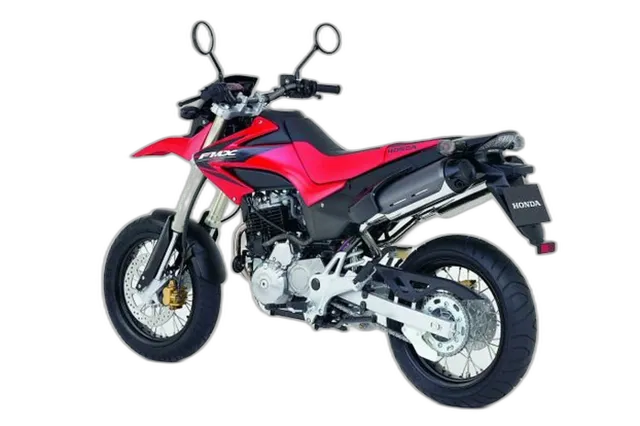
Honda FMX 650 (RD12)

Previous generation · 2005–2007

Honda FMX 650 (RD12)

Honda's Fun Lightweight Flickable Thumper

Compare to the previous model →