By NastyNils·
Motorcycle comparison · Supersport
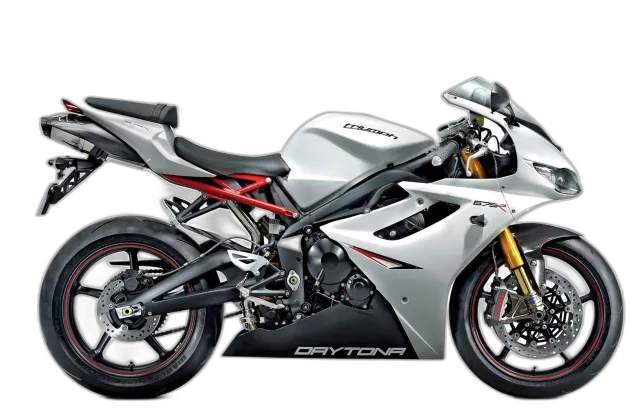
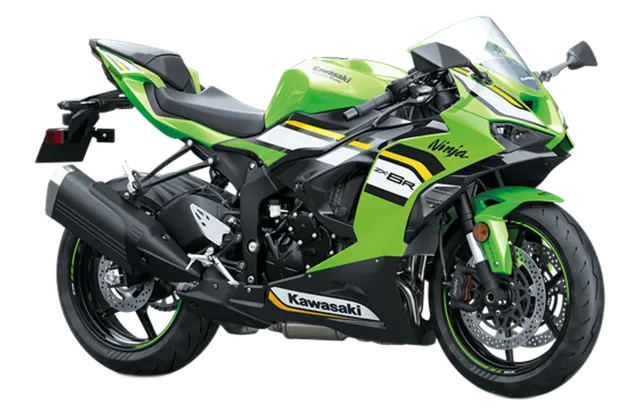
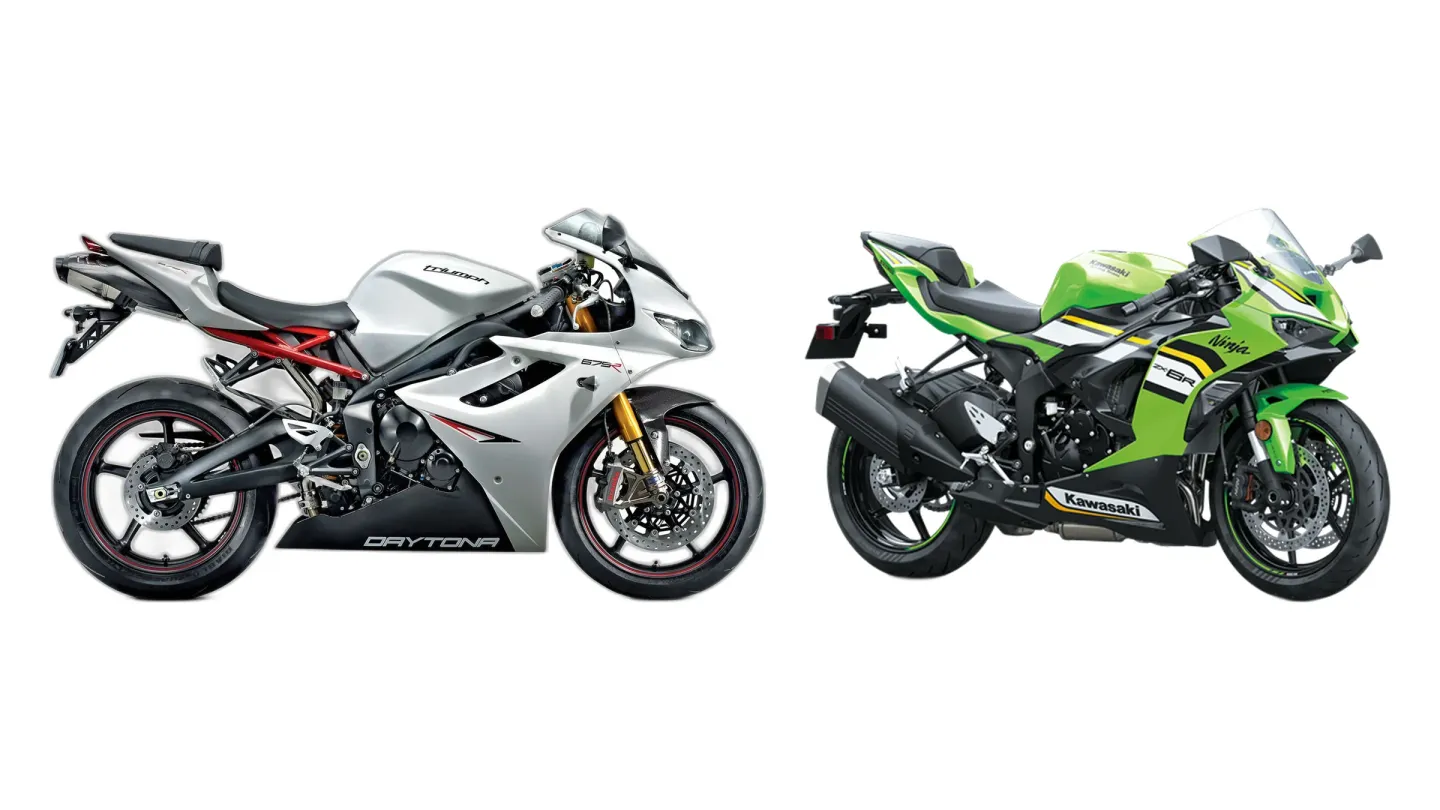
Triumph Daytona 675 (D67LC2-R) vs Kawasaki Ninja ZX-6R (ZX600R)
Triumph Daytona 675 vs Kawasaki Ninja ZX-6R: which one to buy for the riding you do.
Out of a slow bend, the Triumph Daytona 675's triple doesn't wait for revs and pulls straight from the middle. The Kawasaki Ninja ZX-6R's four has enough low down for a relaxed pace, and you'll feel it wake up as the needle climbs. Its rush keeps building all the way to redline.
So which one do you buy?
The Daytona 675 has the edge if…
Racetrack use
Slight edge: Daytona 675
On a closed course, the Daytona 675 edges ahead. Thank more suspension adjustment for that. Not by enough to settle it.
Which one's the smarter buy
Value's a wash
At these used prices, neither bike is the clear better buy for the money.
What makes each one tick
Daytona 675
Through a fast sweeper, the Daytona 675's aluminum frame doesn't twitch, and the bars still flick it toward the next apex. Its Öhlins fork and shock soak up broken pavement, yet there's still a clear read on the road surface. Its brake lever stops it hard. The Brembos bite with feel to spare.
Ninja ZX-6R
There's an addictive howl from the Ninja ZX-6R's intake as the tach swings toward its screaming top end. At WeatherTech Raceway Laguna Seca, the Kawasaki's front end tucks into each corner entry the instant it's asked. Mid-corner, the chassis doesn't squirm. The fork's always reporting what the front tire finds.
Nils rode the Ninja ZX-6R in Japan in 2008 (NastyNils Testride).
The Voice of Experience

What actually separates them
- The Ninja ZX-6R has the lower seat: 32.1 in (815 mm) vs 32.7 in (831 mm).
- The Daytona 675 has the lower wet weight: 407 lb (185 kg) vs 421 lb (191 kg).
- The Daytona 675 makes more peak torque: 53 lb-ft (72 Nm) vs 49 lb-ft (67 Nm).
Which one for the way you ride
Comfortable long-distance riding
Look elsewhere
Both of these get tiring on a long day. A proper tourer will treat you better on big miles.
Don't look for a gap on commuting, twisty roads, and running costs: there isn't one. Go by how each one fits you.
Who each one is built for
What's good, and what you'll live with
Daytona 675
What owners say
Strengths
- Exceptional triple engine character
- Superb handling and cornering confidence
- Plush, high-spec Öhlins suspension
- Powerful and precise Brembo brakes
Trade-offs
- Regulator/rectifier prone to failure
Ninja ZX-6R
What owners say
Strengths
- Sharp, race‑derived handling
- Class‑leading power and top‑end rush
Known problems to check before you buy
Daytona 675
- Regulator/rectifier failure The regulator/rectifier can overheat and fail, leading to charging system issues and potentially damaging the battery and ECU. Many owners replace it proactively with a MOSFET unit or relocate it for better cooling.
- Oil/water heat exchanger failure The oil cooler (heat exchanger) can develop internal leaks, allowing coolant and oil to mix.
Ninja ZX-6R
- Regulator/rectifier charging failure (recall) Recall 12V064000 A manufacturing error causes the regulator/rectifier to insufficiently charge the battery. This may lead to sudden stalling without warning. Kawasaki recalled MY2009–2012 ZX‑6R models to replace the unit free of charge.
- Intermittent ticking noise from engine top‑end Some owners report a pronounced ticking or knocking sound, often attributed to the automatic cam‑chain tensioner or piston slap when cold. Usually considered a characteristic rather than a mechanical fault, but valves and CCT should be inspected if noise is excessive.
What they cost used
These prices compare a 14-year-old Daytona 675 with a 14-year-old Ninja ZX-6R.
- Daytona 675
- about $6,200
- Ninja ZX-6R
- about $6,400
What they share
- Cooling
- Liquid-cooled
- Gearbox
- 6-speed
- Final drive
- Chain
- Front tire
- 120/70-17
- Rear tire
- 180/55-17
Where the spec sheets split
| Daytona 675 | Ninja ZX-6R | |
|---|---|---|
| Seat height | 32.7 in (831 mm) | 32.1 in (815 mm) |
| Wet weight | 407 lb (185 kg) | 421 lb (191 kg) |
| Daytona 675 | Ninja ZX-6R | |
|---|---|---|
| Displacement | 675 cc | 599 cc |
| Engine | Inline-three | Inline-four |
| Power | 126 hp (94 kW) | 128 hp (94 kW) |
| Peak power at | 12,600 rpm | 14,000 rpm |
| Torque | 53 lb-ft (72 Nm) | 49 lb-ft (67 Nm) |
| Daytona 675 | Ninja ZX-6R | |
|---|---|---|
| Fuel capacity | 4.6 US gal (17.4 L) | 4.5 US gal (17 L) |
| Daytona 675 | Ninja ZX-6R | |
|---|---|---|
| Fork | Upside-down (USD) | Telescopic |
| Front brake | 308 mm | 300 mm |
| Wheelbase | 54.9 in (1394 mm) | 55.1 in (1400 mm) |
What comes fitted, what costs extra
| Daytona 675 | Ninja ZX-6R | |
|---|---|---|
| Quickshifter | Standard | Not offered |
| Slipper Clutch | Not offered | Standard |
Head to head, area by area
Both bikes on the same scale, one area at a time.