By NastyNils·
Motorcycle comparison · Supersport
Triumph Daytona 675 (D67LC2-R) vs Honda CBR600RR (PC 40)
Triumph Daytona 675 vs Honda CBR600RR: which one to buy for the riding you do.
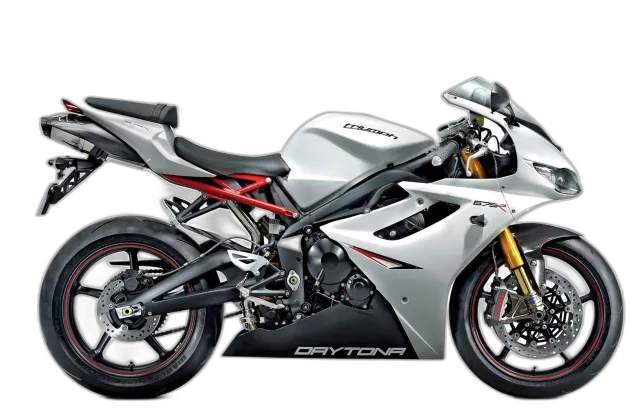
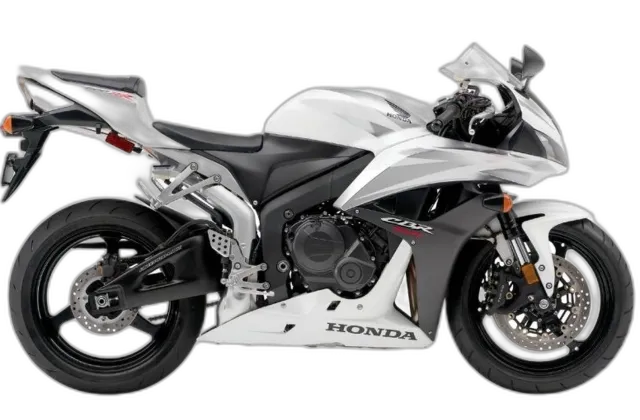
You'll feel the Triumph Daytona 675 drop into a bend willingly, its Öhlins holding the front steady as you tip in. The Honda CBR600RR doesn't beg for a downshift at turn-in.
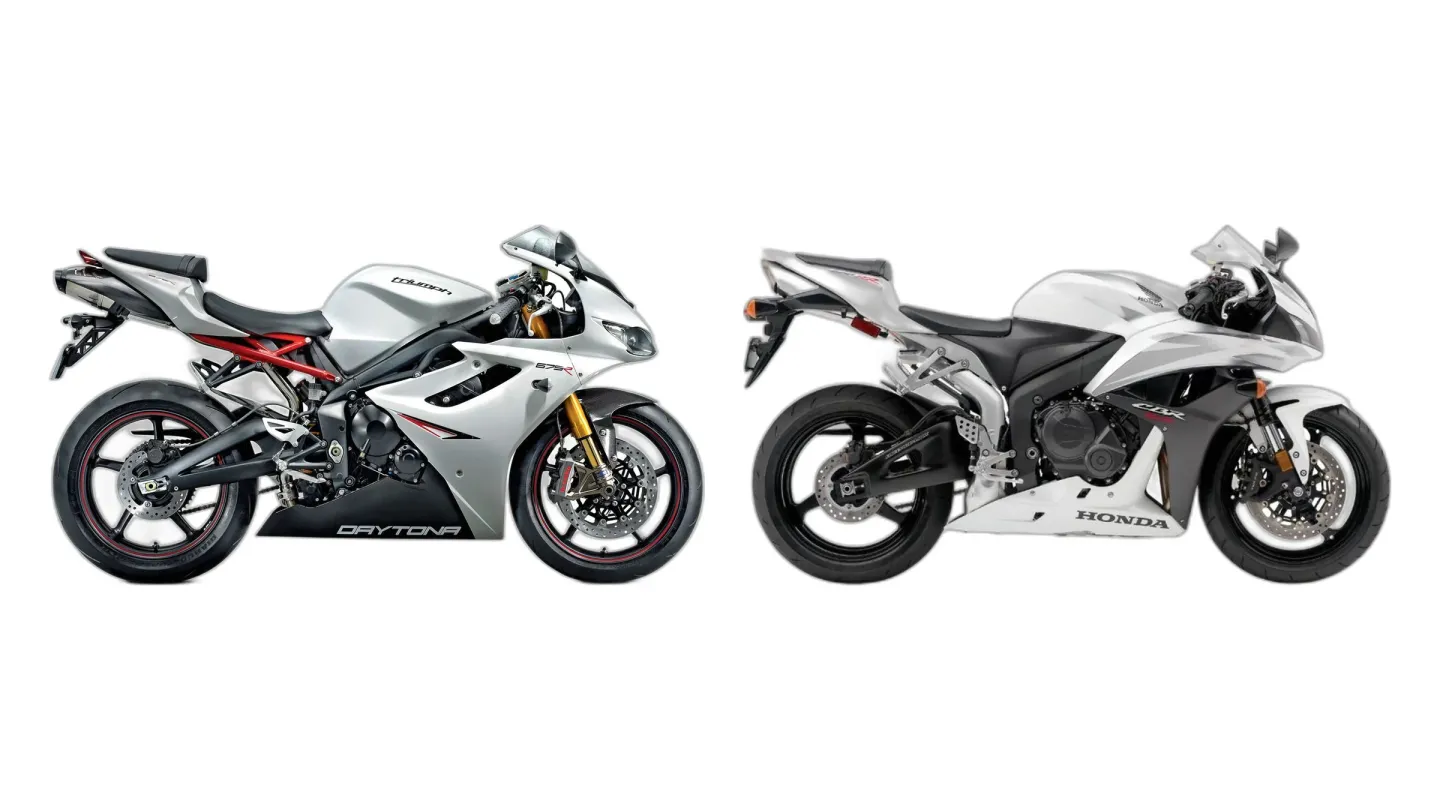
So which one do you buy?
The Daytona 675 has the edge if…
Racetrack use
A touch ahead: Daytona 675
For a day at the track, the Daytona 675 makes slightly more sense. What tips it: more suspension adjustment and stronger brakes.
Which one's the smarter buy
Depends what you want it for
Neither bike is the clear better buy at these used prices. The Daytona 675 costs less, but that doesn't make it the smarter spend.
What makes each one tick
Daytona 675
Inside the Daytona, the triple pulls hard through the middle of the rev range, then keeps screaming as the needle climbs. The brake lever bites hard and keeps its feel when you're hauling down from speed. Through a fast sweeper at WeatherTech Raceway Laguna Seca, the aluminum frame stays stable yet it's quick to change direction, and the chassis keeps talking back to you. The shock swallows ripples whole.
CBR600RR
Mass packed tight around the engine lets the CBR600RR flick from one lean angle to the next almost on thought. The throttle finds real pull in the middle of the revs, and you won't be hunting through the gearbox to stay on the boil. There's no sudden hit as the four spins up. The chassis stays poised mid-corner.
Nils rode the CBR600RR in Hungary in 2007, in Qatar in 2008, in Croatia/Dalmatia in 2013, and in Germany in 2017 (NastyNils Testride).
The Voice of Experience

What actually separates them
- The Daytona 675 makes more peak power: 126 hp (94 kW) vs 121 hp (89 kW).
- The Daytona 675 makes more peak torque: 53 lb-ft (72 Nm) vs 49 lb-ft (66 Nm).
- The Daytona 675 has the larger engine: 675 cc vs 599 cc.
Which one for the way you ride
Comfortable long-distance riding
Neither is a natural fit
Long-haul comfort is a weak spot for both. If you tour, shop with that in mind.
These two run dead level on commuting, twisty roads, and running costs. Sit on both in the showroom and trust what your body says.
Who each one is built for
What's good, and what you'll live with
Daytona 675
What owners say
Strengths
- Exceptional triple engine character
- Superb handling and cornering confidence
- Plush, high-spec Öhlins suspension
- Powerful and precise Brembo brakes
Trade-offs
- Regulator/rectifier prone to failure
CBR600RR
What owners say
Strengths
- Excellent build quality and reliability
- Strong midrange for a supersport
Trade-offs
- Cramped riding position
Known problems to check before you buy
Daytona 675
- Regulator/rectifier failure The regulator/rectifier can overheat and fail, leading to charging system issues and potentially damaging the battery and ECU. Many owners replace it proactively with a MOSFET unit or relocate it for better cooling.
- Oil/water heat exchanger failure The oil cooler (heat exchanger) can develop internal leaks, allowing coolant and oil to mix.
CBR600RR
- Fuel pump impeller may deform and cause failure Recall 24V864000 A recall covers certain 2007 and 2009-2017 CBR600RR models: improperly molded fuel pump impellers can deform, leading to sudden fuel pump failure and stalling.
What they cost used
These prices compare a 14-year-old Daytona 675 with a 14-year-old CBR600RR.
- Daytona 675
- about $6,200
- CBR600RR
- about $7,300
At 14 years old, the Triumph Daytona 675 sits around $6,200 while the Honda CBR600RR runs about $7,300. That's a $1,100 gap in the Daytona's favor. These are US market estimates, not live listings.
What they share
- Cooling
- Liquid-cooled
- Gearbox
- 6-speed
- Final drive
- Chain
- Fork
- Upside-down (USD)
- Front tire
- 120/70-17
- Rear tire
- 180/55-17
Where the spec sheets split
| Daytona 675 | CBR600RR | |
|---|---|---|
| Seat height | 32.7 in (831 mm) | 32.3 in (820 mm) |
| Wet weight | 407 lb (185 kg) | 410 lb (186 kg) |
| Daytona 675 | CBR600RR | |
|---|---|---|
| Displacement | 675 cc | 599 cc |
| Engine | Inline-three | Inline-four |
| Power | 126 hp (94 kW) | 121 hp (89 kW) |
| Peak power at | 12,600 rpm | 13,500 rpm |
| Torque | 53 lb-ft (72 Nm) | 49 lb-ft (66 Nm) |
| Top speed | 156 mph (251 km/h) | 158 mph (255 km/h) |
| Daytona 675 | CBR600RR | |
|---|---|---|
| Fuel capacity | 4.6 US gal (17.4 L) | 4.8 US gal (18.2 L) |
| Daytona 675 | CBR600RR | |
|---|---|---|
| Front brake | 308 mm | 310 mm |
| Wheelbase | 54.9 in (1394 mm) | 54.1 in (1375 mm) |
What comes fitted, what costs extra
| Daytona 675 | CBR600RR | |
|---|---|---|
| ABS | Not offered | Option (from 2009) |
| Quickshifter | Standard | Option |
Head to head, area by area
Both bikes on the same scale, one area at a time.