By NastyNils·
Motorcycle comparison · Supersport
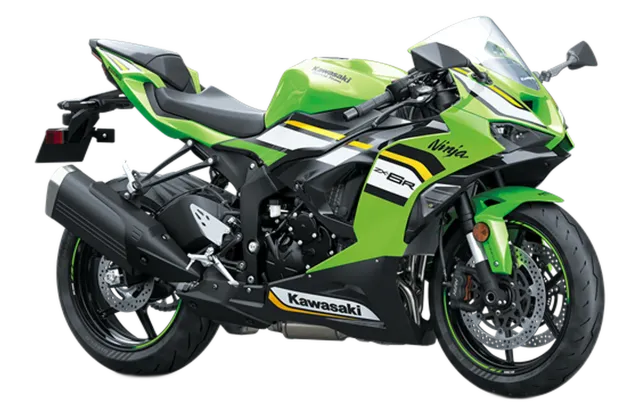
Kawasaki Ninja ZX-6R (MY2005) vs Ninja ZX-10R (ZXT00E)
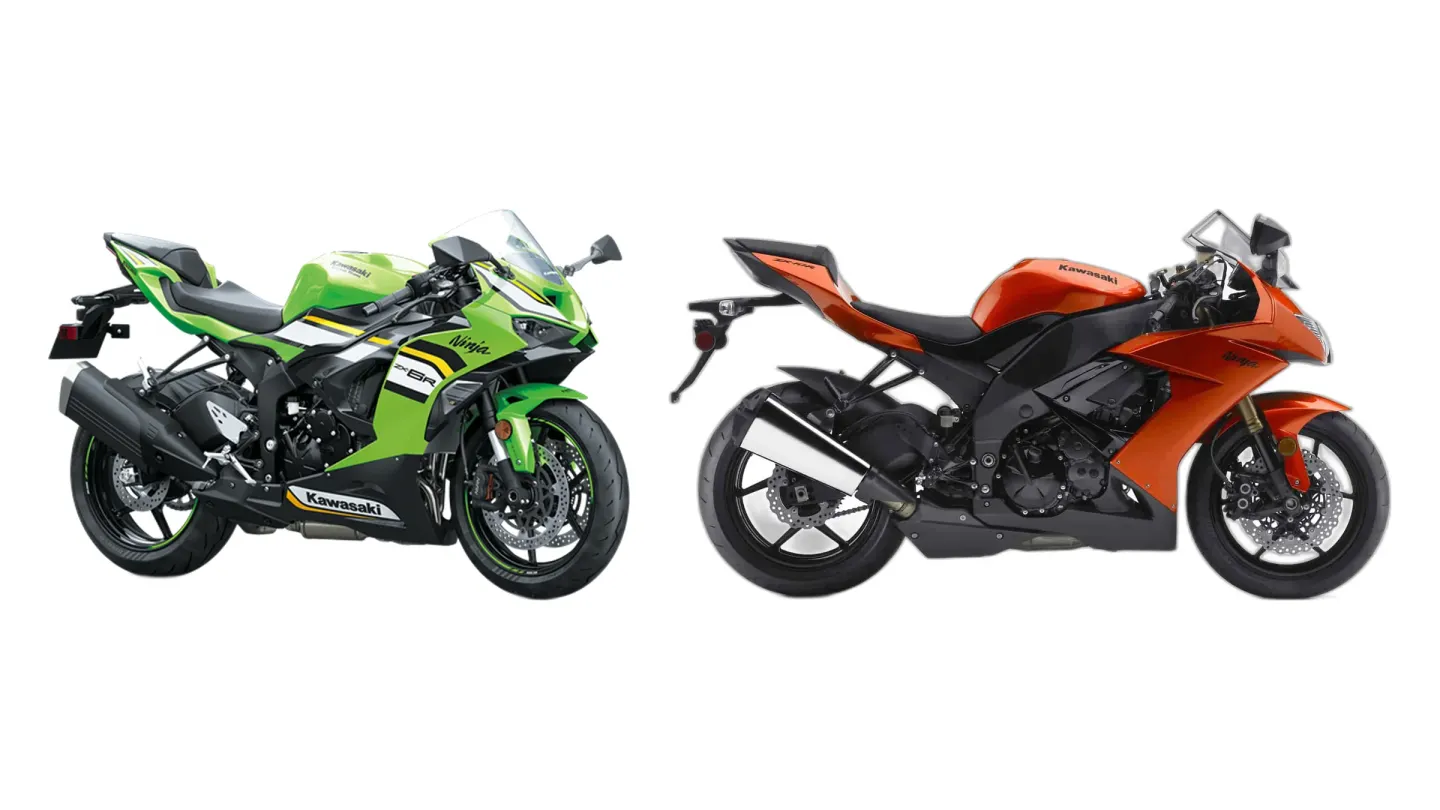
Kawasaki Ninja ZX-6R vs Ninja ZX-10R: one garage spot. Here's what should decide it.
You'll find the Kawasaki Ninja ZX-6R's front end doesn't flinch at a clumsy bar input on turn-in. The Kawasaki Ninja ZX-10R's nose flicks in without push-back.
So which one do you buy?
The Ninja ZX-10R has the edge if…
Racetrack use
By a nose: Ninja ZX-10R
On a circuit, the Ninja ZX-10R feels a little sharper. Thank more suspension adjustment and stronger brakes for that. The margin is thin, and setup can close it.
Sporty riding on twisty roads
A touch ahead: Ninja ZX-10R
The Ninja ZX-10R nudges ahead once the pavement starts to wiggle. Most of that is better suspension and a sportier chassis. Don't expect a night-and-day difference.
What makes each one tick
Ninja ZX-6R
Rough pavement disappears into the Ninja ZX-6R's fork, and the chassis doesn't trade away its cornering for that calm. The chassis holds every section. With the throttle shut and the gears hammered down for a chicane, engine braking doesn't kick the rear tire into a hop. Its base setup works on whatever rubber goes on.
Nils rode the Ninja ZX-6R in Hungary and the Czech Republic in 2004 (NastyNils Testride).
Ninja ZX-10R
There's one clean line of pull from the Ninja ZX-10R's inline-four off a closed throttle, and then it screams toward a stratospheric redline. Lap after lap at WeatherTech Raceway Laguna Seca, the brake lever's bite and feel don't fade. The tail stays straight. Tucked flat down the straight, the chassis stays put.
Nils rode the Ninja ZX-10R in Qatar in 2008 (NastyNils Testride).
The Voice of Experience

What actually separates them
- The Ninja ZX-6R has the lower wet weight: 432 lb (196 kg) vs 459 lb (208 kg).
- The Ninja ZX-10R makes more peak power: 187 hp (138 kW) vs 132 hp (97 kW).
- The Ninja ZX-10R makes more peak torque: 83 lb-ft (113 Nm) vs 52 lb-ft (70 Nm).
Which one for the way you ride
Comfortable long-distance riding
Both fall short
Long days aren't what these two do best. Plan shorter legs and plenty of stops.
Nothing splits them on commuting and running costs. Ride both back to back and the decision usually makes itself.
Who each one is built for
What's good, and what you'll live with
Ninja ZX-6R
From Nils' own saddle time
Strengths
- Forgiving, planted front end
- Stock Showa is genuinely sorted
- Changes line on one input
- Lap timer standard from the factory
Trade-offs
- No steering damper fitted
- Early 2005 ECU overheating
- Fuel pump can fail early
Ninja ZX-10R
Strengths
- Flicks In And Stays There
- Planted In Every Phase
- Brakes That Don't Fade
- Linear Power, Nothing To Manage
- Exhilarating top‑end power
Trade-offs
- It Won't Reward Half Effort
- Known Weak Points With Age
Known problems to check before you buy
Ninja ZX-6R
- ECU overheating due to exhaust heat On early production models, heat from the underseat exhaust can cause the ECU to malfunction or fail, leading to engine cutouts and stalling.
- Regulator/rectifier failure Occasional charging system issues due to regulator/rectifier failure, potentially leading to battery drain or electrical faults.
Ninja ZX-10R
- Regulator/rectifier recall (12V064000) Recall 12V064000 A faulty voltage regulator/rectifier can insufficiently charge the battery, potentially causing the motorcycle to stall without warning. Kawasaki recalled affected 2008‑2010 ZX‑10Rs and replaced the unit free of charge.
- Clutch basket failure under hard use Aggressive launches or severe shock loads can cause the stock clutch basket rivets to loosen or shear, potentially causing the basket to crack or fail catastrophically.
- Shift fork problems (early 2008 models) Early ZXT00E machines suffered a weak shift selector/shift fork design that could develop hairline cracks and flex, causing missed shifts and difficulty engaging gears. Affects 2008 and early 2009 units; later 2009 production used a revised part.
What they share
- Engine
- Inline-four
- Cooling
- Liquid-cooled
- Fuel capacity
- 4.5 US gal (17 L)
- Gearbox
- 6-speed
- Final drive
- Chain
Where the spec sheets split
| Ninja ZX-6R | Ninja ZX-10R | |
|---|---|---|
| Seat height | 32.3 in (820 mm) | 32.7 in (830 mm) |
| Wet weight | 432 lb (196 kg) | 459 lb (208 kg) |
| Ninja ZX-6R | Ninja ZX-10R | |
|---|---|---|
| Displacement | 636 cc | 998 cc |
| Power | 132 hp (97 kW) | 187 hp (138 kW) |
| Torque | 52 lb-ft (70 Nm) | 83 lb-ft (113 Nm) |
| Ninja ZX-6R | Ninja ZX-10R | |
|---|---|---|
| Front tire | 120/65-17 | 120/70-17 |
| Rear tire | 180/55-17 | 190/55-17 |
What comes fitted, what costs extra
| Ninja ZX-6R | Ninja ZX-10R | |
|---|---|---|
| Steering Damper | Not offered | Standard |
Head to head, area by area
Both bikes on the same scale, one area at a time.