By NastyNils·
Motorcycle comparison · Supersport
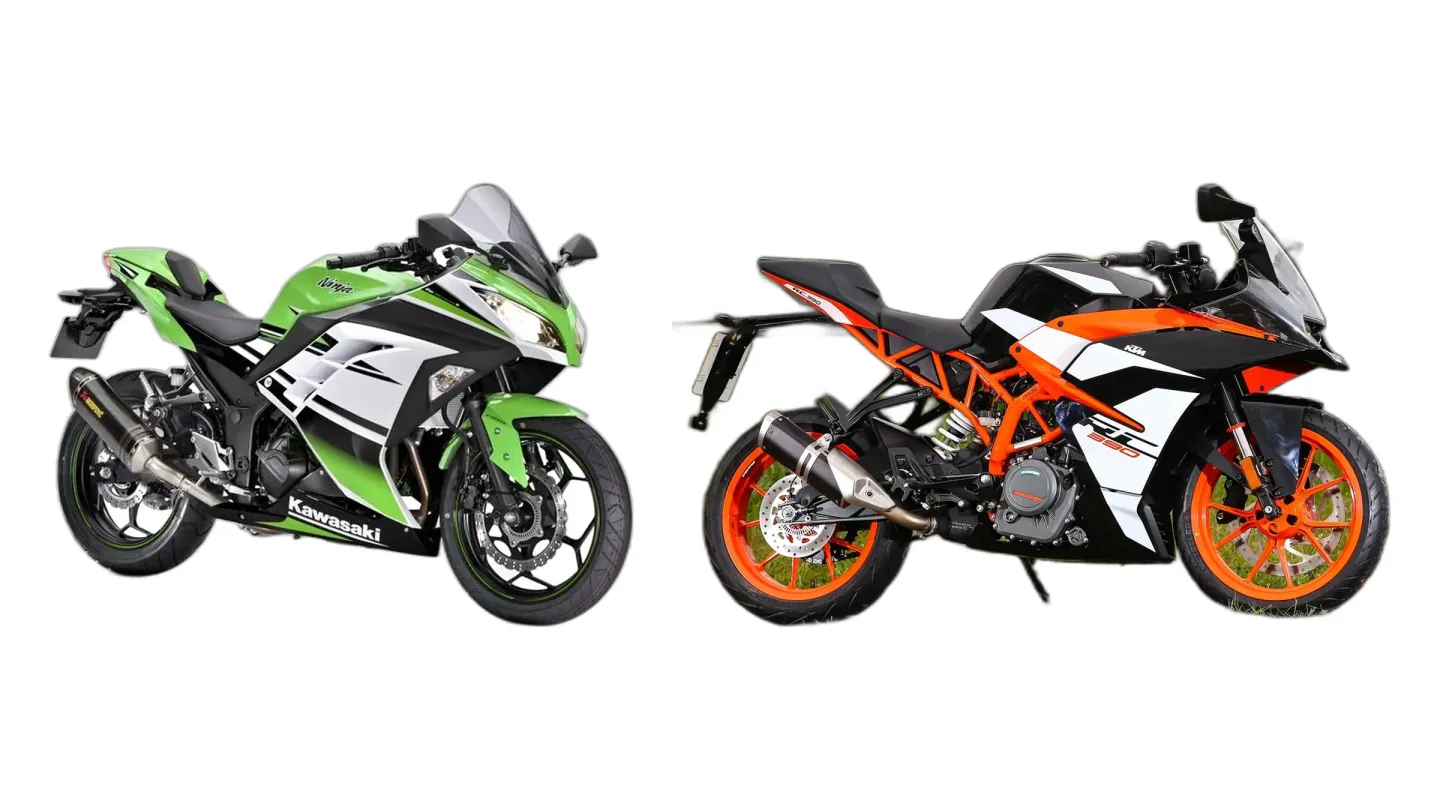
Kawasaki Ninja 300 (MY2013) vs KTM RC 390 (MY2014)
Kawasaki Ninja 300 vs KTM RC 390: one garage spot. Here's what should decide it.
Wind the Kawasaki Ninja 300 out through a gear and its twin doesn't settle until the top of the range, where the rush builds. The KTM RC 390 leaves no slack at all between the grip and the engine. The instant your wrist turns, it's already pulling.
So which one do you buy?
The RC 390 has the edge if…
Racetrack use
Nose ahead: RC 390
Track days lean slightly toward the RC 390. Most of that is more suspension adjustment and more feel through the bars. Count it as a small bonus.
Daily commuting & city riding
Slight edge: RC 390
The RC 390 makes slightly more sense as a commuter. Don't read much into a gap this small.
Sporty riding on twisty roads
A touch ahead: RC 390
On a tight back road, the RC 390 is slightly more fun to wring out. What tips it: a sportier chassis and better suspension.
Which one's the smarter buy
Nothing in it on value
At these used prices, neither bike is the clear better buy for the money.
What makes each one tick
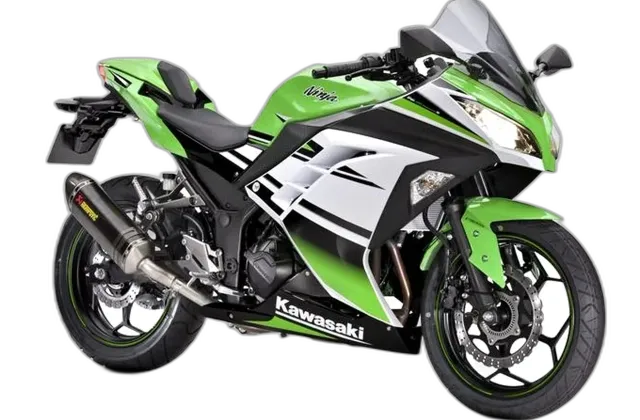
Ninja 300
From the light clutch lever to the low seat and upright bars, the Ninja 300 doesn't make you fight it for anything. On Angeles Crest Highway, it doesn't need more than a push at the bar to drop into each corner, and the light chassis flicks it through the next bend. Kept high in the revs, it'll charge hard enough to mimic a far larger supersport. The tach needle's happiest near redline.
RC 390
There's almost no weight on the seat, and with the pegs carrying the load, the RC 390 holds a line as if a compass drew it. Hard on the brake lever or hard on the gas, the rear tire reports exactly how much load it's carrying. A slide at the back doesn't sneak up: a soft rumble arrives before the tire lets go. The tail's easy to catch.
Nils rode the RC 390 in the Czech Republic in 2014 (NastyNils Testride).
The Voice of Experience

What actually separates them
- The Ninja 300 has the lower seat: 30.9 in (785 mm) vs 32.3 in (820 mm).
- The RC 390 makes more peak power: 44 hp (32 kW) vs 39 hp (29 kW).
- The RC 390 makes more peak torque: 26 lb-ft (35 Nm) vs 20 lb-ft (27 Nm).
Which one for the way you ride
Comfortable long-distance riding
Both fall short
Both of these get tiring on a long day. A proper tourer will treat you better on big miles.
Nothing splits them on running costs. Ride both back to back and the decision usually makes itself.
Who each one is built for
What's good, and what you'll live with
Ninja 300
What owners say
Strengths
- Lightweight and maneuverable handling
- High-revving, entertaining engine
- Rider-friendly ergonomics and practicality
RC 390
From Nils' own saddle time
Strengths
- Locks Onto Your Line
- Light Yet Genuinely Stable
- Trustworthy Rear Traction Feel
- Torque Matched To Weight
- Confidence That Feels Irrational
Trade-offs
- Your Weight Steers It
- Outgunned On Corner Exit
- Head Gasket Can Fail
- Cooling Struggles In Traffic
Known problems to check before you buy
Ninja 300
- Front ABS sensor lead bracket caliper interference On ABS-equipped models, the front ABS sensor lead bracket can physically contact and interfere with the front brake caliper. This contact impedes proper caliper movement, leading to accelerated and uneven outer brake pad wear that degrades braking performance.
- Stator/rotor failure leads to charging loss Some owners report premature stator or rotor failure, resulting in a total loss of charging capability.
RC 390
- Head gasket failure Reports of head gasket leaks and failures, often preceded by overheating; can lead to catastrophic engine damage if not addressed. Typically occurs after moderate mileage.
What they cost used
These prices compare a 12-year-old Ninja 300 with a 12-year-old RC 390.
- Ninja 300
- about $3,800
- RC 390
- about $3,800
What they share
- Cooling
- Liquid-cooled
- Gearbox
- 6-speed
- Final drive
- Chain
- Front tire
- 110/70-17
Where the spec sheets split
| Ninja 300 | RC 390 | |
|---|---|---|
| Seat height | 30.9 in (785 mm) | 32.3 in (820 mm) |
| Ninja 300 | RC 390 | |
|---|---|---|
| Displacement | 296 cc | 373 cc |
| Engine | Parallel twin | Single-cylinder |
| Power | 39 hp (29 kW) | 44 hp (32 kW) |
| Torque | 20 lb-ft (27 Nm) | 26 lb-ft (35 Nm) |
| Ninja 300 | RC 390 | |
|---|---|---|
| Fuel capacity | 4.5 US gal (17 L) | 2.6 US gal (10 L) |
| Ninja 300 | RC 390 | |
|---|---|---|
| Fork | Telescopic | Upside-down (USD) |
| Rear tire | 140/70-17 | 150/60-17 |
What comes fitted, what costs extra
| Ninja 300 | RC 390 | |
|---|---|---|
| ABS | Option | Standard |
Head to head, area by area
Both bikes on the same scale, one area at a time.