By NastyNils·
Motorcycle comparison · Naked Bike
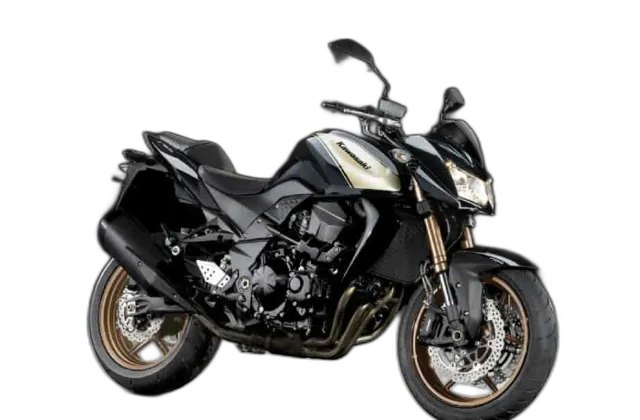
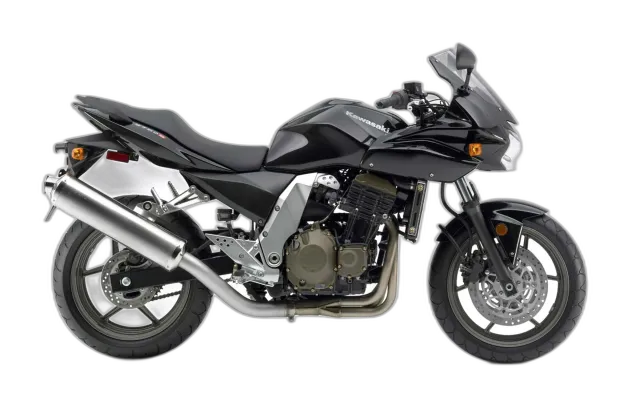
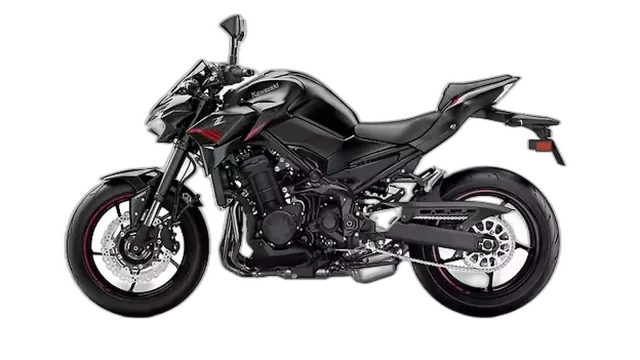
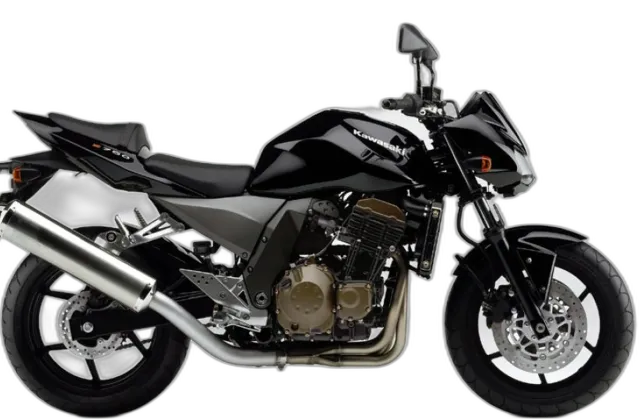
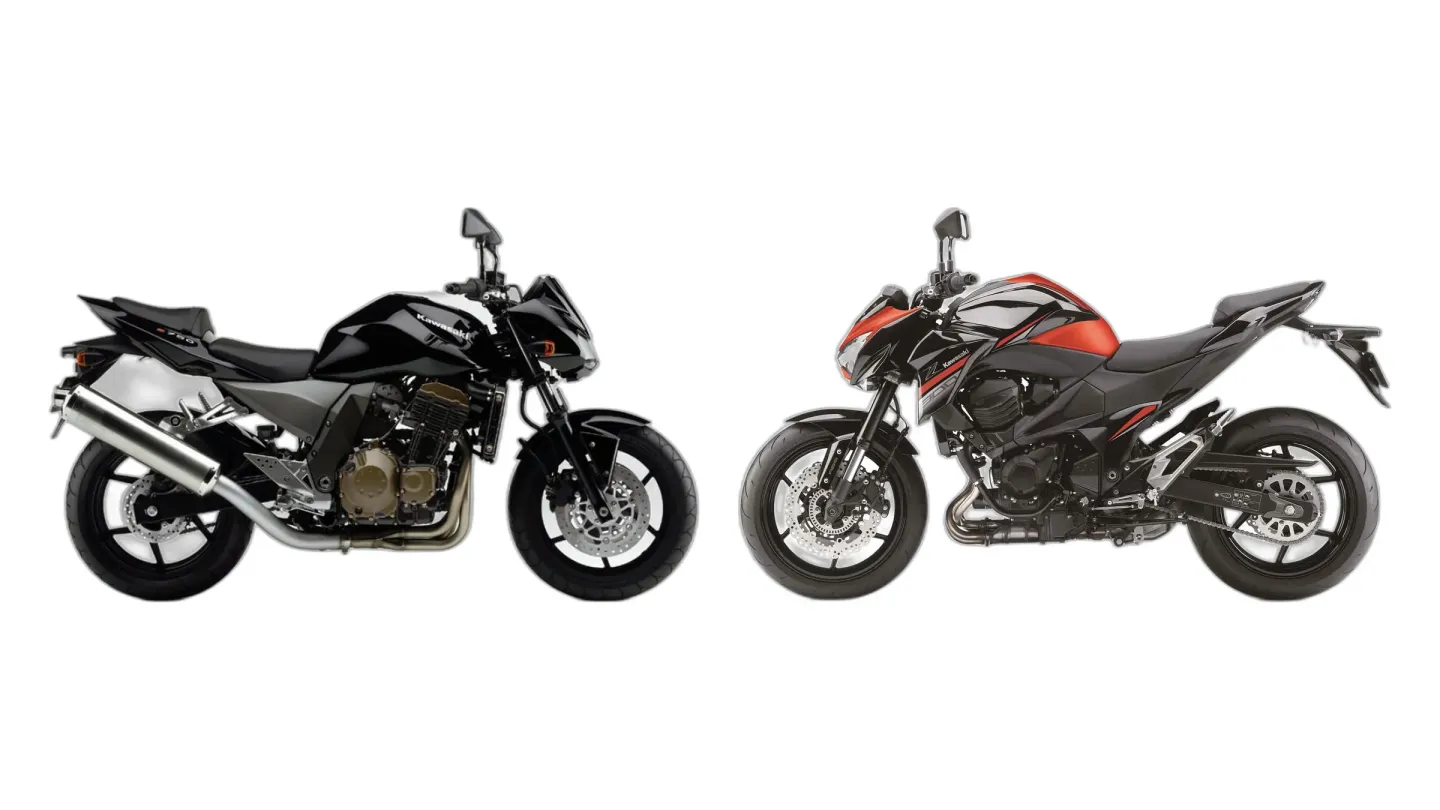
Kawasaki Z750 (MY2004) vs Z 800 (ZR A)
Kawasaki Z750 vs Z 800: which one's easier to live with every day.
You'll feel the Kawasaki Z750's four come alive as the revs climb, hungry for its top-end rush. Roll the throttle on the Kawasaki Z 800 and it's already pulling cleanly from low revs. Then it keeps screaming all the way up.
So which one do you buy?
The Z 800 has the edge if…
Traveling with luggage
By a nose: Z 800
For a week away, the Z 800 noses in front. That comes from more comfort on long stints. Fit the bags you want before you decide.
What makes each one tick
Z750
A stiff frame keeps the Z750 eager through the twists of the Angeles Crest Highway. There isn't much initial bite at the brake lever, and the calipers need some heat before they work properly. For normal riding, they're enough. The bar tips into a bend at a nudge.
Z 800
Broken pavement doesn't unsettle the Z 800, whose KYB suspension soaks up the ruts and keeps its mass pinned to the road. Behind the wide bar, there's a neutral, slightly forward stance that stays comfortable all day. Corner entry feels heavy, and the bike isn't quick to flick through tight turns. Leaned over, the bulk disappears.
The Voice of Experience

What actually separates them
- The Z750 has the lower seat: 32.1 in (815 mm) vs 32.8 in (834 mm).
- The Z750 has the lower wet weight: 481 lb (218 kg) vs 505 lb (229 kg).
- The Z 800 makes more peak torque: 61 lb-ft (83 Nm) vs 55 lb-ft (75 Nm).
Which one for the way you ride
Comfortable long-distance riding
Neither is a natural fit
Big miles aren't where either one shines. You'll be watching for the next rest stop.
A confidence-building first motorcycle
Not built for this
Learning on either of these is the hard way. A gentler bike will make you a better rider sooner.
For commuting and twisty roads, you won't find daylight between them. Let the test ride settle it.
Who each one is built for
What's good, and what you'll live with
Z750
What owners say
Strengths
- Rev-happy, superbike-derived engine
- Outstanding value for performance
Trade-offs
- Budget suspension lacks composure
- Adequate but wooden front brakes
- Prone to cosmetic corrosion
- Uncomfortable seat for longer trips
Z 800
What owners say
Strengths
- Smooth, rev-happy inline-four with strong midrange
- Surprisingly refined ride quality
- Comfortable, all-day ergonomics
Trade-offs
- Heavy weight dulls agility
- Intrusive engine vibrations at highway speed
- Lack of wind protection
- No gear indicator and basic dash
What they share
- Engine
- Inline-four
- Cooling
- Liquid-cooled
- Gearbox
- 6-speed
- Final drive
- Chain
- Front tire
- 120/70-17
- Rear tire
- 180/55-17
Where the spec sheets split
| Z750 | Z 800 | |
|---|---|---|
| Seat height | 32.1 in (815 mm) | 32.8 in (834 mm) |
| Wet weight | 481 lb (218 kg) | 505 lb (229 kg) |
| Z750 | Z 800 | |
|---|---|---|
| Displacement | 748 cc | 806 cc |
| Power | 110 hp (81 kW) | 113 hp (83 kW) |
| Peak power at | 10,500 rpm | 10,200 rpm |
| Torque | 55 lb-ft (75 Nm) | 61 lb-ft (83 Nm) |
| Peak torque at | 8,200 rpm | 8,000 rpm |
| Top speed | 138 mph (222 km/h) | 145 mph (233 km/h) |
| Z750 | Z 800 | |
|---|---|---|
| Fuel capacity | 4.8 US gal (18 L) | 4.5 US gal (17 L) |
| Z750 | Z 800 | |
|---|---|---|
| Fork | Telescopic | Upside-down (USD) |
| Front brake | 300 mm | 310 mm |
What comes fitted, what costs extra
| Z750 | Z 800 | |
|---|---|---|
| ABS | Not offered | Option |
| Manually Adjustable Front Suspension | Not offered | Standard |
Head to head, area by area
Both bikes on the same scale, one area at a time.