By NastyNils·
Motorcycle comparison · Naked Bike vs Adventure
Honda CB750 Hornet (RH12) vs XL750 Transalp (RD16-3)
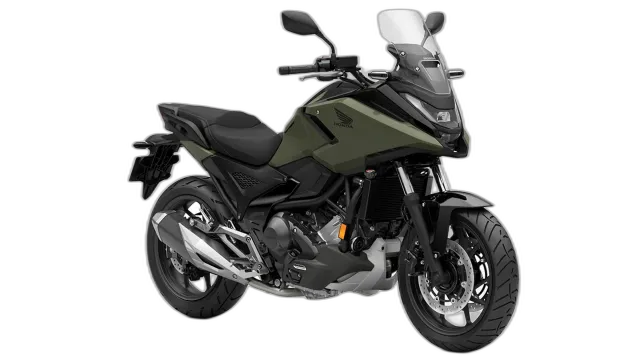
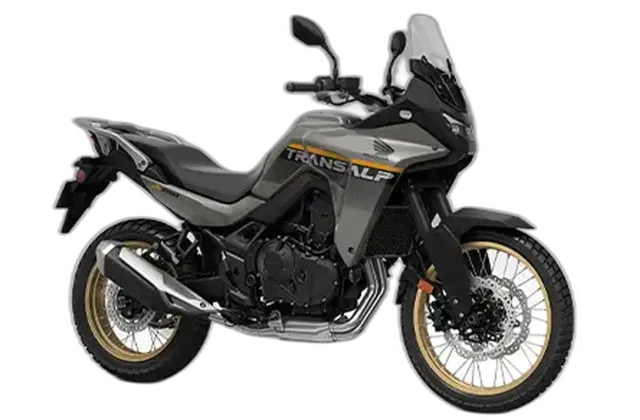
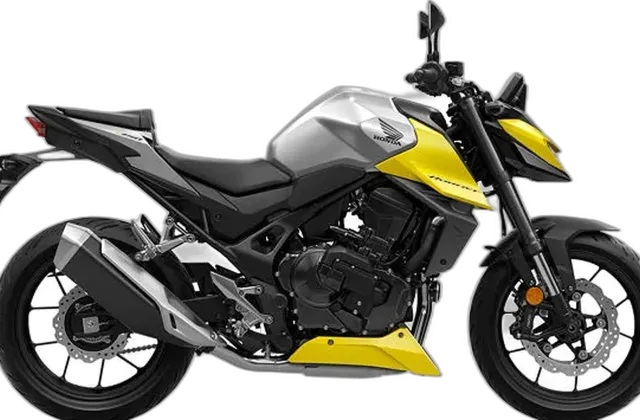
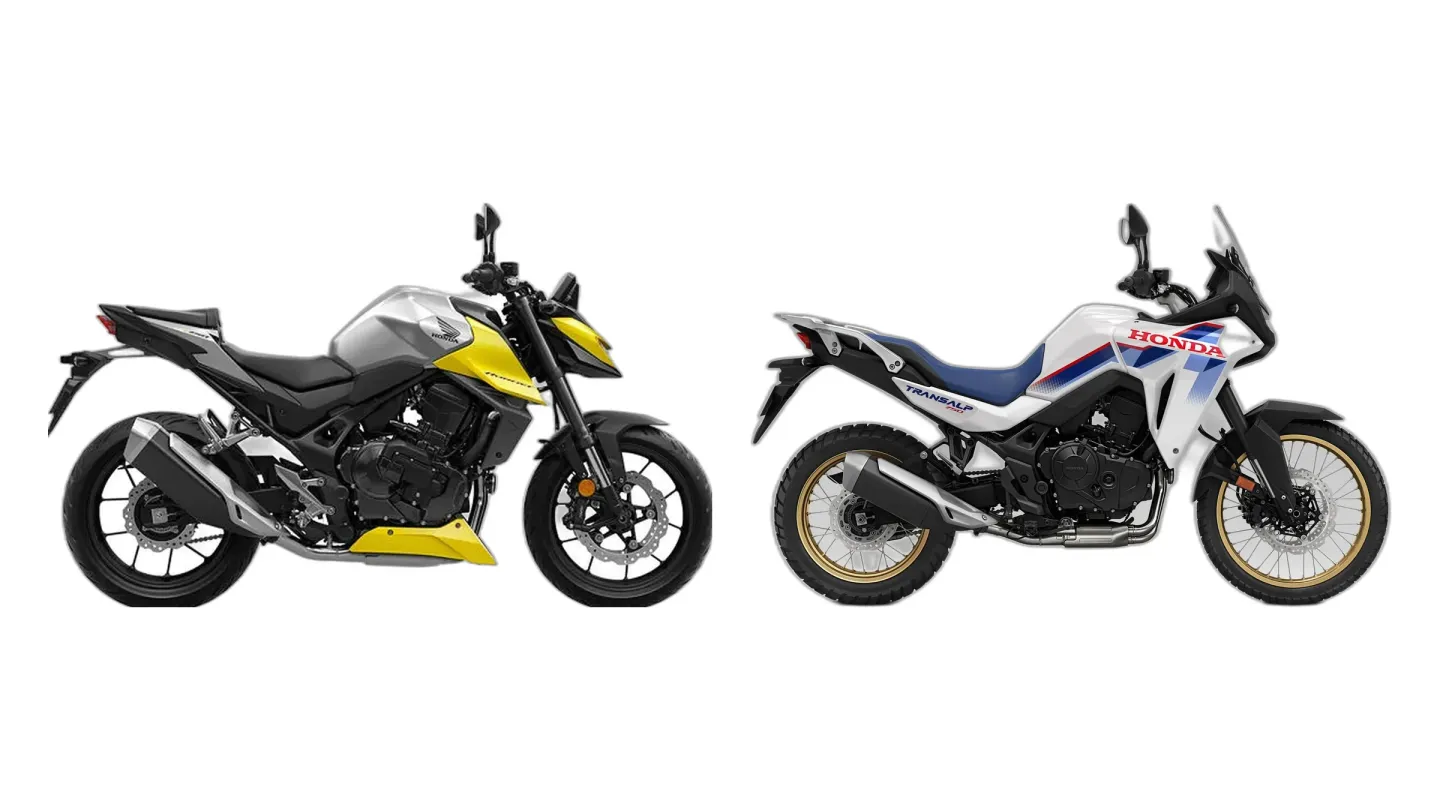
Honda CB750 Hornet vs XL750 Transalp: two kinds of bike, and who each one is for.
You'll feel the Honda CB750 Hornet tip into a bend on one push and hold whatever line you've picked. The Honda XL750 Transalp sweeps through it in comfort and doesn't wear you down. It keeps going where the pavement turns to dirt.
So which one do you buy?
Buy the CB750 Hornet if…
Daily commuting & city riding
Clear edge: CB750 Hornet
The CB750 Hornet suits a daily commute clearly better. Thank lighter steering for that. In traffic, it's simply less work.
The CB750 Hornet has the edge if…
Sporty riding on twisty roads
A touch ahead: CB750 Hornet
The CB750 Hornet is a touch more fun when the road starts bending. It's down to more feel through the bars.
The XL750 Transalp has the edge if…
Keeping running costs low
Small edge: XL750 Transalp
For the money you spend after the purchase, the XL750 Transalp nudges ahead. The gap is too small to plan a budget around.
What makes each one tick
CB750 Hornet
There's an uneven pulse in the Hornet's twin that feels closer to a V-twin, and the motor kicks hard enough to send you home grinning. Rolling off the throttle mid-corner brings in engine braking that doesn't unsettle the chassis. The front brake stops hard. The lever eases in, then bites like a vise.
Nils rode the CB750 Hornet in Austria in 2023, and in Austria in 2024 (1000PS test reports).
XL750 Transalp
The Transalp's twin pulls hard through the middle of its revs and keeps spinning eagerly toward the top. On the Blue Ridge Parkway, there's a narrow feel between your knees as the bike steers cleanly into each curve. On trails, the twin hooks up.
The Voice of Experience

What actually separates them
- The CB750 Hornet has the lower seat: 31.3 in (795 mm) vs 33.7 in (856 mm).
- The CB750 Hornet has the lower wet weight: 419 lb (190 kg) vs 459 lb (208 kg).
- The XL750 Transalp has the larger fuel tank: 4.4 US gal (16.7 L) vs 4.0 US gal (15.2 L).
Which one for the way you ride
Comfortable long-distance riding
Sits this out: CB750 Hornet
No long-distance verdict for the CB750 Hornet. It's made for something else entirely.
Nothing splits them on a first bike. Ride both back to back and the decision usually makes itself.
Who each one is built for
What's good, and what you'll live with
CB750 Hornet
Strengths
- Weightless clutch, tuned slipper
- Turns in on one push
- Strong, easy front brake
- Gutsy low-end twin
- Surprising lean clearance
Trade-offs
- No damping adjustment
- Vague front-end feel
- Seat bottoms out
- Tight for taller riders
- Snatchy on-off throttle at low rpm
XL750 Transalp
What owners say
Strengths
- Punchy, characterful parallel-twin engine
- Intuitive ride modes and electronics
Trade-offs
- Lack of cruise control
Known problems to check before you buy
CB750 Hornet
- Soft suspension setup, limited adjustability The Showa SFF-BP USD fork is non-adjustable on the standard model; the Pro-Link rear shock offers preload only (7-step). Heavier riders and brisk-paced riders report rebound oscillation, bouncing on bigger bumps, and a setup biased toward comfort over control. Aftermarket shock upgrades (Wilbers and similar) resolve this for owners pursuing sporty pace. Honda revised the fork damping for 25YM, but the adjustability did not change.
- Jerky on-off throttle at low rpm and urban speeds The ride-by-wire throttle calibration is abrupt during transitions between closed and small-throttle openings, particularly in 1st and 2nd gear at urban speeds and at part-throttle below approximately 5,500 rpm. Multiple owners report a TPS reset procedure provides limited improvement; Honda is reported to have improved the calibration for model year 2025.
- ABS cannot be switched off, no cornering ABS The 2-channel ABS system is fixed and non-defeatable, with no IMU and therefore no cornering ABS. Reviewers report the ABS can intervene aggressively on loose surfaces. This is a spec design choice rather than a fault, but it is a documented limitation for owners using the bike on gravel or for back-track riding.
XL750 Transalp
- Snatchy low-speed throttle Throttle response can be abrupt on initial opening at low engine speeds, even in Rain mode, making smooth slow-speed riding difficult.
What they share
- Displacement
- 755 cc
- Engine
- Parallel twin
- Cooling
- Liquid-cooled
- Power
- 92 hp (68 kW)
- Peak power at
- 9,500 rpm
- Torque
- 55 lb-ft (75 Nm)
- Peak torque at
- 7,250 rpm
- Gearbox
- 6-speed
- Final drive
- Chain
Where the spec sheets split
| CB750 Hornet | XL750 Transalp | |
|---|---|---|
| Seat height | 31.3 in (795 mm) | 33.7 in (856 mm) |
| Wet weight | 419 lb (190 kg) | 459 lb (208 kg) |
| CB750 Hornet | XL750 Transalp | |
|---|---|---|
| Fuel capacity | 4.0 US gal (15.2 L) | 4.4 US gal (16.7 L) |
| CB750 Hornet | XL750 Transalp | |
|---|---|---|
| Front brake | 296 mm | 310 mm |
| Front tire | 120/70-17 | 90/90-21 |
| Rear tire | 160/60-17 | 150/70-18 |
| Wheelbase | 55.9 in (1420 mm) | 61.5 in (1562 mm) |
| Ground clearance | 5.5 in (140 mm) | 8.3 in (210 mm) |
What comes fitted, what costs extra
| CB750 Hornet | XL750 Transalp | |
|---|---|---|
| Manually Adjustable Front Suspension | Not offered | Standard |
Head to head, area by area
Both bikes on the same scale, one area at a time.