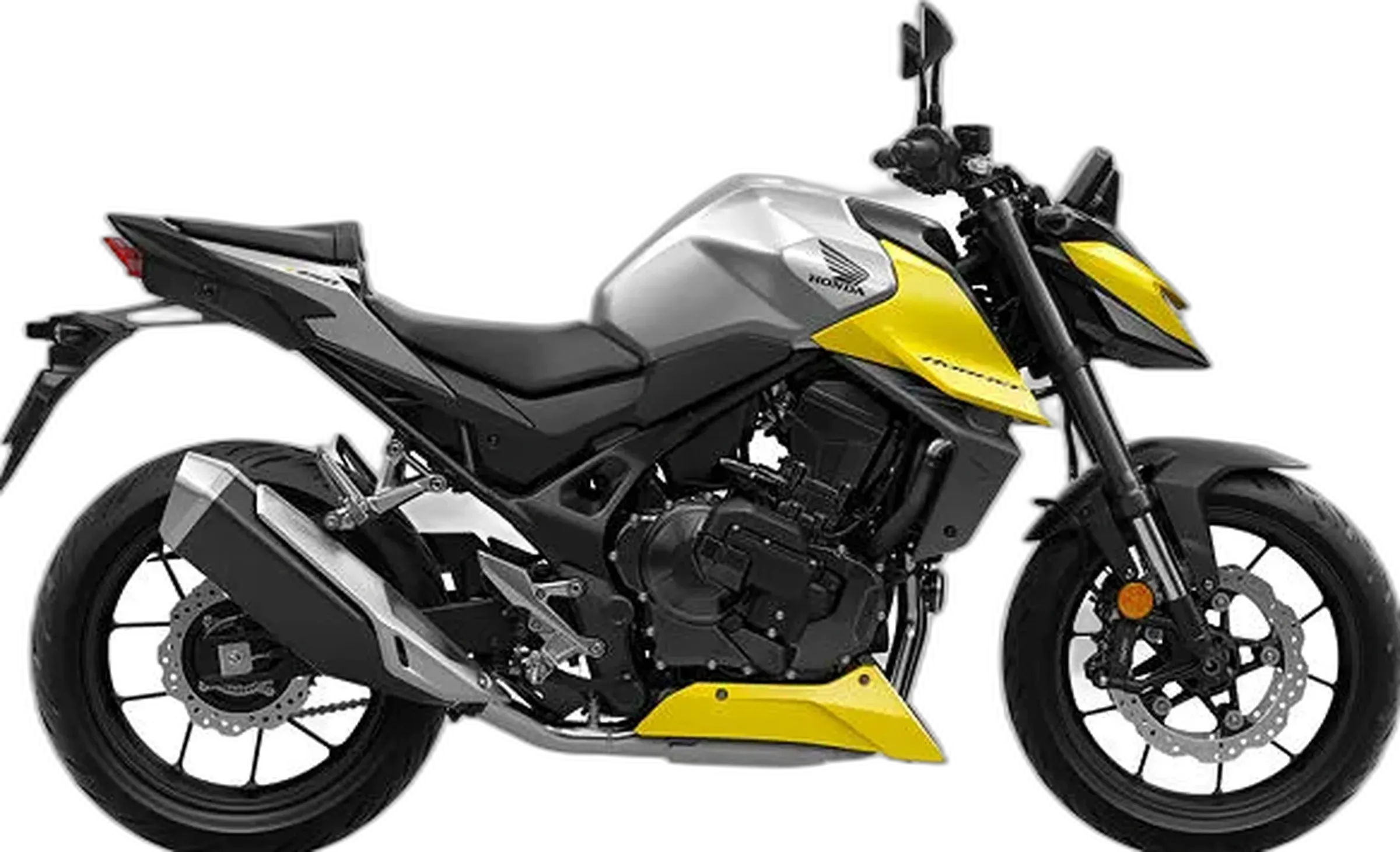

Honda CB750 Hornet (RH12) — Naked Bike
NastyNils / Honda press archive

2023 · Naked Bike · Buyer's Guide

CB750 Hornet (RH12)

Light Hands, Genuine Grin

The Machine's Character

The Hornet is built around a 755 cc parallel twin with a 270-degree crank, which gives it an uneven, gutsy firing pulse closer to a V-twin than a typical middleweight. It makes 92 hp and 55 lb-ft, and the torque arrives low and stays willing, so you rarely chase revs to feel strong. Wrap that around a light steel diamond frame and 419 lb of wet weight and you get a compact, quick-steering naked that turns in on a single push. ABS, ride modes, and wheelie control come standard, so the electronics back the fun instead of smothering it.

On the road it rewards riders who value ease over intimidation. It stays light and predictable at canyon pace, holds a line without fighting back, and shrugs off a couple of hours of highway without wearing you out. This is a bike you grow into rather than brace against. The honest caveats are real, though. The fork is non-adjustable and rear preload is the only setting you can touch, the seat goes soft on long days, and taller riders will find the proportions on the small side. Sit on it before you commit to all-day distance.

Hard Numbers

Spec sheets don't ride bikes, but they set the baseline.

Show full specs & equipment Hide specs & equipment
Key specifications
Power 92 hp (68 kW) @ 9,500 rpm
Torque 55 lb-ft (75 Nm) @ 7,250 rpm
Displacement 755 cc
Engine Parallel twin
Cooling Liquid-cooled
Gearbox 6-speed
Final drive Chain
Front brake 296 mm
Front tire 120/70-ZR17 (58W)
Rear tire 160/60-ZR17 (69W)
Wheelbase 55.9 in (1420 mm)
Seat height 31.3 in (795 mm)
Wet weight 419 lb (190 kg)
Fuel capacity 4.0 gal (15.2 L)
Top speed 127 mph (205 km/h)
Fuel economy 55 mpg (US)

Equipment check

Chassis

  • Rear Suspension Adjustable Standard

Connectivity

  • TFT Display Standard
  • Smartphone Connectivity Standard

Drivetrain

  • Quickshifter Optional
  • Slipper Clutch Standard

Lighting

  • LED Headlight Standard

Safety

  • ABS Standard
  • Ride Modes Standard

The Voice of Experience

Portrait of NastyNils

The test ride

Thumb the starter and the twin barks with a deep, boomy note that flatters every throttle blip. The first thing your hands register is the clutch: the pull is nearly weightless, which matters when you're feathering through slow traffic, and the slipper soaks up aggressive downshifts without a shudder. Every gearchange drops in with a clean, definite click and zero vagueness. The bike feels genuinely small underway, flickable and low-effort, with more cornering clearance than its friendly manners suggest. Two hours of slab before my test never turned twitchy or exhausting. The rough edges live in the details. The menu logic took a while to decode, there's no USB port to charge a phone, and by the third hour the soft seat has you perched on a hard platform. Sit on it before a long trip.

Rated point by point — where it earns its keep

My own 0–100 score for this bike against the class, area by area — the marker on each bar is the class average.

The Hornet shrinks around you the moment you're rolling. A single input drops it into a bend, and through a run of quick esses it swaps direction with barely any weight on the bars. Whatever line I asked for, it held, no drift, no correcting halfway through. There's more room to lean than its easygoing nature suggests, so I kept finding another inch of angle before anything touched down. It stays grown-up on faster roads too, sitting steady through long sweepers and shrugging off heavy braking without stepping out of shape. Two honest gaps kept me from full trust. The fork stays tight-lipped about the front contact patch, and I felt that silence most trailing the brake deep toward an apex, right when I wanted a report. Adjustment runs out fast as well: rear preload is the only setting on offer, so the stock tune has to answer for load and pace it was never dialed for.

Build quality is a quiet strength almost everywhere you look. Panels fit, the finishes hold up, and the whole thing feels put together to a standard above what you pay for it. Then your eye lands on the swingarm and the illusion cracks. It's bland, off-the-shelf stuff, visibly a rung below the parts around it, as if nobody gave it the same care. It won't leave you stranded. It just looks like it wandered in from a cheaper motorcycle every time you catch sight of it.

This is the balancing act I care about most, and the Hornet nails it. From the opening bend it asks nothing of you, staying light and honest, never a machine you have to muscle or tiptoe around. Then the twin and the chassis muster enough bite to send you home wearing a grin you didn't plan on. Making a bike this easygoing and this genuinely rewarding is a tightrope most manufacturers wobble off of. Honda walked it without a stumble.

No complaints up front, and that counts for a lot on a bike this eager. The lever meters cleanly, so I could ease pressure in and hold it toward the corner, or bite down late and the bike answered exactly as I expected each time. There's real muscle in the front stopper when you reach for it, and the rear pulls its weight quietly behind it. Predictable is the word I kept landing on.

The clutch is the comfort story I'd lead with. It costs almost nothing at the lever, which spares your left hand on a crawling commute, and the slipper stays composed under hard downchanges with no snatch through the driveline. The seat is where the goodwill runs thin. It's fine for a hop across town, but the foam collapses after an hour or two and drops you onto the pan. The cockpit also carries a small-framed feel taller riders won't stretch into as the miles pile up.

Low-end grunt is the twin's whole personality, and it never taxes your right wrist to find it. I could short-shift and let torque do the work, or hold a gear and lean on the pull, and the fueling stayed clean either way. Cracking the throttle while banked over gave me drive I could dole out precisely, no lurch, no dead spot before it took hold. Trimming speed on a closed throttle mid-bend never jolted the chassis either, the engine braking blends in that smoothly. The box backs it up with shifts that snick home tight and repeatable every time.

Two things nagged at me here, both about living with the electronics rather than riding. The display takes patience to learn. A given button doesn't always do what you'd bet it would, and there's a genuine settling-in period before you stop hunting through menus. The bigger gap is power. The bike pairs with your phone, yet gives it nothing to drink from, so on a full day of navigation you're watching the battery drain with no way to top it up in the saddle.

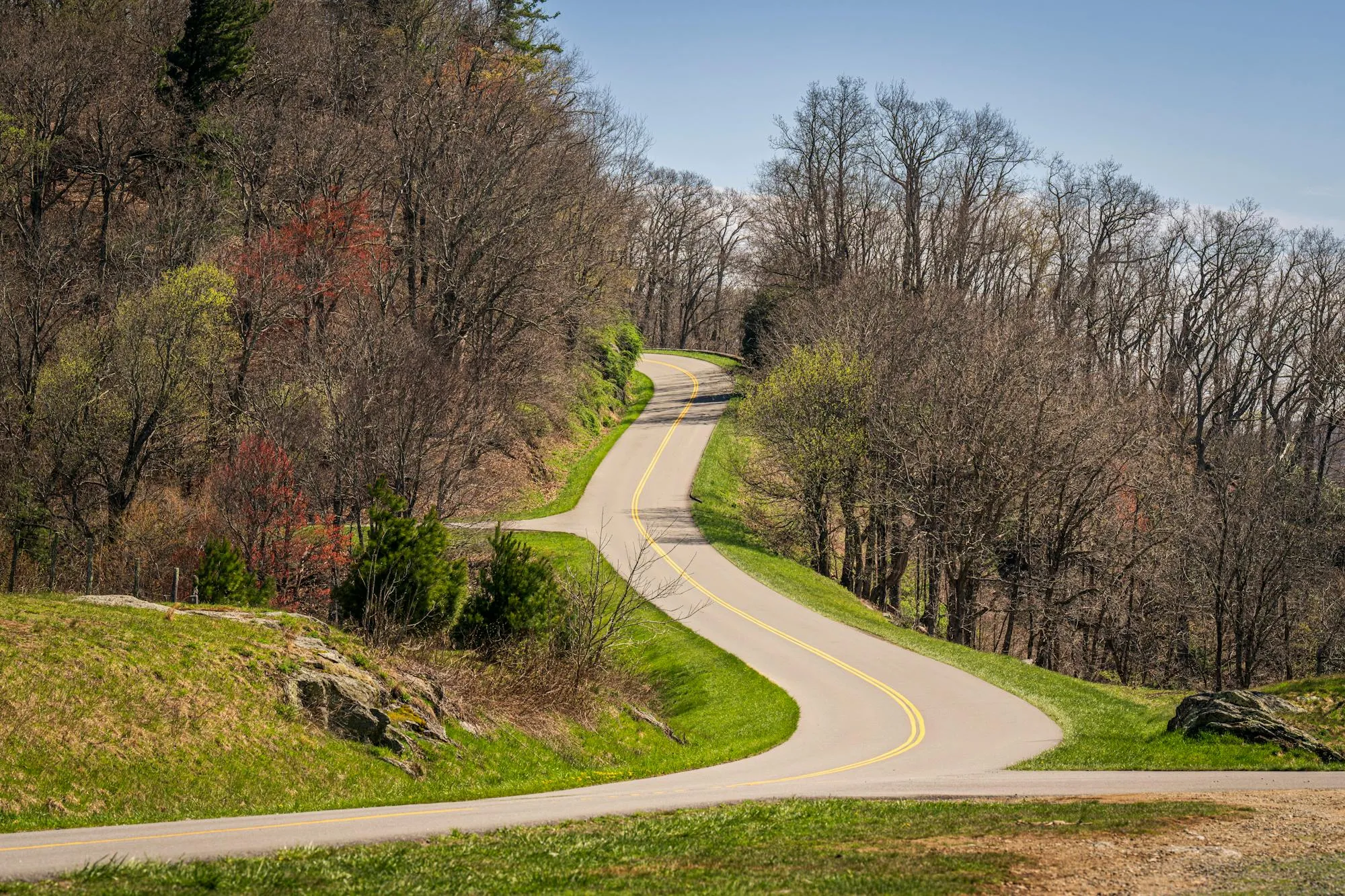
A winding asphalt road descending through the Appalachian Mountains, likely the famous Tail of the Dragon section in Tennessee and North Carolina. Multiple technical right-hand and left-hand curves are visible in this aerial perspective, surrounded by deciduous forest in spring foliage. Clear sunny conditions, well-maintained asphalt with yellow center lines marking the curves.
Mark Stebnicki / Pexels

The Truth on the Street

The picture here doesn't come from any single place. It's what I've gathered over years of listening to riders: conversations in the paddock, chats with owners at fuel stops, and the steady run of emails and messages that reach me directly. Pull all of it together and a clear pattern shows up. Riders keep circling back to how light and manageable the Hornet feels, while the reservations settle on the setup and the fit rather than the machine itself.

The easy, flickable feel riders return to

The praise that comes up most is about how light the Hornet feels for its displacement. Riders describe it as easy to thread through traffic and quick to flip from side to side, the sort of bike that builds low-speed confidence instead of testing it. The steering draws its own steady approval. Owners call it sharp and fast to turn in, and while several admit the rate takes a little getting used to, once they've adjusted they rate that quickness as one of the bike's genuine strengths.

Where the setup and the fit fall short

The reservations gather in a few predictable spots. The most common is the suspension. The fork offers no adjustment at all, and the rear gives you only preload, so heavier and quicker-paced owners report the back end oscillating over rough going. Fitting a better shock is one of the mods that comes up again and again. Comfort draws its own recurring complaints. Taller riders find the reach cramped and the knees folded up, with cramp setting in after an hour or so, and the seat goes hard on longer rides. A smaller, purely cosmetic grumble rounds it out: plenty of owners think the boxy steel swingarm looks a rung cheaper than the parts around it.

Known issues

  • Crankcase sealing bolt may leak engine oil onto the rear tire

    engineoccasional

    Defectively manufactured engine-housing sealing screws (root cause: misaligned screw axis during thread cutting, combined with a worn inspection gauge at the Japanese supplier) can allow engine oil to seep from the crankcase. In severe cases oil could reach the rear tire and cause loss of grip. Remedy: replacement of the crankcase sealing screw with the revised part 90048-MFL-000, free of charge at authorised Honda dealers.

  • Soft suspension setup, limited adjustability

    suspensionoccasional

    The Showa SFF-BP USD fork is non-adjustable on the standard model; the Pro-Link rear shock offers preload only (7-step). Heavier riders and brisk-paced riders report rebound oscillation, bouncing on bigger bumps, and a setup biased toward comfort over control. Aftermarket shock upgrades (Wilbers and similar) resolve this for owners pursuing sporty pace. Honda revised the fork damping for 25YM, but the adjustability did not change.

  • Jerky on-off throttle at low rpm and urban speeds

    fuel systemcommon

    The ride-by-wire throttle calibration is abrupt during transitions between closed and small-throttle openings, particularly in 1st and 2nd gear at urban speeds and at part-throttle below approximately 5,500 rpm. Multiple owners report a TPS reset procedure provides limited improvement; Honda is reported to have improved the calibration for model year 2025.

  • ABS cannot be switched off, no cornering ABS

    brakesoccasional

    The 2-channel ABS system is fixed and non-defeatable, with no IMU and therefore no cornering ABS. Reviewers report the ABS can intervene aggressively on loose surfaces. This is a spec design choice rather than a fault, but it is a documented limitation for owners using the bike on gravel or for back-track riding.

  • HSTC traction-control setting resets to default on every key-on

    electricsoccasional

    Owners and reviewers note that the bike does not retain the rider's HSTC setting across a key cycle; it returns to the default level whenever the ignition is turned off and on again. An annoyance for riders who routinely run a non-default HSTC level.

  • Stock mirrors mounted close to the bar centerline

    bodyworkoccasional

    The stock mirrors are mounted inboard such that riders see their own forearms more than the road behind. Bar-end mirror replacements are a popular owner modification.

The Expert Benchmark

Where this Honda CB750 Hornet pulls ahead of — or falls behind — its rivals on the numbers, and the typical bike in its class on character.

What kind of bike this is — character vs. the class

This bike Class average

The shape of the Honda CB750 Hornet — numbers and character vs. the average Naked Bike

Head-to-head: Honda CB750 Hornet vs. its rivals

The 'Should I Buy It?' Score

Forget spec-sheet bragging. Here's who the CB750 Hornet is actually built for.

A scenic view of Angeles Crest Highway winding through rugged Southern California canyon terrain. Rocky mountainsides with golden earth tones frame the asphalt road with tight sweeping curves. Double yellow center line visible, sparse vegetation along the shoulders, clear blue sky with white clouds. Daylight, dry conditions. Iconic location for canyon-road enthusiasts.
Josh Sorenson / Pexels

Best motorcycle for Angeles Crest?

If your weekends run from LA traffic to Angeles Crest, the Hornet's light steering and gutsy twin suit the canyons well. Just know the fork can't be tuned, so hard chargers should respect its limits.

Made for Angeles Crest Highway · Coronado Trail / US 191 · Highway 1 / Big Sur
Best motorcycle for Tail of the Dragon?

For the Dragon and Blue Ridge, this is a skill-builder's bike: light, forgiving, and quick to change line. The catch is the vague fork feel when you trail the brake deep into a technical corner.

Made for Back of the Dragon · Blue Ridge Parkway · Cherohala Skyway

Best motorcycle for Bay Area?

Great for Skyline runs and city commuting, the Hornet is light, easy, and photogenic without the drama. Reliable and cheap to run daily, though the soft seat argues against your longest rides.

Made for Bay Area Ridge Roads · San Francisco / Bay Area · Skyline Boulevard / Alice's Restaurant

Alternatives to the Honda CB750 Hornet

If this one isn't quite the fit, these are the bikes worth riding back-to-back against it.

Any price note compares both bikes at the same age — the youngest age both have on the used market — against this Honda CB750 Hornet. “cheaper/pricier” is what that bike costs second-hand, not how worn it is.