
Honda CB500 Hornet (MY2024) — Naked Bike
NastyNils / Honda press archive

2024 · Naked Bike · Buyer's Guide

CB500 Hornet (MY2024)

The A2 That Actually Handles

The Machine's Character

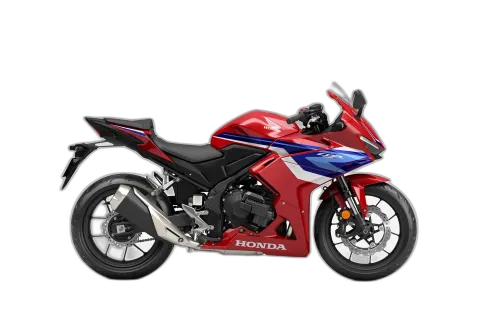
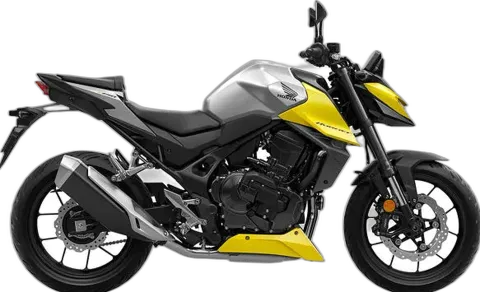
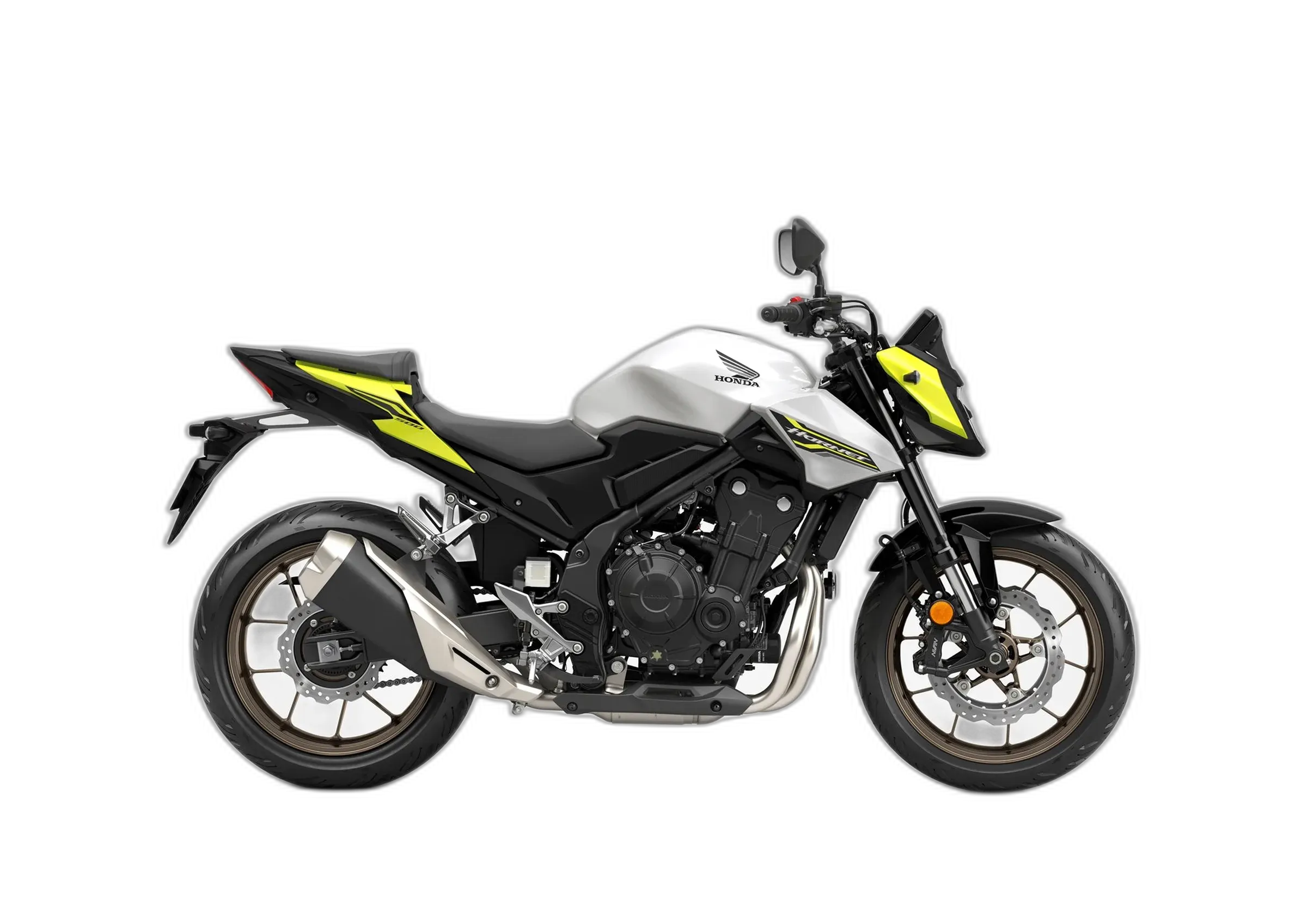
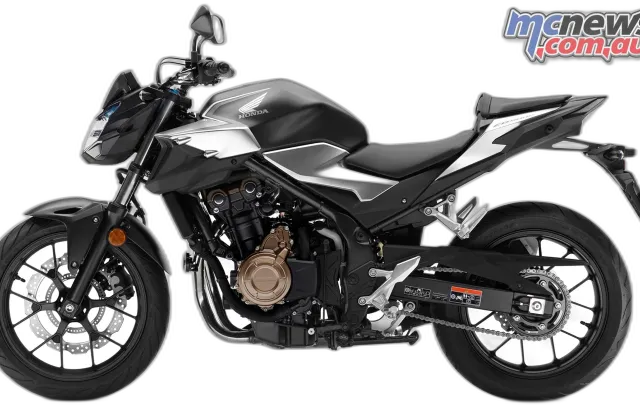
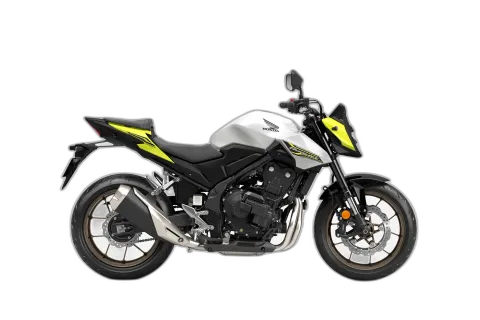
The CB500 Hornet is the entry point to Honda's Hornet family, sitting below the CB750 and CB1000 Hornet with the same naked attitude in a lighter, friendlier package. The heart is a liquid-cooled 471cc parallel twin making 48 hp and 32 lb-ft, tuned to pull cleanly rather than shout. What lifts it above the usual middleweight is the hardware. A Showa SFF-BP upside-down fork and dual 296mm front discs on radial four-piston calipers give it a braking setup that outguns most of what sits at this displacement. Traction control and ABS come standard, with a color TFT reading out the essentials.

On the road it rides like a bigger, more expensive machine than it is. Handling is genuinely light, the chassis stays composed over broken pavement, and the build quality feels a class above where the price sits. It's happiest as a confidence-builder for canyon runs and daily miles, and its reliability and 67 mpg economy make it cheap to live with. The honest caveat: the real character lives up top, so stock gearing leaves you hunting revs in everyday riding, and the rear suspension runs short on headroom once a heavier rider starts pushing the pace.

Hard Numbers

Spec sheets don't ride bikes, but they set the baseline.

Show full specs & equipment Hide specs & equipment
Key specifications
Power 48 hp (35 kW) @ 8,600 rpm
Torque 32 lb-ft (43 Nm) @ 6,500 rpm
Displacement 471 cc
Engine Parallel twin
Cooling Liquid-cooled
Gearbox 6-speed
Final drive Chain
Fork Upside-down (USD)
Front brake 296 mm
Front tire 120/70 ZR17
Rear tire 160/60 ZR17
Wheelbase 55.5 in (1410 mm)
Seat height 30.9 in (785 mm)
Wet weight 414 lb (188 kg)
Fuel capacity 4.5 gal (17.1 L)
Fuel economy 67 mpg (US)

Equipment check

Chassis

  • Rear Suspension Adjustable Standard

Connectivity

  • TFT Display Standard
  • Smartphone Connectivity Standard

Drivetrain

  • Slipper Clutch Standard

Lighting

  • LED Headlight Standard

Safety

  • ABS Standard
  • Traction Control Standard

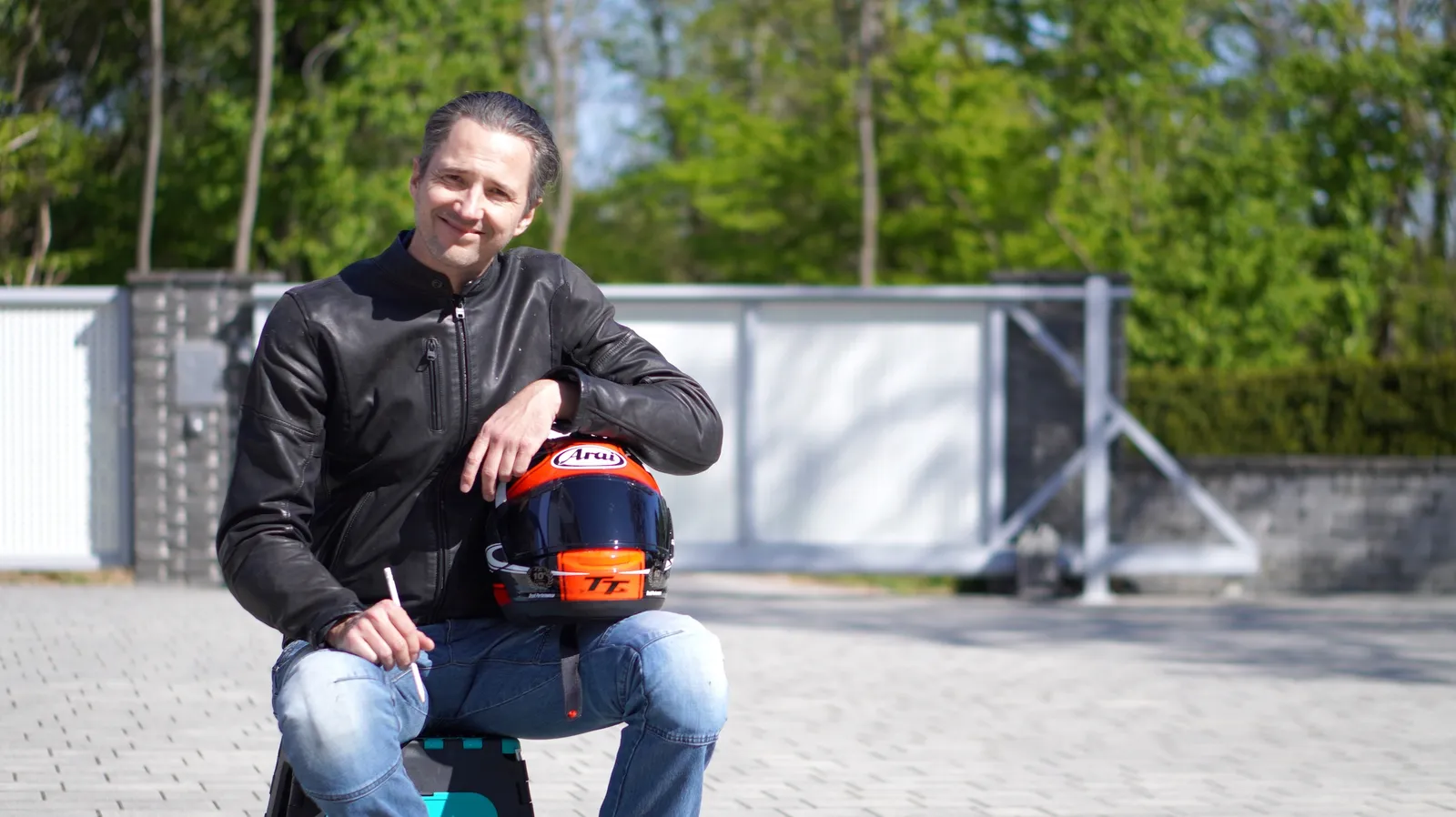
The Voice of Experience

Portrait of NastyNils

The test ride

Swing a leg over and the first surprise is how substantial it feels for a bike this light. At 30.9 inches the seat lets shorter riders flat-foot it while taller riders still find room, so slow-speed work stays relaxed rather than tense. Thumb the starter and the twin runs remarkably clean: no buzz through the bars, no tremor in the pegs, from a crawl through traffic to a steady highway cruise. The riding position is comfortable and upright, though it sets you back from the front rather than over it, so you ride along with the bike more than you lean into it. The bar is on the narrow side and the seat leans soft, which suits city duty. Push over rough backroad tarmac and the chassis stays planted instead of wallowing.

Rated point by point — where it earns its keep

My own 0–100 score for this bike against the class, area by area — the marker on each bar is the class average.

The thing I trust most here is how little the Hornet asks of me at walking pace. Parking-lot loops and tight U-turns come off without a fight, no clenched grip, no bracing for it to drop into the turn. Pick up the speed and that ease holds: flick it side to side through a quick set of bends and it settles onto the new line right away, with none of the vague loading-up moment cheaper chassis hand you. It also shrugs off broken tarmac far better than the older bikes in this family ever managed, staying quiet under me where a lesser setup would start to pogo. The honest limits are the hardware ones. Lean it far enough and the pegs and pipe find the ground before the tires are anywhere near done. And the rear shock runs out of ideas once a heavier rider leans on it hard over rough ground, giving back its travel too quickly to keep a fast pace tidy.

Two things settle my mind about living with it. It sips fuel, sitting right in economy territory, with a range roomy enough that a daily commute and a weekend loop rarely have me thinking about the next fill. And the way it's screwed together reads a class or two above where it sells. Run your hands over the controls and it feels like a full-grown, properly serious machine, not a starter bike dressed up to pass for one. That's the kind of quality you register through your palms, and it's what tells me it'll stay dependable long after the new has worn off.

This is where the Hornet quietly embarrasses its rivals. The four-piston radial front has genuine muscle, enough that on the test loop I could leave my braking later and place it more precisely than instinct said was wise, then still get the nose tucked cleanly into the corner. Nothing else at this size gives you that mix of first-touch bite, real reserves deep in the lever travel, and the feel to meter pressure by the fingertip instead of just clamping and hoping. Two things keep it grounded. The ABS is calibrated on the cautious side, so it cuts in before the tire has actually run out of grip. You will never feel that on the road, but on a circuit it shortens your late entry right when you are starting to lean on it. And the lever wants intent: a soft pull leaves power on the table, so you have to commit to it, which comes naturally once your hand learns the weight of the thing.

Line it up against Honda's other 500s over the same laps and it comes out fastest, by a margin that honestly surprised me. No single headline explains it; the whole bike works toward the same end. What matters more to me than the stopwatch is temperament. There is always a bit held in hand, so it never demands more of a rider than they've got on the day. For someone stepping up on an A2 license, that steady, no-nasty-shocks character does more good than a quick jolt of adrenaline ever would. Respect is what it builds, not just a buzz.

Small bike, but it never rides small. Even at my height I don't feel folded onto it, and the seat is judged well: high enough to keep me in control, low enough to keep my feet reassured at a stop. The compromises here are about connection, not comfort. The bar runs a touch narrow and the seat is plush, easy company for a long day but soft enough to filter out some of the front-end messaging. The geometry also parks me behind the front wheel rather than over it, so the bike leads and I follow. Riders who want to feel every input will notice the gap.

What makes this twin so easy to lean on is that it never does anything sudden. Roll the throttle open and the drive arrives in one continuous line from low in the range to the top, so I can gather up power out of a bend without waiting for a step or a surge that unsettles me. I can also get on the gas earlier than a bike this modest has any right to allow, and it just takes up the load and pulls clean, no snatch, no punishment for an eager hand. Refinement is the other quiet win: nothing tingles or drums through the contact points whether I launch it hard from a stop or hold a steady cruise, and that is a real move on from older takes on this motor. My one true gripe is the gearing. The character lives high in the rev range, and the stock final drive keeps dropping me under it in everyday riding, so I spend too long reaching for another gear to climb back there.

This is the corner of the bike that beat my expectations. The same machine that shuffles through Monday rush hour without a word of complaint will head out and run real laps at the weekend, never once looking out of its depth in either role. Very few bikes at this weight and power pull that off; usually one side gets quietly watered down to prop up the other. This one won't be shoved into a category. Ride it long enough in both worlds and it stops being a commuter that plays at sport or a sport tool putting up with the daily slog. It does both for real.

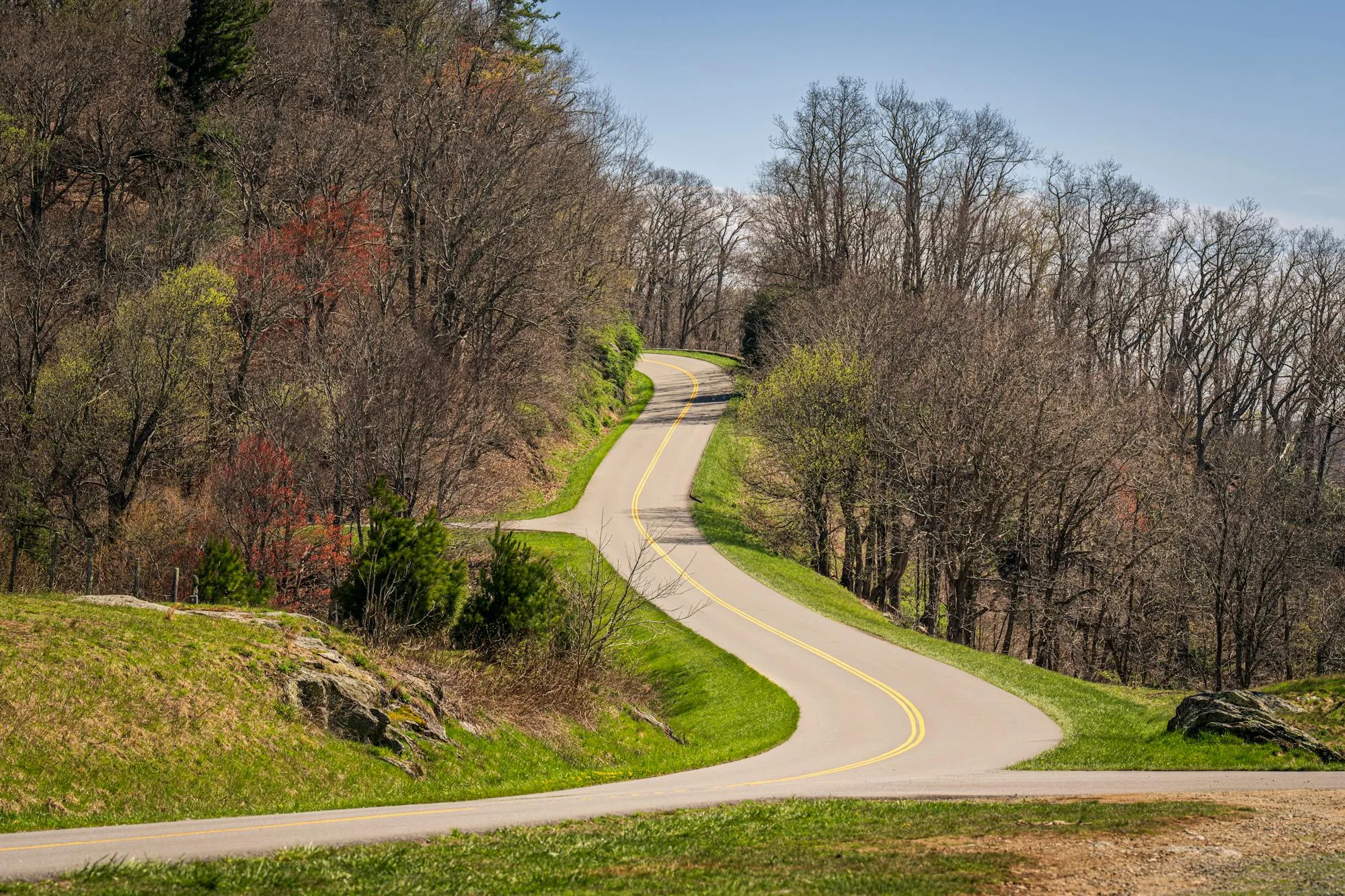
A winding asphalt road descending through the Appalachian Mountains, likely the famous Tail of the Dragon section in Tennessee and North Carolina. Multiple technical right-hand and left-hand curves are visible in this aerial perspective, surrounded by deciduous forest in spring foliage. Clear sunny conditions, well-maintained asphalt with yellow center lines marking the curves.
Mark Stebnicki / Pexels

The Truth on the Street

I've spent years keeping an ear on what CB500 Hornet owners tell me, in paddock talk, long chats after a ride, and the steady stream of messages and emails that land in my inbox. Pull it all together and one pattern holds: this is a bike riders take to quickly and grow into, with a short, honest list of limits.

What owners keep praising

The parallel twin draws the most consistent praise. Riders describe smooth, predictable pull from low revs that still rewards you toward the top, easy company for a newcomer and never abrupt. The hardware earns respect too. Owners point to the upgraded Showa front end staying composed over mixed surfaces, and the strong four-piston front brakes for bite and modulation well beyond what the class usually offers. Shorter and newer riders single out the low seat and slim, manageable feel as a confidence-builder. Many also flag the color TFT with Honda RoadSync, calling out turn-by-turn prompts, music, and call handling as tech most rivals at this size skip.

The limits riders agree on

The gripes are few and repeat. Most common is the power ceiling: the engine feels stretched at sustained highway speed or two-up with luggage, happy solo on back roads but working hard when you ask for more. A recurring wish is a quickshifter the bike simply goes without. And some riders note the front fork can't be adjusted for damping or preload, so heavier or sportier owners can't dial it in.

Known issues

  • Front brake judder

    brakesrare

    One owner reported severe front brake judder at approximately 35 mph on a 2024 model with only 1,900 miles. The issue is suspected to originate from the brake discs and occurred under warranty.

The Expert Benchmark

Where this Honda CB500 Hornet pulls ahead of — or falls behind — its rivals on the numbers, and the typical bike in its class on character.

What kind of bike this is — character vs. the class

This bike Class average

The shape of the Honda CB500 Hornet — numbers and character vs. the average Naked Bike

Head-to-head: Honda CB500 Hornet vs. its rivals

The 'Should I Buy It?' Score

Forget spec-sheet bragging. Here's who the CB500 Hornet is actually built for.

A scenic view of Angeles Crest Highway winding through rugged Southern California canyon terrain. Rocky mountainsides with golden earth tones frame the asphalt road with tight sweeping curves. Double yellow center line visible, sparse vegetation along the shoulders, clear blue sky with white clouds. Daylight, dry conditions. Iconic location for canyon-road enthusiasts.
Josh Sorenson / Pexels

Best motorcycle for Bay Area?

For your Skyline and Alice's runs plus the weekday commute, this is a clean fit: light, easy in traffic, and refined enough to keep you relaxed while still rewarding a spirited pace on the ridge roads.

Made for Bay Area Ridge Roads · San Francisco / Bay Area · Skyline Boulevard / Alice's Restaurant
Best motorcycle for Tail of the Dragon?

On tight, technical roads where finesse beats horsepower, the Hornet plays to your strengths. Light handling and class-leading brakes let you work the corners cleanly, provided you keep it in the upper revs.

Made for Back of the Dragon · Blue Ridge Parkway · Cherohala Skyway

Best motorcycle for Angeles Crest?

You'll love the brakes and light steering on Angeles Crest, but the modest output and soft rear will hold you back if you're chasing outright pace. Better as a confidence-builder than a full-on canyon weapon.

Made for Angeles Crest Highway · Coronado Trail / US 191 · Highway 1 / Big Sur

Alternatives to the Honda CB500 Hornet

If this one isn't quite the fit, these are the bikes worth riding back-to-back against it.

Any price note compares both bikes at the same age — the youngest age both have on the used market — against this Honda CB500 Hornet. “cheaper/pricier” is what that bike costs second-hand, not how worn it is.