By NastyNils·
Motorcycle comparison · Adventure vs Naked Bike
BMW F 900 GS (K81) vs F 900 R (K83)
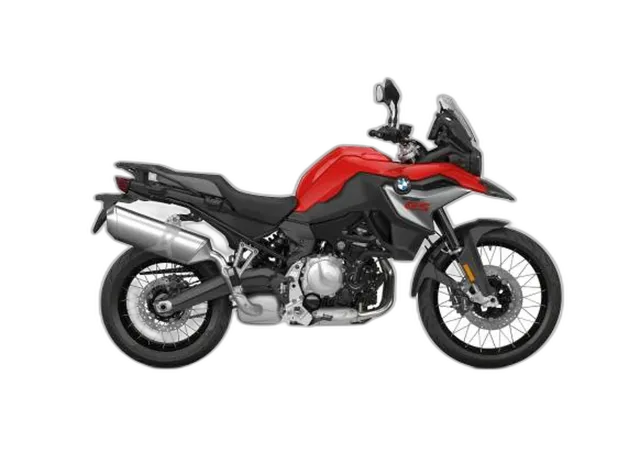
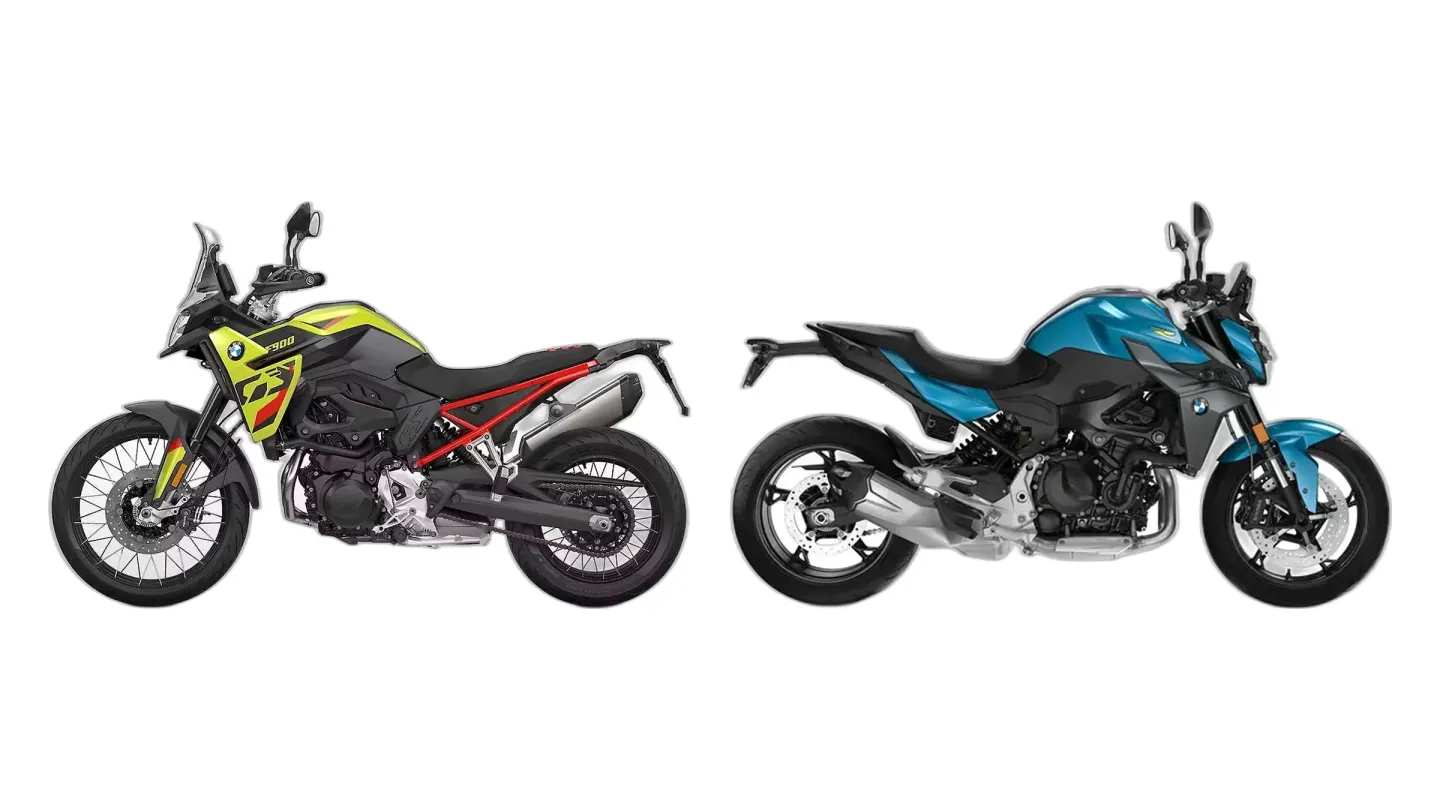
BMW F 900 GS vs F 900 R: two kinds of bike, and who each one is for.
At turn-in, the BMW F 900 GS's wide bar sets your line, and it's tracking clean without a fight. The BMW F 900 R drops in quick and doesn't twitch.
So which one do you buy?
Buy the F 900 R if…
Daily commuting & city riding
Clearly ahead: F 900 R
The F 900 R suits a daily commute clearly better. In traffic, it's simply less work.
The F 900 GS has the edge if…
Traveling with luggage
By a nose: F 900 GS
Packed for a long trip, the F 900 GS is a little better at it. The difference is better wind protection.
The F 900 R has the edge if…
Sporty riding on twisty roads
Inches ahead: F 900 R
The F 900 R nudges ahead once the pavement starts to wiggle. Don't expect a night-and-day difference.
What makes each one tick
F 900 GS
From the first mile, the F 900 GS puts its levers and switches right where they're needed, and its riding position already feels broken in. Gravel's harder on it, since even a gentle pace sends every hit through the stock suspension to the seat. Bumps on broken mountain tarmac don't upset its suspension or push it off course. Weekday traffic suits it just as well.
Nils rode the F 900 GS in Portugal in 2024, and in the Canary Islands in 2025 (NastyNils Testride).
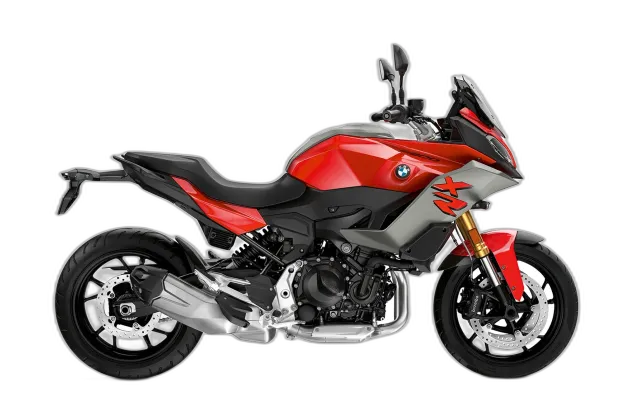
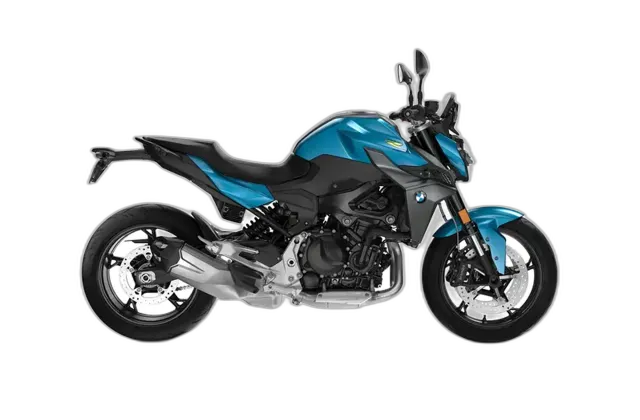
F 900 R
Through a bend the F 900 R leans in willingly, and it's still settled at full lean. There's no surge waiting when the throttle opens, since the twin just moves you along. Its firm damping holds up over a long day's miles.
Nils rode the F 900 R in 2021 (NastyNils Testride).
The Voice of Experience
What actually separates them
- The F 900 R has the lower seat: 32.1 in (815 mm) vs 34.3 in (870 mm).
- The F 900 R has the lower wet weight: 465 lb (211 kg) vs 483 lb (219 kg).
- The F 900 GS has the larger fuel tank: 3.8 US gal (14.5 L) vs 3.4 US gal (13 L).
Which one for the way you ride
A confidence-building first motorcycle
Both fall short
Both of these ask too much of a rookie. Spend your first year on something lighter.
Call it even on running costs. Choose on fit, price and the one that makes you grin.
Who each one is built for
What's good, and what you'll live with
F 900 GS
Strengths
- Planted on rough tarmac
- Easy to live with daily
- Controls fall right to hand
- Livelier than the Adventure version
- Genuine off-road capability
Trade-offs
- Stock suspension folds off-road
- Enduro Pro Package near-mandatory
- Buzzy across the rev range
- Tall seat height limits accessibility
- Expensive when configured with packages
F 900 R
Strengths
- Willing, planted handling
- Comfortable from the first mile
- Firm but livable suspension
- Production-grade display and connectivity
Trade-offs
- Competent but short on character
- Engine that just moves you along
- Gearbox feel is inconsistent
- Buzz through the bars
- Short side stand
Known problems to check before you buy
F 900 GS
No confirmed faults on file yet. That's not the same as fault-free.
F 900 R
- OE seat uncomfortable beyond approximately one hour of riding The OE seat is widely described as too hard and too flat after roughly an hour of riding, with "ironing board" comparisons recurring frequently. Wunderlich and other accessory makers offer dedicated comfort seats specifically for this complaint. Aftermarket comfort seats reportedly resolve the issue.
- Engine starts then stalls; unstable idle when cold On 2020/2021 production units, the engine starts but immediately stalls — often requiring three to four attempts. Once running, throttle input is needed for approx. 20 seconds to keep idle stable. Most pronounced after 24+ hours of standing, especially below approx. 68 °F (20 °C) ambient. Some owners also report sensitivity to fuel octane (95 vs. 98 RON). Resolved via BMW dealer software update; later production units do not exhibit the issue.
- Noticeable vibration through bars and instrument cluster at certain RPM windows Despite the firing interval and dual counterbalancers, the parallel twin transmits vibration to the bars and mirrors at specific RPM windows. Owners report the TFT instrument cluster shaking visibly at a specific speed in 6th gear. Vibration reportedly calms at certain RPM ranges. Aftermarket bar risers and heavier OEM bar-end weights reduce the issue meaningfully — i.e., it is a cumulative damping characteristic rather than a component defect.
- OE side stand unusually short — bike leans excessively when parked The OE side stand is unusually short. On uneven, soft, or cambered surfaces the bike leans far over and is reportedly difficult to right from the saddle. Aftermarket side-stand extensions are a documented common fix. This is a build-spec characteristic rather than a wear failure.
- Optional Gear Shift Assist Pro fails intermittently Up- or down-shift via the quickshifter occasionally fails to complete: ignition cut fires but the gear does not engage (deceleration jolt on upshifts), or the throttle blip fires without a corresponding downshift (sudden surge). Some owners report the system progressively degrades and eventually stops working entirely. This is a commonly reported issue among owners. Dealer adjustment or component replacement typically resolves it; recurrence is reported.
- Abrupt on-off throttle transition; lurching at light throttle openings On-off throttle response feels uneven; holding a steady speed at low throttle openings is harder than expected — owners describe a "pulsing" or "lurching" feeling. Switching to Rain mode partially smooths the response. Widely attributed to Euro 5 mapping running the engine relatively lean at light load. Some owners also report exhaust popping on a closed throttle, consistent with a lean transition. Affects standard road-mode mapping and is a character trait of the Euro 5 calibration rather than a component failure.
- BMW Motorrad Connected app pairing failures and dropouts Bluetooth pairing failures with the BMW Motorrad Connected app, dropouts during navigation, media, and call handling, and reports of the app keeping the connection alive long enough to drain the bike's battery if left unattended. The issue is generic across recent BMW Motorrad TFT-equipped models but is documented specifically on the F 900 R.
What they cost used
These prices compare a 2-year-old F 900 GS with a 2-year-old F 900 R.
- F 900 GS
- about $12,000
- F 900 R
- about $8,700
Two-year-old BMW F 900 GS and BMW F 900 R both sit in the US used market. The F 900 GS runs about $12,000, while the F 900 R sits near $8,700. That's a $3,300 gap between the two. These are estimates, not live listings.
What they share
- Displacement
- 895 cc
- Engine
- Parallel twin
- Cooling
- Liquid-cooled
- Power
- 105 hp (77 kW)
- Peak power at
- 8,500 rpm
- Gearbox
- 6-speed
- Final drive
- Chain
- Fork
- Upside-down (USD)
Where the spec sheets split
| F 900 GS | F 900 R | |
|---|---|---|
| Seat height | 34.3 in (870 mm) | 32.1 in (815 mm) |
| Wet weight | 483 lb (219 kg) | 465 lb (211 kg) |
| F 900 GS | F 900 R | |
|---|---|---|
| Torque | 69 lb-ft (93 Nm) | 68 lb-ft (92 Nm) |
| Peak torque at | 6,750 rpm | 6,500 rpm |
| F 900 GS | F 900 R | |
|---|---|---|
| Fuel economy | 55 mpg (US) / 4.3 L/100 km | 56 mpg (US) / 4.2 L/100 km |
| Fuel capacity | 3.8 US gal (14.5 L) | 3.4 US gal (13 L) |
| F 900 GS | F 900 R | |
|---|---|---|
| Front tire | 90/90-21 | 120/70-17 |
| Rear tire | 150/70-17 | 180/55-17 |
| Wheelbase | 62.7 in (1593 mm) | 59.8 in (1518 mm) |
| Front travel | 9.1 in (230 mm) | 5.3 in (135 mm) |
| Rear travel | 8.5 in (215 mm) | 5.6 in (142 mm) |
What comes fitted, what costs extra
| F 900 GS | F 900 R | |
|---|---|---|
| Cornering ABS | Standard | Option |
| Manually Adjustable Front Suspension | Standard | Standard (from 2025) |
| Steering Damper | Not offered | Standard |
| Navigation | Not offered | Standard |
| USB Charging Port | Standard | Not offered |
| Heated Grips | Standard | Option |
| Cornering Lights | Not offered | Option |
Head to head, area by area
Both bikes on the same scale, one area at a time.