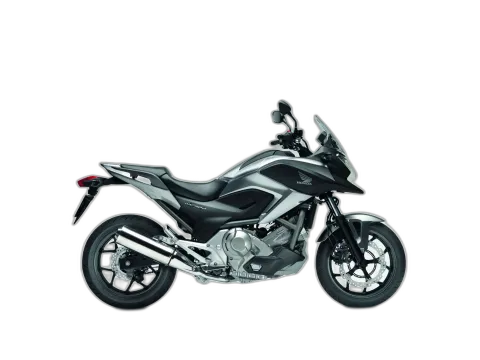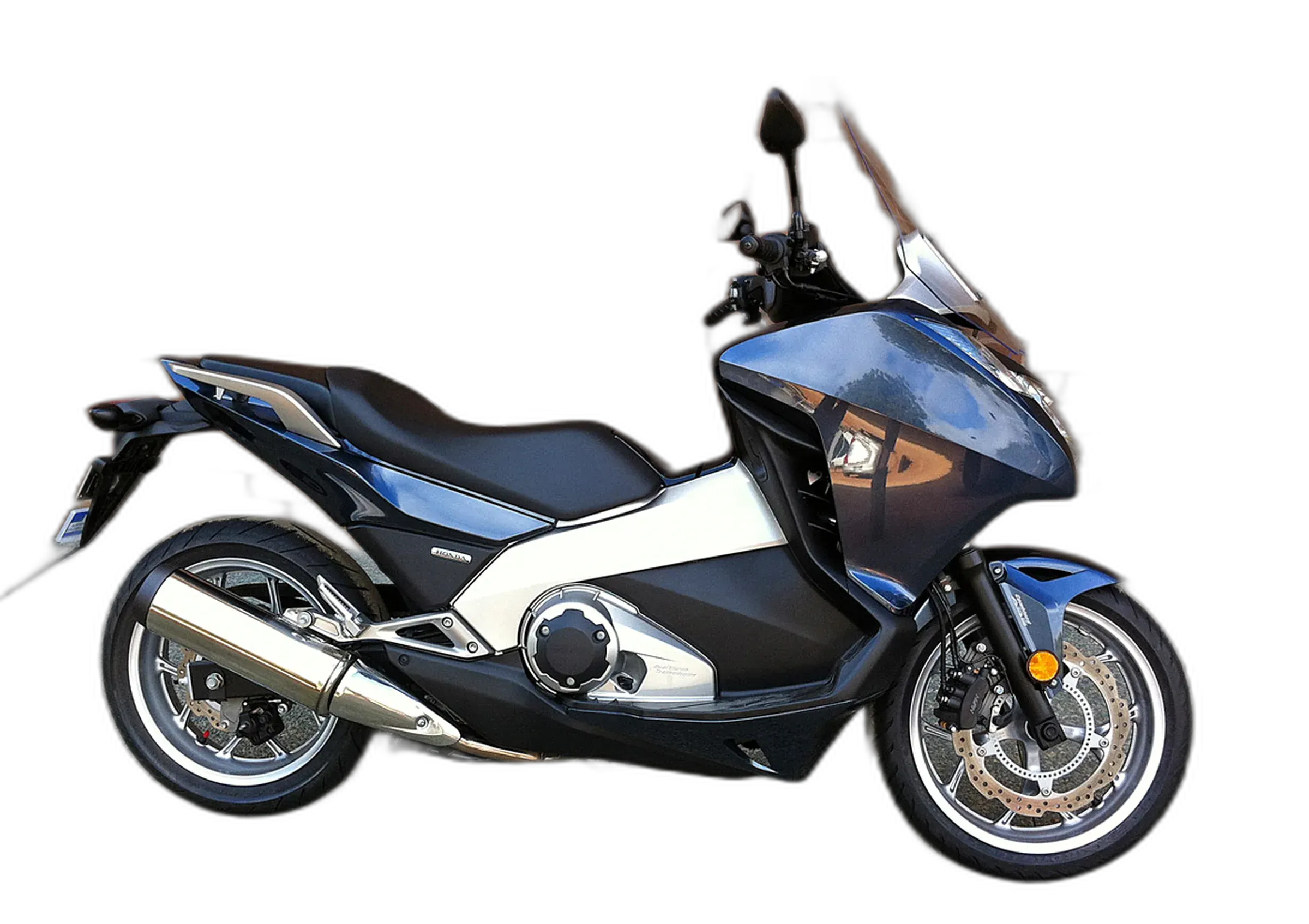



Honda Integra (NC700D) — Scooter
NastyNils / Honda press archive

2012–2013 · Scooter · Buyer's Guide

Integra (NC700D)

The Commuter That Rides Real

The Machine's Character

The Integra takes the 670cc parallel-twin and steel frame Honda uses across its NC family and wraps it in scooter-style bodywork, then hands shifting duty to a dual-clutch automatic instead of the belt-drive CVT you'd expect under this kind of fairing. The engine came out of Honda's automotive thinking: 52 hp and 46 lb-ft, all of it stacked down low, tuned for the way people actually ride in a city rather than for a number on a chart. It is a scooter in silhouette and a real motorcycle everywhere it counts.

That split personality is the whole point. Proper fork and rear linkage give it roadholding a conventional scooter simply doesn't have, so it stays composed on fast, broken pavement and then folds back into easy stop-and-go without asking anything of you. It's built for the rider who wants scooter convenience but refuses to give up the way a motorcycle holds a line. The honest catch: going hybrid costs storage and a little agility, and the open chain sits oddly with anyone raised on enclosed-drive scooters.

Hard Numbers

Spec sheets don't ride bikes, but they set the baseline.

Show full specs & equipment Hide specs & equipment
Key specifications
Power 52 hp (38 kW)
Torque 46 lb-ft (62 Nm)
Displacement 670 cc
Engine Parallel twin
Cooling Liquid-cooled
Gearbox 6-speed
Final drive Chain
Fork Telescopic
Front brake 320 mm
Front tire 120/70-17
Rear tire 160/60-17
Seat height 31.1 in (790 mm)
Wet weight 525 lb (238 kg)
Fuel capacity 3.7 gal (14 L)
Top speed 98 mph (158 km/h)
Fuel economy 50 mpg (US)

Equipment check

Comfort

  • Luggage System Optional

Drivetrain

  • Automatic Shift (DCT / ASA / AMT) Standard

Safety

  • ABS Standard

The Voice of Experience

Portrait of NastyNils

The test ride

Thumb the starter and the twin settles into a low, unhurried idle that never asks you to work it. What you notice first from the saddle is how little the drivetrain intrudes: shifts pass by unannounced, and in heavy traffic your left hand and left foot just have nothing to do, which resets how relaxed a commute can feel. The seat sits a touch taller than most scooters at 31.1 in, comfortable for most riders, though anyone well over six feet finds their knees pressing the fairing with no room to slide back. The fairing earns its keep at sustained highway speed, pushing enough air over you that a long stint doesn't wear you down. Hit the S-mode button and the whole feel sharpens, the box dropping gears eagerly when you crack the throttle. At 525 lb it carries its weight low and never feels like the number.

Rated point by point — where it earns its keep

My own 0–100 score for this bike against the class, area by area — the marker on each bar is the class average.

This is where the Integra pays you back over the long haul. Honda's economy claim survives contact with real roads; the figure comes from a controlled measurement cycle instead of ideal bench conditions, and it matched what I saw on my own commute. Service intervals stretch far enough that a daily rider can cover serious distance between dealer visits. Keep it fueled and ride it, and the ownership stays low on fuss month after month.

What sold the test group on this bike was the gearbox, and I put it at the top for a reason. The dual-clutch automatic takes over every choice a clutch lever and left foot usually demand, so slipping into a gap, inching along in a queue, or rolling up to a red all happen without a thought from you, and in stop-and-go it more or less disappears. Thumb the S button on the right bar and its whole temperament sharpens, the box cutting down a gear or two the moment your wrist rolls on, and it becomes reflex within a few junctions. The cost lands on what you can carry. Under the seat there is plainly less room than a full-size luxury scooter offers, and I felt that shortfall every time I loaded up for a day out. In the tightest filtering, lighter commuters get through where this one has to sit and wait. And that exposed chain never looks as tidy at the curb as an enclosed drive.

The bodywork does more than its scooter shape suggests. Hold a steady highway speed and the fairing gives you real shelter rather than a token gesture, so a longer run doesn't grind you down, and with the optional bags fitted it stands up as a serious all-weather tool. The catch is legroom. The saddle sits taller than the scooter norm yet stays within reach for most, but anyone well past six feet finds their knees jammed into the fairing with nowhere on the shaped seat to ease back.

Braking is one part of this bike I quickly stopped worrying about. Pull the lever and the bite is firm and immediate, the kind you can lean on hard without second-guessing it. The calipers and discs suit a genuinely quick machine rather than a gentle commuter, and with combined ABS standard, dragging it down from speed stays composed even with a full load on board.

Underneath the panels sits genuine motorcycle suspension, a real fork and rear linkage rather than the shrunken gear most scooters make do with, and the difference lands the instant the surface deteriorates. I leaned it through quick sweepers on pavement well past its best and the chassis stayed planted throughout. Ridden briskly it carries corners the way a proper bike does; back in crawling traffic it settles into scooter ease again, and the handover happens on its own.

Everything this twin does well happens low in the range. It answers the throttle straight off idle with a thick slug of torque, so getting away ahead of city traffic asks nothing of you. Honda aimed it squarely at town work, and the top of the tach holds no reward for your effort. Riders who instinctively wind an engine out before each shift will need to recalibrate, because the grunt lives at the bottom and staying there is the whole trick.

Nothing about the way this bike presents itself says it can hustle. Start leaning on it and that quiet impression falls apart fast. I ran it in a group of motorcycles being ridden hard and it stayed with them without strain or fuss, and the drive keeps building well beyond any speed that makes sense on a public road. It keeps its ability hidden, which is precisely why it catches riders off guard.

Elevated aerial view of Seattle's downtown skyline looking toward the city core along a dense urban street canyon. A mix of glass-and-steel skyscrapers and mid-rise residential towers fills the frame. A construction crane is active on the left. The street below carries light vehicle traffic flanked by mature street trees.
Josh Hild / Pexels

The Truth on the Street

The read on the Integra built up slowly: notes owners send me directly, questions from people who ride one daily, and the back-and-forth at gatherings where riders trade what they actually live with. Line it up and one pattern holds: riders trust the bike deeply, yet the same handful of everyday frustrations keeps surfacing.

What earns their trust

The praise starts with dependability. Owners rack up big mileage and describe ownership as trouble-free, with no recurring faults. Cornering draws heavy admiration; thanks to its bike-style running gear and larger wheels, it stays composed through bends and over rough pavement where a standard maxi-scooter would struggle. Cheap running is another favorite, with real-world economy near 50 mpg (4.7 L/100km), and the seamless automatic gearbox takes the stress out of stop-and-go riding.

The gripes that keep surfacing

Storage tops the frustrations. The space under the seat won't take a full-face helmet, and beyond a small cubby, nowhere to stash anything, leaving it behind rival maxi-scooters. The saddle collects steady criticism, going firm and wearing on riders once a trip stretches out. A smaller camp reads the bike as purely functional, calling the willing but low-revving twin short on excitement, and a few mention how heavy it feels at parking-lot speeds.

Known issues

No widely-reported issues on record.

    The Expert Benchmark

    Where this Honda Integra pulls ahead of — or falls behind — its rivals on the numbers, and the typical bike in its class on character.

    What kind of bike this is — character vs. the class

    This bike Class average

    Head-to-head: Honda Integra vs. its rivals

    The 'Should I Buy It?' Score

    Forget spec-sheet bragging. Here's who the Integra is actually built for.

    Aerial photograph of downtown Austin, Texas, showing modern high-rise buildings against a clear blue sky. Urban infrastructure, highways, and parking structures visible in the foreground.
    Thomas Balabaud / Pexels

    Best scooter for NYC?

    If your day is short hops, tight parking and low running costs in a packed market, this fits beautifully. The DCT and low-end torque make traffic effortless, just know storage trails a full-size scooter.

    Made for Austin · Los Angeles · Miami Beach / Miami
    Best motorcycle for Bay Area?

    You commute all week and chase Skyline curves on weekends, and the Integra genuinely does both. It holds pace with motorcycles on a group ride, then flips back to easy scooter mode in town.

    Made for Bay Area Ridge Roads · San Francisco / Bay Area · Skyline Boulevard / Alice's Restaurant

    Alternatives to the Honda Integra

    If this one isn't quite the fit, these are the bikes worth riding back-to-back against it.

    Any price note compares both bikes at the same age — the youngest age both have on the used market — against this Honda Integra. “cheaper/pricier” is what that bike costs second-hand, not how worn it is.