By NastyNils·
Motorcycle comparison · Supersport
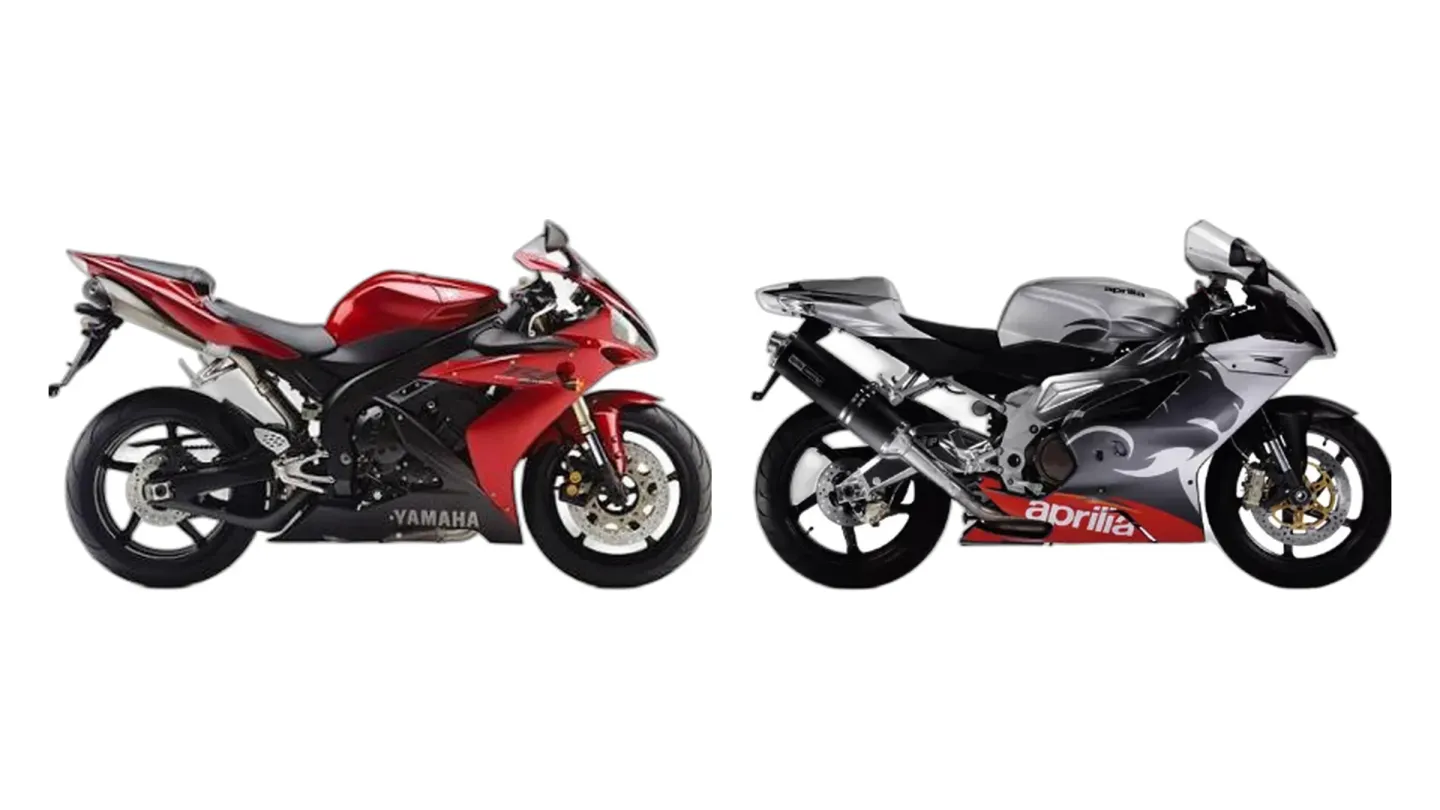
Yamaha YZF-R1 (RN12) vs Aprilia RSV 1000 R (RSV Mille R) (MY2005)
Yamaha YZF-R1 vs Aprilia RSV 1000 R (RSV Mille R): which one to buy for the riding you do.
Coming off a tight corner, the Yamaha YZF-R1's rear tire hooks up the instant you crack the throttle, and it's already lifting the front. On the Aprilia RSV 1000 R (RSV Mille R), that throttle wakes a rumbling V-twin that's thumping from low revs. Up top, the pull doesn't fade; it rushes.
So which one do you buy?
The YZF-R1 has the edge if…
Racetrack use
Small edge: YZF-R1
On a closed course, the YZF-R1 edges ahead. The difference is stronger brakes. Not by enough to settle it.
Sporty riding on twisty roads
Slight edge: YZF-R1
The YZF-R1 nudges ahead once the pavement starts to wiggle. Don't expect a night-and-day difference.
What makes each one tick
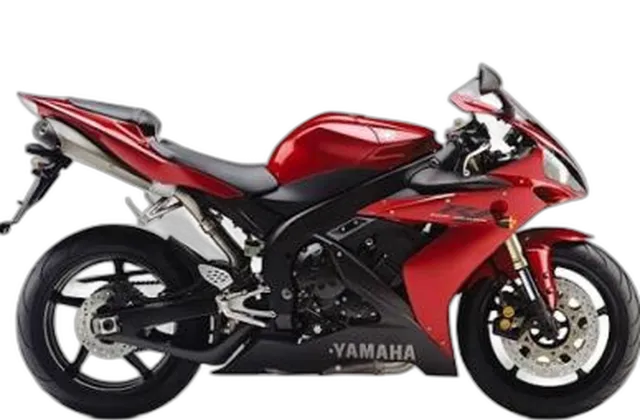
YZF-R1
There's no hiding a slack posture on the YZF-R1, whose front brake bites hard enough to pitch you into a push-up off the bars. At turn-in the bars itch to flick the bike toward the next bend before you've committed. It steers in and stays put. Stuck a gear high, the four still drives clean.
Nils rode the YZF-R1 in Andalusia in 2004 (NastyNils Testride).
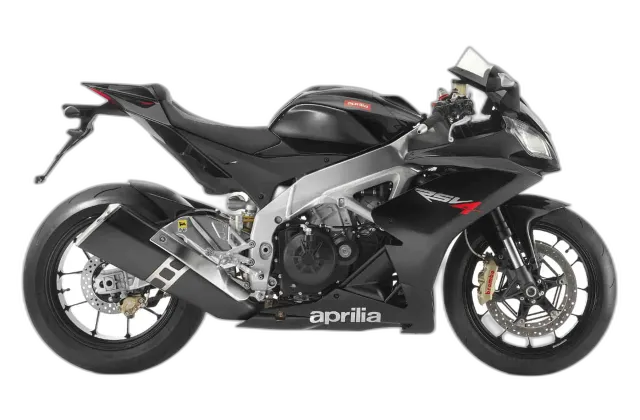
RSV 1000 R (RSV Mille R)
Steady feedback streams through the Aprilia's stiff aluminum frame, and it puts the bike exactly where you've aimed it. A mid-bend bump doesn't knock the chassis off its line. The bars read every ripple.
Nils rode the RSV 1000 R (RSV Mille R) in Hungary in 2004 (NastyNils Testride).
The Voice of Experience

What actually separates them
- The RSV 1000 R (RSV Mille R) has the lower seat: 31.9 in (810 mm) vs 32.9 in (835 mm).
- The YZF-R1 has the lower wet weight: 425 lb (193 kg) vs 463 lb (210 kg).
- The YZF-R1 makes more peak power: 172 hp (127 kW) vs 143 hp (105 kW).
Which one for the way you ride
Comfortable long-distance riding
Neither one fits
Both of these get tiring on a long day. A proper tourer will treat you better on big miles.
For commuting and running costs, you won't find daylight between them. Let the test ride settle it.
Who each one is built for
What's good, and what you'll live with
YZF-R1
Strengths
- Front Brake With Real Bite
- Corner Exit Grip That Sticks
- Razor Turn-In, Never Nervous
- Track Focus, Road Manners Intact
- Strong long-term reliability
Trade-offs
- Jitter Off Closed Throttle
- Punishes A Lazy Body
RSV 1000 R (RSV Mille R)
What owners say
Strengths
- Potent and characterful V-twin engine
- Exotic Italian styling
- Sharp, communicative handling
Trade-offs
- Common rear brake bleeding issues
- Limited dealer network and parts availability
Known problems to check before you buy
YZF-R1
- Throttle position sensor recall (stalling risk) Recall 06V371000 The RN12 R1 was recalled (NHTSA campaign 06V371000) for an improperly designed throttle position sensor that could cause an intermittently unstable idle and stalling at low speed or when stopped, risking a momentary rear-wheel slip if the clutch was abruptly re-engaged in a low gear. A separate 2005-only campaign (09V360000) covered the same sensor failure.
- Clutch wear from tall first gear The very high first gear forces the clutch to absorb excessive energy during take-off, leading to accelerated wear, slippage, and judder. Worse in heavy traffic.
- Stator failure Some bikes suffer from premature stator failure, resulting in charging system problems and eventual battery drain.
RSV 1000 R (RSV Mille R)
- Rear brake bleeding / fading The rear brake often becomes ineffective due to air trapped in the system. Standard bleeding procedures may not fully resolve it; hanging a weight from the pedal overnight or fitting an aftermarket master cylinder are known fixes.
- Stator and charging system failures The stator can burn out, leading to battery drain and charging issues. Brown connectors in the wiring harness are a known weak point and may need repair or replacement.
- Clutch slave cylinder leakage The factory clutch slave cylinder can develop leaks, leading to poor clutch disengagement. Replacing it with an upgraded aftermarket unit typically cures the problem.
What they share
- Displacement
- 998 cc
- Cooling
- Liquid-cooled
- Fuel capacity
- 4.8 US gal (18 L)
- Gearbox
- 6-speed
- Final drive
- Chain
- Fork
- Upside-down (USD)
- Front brake
- 320 mm
- Front tire
- 120/70-17
- Rear tire
- 190/50-17
Where the spec sheets split
| YZF-R1 | RSV 1000 R (RSV Mille R) | |
|---|---|---|
| Seat height | 32.9 in (835 mm) | 31.9 in (810 mm) |
| Wet weight | 425 lb (193 kg) | 463 lb (210 kg) |
| YZF-R1 | RSV 1000 R (RSV Mille R) | |
|---|---|---|
| Engine | Inline-four | 60° V-twin |
| Power | 172 hp (127 kW) | 143 hp (105 kW) |
| Peak power at | 12,500 rpm | 9,500 rpm |
| Torque | 79 lb-ft (107 Nm) | 76 lb-ft (103 Nm) |
| Peak torque at | 10,500 rpm | 8,000 rpm |
| Top speed | 180 mph (290 km/h) | 172 mph (277 km/h) |
| YZF-R1 | RSV 1000 R (RSV Mille R) | |
|---|---|---|
| Fuel economy | 32 mpg (US) / 7.43 L/100 km | 30 mpg (US) / 7.85 L/100 km |
What comes fitted, what costs extra
| YZF-R1 | RSV 1000 R (RSV Mille R) | |
|---|---|---|
| Steering Damper | Standard | Option |
| Slipper Clutch | Not offered | Standard |
Head to head, area by area
Both bikes on the same scale, one area at a time.