By NastyNils·
Motorcycle comparison · Supersport
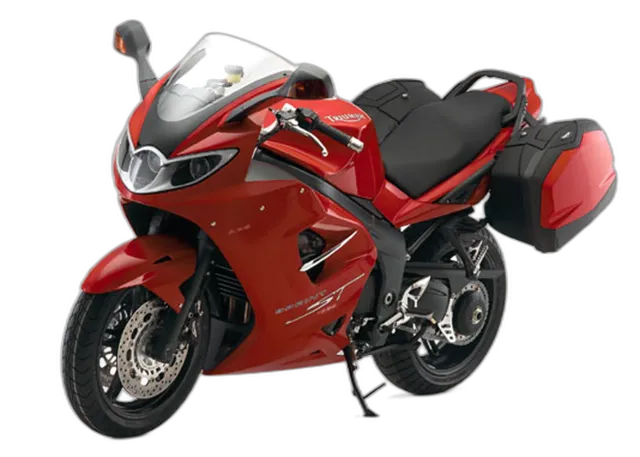
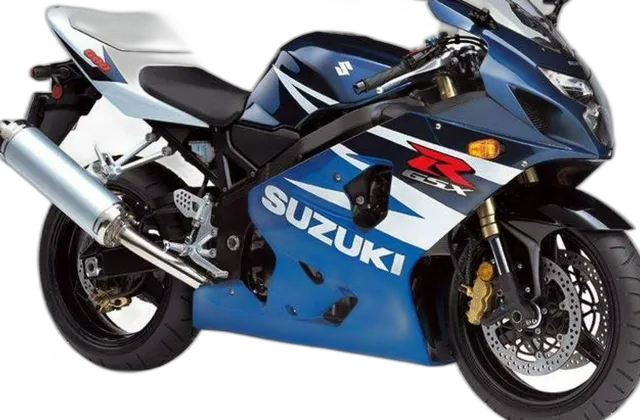
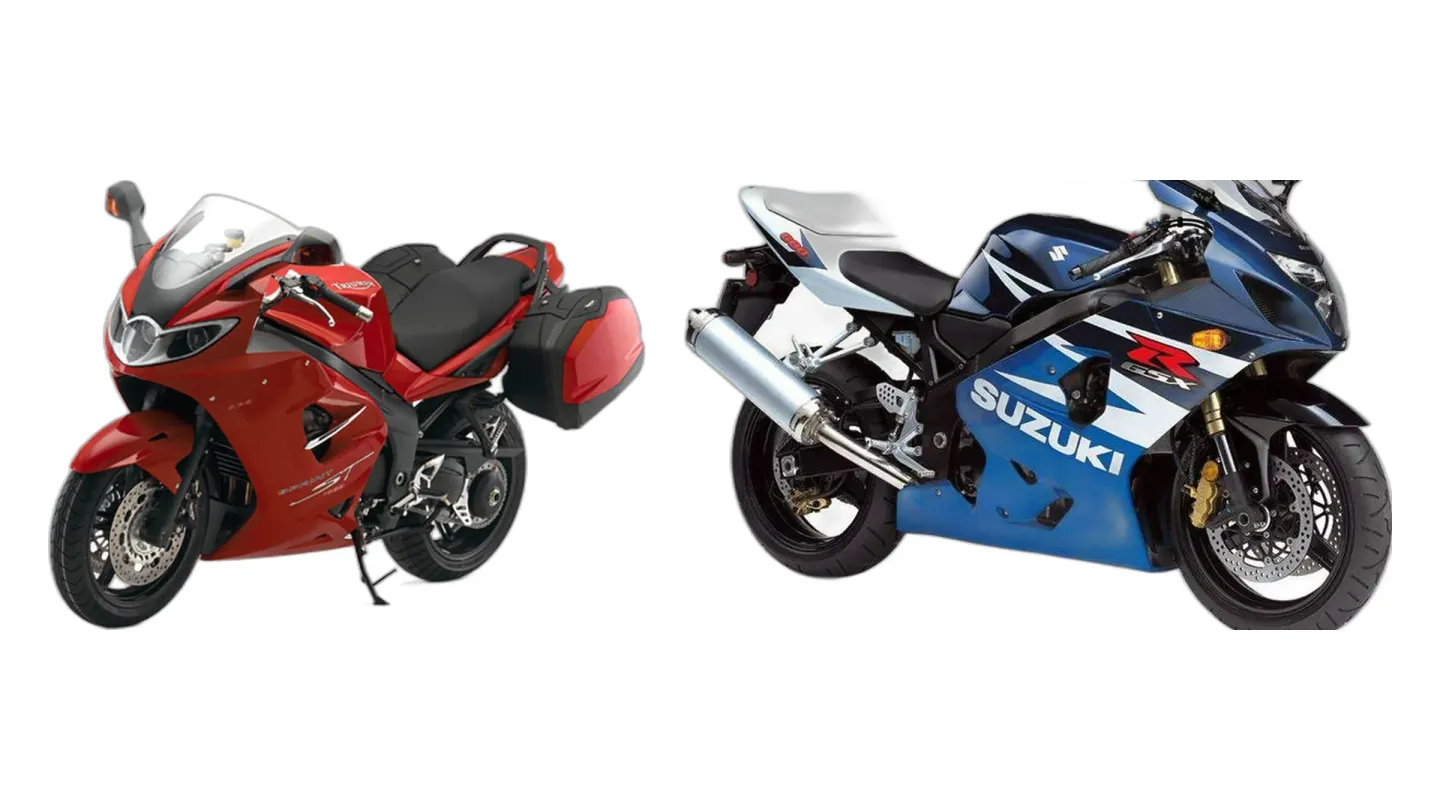
Triumph Daytona 675 (D67LC) vs Suzuki GSX-R 750 (K6)
Triumph Daytona 675 vs Suzuki GSX-R 750: which one to buy for the riding you do.
Roll over a rippled stretch with the damping backed off, and the Triumph Daytona 675 soaks it up; the jolt doesn't reach your wrists. The Suzuki GSX-R 750's stiff aluminum frame and adjustable suspension keep its wheels tracking over those ripples. Its nose holds exactly where you pointed it.
So which one do you buy?
The GSX-R 750 has the edge if…
Racetrack use
A touch ahead: GSX-R 750
The GSX-R 750 pulls a nose ahead on track. Don't count on it doing the work for you.
Sporty riding on twisty roads
By a nose: GSX-R 750
Once the road starts to bend, the GSX-R 750 noses ahead. Your own skill counts for more than a gap this size.
What makes each one tick
Daytona 675
Through an S-bend the Daytona's slim chassis flicks from side to side, and its light tail doesn't lag. Second gear covers most bends. Hours of hard laps don't wear the bite out of the brake lever. The last stop of the day bites like the first.
GSX-R 750
There's enough low-down pull in the GSX-R's inline-four to keep it tractable between bends. At corner entry the front tire hooks in cleanly, and the chassis settles onto its line. Mid-corner, the bars stay quiet. Up top, the tach needle sprints.
Nils rode the GSX-R 750 in 2006 (NastyNils Testride).
The Voice of Experience

What actually separates them
- The GSX-R 750 has the lower seat: 31.9 in (810 mm) vs 32.5 in (825 mm).
- The Daytona 675 has the lower wet weight: 408 lb (185 kg) vs 434 lb (197 kg).
- The GSX-R 750 makes more peak power: 150 hp (110 kW) vs 123 hp (92 kW).
Which one for the way you ride
A confidence-building first motorcycle
Both miss here
Learning on either of these is the hard way. A gentler bike will make you a better rider sooner.
For commuting and running costs, you won't find daylight between them. Let the test ride settle it.
Who each one is built for
What's good, and what you'll live with
Daytona 675
Strengths
- Goes Exactly Where You Point
- Settled On Rough Corners
- Holds Up To Hard Use
- One Gear, Most Situations
- Characterful inline-triple engine
Trade-offs
- Throttle Lag Off A Closed Corner
- Rear Moves Under Hard Braking In Lean
- Track Tires Wear Fast
- Cramped, track-focused ergonomics
GSX-R 750
What owners say
Strengths
- Electrifying, rev‑hungry engine
- Sharp, confidence‑inspiring handling
Known problems to check before you buy
Daytona 675
- Regulator/rectifier overheating and failure Recall 12V445000 The regulator/rectifier can overheat, preventing charging and causing the motorcycle to stall. An NHTSA recall (12V445000) was issued covering 2006–2009 Daytona 675 models.
- EXUP valve sticking The exhaust valve (EXUP) can seize or become noisy, triggering the check engine light and potentially affecting mid-range power. Often requires adjustment or replacement.
GSX-R 750
- Regulator/rectifier failures Some owners report premature failure of the regulator/rectifier, leading to charging system problems and potential battery drain.
What they share
- Cooling
- Liquid-cooled
- Gearbox
- 6-speed
- Final drive
- Chain
- Fork
- Upside-down (USD)
- Front tire
- 120/70-17
- Rear tire
- 180/55-17
Where the spec sheets split
| Daytona 675 | GSX-R 750 | |
|---|---|---|
| Seat height | 32.5 in (825 mm) | 31.9 in (810 mm) |
| Wet weight | 408 lb (185 kg) | 434 lb (197 kg) |
| Daytona 675 | GSX-R 750 | |
|---|---|---|
| Displacement | 675 cc | 749 cc |
| Engine | Inline-three | Inline-four |
| Power | 123 hp (92 kW) | 150 hp (110 kW) |
| Peak power at | 12,600 rpm | 12,800 rpm |
| Torque | 53 lb-ft (72 Nm) | 64 lb-ft (86 Nm) |
| Peak torque at | 11,750 rpm | 11,200 rpm |
| Daytona 675 | GSX-R 750 | |
|---|---|---|
| Fuel capacity | 4.6 US gal (17.5 L) | 4.4 US gal (16.5 L) |
What comes fitted, what costs extra
| Daytona 675 | GSX-R 750 | |
|---|---|---|
| Slipper Clutch | Not offered | Standard |
Head to head, area by area
Both bikes on the same scale, one area at a time.