By NastyNils·
Motorcycle comparison · Supersport
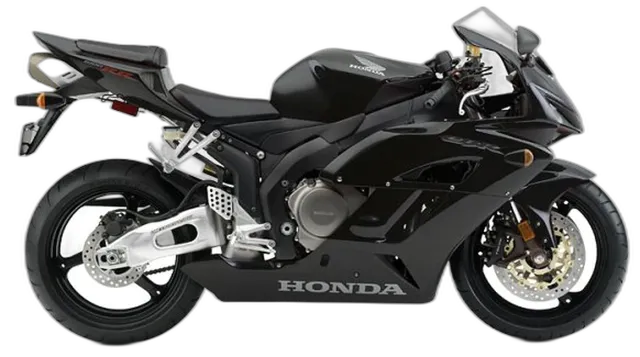
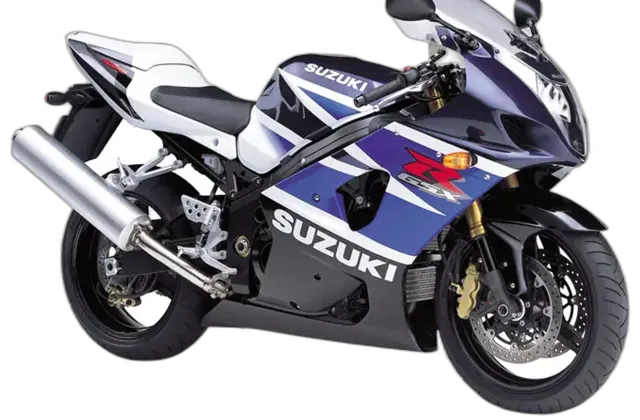
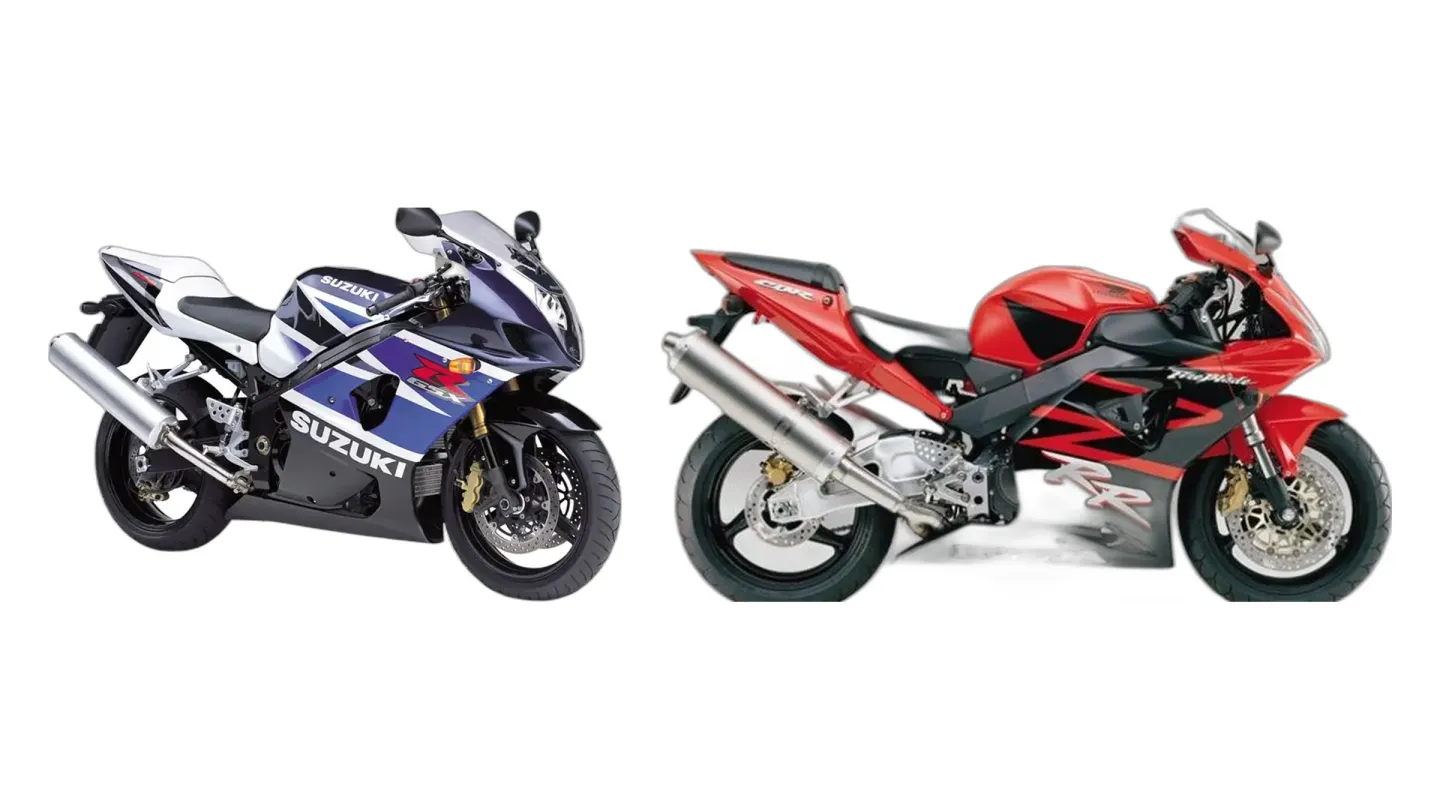
Suzuki GSX-R 1000 (K3) vs Honda CBR900RR (SC50)
Suzuki GSX-R 1000 vs Honda CBR900RR: which one to buy for the riding you do.
Through the entry of a fast bend, the Suzuki GSX-R 1000 tips in quickly and doesn't get unsettled once it's leaned over. The Honda CBR900RR drops in on a single nudge.
So which one do you buy?
The GSX-R 1000 has the edge if…
Racetrack use
Slight edge: GSX-R 1000
For track days, the GSX-R 1000 comes out a touch ahead. Your setup and tires matter just as much.
Sporty riding on twisty roads
Nose ahead: GSX-R 1000
The GSX-R 1000 nudges ahead once the pavement starts to wiggle. Don't expect a night-and-day difference.
The CBR900RR has the edge if…
Keeping running costs low
Inches ahead: CBR900RR
The CBR900RR should be a little cheaper to keep on the road. It's a small gap.
Daily commuting & city riding
Narrow edge: CBR900RR
For the ride to work, the CBR900RR noses ahead. Thank simpler maintenance for that. Don't let that alone make the call.
What makes each one tick
GSX-R 1000
Low in the revs, the GSX-R 1000 purrs around town on creamy pull, yet more throttle wakes a screaming rush that doesn't stop building until the redline. The twin-spar frame lets it flick around a track, and the pegs and bars leave long legs room for a long day. Its brakes bite hard, with feel. The intake's howl turns every ride into an event.
CBR900RR
Behind a quarter turn of the CBR900RR's grip there's a quarter of the power, and it doesn't drift from that up to the limiter. Wind it out in second or third and the front wheel loses meaningful road contact. The front brake stops hard, yet its bite keeps growing through the stop even when lever pressure doesn't change. A fierce grab at the lever stands the bike up. At speed, the airstream lifts weight off the bars.
Nils rode the CBR900RR in Styria in 2002 (NastyNils Testride).
The Voice of Experience
What actually separates them
- The CBR900RR has the lower seat: 32.1 in (815 mm) vs 32.7 in (830 mm).
- The CBR900RR has the lower wet weight: 423 lb (192 kg) vs 441 lb (200 kg).
- The GSX-R 1000 makes more peak power: 163 hp (120 kW) vs 154 hp (113 kW).
Which one for the way you ride
Comfortable long-distance riding
Not their thing
Hours in the saddle won't flatter either of these. They're happier on shorter runs.
Who each one is built for
What's good, and what you'll live with
GSX-R 1000
What owners say
Strengths
- Thrilling top-end power and acceleration
- Excellent braking performance
- Surprisingly comfortable riding position
CBR900RR
Strengths
- Throttle you can trust
- Wind that unloads your arms
- High reliability & build quality
- Strong, flexible engine
Trade-offs
- Suspension arrives unbalanced
- Nervous at high speed
- Stands up under hard braking
- Miserable in slow traffic
Known problems to check before you buy
GSX-R 1000
- Fork seals prone to leaking Many owners report the front fork seals weeping or leaking oil, typically as mileage accumulates, requiring replacement.
- SET valve and STVA motor failures The Suzuki Exhaust Tuning (SET) valve servo or the Secondary Throttle Valve Actuator (STVA) can fail, triggering an FI warning light and causing poor running.
CBR900RR
- Steering head bearing update campaign The sharp-steering 2002 model was subject to a Honda steering-stem bearing update campaign (a service action, not a safety recall) aimed at calming the front end; 2003 bikes left the factory already revised. Notchy or worn steering-head bearings are a documented owner concern on early bikes, so confirm the update was carried out or the bearings are healthy.
What they share
- Dry weight
- 370 lb (168 kg)
- Engine
- Inline-four
- Cooling
- Liquid-cooled
- Fuel capacity
- 4.8 US gal (18 L)
- Gearbox
- 6-speed
- Final drive
- Chain
- Fork
- Upside-down (USD)
- Front tire
- 120/70-17
- Rear tire
- 190/50-17
Where the spec sheets split
| GSX-R 1000 | CBR900RR | |
|---|---|---|
| Seat height | 32.7 in (830 mm) | 32.1 in (815 mm) |
| Wet weight | 441 lb (200 kg) | 423 lb (192 kg) |
| GSX-R 1000 | CBR900RR | |
|---|---|---|
| Displacement | 988 cc | 954 cc |
| Power | 163 hp (120 kW) | 154 hp (113 kW) |
| Peak power at | 10,800 rpm | 11,250 rpm |
| Torque | 80 lb-ft (109 Nm) | 78 lb-ft (106 Nm) |
| Peak torque at | 8,500 rpm | 9,000 rpm |
| Top speed | 175 mph (282 km/h) | 170 mph (274 km/h) |
| GSX-R 1000 | CBR900RR | |
|---|---|---|
| Front brake | 300 mm | 330 mm |
| Wheelbase | 55.5 in (1410 mm) | 55.3 in (1405 mm) |
What comes fitted, what costs extra
| GSX-R 1000 | CBR900RR | |
|---|---|---|
| Steering Damper | Standard | Not offered |
Head to head, area by area
Both bikes on the same scale, one area at a time.