By NastyNils·
Motorcycle comparison · Supersport
Honda CBR650R (RH01) vs Triumph Daytona 660 (MY2024)
Honda CBR650R vs Triumph Daytona 660: which one to buy for the riding you do.
Low in the rev range with the throttle half open, the Honda CBR650R stays smooth, but it doesn't wake up until you've wound it high. The Triumph Daytona 660 pulls hard from down low in the revs. Then it keeps howling all the way to redline.
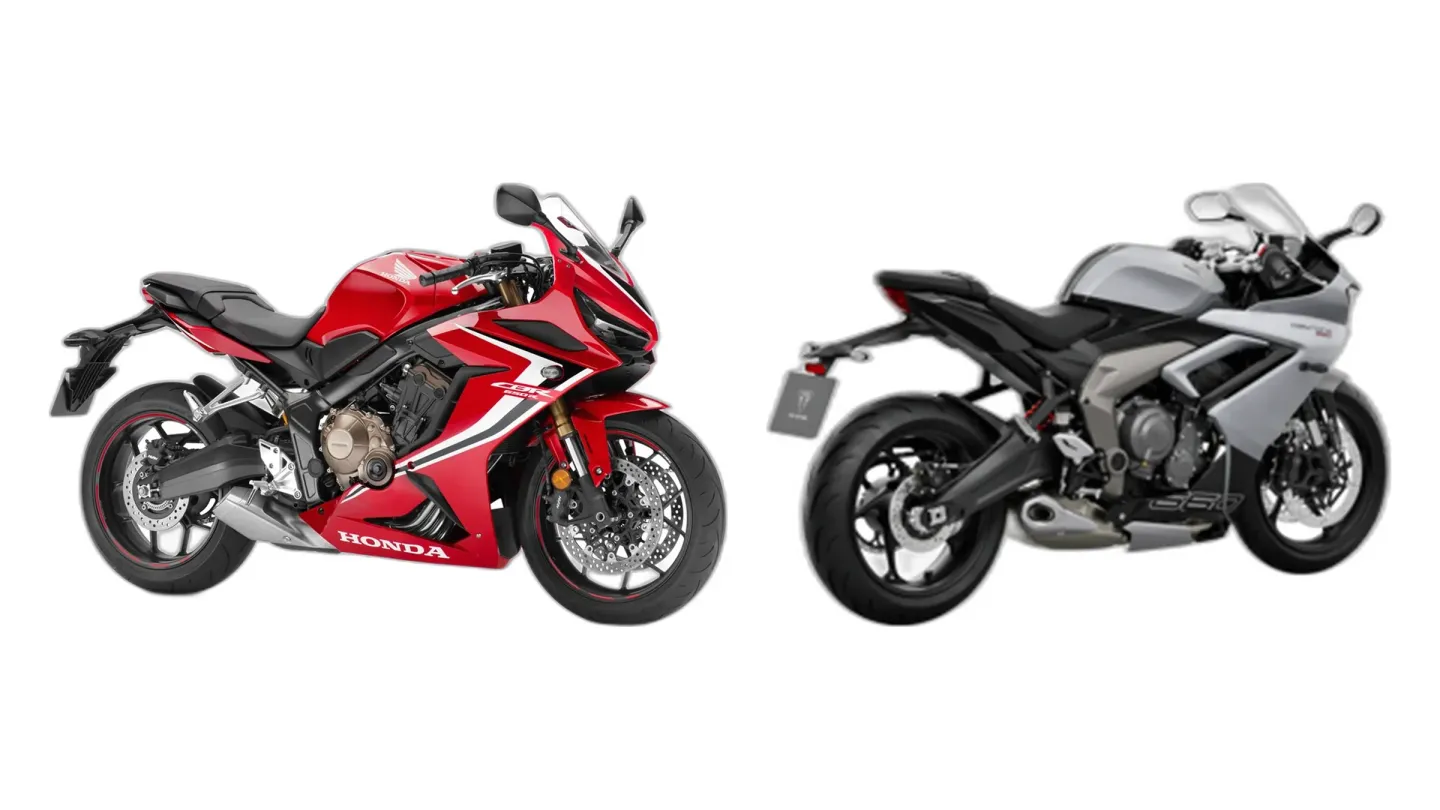
So which one do you buy?
The Daytona 660 has the edge if…
Daily commuting & city riding
Nose ahead: Daytona 660
On the way to work, the Daytona 660 asks a little less of you. Close enough that the test ride should settle it.
Sporty riding on twisty roads
Slight edge: Daytona 660
The Daytona 660 nudges ahead once the pavement starts to wiggle. It's down to harder acceleration. Don't expect a night-and-day difference.
Racetrack use
A touch ahead: Daytona 660
On a closed course, the Daytona 660 edges ahead. Not by enough to settle it.
What makes each one tick
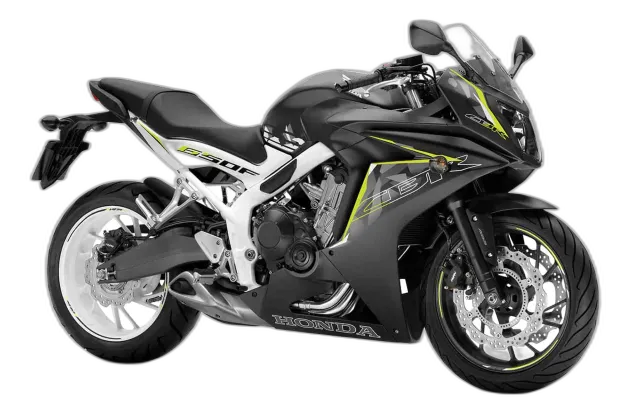
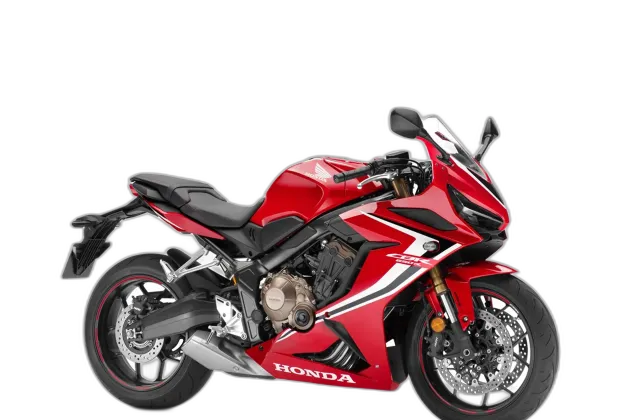
CBR650R
The CBR650R's four hums along quietly in traffic, and it's the last stretch of the tach where the real rush lives. Corner entry takes only a light push on the bar. There's no fuss at the bars: the steering settles neutral and holds whatever line you've picked. The chassis sits planted through the apex.
Daytona 660
The Daytona 660 sets its clip-ons within a moderate reach of a plush seat, and the riding position doesn't fold you over the tank. Hauling on the brake lever at a spirited pace sends the soft fork diving deep. The front end goes vague. The triple spins free and sings from the exhaust.
The Voice of Experience

What actually separates them
- The Daytona 660 has the lower wet weight: 443 lb (201 kg) vs 456 lb (207 kg).
- The Daytona 660 makes more peak torque: 51 lb-ft (69 Nm) vs 47 lb-ft (64 Nm).
- The CBR650R has the larger fuel tank: 4.1 US gal (15.4 L) vs 3.7 US gal (14 L).
Which one for the way you ride
Comfortable long-distance riding
Both miss here
Hours in the saddle won't flatter either of these. They're happier on shorter runs.
There's no real gap on running costs. Sit on both and let fit and price decide.
Who each one is built for
What's good, and what you'll live with
CBR650R
What owners say
Strengths
- Smooth, flexible inline-four engine
- Strong, progressive brakes
Trade-offs
- Needs revs for excitement
- Noticeable vibration at highway speeds
Daytona 660
What owners say
Strengths
- Characterful triple-cylinder engine
- Comfortable and all-day friendly ergonomics
- Excellent value for money
Trade-offs
- Soft, underdamped suspension
What they share
- Seat height
- 31.9 in (810 mm)
- Cooling
- Liquid-cooled
- Fuel economy
- 48 mpg (US) / 4.9 L/100 km
- Gearbox
- 6-speed
- Front tire
- 120/70-17
- Rear tire
- 180/55-17
Where the spec sheets split
| CBR650R | Daytona 660 | |
|---|---|---|
| Wet weight | 456 lb (207 kg) | 443 lb (201 kg) |
| CBR650R | Daytona 660 | |
|---|---|---|
| Displacement | 649 cc | 660 cc |
| Engine | Inline-four | Inline-three |
| Power | 95 hp (70 kW) | 94 hp (70 kW) |
| Peak power at | 12,000 rpm | 11,250 rpm |
| Torque | 47 lb-ft (64 Nm) | 51 lb-ft (69 Nm) |
| Peak torque at | 8,500 rpm | 8,250 rpm |
| CBR650R | Daytona 660 | |
|---|---|---|
| Fuel capacity | 4.1 US gal (15.4 L) | 3.7 US gal (14 L) |
| CBR650R | Daytona 660 | |
|---|---|---|
| Wheelbase | 57.1 in (1450 mm) | 56.1 in (1425 mm) |
What comes fitted, what costs extra
| CBR650R | Daytona 660 | |
|---|---|---|
| Ride Modes | Not offered | Standard |
| Smartphone Connectivity | Not offered | Option |
Head to head, area by area
Both bikes on the same scale, one area at a time.