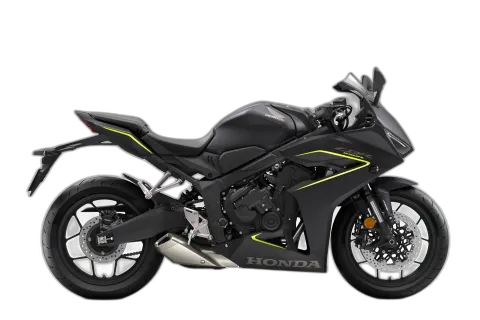

Honda CBR650R (RH01) — Supersport
Honda Press

2019–2023 · Supersport · Buyer's Guide

CBR650R (RH01)

3.5 / 5 NastyNils Rating · against its class

The Inline-Four You Can Keep

The Machine's Character

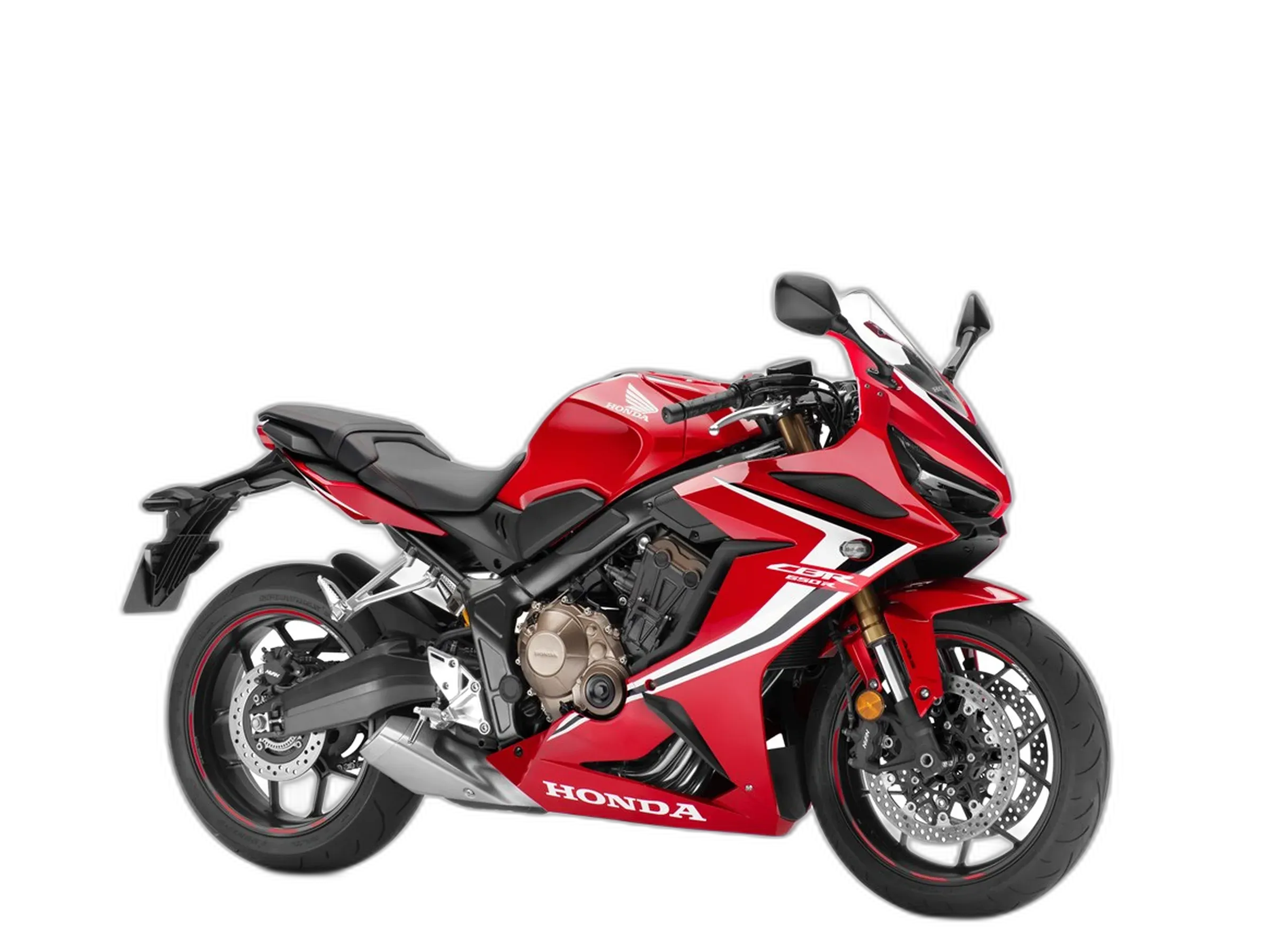
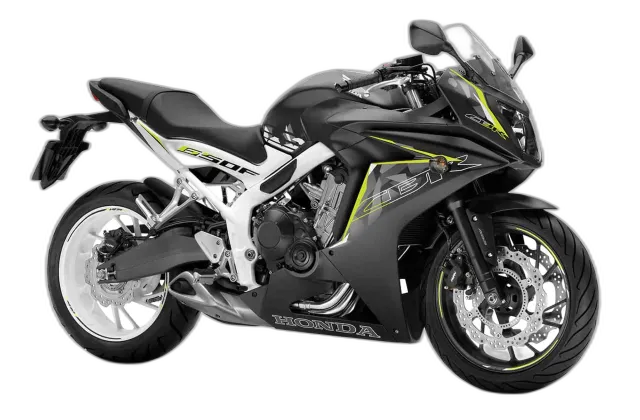
The CBR650R runs an inline-four in a class that mostly runs twins, and that one decision shapes everything about it. 649 cc, 95 hp arriving right at 12,000 rpm, 47 lb-ft at 8,500, and enough flexibility low down that you never feel punished for short-shifting in traffic. A steel diamond frame carries it, four-piston calipers grip 310 mm discs up front, and the standard kit covers ABS, traction control, a slipper clutch, and an LED headlight. This is a full-fairing sport bike built for the road first, with the sharp stuff waiting above 10,000 rpm for riders who go looking.

It rides and ages the way good Honda hardware usually does: predictable, tidy, cheap to keep, and happy to be used hard on a Sunday and ridden to work on Monday. Turn-in is light without ever feeling nervous, it holds a line at speed, and there is more lean angle available than most road riders will ever ask for. The caveat is straightforward. The fork has no adjustment of any kind and only the shock takes preload, there are no ride modes or cornering ABS, and 456 lb wet is honest weight. Push hard enough and the chassis hardware becomes the limit, not the engine.

Hard Numbers

Spec sheets don't ride bikes, but they set the baseline.

Show full specs & equipment Hide specs & equipment
Key specifications
Power 95 hp (70 kW) @ 12,000 rpm
Torque 47 lb-ft (64 Nm) @ 8,500 rpm
Displacement 649 cc
Engine Inline-four
Cooling Liquid-cooled
Gearbox 6-speed
Final drive Chain
Fork Upside-down (USD)
Front brake 310 mm
Front tire 120/70-17
Rear tire 180/55-17
Wheelbase 57.1 in (1450 mm)
Seat height 31.9 in (810 mm)
Wet weight 456 lb (207 kg)
Fuel capacity 4.1 gal (15.4 L)
Fuel economy 48 mpg (US)

Equipment check

Chassis

  • Rear Suspension Adjustable Standard

Drivetrain

  • Quickshifter Optional
  • Slipper Clutch Standard

Lighting

  • LED Headlight Standard

Safety

  • ABS Standard
  • Traction Control Standard
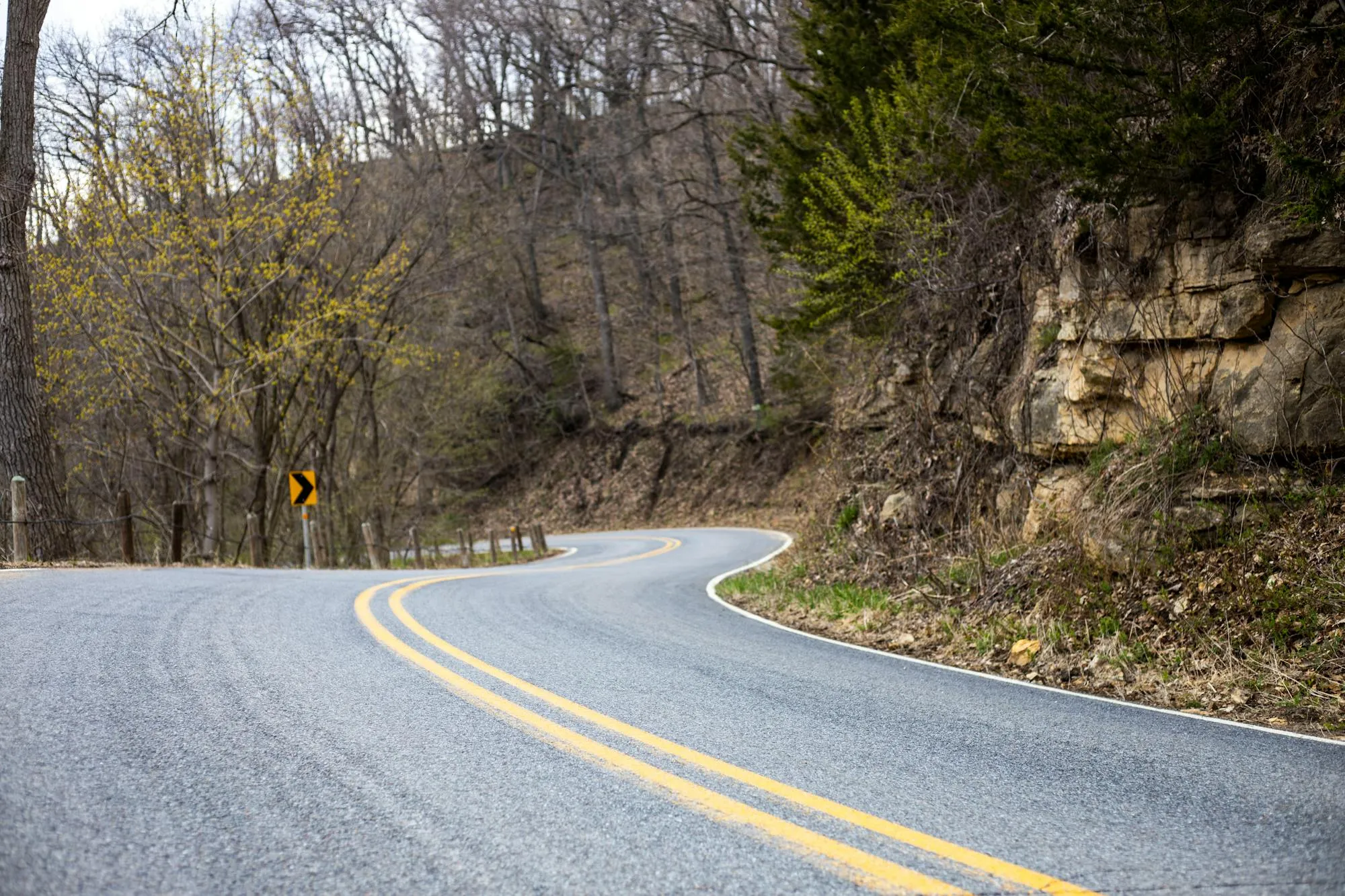
A winding two-lane asphalt road in the Appalachian mountains, photographed in dry daylight. Yellow double-center line markings guide through a series of tight left-hand curves. Dense deciduous and evergreen forest flanks both sides; a rock cut is visible on the right. The road surface and geometry suggest a technical, high-traffic riding corridor popular with motorcyclists.
Chris Flaten / Pexels

The Truth on the Street

None of this comes from my own miles on the bike. It comes from years of listening to the people who actually own them: talk at fuel stops on group rides, riders I end up next to at events, and the messages owners send straight to my inbox. On this generation the chatter keeps landing in one place, which is the engine and where it wants to live in the rev range. Riders agree on what it gives them up top, and they are just as consistent about what it asks of them below that.

Where the four-cylinder wants to live

The steadiest praise in owner reports goes to the inline-four itself. Riders describe it as refined and tractable down low, then something else entirely once it passes 8,000 rpm, with a linear top-end rush they say they don't find elsewhere in the class. The recurring counterweight comes from the same people. There is none of the low-end grunt that parallel-twin rivals hand out, and owners are direct about it: spirited riding means keeping the thing above 6,000 rpm. The riders who work the gearbox that way report no complaint at all. The ones who came expecting a twin's shove off idle say so just as plainly.

Known issues

  • High-frequency vibration

    engine common

    A consistent buzz through the seat, tank, and footpegs can be intrusive, especially around 6,000 rpm, and may cause discomfort on long rides.

  • Throttle hesitation at higher mileage

    fuel system occasional

    Some owners experience a stumble or hesitation when cracking open the throttle, often traced to fuel-injection issues, fouled throttle bodies, or sensor degradation.

The Expert Benchmark

Where this Honda CBR650R pulls ahead of — or falls behind — its rivals on the numbers, and the typical bike in its class on character.

What kind of bike this is — character vs. the class

This bike Class average

The shape of the Honda CBR650R — numbers and character vs. the average Supersport

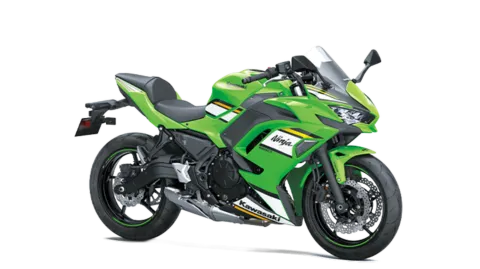
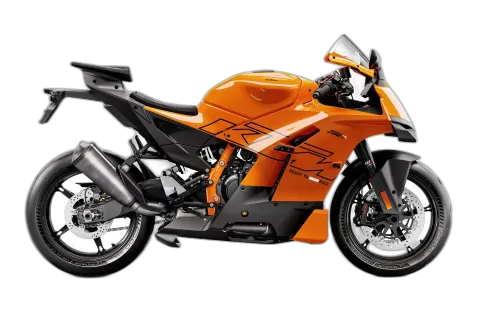
Head-to-head: Honda CBR650R vs. its rivals

The Handshake Score

Forget spec-sheet bragging. Here's who the CBR650R is actually built for.

A scenic view of Angeles Crest Highway winding through rugged Southern California canyon terrain. Rocky mountainsides with golden earth tones frame the asphalt road with tight sweeping curves. Double yellow center line visible, sparse vegetation along the shoulders, clear blue sky with white clouds. Daylight, dry conditions. Iconic location for canyon-road enthusiasts.
Josh Sorenson / Pexels

Best motorcycle for Angeles Crest?

For canyon weekends out of LA this fits: light turn-in, lean angle you will not use up, and a top end worth chasing. Budget for suspension work if you ride at the sharp end, because the fork is fixed.

Made for Angeles Crest Highway · Coronado Trail / US 191 · Highway 1 / Big Sur
Best motorcycle for Tail of the Dragon?

On tight East Coast twisties it rewards exactly what you are working on: smooth inputs, clean lines, a chassis that stays where you put it. And it is still comfortable enough for the drive home.

Made for Back of the Dragon · Blue Ridge Parkway · Cherohala Skyway

Best motorcycle for Laguna Seca?

It will teach you plenty on a track day, with real lean clearance and completely predictable manners. Go in knowing the limits: no ride modes, no cornering ABS, and a front end you cannot dial in.

Made for Barber Motorsports Park · WeatherTech Raceway Laguna Seca · Circuit of the Americas

What's new versus the previous generation

If you're cross-shopping the older generation, here's what changed.

Honda CBR 650F (RC 74)

Previous generation · 2014–2016

Honda CBR 650F (RC 74)

Bulletproof Inline Four, No Fuss

Compare to the previous model →