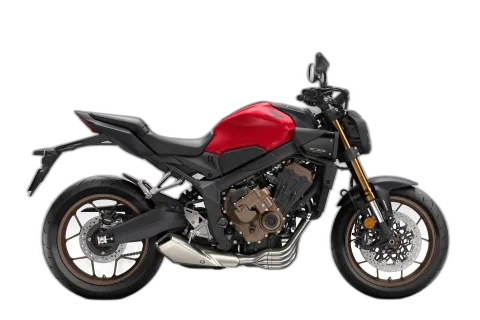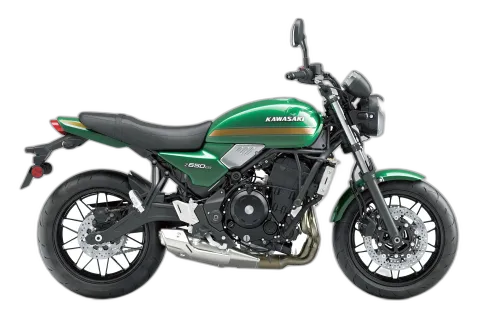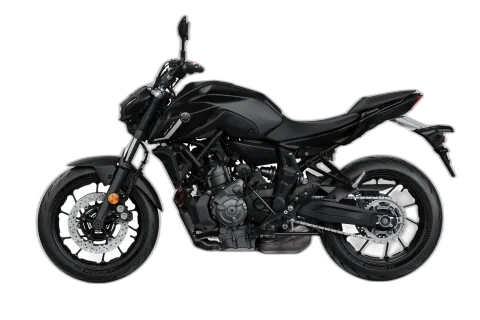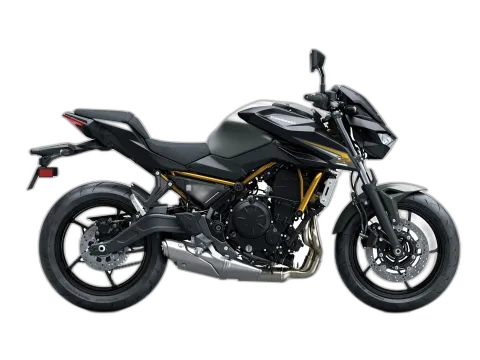

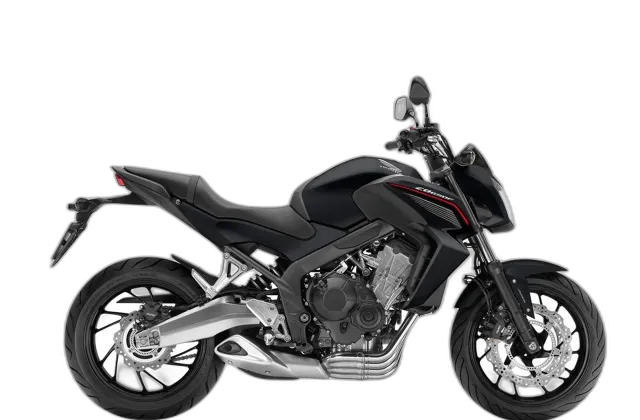
Honda CB650R (RH03) — Naked Bike
NastyNils / Honda press archive

2019–2024 · Naked Bike · Buyer's Guide

CB650R (RH03)

Four Cylinders That Just Work

The Machine's Character

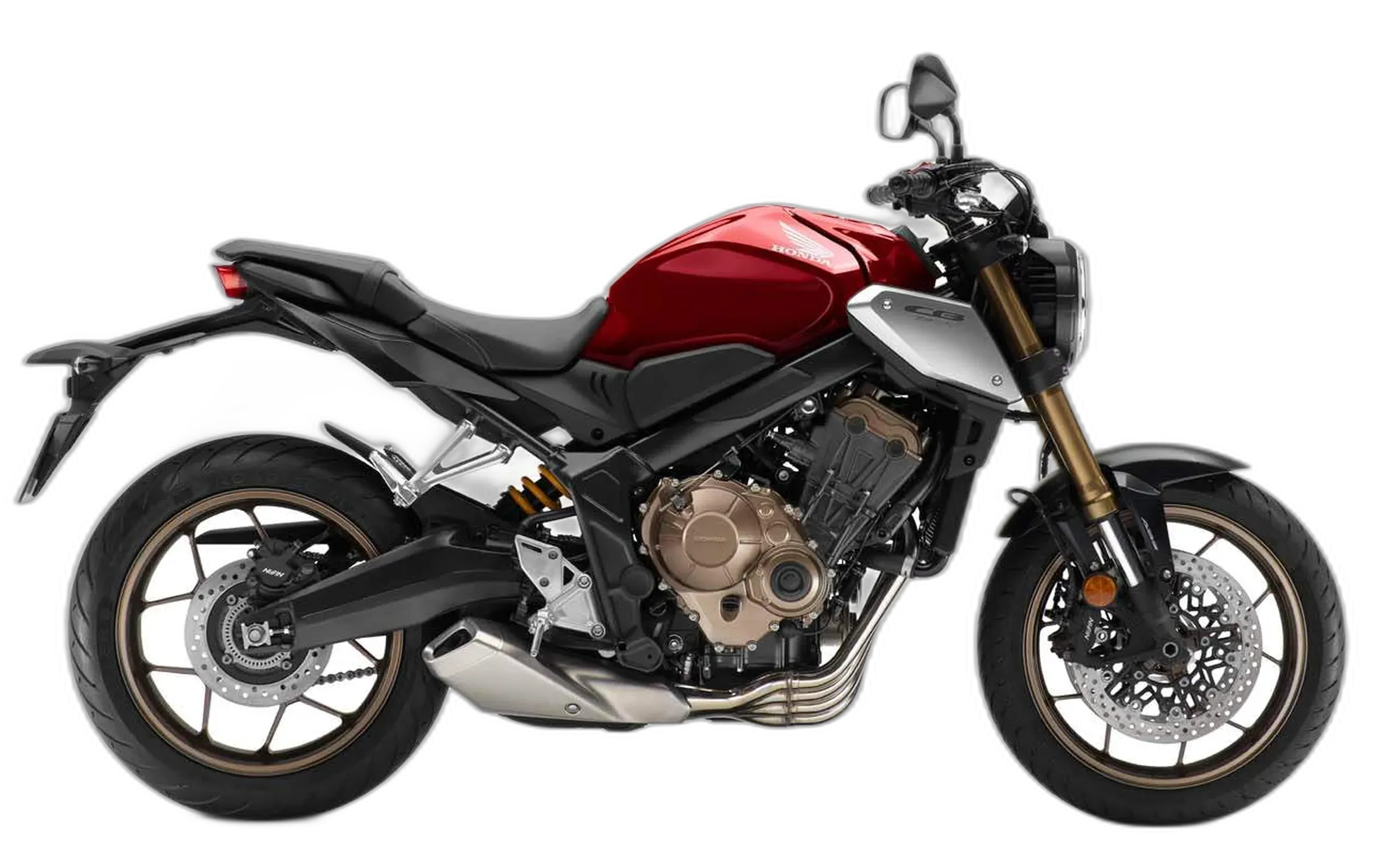
The CB650R is the rare middleweight naked that still runs a genuine inline-four, and that engine defines everything about it. It makes 95 hp at 12,000 rpm and 46 lb-ft at 8,500 rpm from 649 cc, building power in one clean, linear sweep with no steps or spikes. There is no drama down low. The reward waits up top, where the four spins hard and sings the way only a four can. Standard ABS and traction control sit underneath, and the E-Clutch handles the lever for you in traffic. This is Honda's Neo Sports Café read as a real motorcycle, not a styling exercise.

It rides like something engineered for the road you actually own. The 445 lb (202 kg) wet weight and compact frame make it turn light and easy, confident in the city and stable when the road opens up. The suspension is tuned for commuting and back roads rather than a stopwatch, and it takes daily use without complaint. Upright ergonomics fit tall and short riders alike, and the reliability score of 9.5 tells you how it ages: quietly. The honest caveat is the top-end buzz and stock tires that stay cool too long. Anyone chasing raw torque from idle should look elsewhere.

Hard Numbers

Spec sheets don't ride bikes, but they set the baseline.

Show full specs & equipment Hide specs & equipment
Key specifications
Power 95 hp (70 kW) @ 12,000 rpm
Torque 46 lb-ft (63 Nm) @ 8,500 rpm
Displacement 649 cc
Engine Inline-four
Cooling Liquid-cooled
Gearbox 6-speed
Final drive Chain
Fork Upside-down (USD)
Front tire 120/70-ZR17
Rear tire 180/55-ZR17
Wheelbase 57.1 in (1450 mm)
Seat height 31.9 in (810 mm)
Wet weight 445 lb (202 kg)
Fuel capacity 4.1 gal (15.4 L)
Fuel economy 48 mpg (US)

Equipment check

Chassis

  • Rear Suspension Adjustable Standard

Drivetrain

  • Slipper Clutch Standard

Lighting

  • LED Headlight Standard

Safety

  • ABS Standard
  • Traction Control Standard

The Voice of Experience

Portrait of NastyNils

The test ride

Swing a leg over and the 31.9 in (810 mm) seat lands you upright and open, room enough that a full day never has you shifting around hunting for relief. It fits big frames and small ones without argument. In stop-and-go the E-Clutch is the thing you stop noticing, which is the highest praise a piece of hardware can earn: roll on, roll off, and your left hand just forgets the lever exists. Weeks of it never once hiccupped. Wind it into the mid and upper revs and a light buzz creeps through the bars and pegs, present enough to register on a long slog without ever forcing you off the bike. Cold mornings ask for a gentle right hand until the engine warms and the abruptness melts away. On real pavement the whole machine feels sorted, planted, and honest about what it is.

Rated point by point — where it earns its keep

My own 0–100 score for this bike against the class, area by area — the marker on each bar is the class average.

The chassis feels dialed in by someone who actually rides the roads I ride. It never reaches for lap times, but aim it at a morning commute, a string of curves, or a harder shove and it holds its composure through every bit of it. My one real gripe is the factory tires. They take forever to find heat and give back a vague, remote read at the front, and even warm, that last sliver of confidence never turns up. Fit a decent sport or sport-touring tire and the bike finally starts talking to you.

Reliability I judge mostly through the E-Clutch, since that's the newest and most exposed part of the whole setup. Weeks of steady daily riding and it simply did its job every time, with no warning lights, no hesitation, no quirks to plan around. When the one part I'd expect to act up behaves this cleanly, it tells me the rest of the bike was put together with the same care. This is considered hardware, not something rushed onto the market.

The strongest case this bike makes is simply what you're getting. A genuine inline-four at this displacement has grown scarce on dealer floors, and that rarity sets it apart from most of what shares its price. If a smooth, high-revving four spinning beneath you is what you actually want from a middleweight, your choices have thinned right out. For that kind of rider, having this configuration on offer at all counts for plenty.

The thing I keep coming back to is how measured the power feels. Open it up and the motor pulls in a single seamless stream, with nothing abrupt waiting in the band and no dead patches to ride through. This is classic four-cylinder smoothness done with real polish. If you prize a clean, orderly climb through the revs over a hard shove from down low, this engine gives you plenty to enjoy.

Long days in the saddle are where this one quietly wins me over. The stance sits you open and neutral, roomy enough that big riders and small ones both settle in without any fuss. I'd flag two honest caveats. A gentle vibration works into your palms and footpegs once the tach climbs past the middle, noticeable on a long stint but never a dealbreaker. And that very first pull from a cold start nips keener than you'd guess before the engine warms and irons it flat.

In the daily grind of city traffic, the E-Clutch is the thing that justifies its spot on the bike. You inch ahead, halt, inch ahead again, and before long you've quit thinking about your left hand entirely while the electronics handle each pull-away. A few packed commutes and going back to a lever-operated clutch feels like busywork. If your week is mostly stoplights and stop-start crawling, this is what makes the slog genuinely easier.

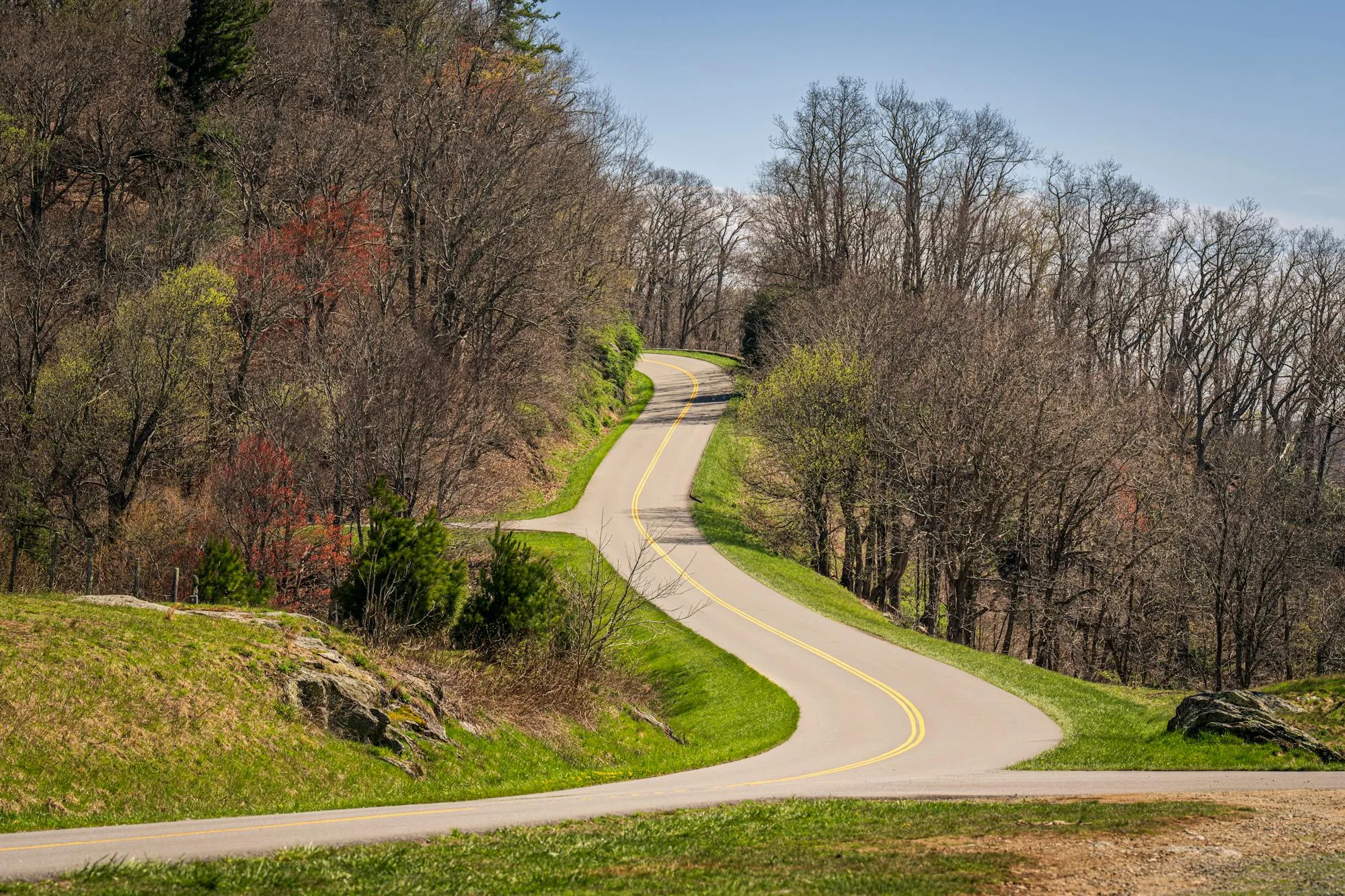
A winding asphalt road descending through the Appalachian Mountains, likely the famous Tail of the Dragon section in Tennessee and North Carolina. Multiple technical right-hand and left-hand curves are visible in this aerial perspective, surrounded by deciduous forest in spring foliage. Clear sunny conditions, well-maintained asphalt with yellow center lines marking the curves.
Mark Stebnicki / Pexels

The Truth on the Street

This section is a mirror, not a review. Over the years I've kept a close ear on CB650R owners: talk at track days and events, long conversations with people who ride them every day, and the steady trickle of emails and messages that land in my inbox. Pull it all together and a consistent shape emerges. Riders save their strongest praise for the hardware, while the recurring gripes gather around comfort once the miles add up.

The hardware riders praise

Two things come up again and again when owners talk about what the bike gets right. The first is the front brake. Riders consistently rate the stopping power above what they expect in this class, and they single out how strong and progressive it feels the moment you load the lever. The second is the finish. The Neo Sports Café look draws steady compliments, from the bronze wheels and blacked-out engine to the round LED headlight, and owners regularly call out the paint and overall build quality as a cut above what they see on rival machines.

Where the miles start to tell

For all that goodwill, a handful of complaints surface with real regularity, and nearly all of them show up once the ride stretches out. The loudest is the seat. Owners describe the stock perch as too firm, with discomfort setting in somewhere around the first hour or hour and a half, and the passenger seat draws even harsher words. Plenty of riders end up fitting an aftermarket saddle. The lack of any wind protection is the next common theme, and sustained highway speeds wear people down over a long stint. A smaller group points to the modest tank, which keeps the real-world range short enough to complicate longer trips.

Known issues

  • LCD instrument cluster unreadable in direct sunlight

    electricsvery common

    The round LCD display on 2019–2023 models becomes virtually unreadable in direct sunlight. The 2021 update improved the situation with negative backlight but did not fully resolve it. Anti-reflective screen protectors (aftermarket) provide partial relief. The 2024 TFT upgrade eliminated the problem.

  • Noticeable vibrations at sustained highway speeds

    engineoccasional

    Perceptible high-frequency vibrations through handlebars, footpegs, and seat in the 6,000–9,000 rpm range — corresponding to typical highway cruising speeds (56–81 mph / 90–130 km/h). Inherent to the inline four-cylinder configuration at this displacement. Some individual bikes exhibit more pronounced vibrations, potentially linked to engine mount bolt torque. Honda added a central engine mount element (vs. CB650F) to reduce vibrations, but the issue is not fully eliminated.

  • Turn signal relay moisture sensitivity

    electricsoccasional

    The indicator flasher relay, located behind the tank under the bodywork, is poorly sealed against water. After rain or washing, the relay can malfunction — causing indicators to flash erratically or activate hazard mode spontaneously. The problem appears specific to the CB650R (naked) and not the fully faired CBR650R sibling.

  • Chain stretch requiring frequent adjustment during break-in

    drivetrainoccasional

    New CB650R chains require adjustment (to 30 mm slack per owner's manual) up to three times within the first 240–320 km (150–200 miles) before settling. While initial seating stretch is normal for any new chain, the frequency surprises first-time owners. After break-in, chain maintenance returns to normal intervals.

  • Abrupt throttle response in low RPM range

    fuel systemoccasional

    In the lower RPM range (particularly in 1st and 2nd gear, urban riding), the fuel injection responds abruptly to small throttle inputs — described as "snatch" or "jerky" by owners. Likely caused by FI mapping characteristics and/or insufficient throttle cable free play.

  • Surface corrosion on exhaust headers and footpegs

    exhaustoccasional

    Bikes ridden year-round or stored outdoors develop surface oxidation/discoloration on exhaust header pipes, pillion footpegs, and uncoated weld seams on the frame. The exhaust material is stainless steel (no structural risk), but heat cycling combined with road salt causes visible tarnishing. Not a structural defect.

The Expert Benchmark

Where this Honda CB650R pulls ahead of — or falls behind — its rivals on the numbers, and the typical bike in its class on character.

What kind of bike this is — character vs. the class

This bike Class average

The shape of the Honda CB650R — numbers and character vs. the average Naked Bike

Head-to-head: Honda CB650R vs. its rivals

The 'Should I Buy It?' Score

Forget spec-sheet bragging. Here's who the CB650R is actually built for.

A scenic view of Angeles Crest Highway winding through rugged Southern California canyon terrain. Rocky mountainsides with golden earth tones frame the asphalt road with tight sweeping curves. Double yellow center line visible, sparse vegetation along the shoulders, clear blue sky with white clouds. Daylight, dry conditions. Iconic location for canyon-road enthusiasts.
Josh Sorenson / Pexels

Best motorcycle for Angeles Crest?

For weekends between LA traffic and the Angeles Crest, the light handling and eager top-end suit you well. Just budget for better tires before you push the front hard through fast corners.

Made for Angeles Crest Highway · Coronado Trail / US 191 · Highway 1 / Big Sur
Best motorcycle for Tail of the Dragon?

On tight Dragon and Blue Ridge work where skill beats speed, the easy turn-in and forgiving chassis reward clean lines. Warm the stock rubber or swap it, then the front finally talks back.

Made for Back of the Dragon · Blue Ridge Parkway · Cherohala Skyway

Best motorcycle for Bay Area?

Commute the city all week and hit Skyline on the weekend; the E-Clutch makes traffic effortless and the four-cylinder gives you something worth talking about at Alice's.

Made for Bay Area Ridge Roads · San Francisco / Bay Area · Skyline Boulevard / Alice's Restaurant