By NastyNils·
Motorcycle comparison · Retro Classic vs Supersport
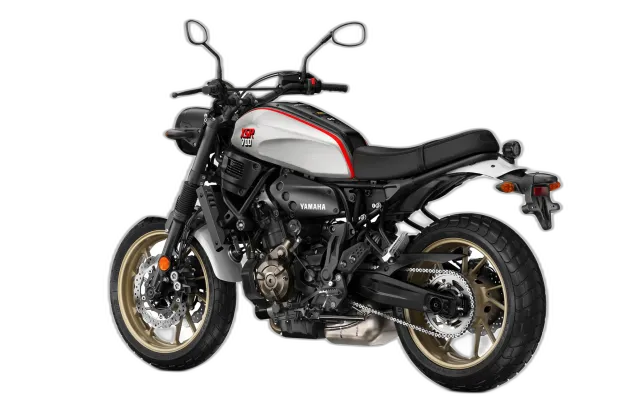
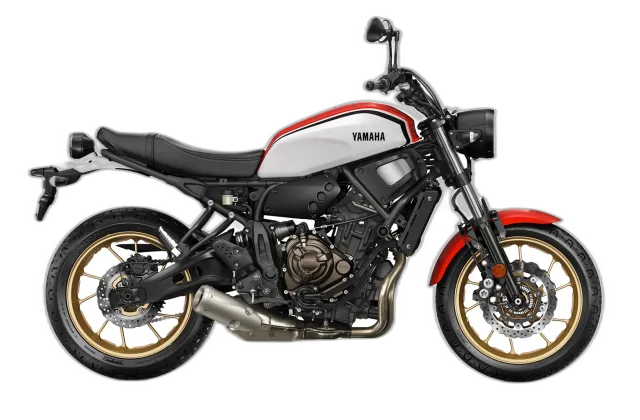
Yamaha XSR700 (RM11) vs YZF-R7 (RM39)
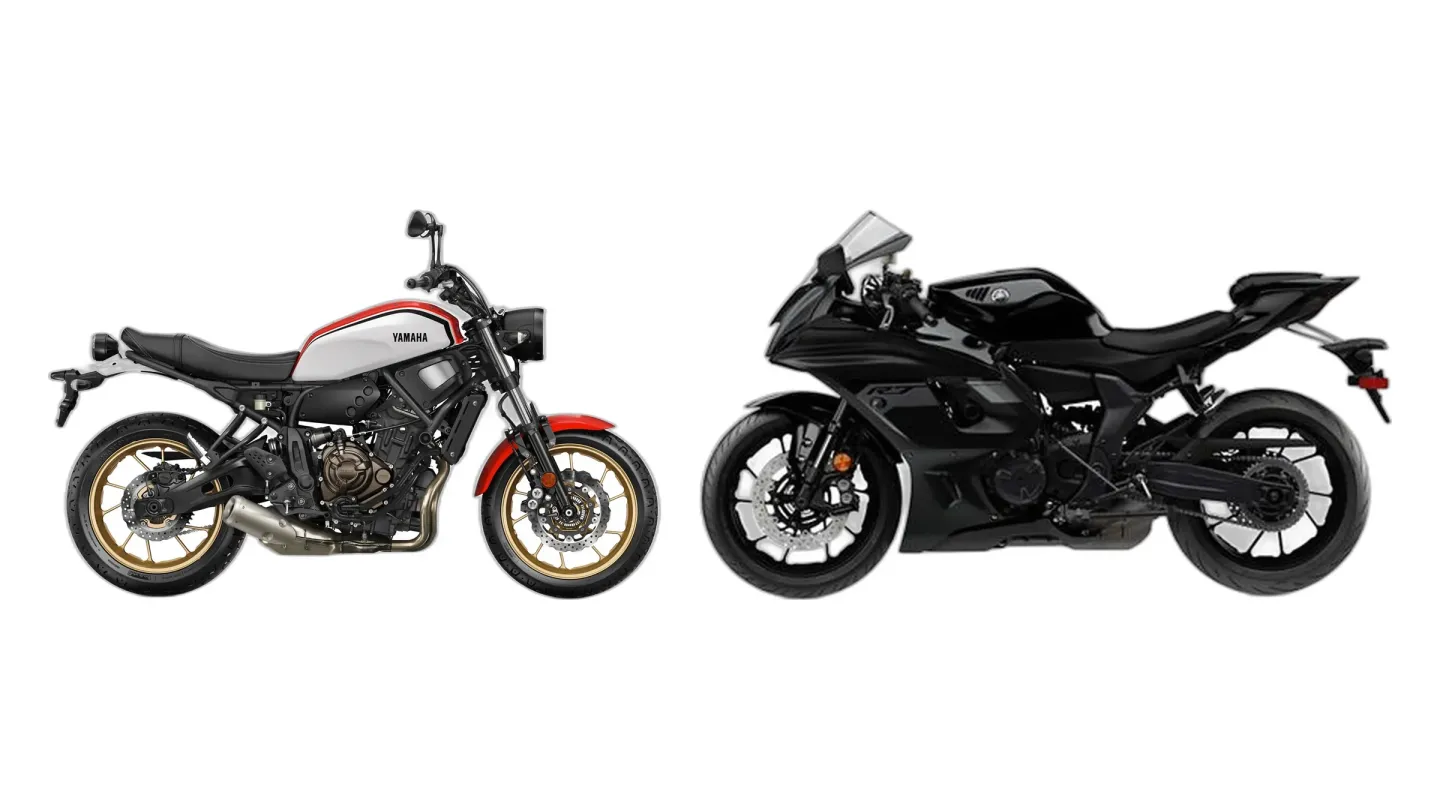
Yamaha XSR700 vs YZF-R7: two kinds of bike, and who each one is for.
Squeeze the front lever on the Yamaha XSR700 and it doesn't try anything clever: the bike just slows the way you'd expect. The Yamaha YZF-R7's radial front brake grabs hard, yet it's easy to meter in fine steps.
So which one do you buy?
The XSR700 has the edge if…
Daily commuting & city riding
Narrow edge: XSR700
For the Monday-to-Friday grind, the XSR700 pulls a nose in front. Your own commute could easily flip it.
The YZF-R7 has the edge if…
Sporty riding on twisty roads
Inches ahead: YZF-R7
On a winding road, the YZF-R7 comes out a touch ahead. The reason: more feel through the bars and stronger brakes. You wouldn't bet much on a gap like that.
What makes each one tick
XSR700
Sitting bolt upright on a seat that doesn't tip you toward the bars or the tail, you'll find the XSR700 drops into a bend on light steering. Ridden harder, its suspension runs short, and the cornering clearance isn't far behind. The gearbox snaps between ratios. The front wheel's up with barely a tug.
YZF-R7
From low revs up, the YZF-R7's crossplane twin pulls with usable torque, and there's no surprise in how the throttle answers. On the Angeles Crest Highway at street pace, the chassis turns in sharply and holds a neutral line mid-corner.
The Voice of Experience
What actually separates them
- The XSR700 has the lower seat: 32.1 in (815 mm) vs 32.9 in (835 mm).
- The XSR700 has the larger fuel tank: 3.7 US gal (14 L) vs 3.4 US gal (13 L).
- Manually Adjustable Front Suspension: standard on the YZF-R7, not offered on the XSR700.
Which one for the way you ride
Comfortable long-distance riding
Both miss here
Neither one is built for long-haul comfort. For big miles, look at a proper tourer or sport tourer.
They come out level on running costs and a first bike. The better-kept used example is the smarter money.
Who each one is built for
What's good, and what you'll live with
XSR700
Strengths
- Handling You Trust Immediately
- Cheap To Keep Running
- A Genuine Blank Canvas
- Settled At Highway Speed
- Punchy, characterful CP2 engine
Trade-offs
- Occasional False Neutral
- Surface Rust Shows Early
- Sticky Starter Switch
- Wiring After Winter Storage
- Budget suspension limits fast riding
YZF-R7
What owners say
Strengths
- Easy, accessible torque from CP2 twin
- M1-inspired styling — premium look at the price
- Aggressive but liveable ergonomics
- Sharp, light steering / chassis turn-in
Trade-offs
- Stock suspension under-damped for track work
- Tall seat height limits rider accessibility
- Frame flex / front-end chatter at sustained track pace
- LCD display dim / hard to read in direct sunlight
- Non-disable ABS — intrusive on track
Known problems to check before you buy
XSR700
- Swingarm and fastener corrosion Surface rust appears on the swingarm, frame welds, and zinc-plated fasteners, particularly when ridden in wet conditions or exposed to winter road salt.
YZF-R7
- Frame flex / front-end chatter under sustained hard cornering at track pace At committed track pace, the high-tensile steel frame "twists up" when leaned over and on the gas through long, hard-loaded corners. The front end develops chatter mid-corner as pace climbs. Not noticeable at street pace; not a safety issue at typical road speeds. Implicitly confirmed by Yamaha's RM60 (2026) frame redesign, which targets increased chassis rigidity as the headline change.
- ABS cannot be disabled by the rider; intrusive at track pace The 2-channel ABS is permanently armed on the stock motorcycle. At track pace, riders report it engaging earlier than desired under hard braking, which is a feel/perceptual issue rather than a street safety concern. ABS works correctly and protectively in normal road use. Aftermarket ABS-delete products (FT-ECU, Spears) are sold specifically to address this for track use.
- KYB fork and shock damping under-tuned for committed track riding The KYB suspension is calibrated for street comfort. Heavier or faster riders report bottoming the fork under hard braking and running out of preload at the rear at track pace. The hardware is genuinely adjustable (front: full P/C/R; rear: P+R), but the stock baseline is soft. Tuning to acceptable track spec is straightforward but required for race pace.
- Optional quickshifter is up-only and works poorly at part-throttle The Yamaha Quick Shift System (QSS) is sold as a dealer-fit accessory (not standard equipment) and provides up-shifts only. Forum consensus across multiple owners is that it works cleanly only at high rpm with aggressive throttle inputs; at part-throttle the shift is described as clunky, intermittent, or failing to engage. The cable-throttle architecture is the underlying constraint; the RM60 (2026) introduces ride-by-wire and a 3rd-generation up-and-down QSS as standard.
- Negative LCD instrument cluster dim and hard to read in direct sunlight The single LCD display (white characters on black background) lacks the brightness, contrast, and information density of contemporary TFT displays. Riders report dim appearance and glare in direct daylight, plus an awkward viewing angle from a tucked riding position. Replaced by a 5-inch TFT on the RM60 (2026).
What they share
- Displacement
- 689 cc
- Engine
- Parallel twin
- Cooling
- Liquid-cooled
- Peak torque at
- 6,500 rpm
- Gearbox
- 6-speed
- Final drive
- Chain
- Front tire
- 120/70-17
- Rear tire
- 180/55-17
Where the spec sheets split
| XSR700 | YZF-R7 | |
|---|---|---|
| Seat height | 32.1 in (815 mm) | 32.9 in (835 mm) |
| Wet weight | 410 lb (186 kg) | 414 lb (188 kg) |
| XSR700 | YZF-R7 | |
|---|---|---|
| Power | 75 hp (55 kW) | 73 hp (54 kW) |
| Peak power at | 9,000 rpm | 8,750 rpm |
| Torque | 50 lb-ft (68 Nm) | 49 lb-ft (67 Nm) |
| XSR700 | YZF-R7 | |
|---|---|---|
| Fuel economy | 55 mpg (US) / 4.3 L/100 km | 56 mpg (US) / 4.2 L/100 km |
| Fuel capacity | 3.7 US gal (14 L) | 3.4 US gal (13 L) |
| XSR700 | YZF-R7 | |
|---|---|---|
| Fork | Telescopic | Upside-down (USD) |
| Front brake | 282 mm | 298 mm |
| Wheelbase | 55.3 in (1405 mm) | 54.9 in (1395 mm) |
What comes fitted, what costs extra
| XSR700 | YZF-R7 | |
|---|---|---|
| Manually Adjustable Front Suspension | Not offered | Standard |
| Quickshifter | Not offered | Option |
| USB Charging Port | Not offered | Option |
| LED Headlight | Not offered | Standard |
Head to head, area by area
Both bikes on the same scale, one area at a time.