By NastyNils·
Motorcycle comparison · Naked Bike
Kawasaki Z900 (MY2020) vs Z900 (MY2017)
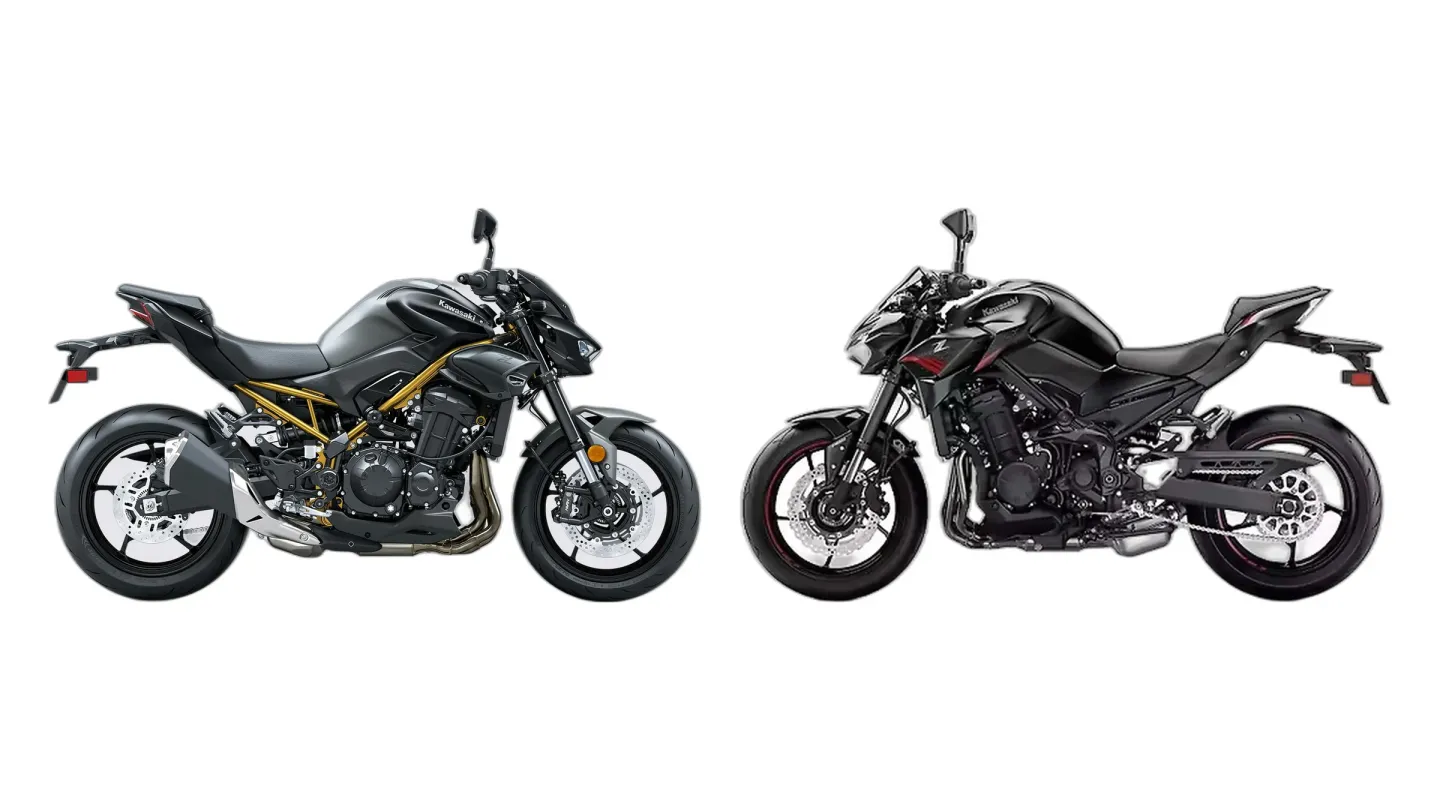
2020 Kawasaki Z900 vs 2017 Kawasaki Z900: no fairing, no excuses. Here's how to pick.
Over a broken patch of pavement, the 2020 Kawasaki Z900 doesn't wander off its line. On the 2017 Kawasaki Z900, the soft shock can't hold up a heavier rider or a passenger. With weight aboard, the rear bottoms out.
So which one do you buy?
The 2020 Z900 has the edge if…
Daily commuting & city riding
Edges it: 2020 Z900
For the ride to work, the 2020 Z900 noses ahead. Don't let that alone make the call.
What makes each one tick
2020 Z900
At corner exit, the throttle unloads the 2020 Z900's front wheel, and the chassis doesn't twitch or weave. Once it's past the middle revs, the four-cylinder surges hard and keeps spinning eagerly up to the limiter. On Angeles Crest Highway, the engine and the chassis tuning don't pull in different directions. The rear tire bites and drives.
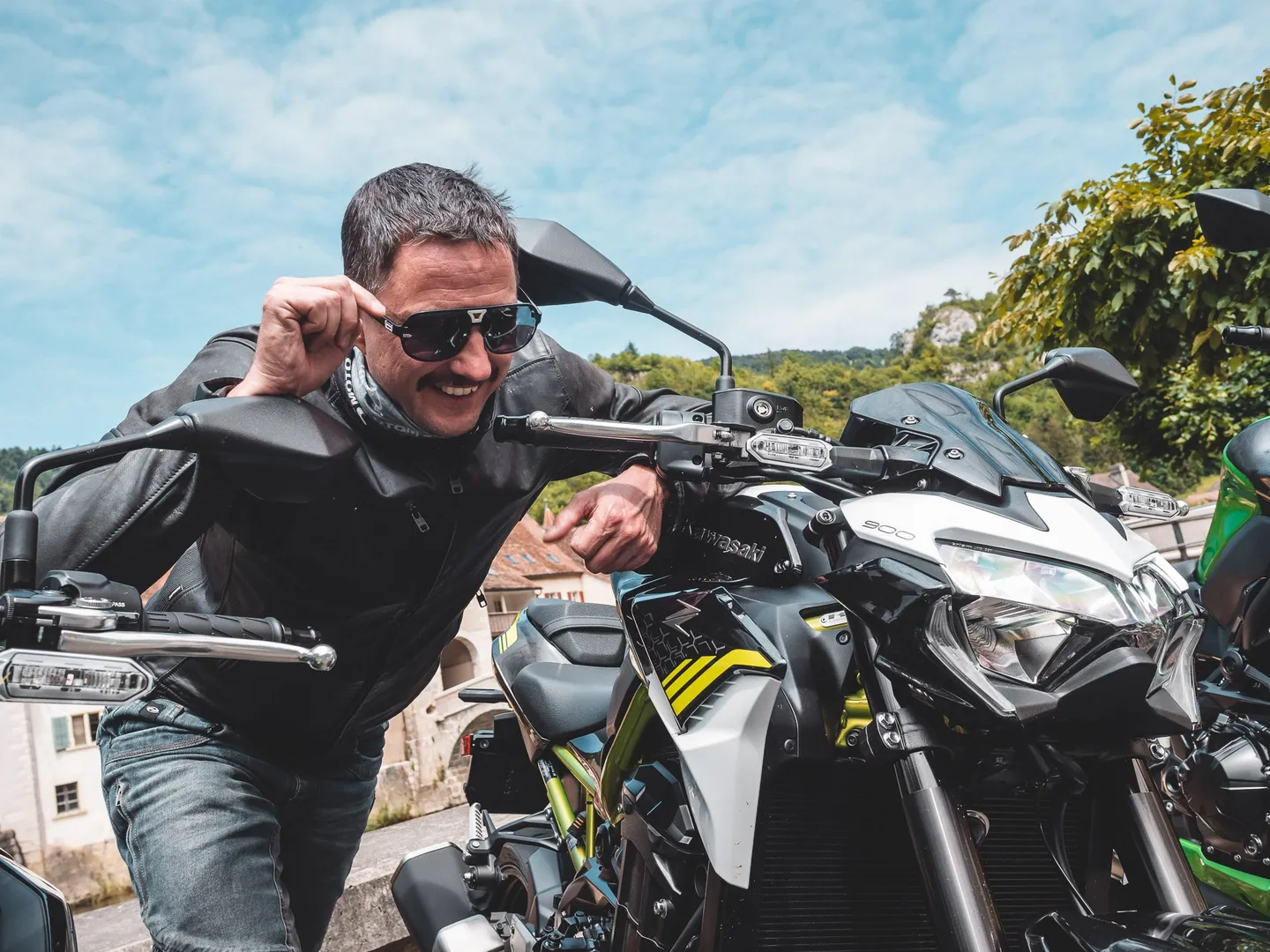
Nils rode the 2020 Z900 in Austria and Switzerland in 2020 (NastyNils Testride).
2017 Z900
Up top, the 2017 Z900's inline-four comes alive and howls the way a streetfighter should. Down low and at a crawl, the throttle snaps on and off, and it's worst in first and second gear. There's a direct feel through the bars at corner entry. The front tips in quickly.
Nils rode the 2017 Z900 in Switzerland in 2017, and in Spain in 2019 (NastyNils Testride).
The Voice of Experience

What actually separates them
- Traction Control: standard on the 2020 Z900, not offered on the 2017 Z900.
- Ride Modes: standard on the 2020 Z900, not offered on the 2017 Z900.
- TFT Display: standard on the 2020 Z900, not offered on the 2017 Z900.
Which one for the way you ride
A confidence-building first motorcycle
Not built for this
A first bike should forgive mistakes, and these two don't do that well enough. Come back to them later.
They come out level on twisty roads, running costs, and trips with luggage. The better-kept used example is the smarter money.
Who each one is built for
What's good, and what you'll live with
2020 Z900
Strengths
- Approachable Or Fast, Your Call
- Proven Over Months Of Testing
- Brakes Beat Their Spec Sheet
- Seat Fits A Wide Range
- Planted, Precise Chassis
Trade-offs
- Handlebar Too Thin
- Menus Fight Back
- Firm In Daily Traffic
- Snatchy Throttle Down Low
- No wind protection
2017 Z900
What owners say
Strengths
- Excellent value for money
- Linear, exhilarating engine
- Agile, intuitive handling
- Good fuel economy
- Low running costs
Trade-offs
- Jerky throttle response at low revs
- Cramped legroom for taller riders
- Lacks modern electronics
- No wind protection
- Soft shock struggles with heavier riders
Known problems to check before you buy
2020 Z900
- Base Model Suspension Struggles with Spirited Riding and Heavier Riders The standard suspension—KYB USD fork with no compression damping adjustment—dives excessively under hard braking. The rear shock sags during acceleration. It proves inadequate for heavier riders (200+ lb) and two-up riding. The setup is designed primarily for commuting and medium-speed riding. The 2022 SE with Öhlins S46 dampers and improved fork solves these issues.
- False Neutrals and Clunky Transmission The transmission occasionally misses shifts, especially during quick upshifts above ~6,000 rpm. Most frequent between 2nd-3rd and 3rd-4th gears. Design-related play in the shift linkage. Downshifts described as clunky. Issue carried over from previous model—engine and transmission are carry-over parts.
- Front ABS intervenes prematurely under hard braking The ABS calibration is conservative and tends to intervene early, particularly at the front wheel under hard braking or over bumpy and uneven surfaces. Riders feel pulsing at the brake lever and a lengthened stop before the tire has reached its real grip limit. The system has a single fixed calibration that does not change with the selected riding mode, and there is no rider-selectable ABS-off function, so the early intervention is present at all times.
- Snatchy/Jerky Throttle Response at Low RPM The Z900 exhibits jerky, on/off-like throttle response at low RPM and speeds, particularly in 1st and 2nd gear. The motorcycle lurches when holding a constant low speed. Improved compared to the 2017-2019 generation, but not resolved. The first degree of throttle turn has a sharp snatch that disrupts smooth application, and snatchy low-speed throttle manners persist. Caused by emissions-related ECU tuning, not a mechanical defect.
- Unstable Bluetooth Connection, App Crashes, Pairing Issues The Kawasaki Rideology app (for the TFT display) exhibits recurring Bluetooth connectivity issues on both iOS and Android. Pairing drops after restarting the motorcycle, particularly with Android/Samsung devices. In rare cases, the cockpit's Bluetooth chip fails entirely, requiring instrument cluster replacement. App update 2.8.2 added a requirement for internet connectivity during the Bluetooth handshake.
- Turn Signal Mount Rubber Inserts Become Brittle and Break The rubber inserts holding the stock turn signals in the body become brittle and break, causing the signals to hang loose on their wires. Vibration and UV radiation accelerate deterioration. OEM replacement turn signals also fail within 1–2 years. Affects multiple Kawasaki models of the same design, not just the Z900.
- Idle RPM Decreases Over Time, Causing Rough Running Idle RPM gradually decreases over time, resulting in rough idle, stumbling, and occasional stalling. Some owners report idle RPM dropping below 1,000. Cold-start idle can climb to 2,500 rpm. Possible solutions include idle RPM adjustment, ECU software update, and fuel quality verification.
- OEM Front Brake Pads Wearing Out Faster Than Expected The stock sintered brake pads wear out during normal use after approximately 8,000–10,000 miles until reaching the wear limit. Inner pads wear faster than outer pads.
- Surface Corrosion on Stock Steel Screws and Fasteners Stock steel screws and fasteners develop surface rust, especially in humid or coastal climates. Kawasaki uses standard steel fasteners instead of stainless steel or coated hardware.
2017 Z900
- Rear Shock Mounting Bore Becomes Oval The mounting holes of the rear shock linkage on the frame can elongate and become oval under load when the shock absorber bottoms out. This compromises damping function and can cause riding instability. Root cause: insufficient material thickness at the linkage mounting point, combined with the stock shock absorber's tendency to bottom out when loaded.
- Rear Brake Line and ABS Sensor Cable May Chafe Against Tire During factory assembly, the rear brake line and wheel speed sensor cable may be incorrectly routed, causing them to chafe against the rear tire. This can damage the brake line (reduced braking performance) or sever the ABS sensor cable (ABS failure).
- ABS Hydraulic Unit Contaminated with Aluminum Shavings The ABS hydraulic unit may become contaminated with aluminum shavings during manufacturing due to a defective machining fixture that shaves the ABS pump housing. This can cause the front or rear wheel to lock up during braking.
- Front ABS Engages Too Early The Nissin ABS unit activates prematurely, particularly on the front brake, during hard braking. The ABS cannot be disabled on 2017–2019 models. This reduces rider confidence during aggressive braking and trail-braking maneuvers. Multiple professional testers and owners confirm the issue.
- False Neutrals, Especially Between 5th and 6th Gear The transmission occasionally misses shifts, especially during rapid upshifts above approximately 6,000 rpm. Most commonly reported between 5th and 6th gear, but also between 2nd and 3rd gear. Incomplete clutch disengagement exacerbates the problem. Downshifts are described as "clunky." Design-related, not an isolated defect.
- Snatchy Throttle Response / Jerky low-RPM fueling The Z900 exhibits jerky, on-off throttle response at low RPMs and speeds, particularly in 1st and 2nd gear. The bike bucks and surges when holding a constant low speed. The cause is emissions-compliant ECU tuning, not a mechanical defect. The problem is exacerbated by the closed secondary throttle plates at low RPMs.
- Ticking Noise from Timing Chain Area Audible ticking from the timing chain area, particularly noticeable because the Z900 is a naked bike. Slight ticking is considered normal (metal-to-metal contact from the automatic timing chain tensioner). In rare cases, the automatic tensioner fails and the noise becomes pronounced. The very quiet stock exhaust makes mechanical engine noises more prominent.
- Turn Signal Bracket Rubber Inserts Become Brittle and Break The rubber inserts that hold the stock turn signals in the body become brittle and break, causing the turn signals to hang loose on their wires. Vibration and UV radiation accelerate the wear. OEM replacement turn signals also fail within 1-2 years. Affects multiple Kawasaki models, not just the Z900.
- Handlebar Vibrations at Highway Speeds Noticeable handlebar vibrations at higher speeds cause hand numbness on longer rides. The bike's unfaired design and inline-four engine contribute to this issue. The stock handlebar is considered undersized for the motorcycle. Numerous aftermarket handlebar weight solutions are available.
- Surface Rust on Stock Steel Fasteners Stock steel fasteners and hardware develop surface rust, especially brake caliper bolts and exposed hardware. Kawasaki uses standard steel fasteners instead of stainless steel or coated alternatives.
What they share
- Displacement
- 948 cc
- Engine
- Inline-four
- Cooling
- Liquid-cooled
- Power
- 125 hp (92 kW)
- Torque
- 73 lb-ft (99 Nm)
- Fuel capacity
- 4.5 US gal (17 L)
- Gearbox
- 6-speed
- Final drive
- Chain
- Fork
- Upside-down (USD)
- Front tire
- 120/70-17
- Rear tire
- 180/55-17
Where the spec sheets split
| 2020 Z900 | 2017 Z900 | |
|---|---|---|
| Seat height | 31.5 in (800 mm) | 31.3 in (795 mm) |
| Wet weight | 467 lb (212 kg) | 463 lb (210 kg) |
| 2020 Z900 | 2017 Z900 | |
|---|---|---|
| Top speed | 153 mph (246 km/h) | 149 mph (240 km/h) |
| 2020 Z900 | 2017 Z900 | |
|---|---|---|
| Fuel economy | 44 mpg (US) / 5.3 L/100 km | 43 mpg (US) / 5.5 L/100 km |
| 2020 Z900 | 2017 Z900 | |
|---|---|---|
| Wheelbase | 57.3 in (1455 mm) | 57.1 in (1450 mm) |
What comes fitted, what costs extra
| 2020 Z900 | 2017 Z900 | |
|---|---|---|
| Traction Control | Standard | Not offered |
| Ride Modes | Standard | Not offered |
| TFT Display | Standard | Not offered |
| Smartphone Connectivity | Standard | Not offered |
| LED Headlight | Standard | Not offered |
Head to head, area by area
Both bikes on the same scale, one area at a time.