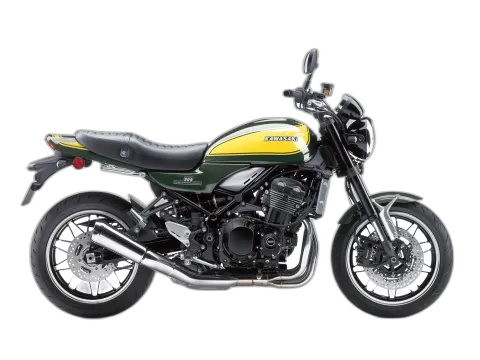
·

Kawasaki Z900 (MY2020) — Naked Bike
NastyNils / Kawasaki press archive

2020–2024 · Naked Bike · Buyer's Guide

Z900 (MY2020)

Two Faces, One Engine

The Machine's Character

The Z900 is the middle child of Kawasaki's naked line, and this generation finally gave it the cockpit to match the engine. The 948cc inline-four makes 125 hp and 73 lb-ft, enough to run to a 153 mph top end, but the real story is how civil it stays until you ask for more. This version arrived with the electronics the bike previously went without: ride modes, traction control, a TFT display and smartphone connectivity, plus an LED headlight as standard. The steel trellis frame keeps all 467 lb feeling lighter than the number on the spec sheet suggests.

On the road it splits cleanly in two. Keep the revs low and it commutes without fuss; wind it out and the four turns aggressive and hungry, pulling hard until your arms go straight. After months of testing nothing broke and nothing loosened, which tells you how this bike ages: honestly. It suits the rider stepping up from something smaller, the commuter who also wants a canyon day, and anyone who values substance over showroom polish. The honest caveat is the finish. The hardware looks plain next to what the engine delivers, the suspension runs firm in town, and the cockpit menus take patience.

Hard Numbers

Spec sheets don't ride bikes, but they set the baseline.

Show full specs & equipment Hide specs & equipment
Key specifications
Power 125 hp (92 kW)
Torque 73 lb-ft (99 Nm)
Displacement 948 cc
Engine Inline-four
Bore × stroke 73.4 × 56 mm
Compression 11.8:1
Cooling Liquid-cooled
Fuel system EFI (throttle body)
Gearbox 6-speed
Final drive Chain
Frame Steel trellis
Fork Upside-down (USD)
Front brake 300 mm
Rear brake 250 mm
Front tire 120/70ZR17 (58W)
Rear tire 180/55ZR17 (73W)
Wheelbase 57.3 in (1455 mm)
Seat height 31.5 in (800 mm)
Wet weight 467 lb (212 kg)
Fuel capacity 4.5 gal (17 L)
Top speed 153 mph (246 km/h)
Fuel economy 44 mpg (US)

Equipment check

Chassis

  • Front Suspension Adjustable Standard
  • Rear Suspension Adjustable Standard

Connectivity

  • TFT Display Standard
  • Smartphone Connectivity Standard

Drivetrain

  • Slipper Clutch Standard

Lighting

  • LED Headlight Standard

Safety

  • ABS Standard
  • Traction Control Standard
  • Ride Modes Standard

The Voice of Experience

Portrait of NastyNils

The test ride

Throw a leg over and the first thing you notice is how reachable the ground is. At 31.5 in the seat lets most riders plant both feet, and the taller standard perch opens the knee angle enough that six-footers stop folding themselves in. Out on a real road it sits planted and stable, unbothered at highway speed. Your hands tell a different story: the handlebar is thinner than a bike with this much muscle deserves, and you feel it every mile. The seat shape gradually nudges you toward the tank, and the firm setup lets rough pavement through to your spine. Small stuff, but it registers over a long day. The full LED lighting and clean TFT round out a cockpit that looks the part once you are moving.

Rated point by point — where it earns its keep

My own 0–100 score for this bike against the class, area by area — the marker on each bar is the class average.

This is the part of the bike I'd defend hardest. None of the suspension is premium hardware, yet the people who set it up plainly knew what they were doing, because that cheap spec never reaches me when I ride. Turn-in is light and honest: I commit to a corner and the front tucks onto the line I picked, then holds it steady without asking for a single correction. The real test comes on the way out. Roll the throttle on hard, the front unloads, and instead of getting nervous the chassis just stays locked on the arc and hooks up. Highway miles feel equally unbothered. Best of all is how wide its comfort zone runs, from a cautious crawl through a bend to a genuinely fast pass with the pegs touching down, and it copes with both ends like neither one troubles it.

Parked, these brakes promise nothing. The calipers are ordinary-looking kit, the sort of setup that signals no ambition under showroom lights. Get rolling and the impression inverts. The bite comes in crisp and easy to read, there's genuine authority in how fast they scrub off speed, and the modulation is fine enough to place the pressure exactly where I want it. Whatever the static look suggested, it badly undersold them.

What makes this bike hard to fault is how much ground it covers without feeling stretched. Nervous newcomers can keep it gentle and never get bitten, while riders who live on the throttle still find plenty to chew on. A few hardware choices betray the budget when it's parked, but ride it and that worry evaporates: engine, chassis tune and balance all pull the same direction, and nothing reads like a corner got cut where it actually counts.

Two engines live inside this one motor, and the gap between them is the whole appeal. Down low it's almost absurdly mild: I can hold a 20 mph (30 km/h) zone at barely any revs, ease the throttle back open, and the fueling answers clean every time, no snatch as it picks up and no scramble for a lower gear. The dual-throttle-valve injection earns the credit for that smoothness. There's real heft behind each roll-on too, the kind of unhurried confidence a smaller engine simply can't manufacture. Then the top half flips the mood. From the midrange up it sharpens, gets greedy for revs, and keeps reaching for more with no strain bleeding through to me. Below that it stays linear and easy to meter with one finger. One engine, two clearly separate temperaments, and the handover between them never shows a seam.

I didn't hand this one back after a quick loop. I kept it well beyond the usual test window, and the longer it stayed the firmer my read on it got. Nothing worked loose and nothing soured across months of hard use. If anything the extra time played like a quiet endorsement: every ride backed up the impression I'd formed in the first hour rather than poking holes in it. I came away without a single nagging doubt.

What strikes me first throwing a leg over is how the height actually works in my favor. I'm a tall rider, and this generation's higher standard saddle finally lets my knees settle into a relaxed bend instead of cramping at me after an hour. At the same time the seat sits low enough that I can get both boots down cleanly at a stop, so the added height never costs me any confidence when I'm stationary. Plenty of bikes get that balance wrong in one direction or the other. The grumbles all live in the calibration. The cushion has a forward tilt that slowly slides me toward the tank no matter how I plant myself, and the springs are set firm, so what feels crisp and purposeful on a quick blast turns into a steady nag on stop-start commutes. If most of your miles are urban, spend a full day on it before committing. Two smaller things bug me up close. The handlebar is too slender for a machine carrying this much muscle, and once I clocked that mismatch I couldn't unfeel it through my palms. And the cockpit, sharp as the readout is on the move, goes clumsy the second I reach in to change a setting, leaving me poking at the left cluster in a sequence nobody seems to have finished. None of it spoils the bike. It's the price of a chassis set up to thrill rather than pamper.

On the practical side the lighting is the clear win: it runs LED throughout as standard, with nothing I'd want to swap for more output. The companion app is the letdown. It gathers vehicle data and keeps simple logs, which sounds handy on paper, but the interface is stiff enough that I quit opening it inside a week. The finish tells the same story. Everything functions properly, it just doesn't carry the visual polish to match what the bike does once it's rolling.

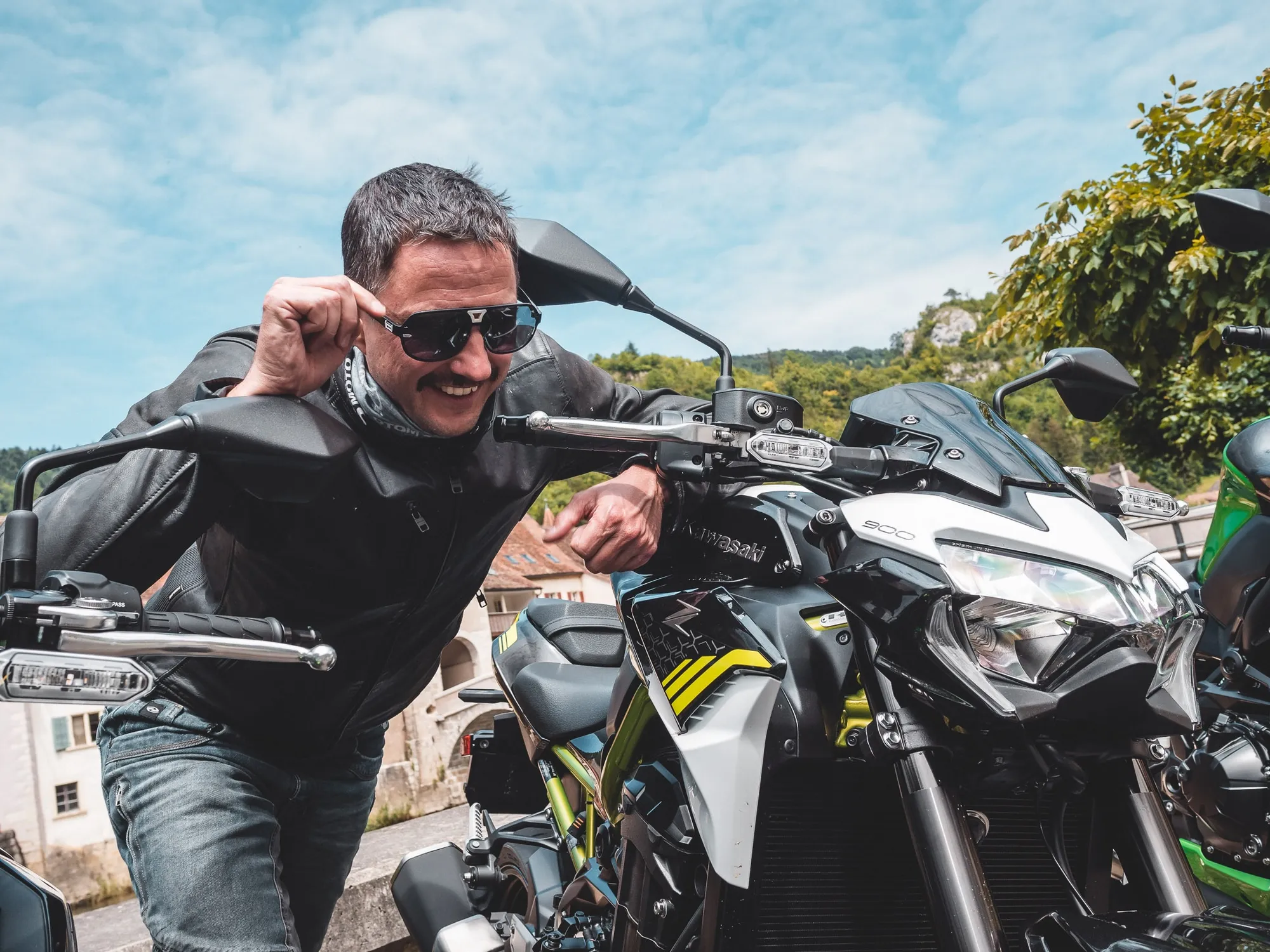
NastyNils poses with a Kawasaki Z900 naked motorcycle in an outdoor staging area. He wears dark sunglasses, black leather riding jacket, and jeans, smiling at the camera with a relaxed expression. The Z900 is displayed in static pose, facing the camera. Clear blue sky with green trees visible in background. Daylight photography, casual portrait style typical of personal bike shots.
NastyNils / Nastynils.com
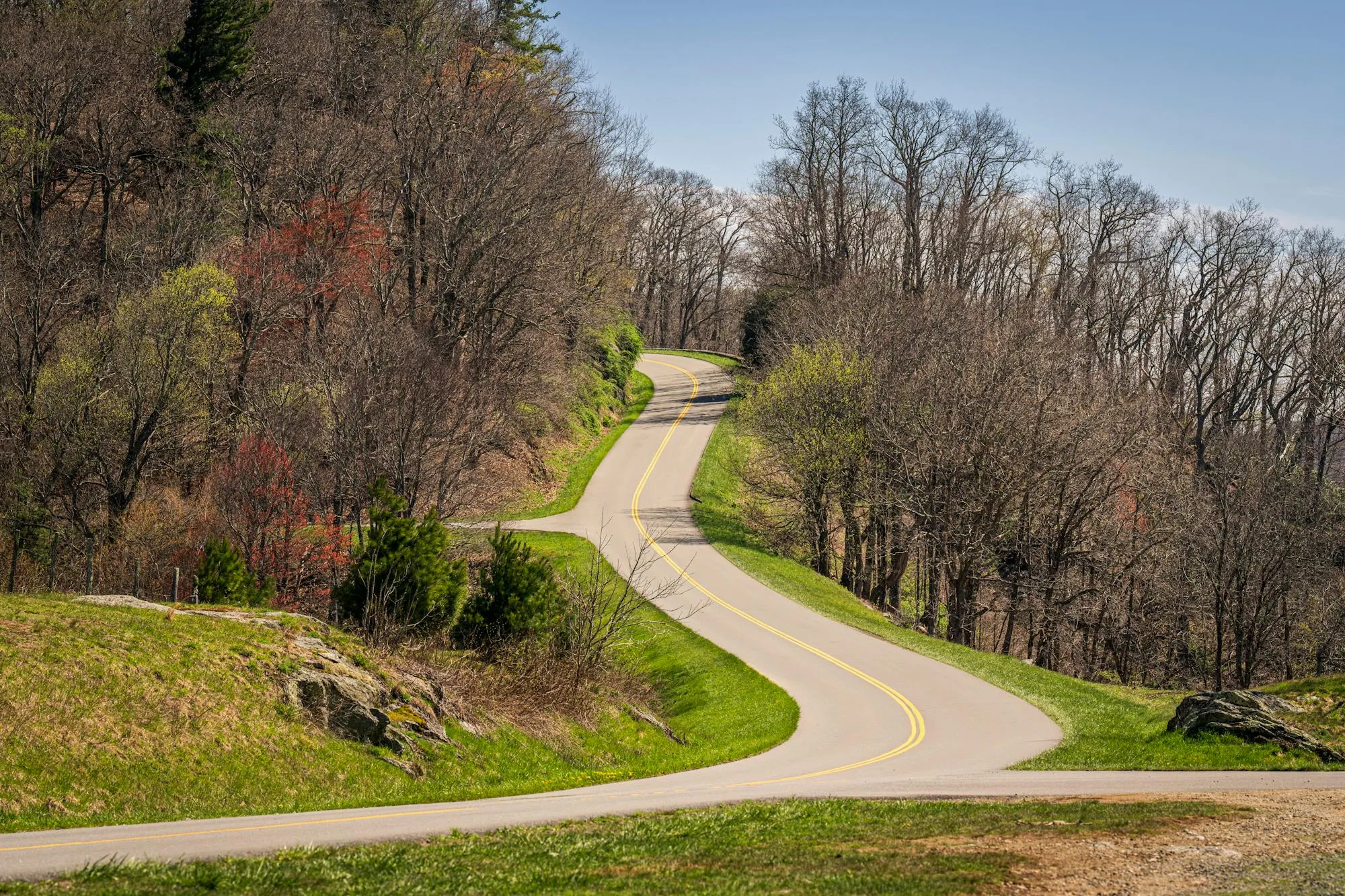
A winding asphalt road descending through the Appalachian Mountains, likely the famous Tail of the Dragon section in Tennessee and North Carolina. Multiple technical right-hand and left-hand curves are visible in this aerial perspective, surrounded by deciduous forest in spring foliage. Clear sunny conditions, well-maintained asphalt with yellow center lines marking the curves. No motorcycle or rider visible in the frame.
Mark Stebnicki / Pexels

The Truth on the Street

None of what follows comes from my own seat time. It's the signal I've pieced together over years of working through the comments under my videos, chasing forum threads to the last reply, talking with owners at the track, and reading the messages riders send straight to my inbox. Set all of it next to each other for the Z900 and the same read keeps surfacing: most owners feel they got more motorcycle than the price suggested, and the few sore spots they raise sit in everyday use rather than anything actually failing.

The value that keeps coming up

The point owners return to first is what the bike costs to buy and to run. They line up the 125 hp (92 kW) inline-four, the color screen, the switchable ride modes and the traction control against the other middleweight nakeds they shopped, and the Z900 keeps landing cheaper. Living with it backs the feeling up. Riders report fuel economy in the low-to-mid 40s mpg in mixed use, a useful stretch between fills from the 4.5-gallon (17 L) tank, and service visits that fall far apart with reasonable shop bills. Many note the chain and sprockets running well past the mileage they expected before needing attention. Confidence in the build sits high too, with owners describing no pattern of mechanical or electrical faults and a clean recall record across the years.

Smooth power, easy steering

Past price, the praise clusters in a few familiar places. The 948cc four draws steady approval for power that arrives smooth and even from low in the rev range all the way to redline, with vibration kept well in check. The chassis earns the same regard: owners describe a bike that tips into a corner on a light input and then holds neutral and planted through it. The updated dash, the ride modes and the traction control read across the board as a real step up from the old cockpit. And riders who commute or ride on weekends point to the upright, relaxed seating and the low-power setting that takes the edge off wet mornings, which is why so many treat the Z900 as a do-most-things machine.

Where the grumbles collect

The criticism runs just as consistently. Raised most often is the fueling down low, which riders call snatchy when they roll back onto the throttle at town speed, and even those who grant it improved over older Z900s still rank it their leading annoyance. The seat comes up nearly as much, faulted as firm and narrow enough to leave you numb inside an hour or two, with the rear perch rated for short hops only. Plenty flag the quickshifter that rivals fit and this one goes without. The base brakes draw fire for a soft initial bite and ABS that steps in earlier than wanted once the pace climbs. With nothing up front to break the air, owners say highway speed throws wind straight at the neck. Taller riders call the legroom tight, smaller hands find the front lever sits too far out even at its closest setting, and the factory tires get little love for taking too long to warm up.

Known issues

  • ABS engages prematurely, especially on front brake; cannot be disabled

    brakescommon

    The ABS unit activates too early, particularly on the front brake during hard braking. Riders experience pulsing at the brake lever before the ABS should rightfully intervene. While Ride Modes modulate ABS intervention, the core issue persists across all modes. Per emissions regulations, ABS cannot be disabled.

  • Inadequate Front Brake Feel and Stopping Power on Base Model

    brakesoccasional

    The base model's conventionally mounted Nissin 4-piston calipers lack feel and braking power under aggressive use, with poor initial bite and excessive fork dive. The master cylinder and conventionally mounted front calipers lack feel when used in anger. The 2022 SE addresses this with Brembo M4.32 radial-monoblock calipers, Nissin radial HBZ master cylinder, and braided steel brake lines.

  • False Neutrals and Clunky Transmission

    drivetraincommon

    The transmission occasionally misses shifts, especially during quick upshifts above ~6,000 rpm. Most frequent between 2nd-3rd and 3rd-4th gears. Design-related play in the shift linkage. Downshifts described as clunky. Issue carried over from previous model—engine and transmission are carry-over parts.

  • Base Model Suspension Struggles with Spirited Riding and Heavier Riders

    suspensionoccasional

    The standard suspension—KYB 41mm USD fork with no compression damping adjustment—dives excessively under hard braking. The rear shock sags during acceleration. It proves inadequate for heavier riders (200+ lb) and two-up riding. The setup is designed primarily for commuting and medium-speed riding. The 2022 SE with Öhlins S46 dampers and improved fork solves these issues.

  • Inadequate Rear Brake Performance

    brakesoccasional

    The rear brake provides minimal braking effect and is referred to by owners as 'utter crap'.

  • Snatchy/Jerky Throttle Response at Low RPM

    fuel systemvery common

    The Z900 exhibits jerky, on/off-like throttle response at low RPM and speeds, particularly in 1st and 2nd gear. The motorcycle lurches when holding a constant low speed. Improved compared to the 2017-2019 generation, but not resolved. The first degree of throttle turn has a sharp snatch that disrupts smooth application, and snatchy low-speed throttle manners persist. Caused by emissions-related ECU tuning, not a mechanical defect.

  • Unstable Bluetooth Connection, App Crashes, Pairing Issues

    electricsoccasional

    The Kawasaki Rideology app (for the TFT display) exhibits recurring Bluetooth connectivity issues on both iOS and Android. Pairing drops after restarting the motorcycle, particularly with Android/Samsung devices. In rare cases, the cockpit's Bluetooth chip fails entirely, requiring instrument cluster replacement. App update 2.8.2 added a requirement for internet connectivity during the Bluetooth handshake.

  • Turn Signal Mount Rubber Inserts Become Brittle and Break

    bodyworkcommon

    The rubber inserts holding the stock turn signals in the body become brittle and break, causing the signals to hang loose on their wires. Vibration and UV radiation accelerate deterioration. OEM replacement turn signals also fail within 1–2 years. Affects multiple Kawasaki models of the same design, not just the Z900.

  • Idle RPM Decreases Over Time, Causing Rough Running

    engineoccasional

    Idle RPM gradually decreases over time, resulting in rough idle, stumbling, and occasional stalling. Some owners report idle RPM dropping below 1,000. Cold-start idle can climb to 2,500 rpm. Possible solutions include idle RPM adjustment, ECU software update, and fuel quality verification.

  • OEM Front Brake Pads Wearing Out Faster Than Expected

    brakesoccasional

    The stock sintered brake pads wear out during normal use after approximately 8,000–10,000 miles until reaching the wear limit. Inner pads wear faster than outer pads.

  • Surface Corrosion on Stock Steel Screws and Fasteners

    bodyworkoccasional

    Stock steel screws and fasteners develop surface rust, especially in humid or coastal climates. Kawasaki uses standard steel fasteners instead of stainless steel or coated hardware.

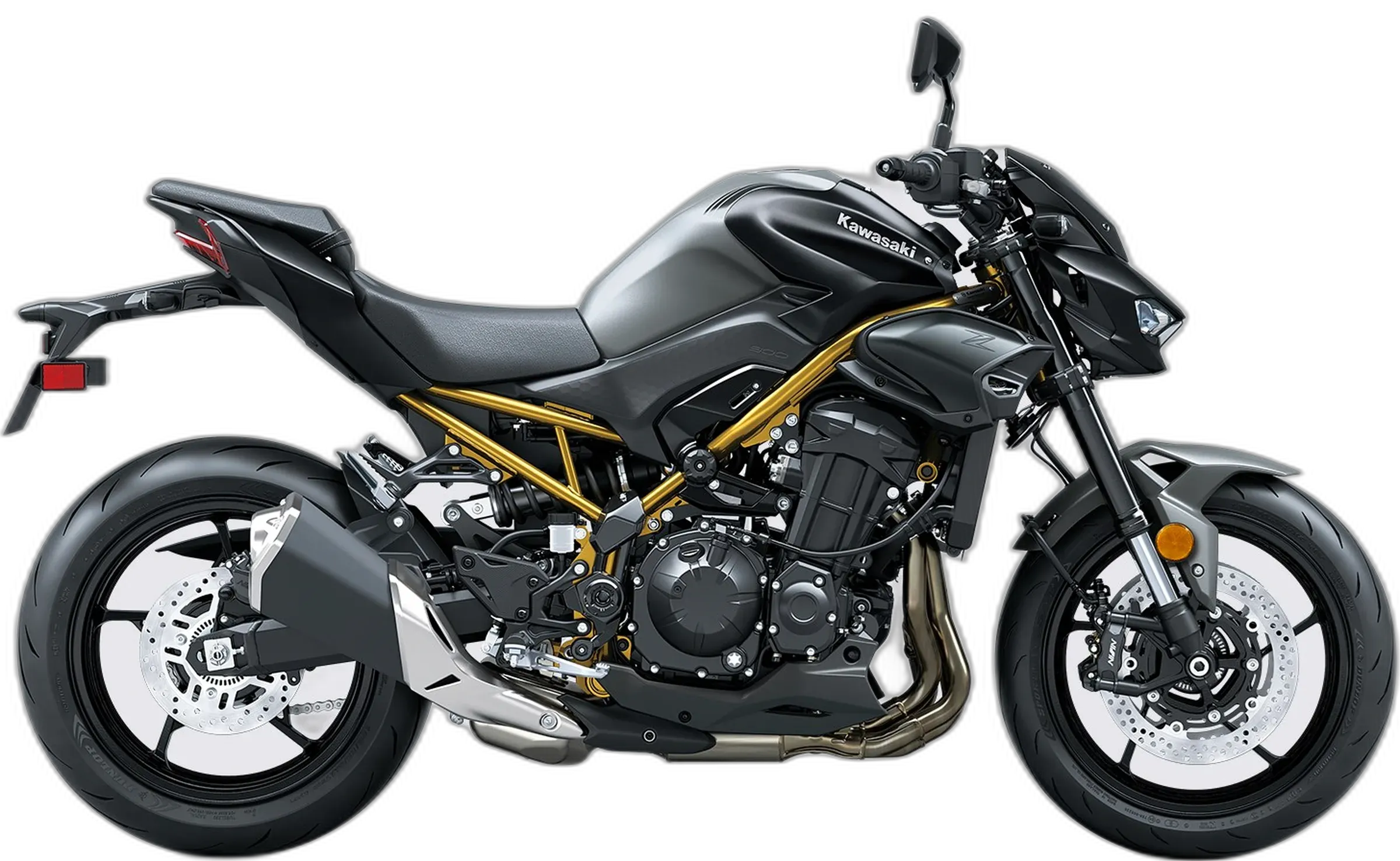
The Expert Benchmark

Where this Kawasaki Z900 pulls ahead of — or falls behind — its rivals on the numbers, and the typical bike in its class on character.

What kind of bike this is — character vs. the class

This bike Class average

The shape of the Kawasaki Z900 — numbers and character vs. the average Naked Bike

Head-to-head: Kawasaki Z900 vs. its rivals

The 'Should I Buy It?' Score

Forget spec-sheet bragging. Here's who the Z900 is actually built for.

A scenic view of Angeles Crest Highway winding through rugged Southern California canyon terrain. Rocky mountainsides with golden earth tones frame the asphalt road with tight sweeping curves. Double yellow center line visible, sparse vegetation along the shoulders, clear blue sky with white clouds. Daylight, dry conditions. No motorcycle or rider visible. Iconic location for canyon-road enthusiasts.
Josh Sorenson / Pexels

Best motorcycle for Angeles Crest?

The handling range is your playground: cautious on cold tires, footpeg-scraping when the road opens up. It rewards precision on the canyon runs without punishing you in LA traffic getting there.

Made for Angeles Crest Highway · Coronado Trail / US 191 · Highway 1 / Big Sur

Best motorcycle for Tail of the Dragon?

On tight technical roads it turns in neutrally and holds its line, and the brakes give you the feel to set corner speed. Light handling over outright pace suits the skill work you go there to do.

Made for Back of the Dragon · Blue Ridge Parkway · Cherohala Skyway

Best motorcycle for Laguna Seca?

It will teach you apex discipline and the chassis stays composed when you push, but the firm stock suspension and plain brakes set the ceiling. A capable trackday tool, not a dedicated track weapon.

Made for Barber Motorsports Park · WeatherTech Raceway Laguna Seca · Circuit of the Americas